Browsed by
Author: Anne Cassidy

Floor Time

Floor Time

Some people clean house before the maid arrives. I have no maid, but I do, today, have carpet cleaners. For them I’ve not just vacuumed, I’ve lifted, unearthed and rearranged. 

Carpet cleaners, of course, must have access to the floor. And the problem around here is that many other things do, too. There are picture frames and shoes and boxes of files. There are radios and fans and music stands. There are computer cables and lamps that must be unplugged. There are filmy white curtains and floral dust ruffles that must be tucked up and away. Most of all, of course, are the books, which are not just on shelves but also in piles on the floor. 

The good part about all of this began even before the carpet cleaners arrived. That’s all the space that opened up during the preparation. Now … if only we didn’t have to put everything back! 

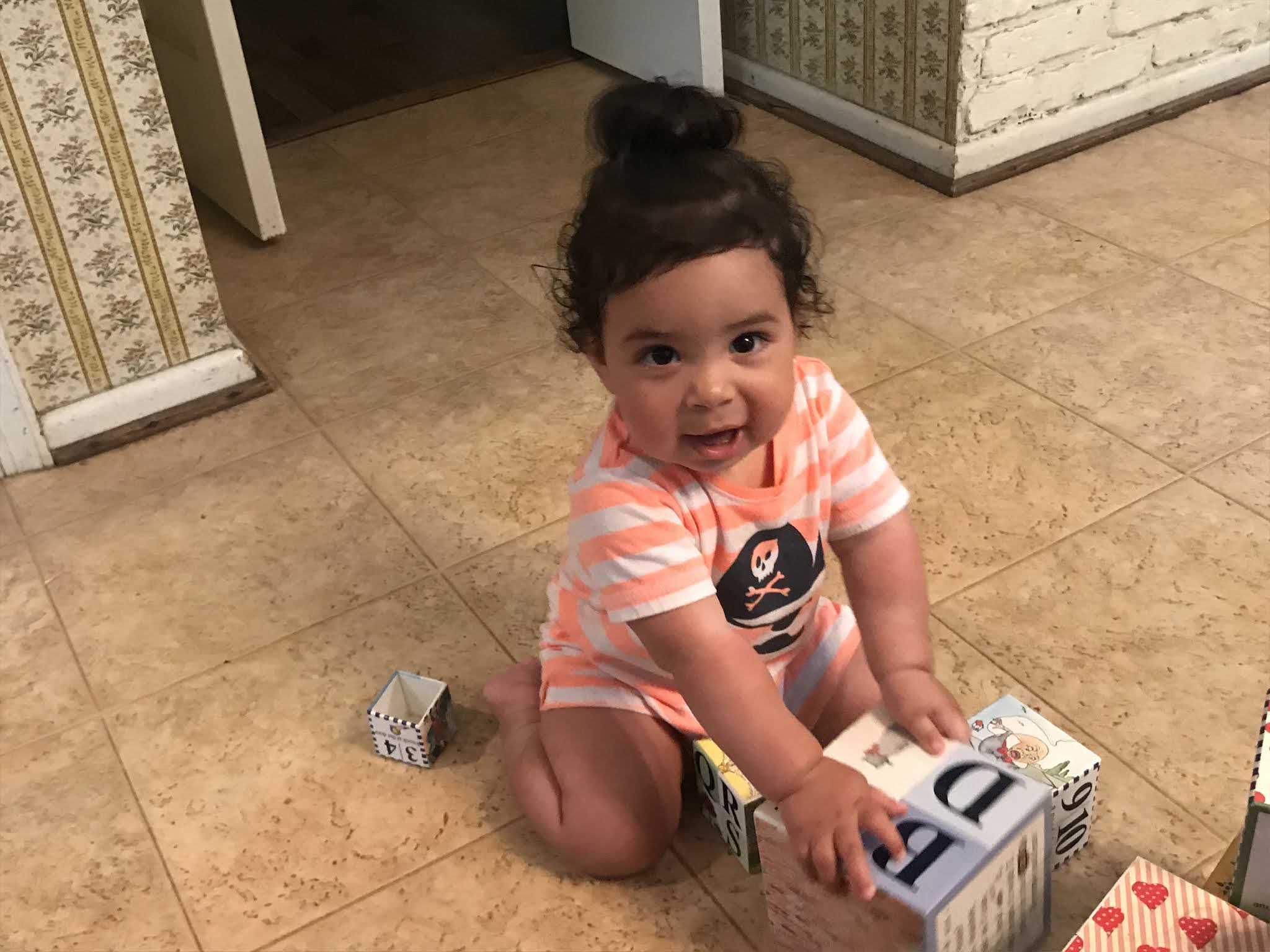
(Copper posing on one of the carpets that is not being cleaned today.)

Planting Seeds

Planting Seeds

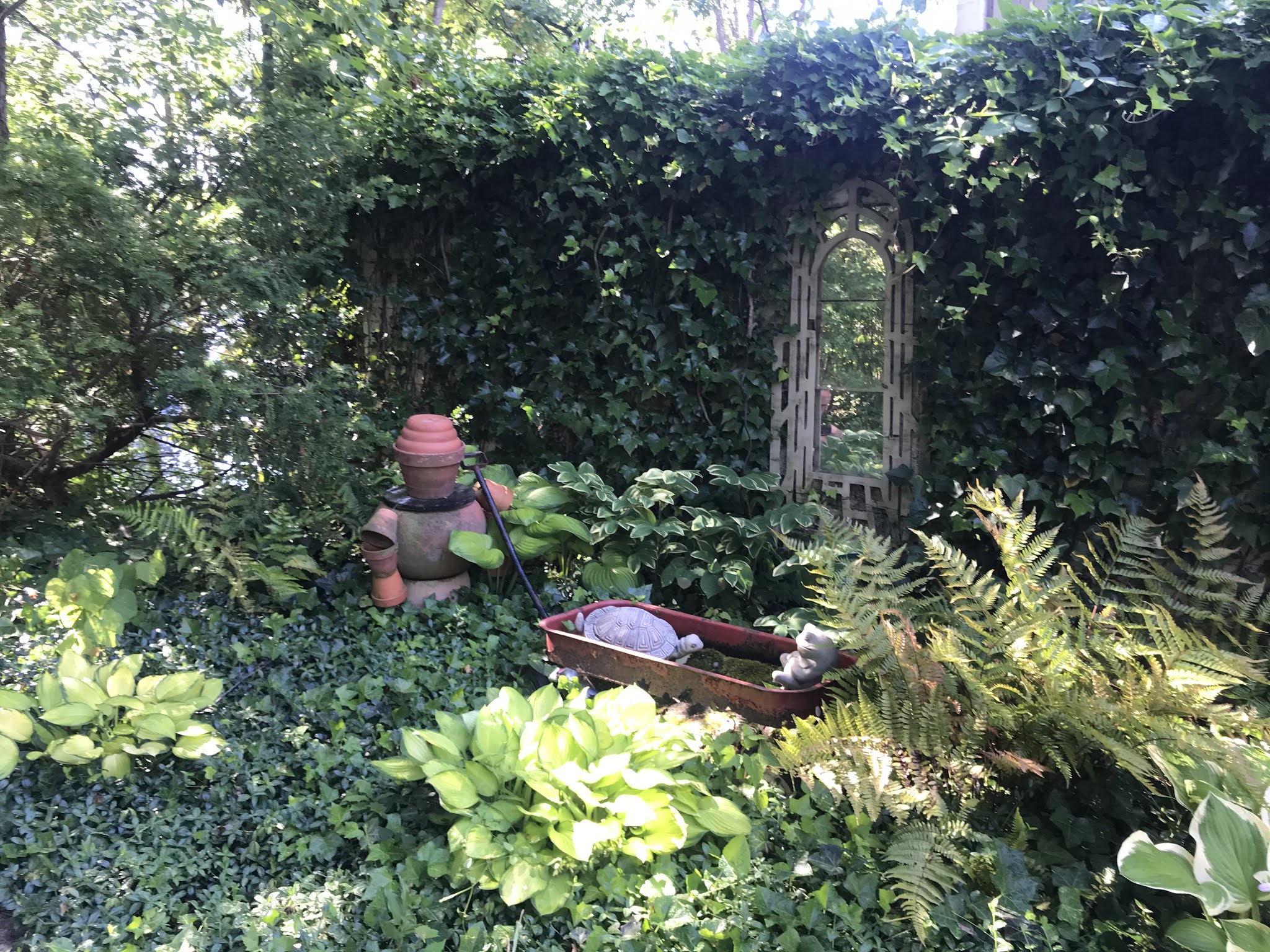
As the great trees have fallen, the yard has grown brighter, able to support sun-loving plants.  Shade still rules the back of the lot, but it’s a more open place than it was ten years ago. 

Zinnias are old-fashioned flowers that like the sun.  They, like the recently transplanted knock-out rose, are the silver lining in the oaks’ demise. You can sow zinnia seeds directly in the soil when the ground is ready in spring. Which means I ventured out over the weekend, when the garden was moist and tangled in weeds, to start what I hope is a small crop of zinnias. 

Planting, like painting, is mostly about preparation. In this case, the preparation was weeding: ripping wild strawberry and mint from the flower bed; pulling the weed du jour, a tall, gangly stem topped with a baby’s breath-like white flower; and digging up wild onions and dandelions.  

Once I’d made room, I shook the seeds — the chaff, really, because that’s all it seemed — into my palm. How insignificant, barely more than pocket lint or specks of dirt with dust attached. But I spread them evenly and covered them with a light blanket of top soil. 

Surely planting seeds is the ultimate act of faith. If these wee, floaty things produce flowers I will be the most surprised one of all.

(Photo: Wikipedia)

Calm Start

Calm Start

The world outside my office window is brown and green and gray, a palette of soft colors for a foggy morning.

I woke to the sound of an early bird, a cardinal perhaps. But since that first song it’s been still and quiet, a calm start to what I hope is a calm weekend.

It’s time to get caught up on errands both inside and outside the house, time to collect myself before the changes to come.

Redbuds!

Redbuds!

Every year I obsess over a new type of spring bloom. This year, it’s the redbud tree. I’ve admired them forever, of course. On the long drives to Kentucky I would see wild ones blooming in the mountains, sometimes whole swatches of them coloring the hillsides.

Unlike the delicate cherries of early spring, the redbud is vibrant, bold — an azalea-hued plant that doesn’t wait till late April to show its bright color. 

I’ve photographed several of them lately and covet one for the yard. I have just the spot for it. 

The Sprawl

The Sprawl

Jason Diamond is a child of the suburbs, and in The Sprawl: Reconsidering the Weird American Suburbs, he writes about them with mixed but ultimately fond feelings, realizing the idea of comfort and security they have given him.

Which doesn’t mean he didn’t escape them as soon as he could. But he does come to terms with them, something I’ve been trying to do for years in my own, still-living-in-the-suburbs way. 

Diamond seeks to understand suburbs by visiting them — Levittown, New York; Roland Park, Maryland; Lake Forest, Illinois; and Fort Lee, New Jersey — and by analyzing movies and songs and books about them — William Gibson’s Neuromancer, Rakesh Satyal’s No One Can Pronounce My Name and one of my favorite films, “Ladybird.” 

The Sprawl is another book I picked up at the library, so serendipity was involved, and though it’s not the most lyrically written book on place, I like the no-holds-barred way Diamond describes its effect on those creative souls who grow up in places like, well, Oak Hill, Virginia: 

“Suburbs in the postwar era were built with homogeneity in mind, and nothing develops a sense of not belonging like telling somebody they have to fit into a mold. While it’s impossible to figure out the roots of each and every case of suburban alienation, stepping back and seeing that there’s something downright strange about the actual concept of the modern suburb — how it’s built and the psychological impact it can have on people — isn’t nearly as hard.”

Seeing Mom

Seeing Mom

I find it interesting that to me the most fascinating character in Ken Burns’ new documentary “Hemingway” is not Papa H himself (though I realize I’ve not read many of his short stories and most of his nonfiction), but Edna O’Brien, an Irish novelist who shines as one of the talking heads Burns uses so beautifully.

O’Brien is calm but intense, and her comments cut to the quick of Hemingway’s novels. In one of her earlier appearances, she takes on detractors who say that Hemingway hated women and wrote adversely about them. 

To answer these criticisms, she reads a passage from Hemingway’s short story “Up in Michigan,” considered scandalous when it was published. The passage occurs near the end of the story, after a sexual encounter that the female character did not want, and O’Brien reads it slowly, the camera panning down to her hands, which gesture slightly as she reads the words with that Irish lilt in her voice. 

I don’t see O’Brien then but my mother, who was roughly O’Brien’s age when she died. I see the same set of the jaw, the same hair, full and of a color not found in nature. The same unbridled truthfulness. 

Mom was a writer, too — though most of her stories were never told. 

(In honor of O’Brien and Mom, a photo of the green fields of County Clare.) 

Impressionistic View

Impressionistic View

Most days I have little choice about which walk I take. I have 30 or so spare minutes, and I sandwich in a stroll between meetings and deadlines, taking the most expedient route — the one out my front door, down the main drag in the neighborhood and back.

But yesterday, I had a little more time, so I picked a paved path that runs along the Fairfax County Parkway because it afforded the best view of blooming Bradford Pear and Redbud trees. I’d been seeing white petals blowing in the breeze like so many springtime snowflakes, and I figured if I was going to see the pears, I’d better do it soon.

The parkway path provided a broad-stroke, Impressionistic view of spring, the kind seen from a distance. It made me feel as if I had traveled far, when actually I was only a few miles from home.

Blue Sky

Blue Sky

In group meditation, we are visualizing creativity as blue sky and a spark of clear spacious light that expands and grows until it covers the universe. 

This is easier said than done. Into the mind comes the grocery list, the calendar, the need to notify team members that I’m off today. Blue sky vanishes behind clouds of my own silly making, which is what it always does. Because clouds are almost all of my own making. 

But today I’m stepping away from calendar and duties, hoping to spend as much time as possible outside, under the real sky, which is, as it turns out, mostly blue today.

Easter Saturday

Easter Saturday

I write today as the eggs are boiling, before the bulk of the cleaning starts and the cake goes in the oven. There will be 16 people here tomorrow. That’s a big gathering when the number is usually two. 

And it’s a big moment in this slow return to normalcy. It’s not exactly like the opening of the gates in Oran from Camus’ The Plague. Our experience with disease has been longer but less acute than what those poor fictional souls experienced. 

But it’s been enough, thank you very much. And our hope that this might be the beginning of the end will make tomorrow’s alleluias ring out all the louder. 

The Alignment Problem

The Alignment Problem

Maybe it’s because I’m going back to school in September and must get some practice reading books I don’t totally understand, but for some reason I was determined to finish The Alignment Problem: Machine Learning and Human Values, by Brian Christian. I picked it up from the “New Nonfiction” shelf a couple of months ago, and thanks to my library’s liberal renewal policies, I have it still. 

I could tell from the beginning that I was in a bit over my head with this tome, which, though written engagingly, presupposes knowledge of artificial intelligence that I do not have at my fingertips. But it seemed like an important book on an important topic so I plowed through it. 

I finished it last night and, after using the index to flip back and forth to various definitions I spaced out while perusing the first time, was at least able to understand what the alignment problem is and why it’s important to solve it. 

The alignment problem is a term in computer science that refers to the divergence between the models we have created and the intentions we have when creating them, often imprecise or incomplete. It is, Christian assures us, a problem that the AI community is working to understand and rectify, but is by no means solved. 

Instead, he says, “We are in danger of losing control of the world not to AI or to machines as such but to models. To formal, often numerical specifications for what exists and what we want.”

We must be concerned, Christian says, but not grim. “Alignment will be messy. How could it be otherwise? Its story will be our story, for better or worse. How could it not?”