Browsed by
Author: Anne Cassidy

Backward Glance

Backward Glance

I’m big on the backward glance, on analyzing what has happened, on figuring out from it what might be to come.

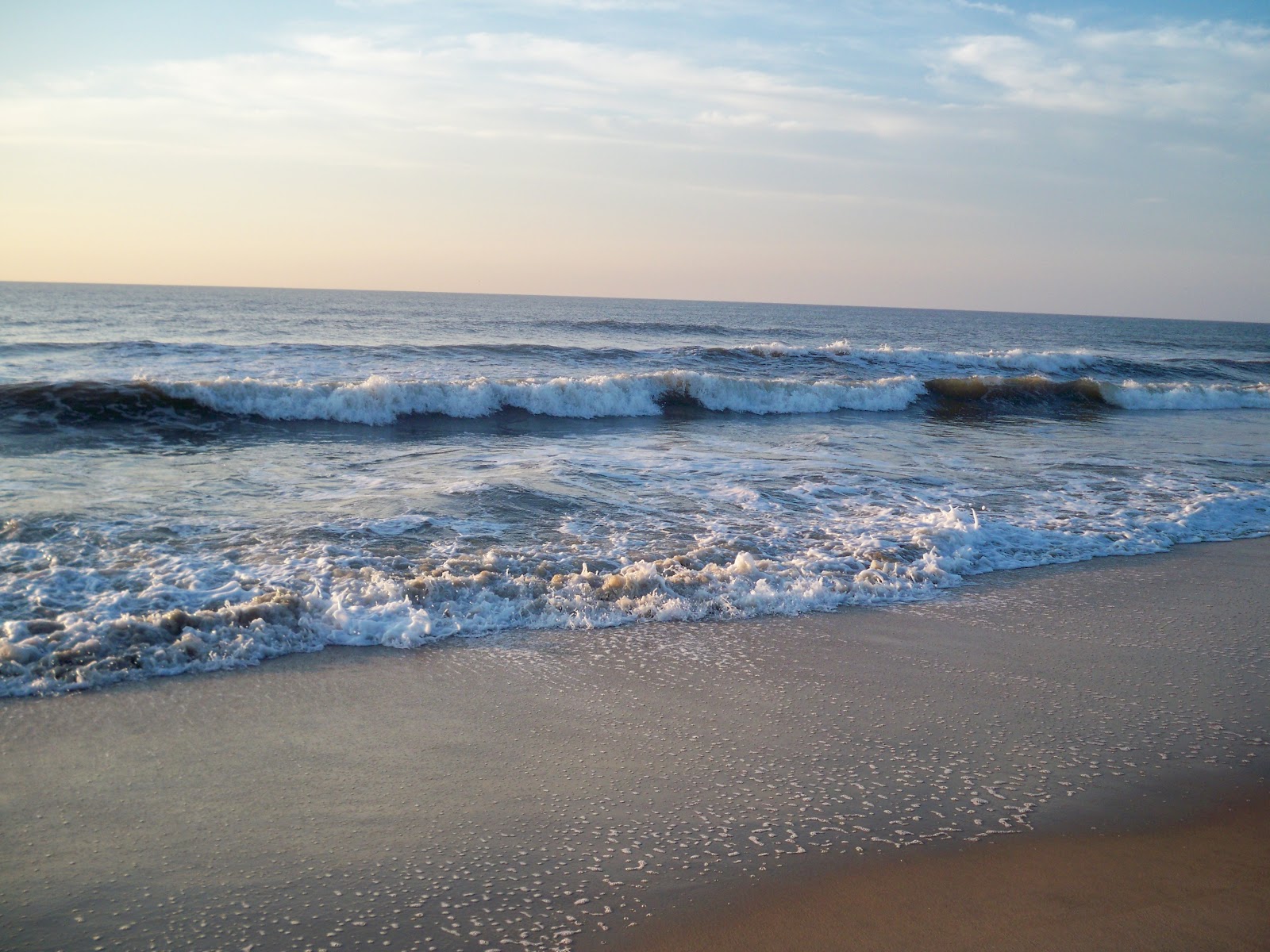
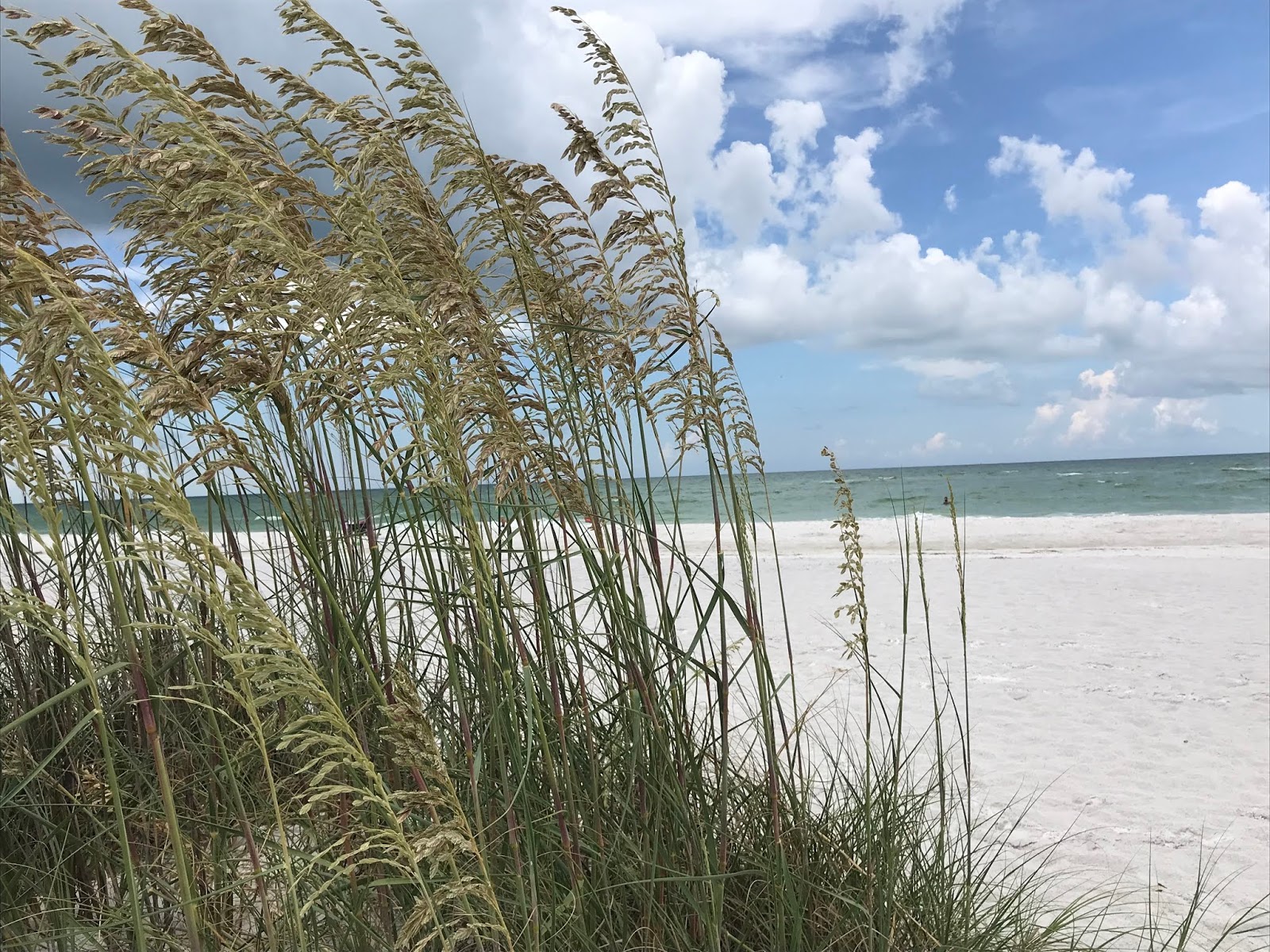
This does not go away when I’m at the beach. But it softens a little, like a once-crisp cracker at an al fresco lunch beside the waves.

At the beach it’s easier to see the back-and-forth of things, the ebbs and flows; easier to trust that all will be well.

I’m always looking for lessons, even from vacations. And that’s what this beach week is showing me: Clouds will pile up in the east, will show themselves as rain-makers by the dark slant beneath them. They will come this way, will empty and pass. And then … the sun will come out again.
Shell Art

Shell Art

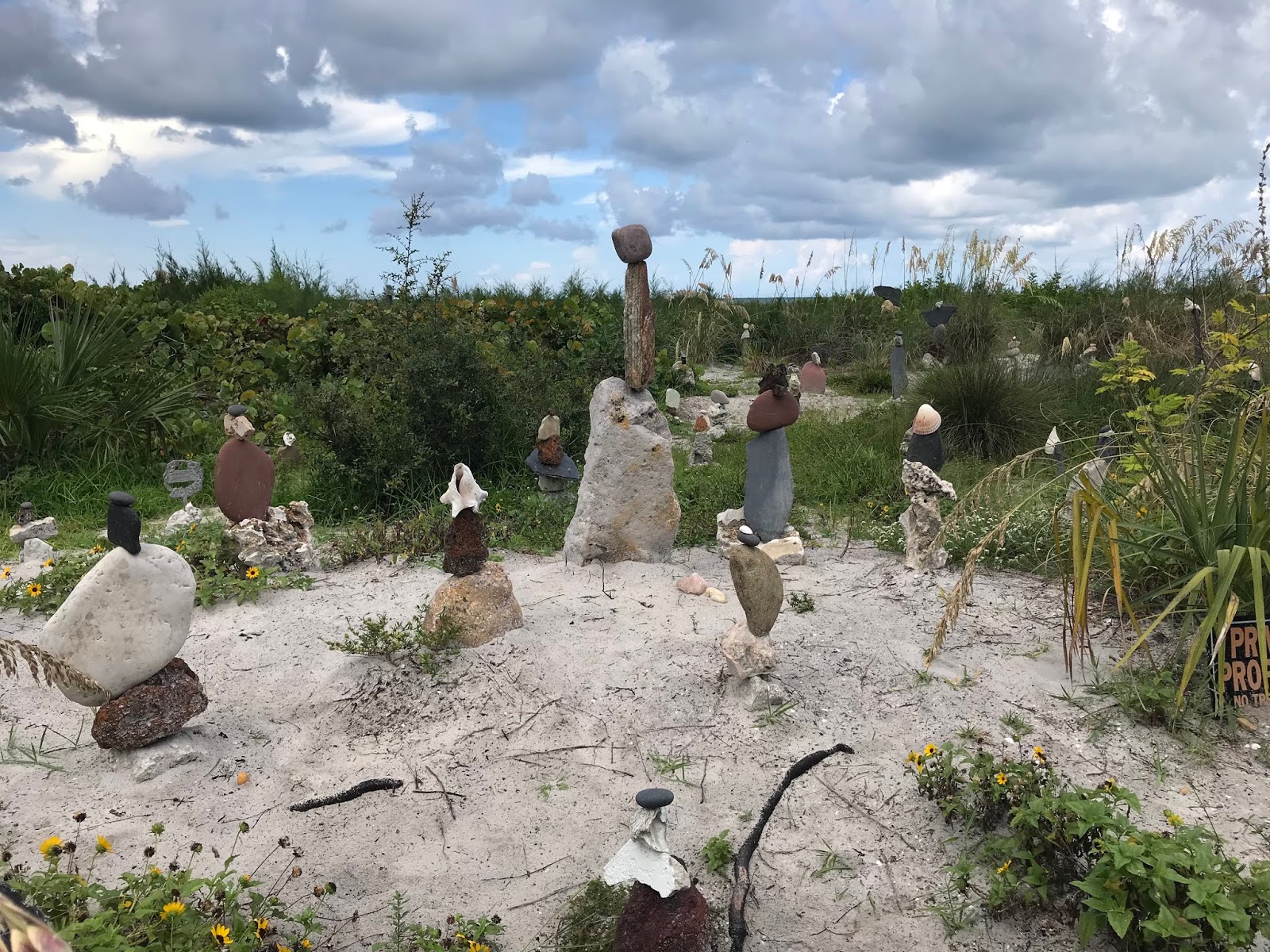
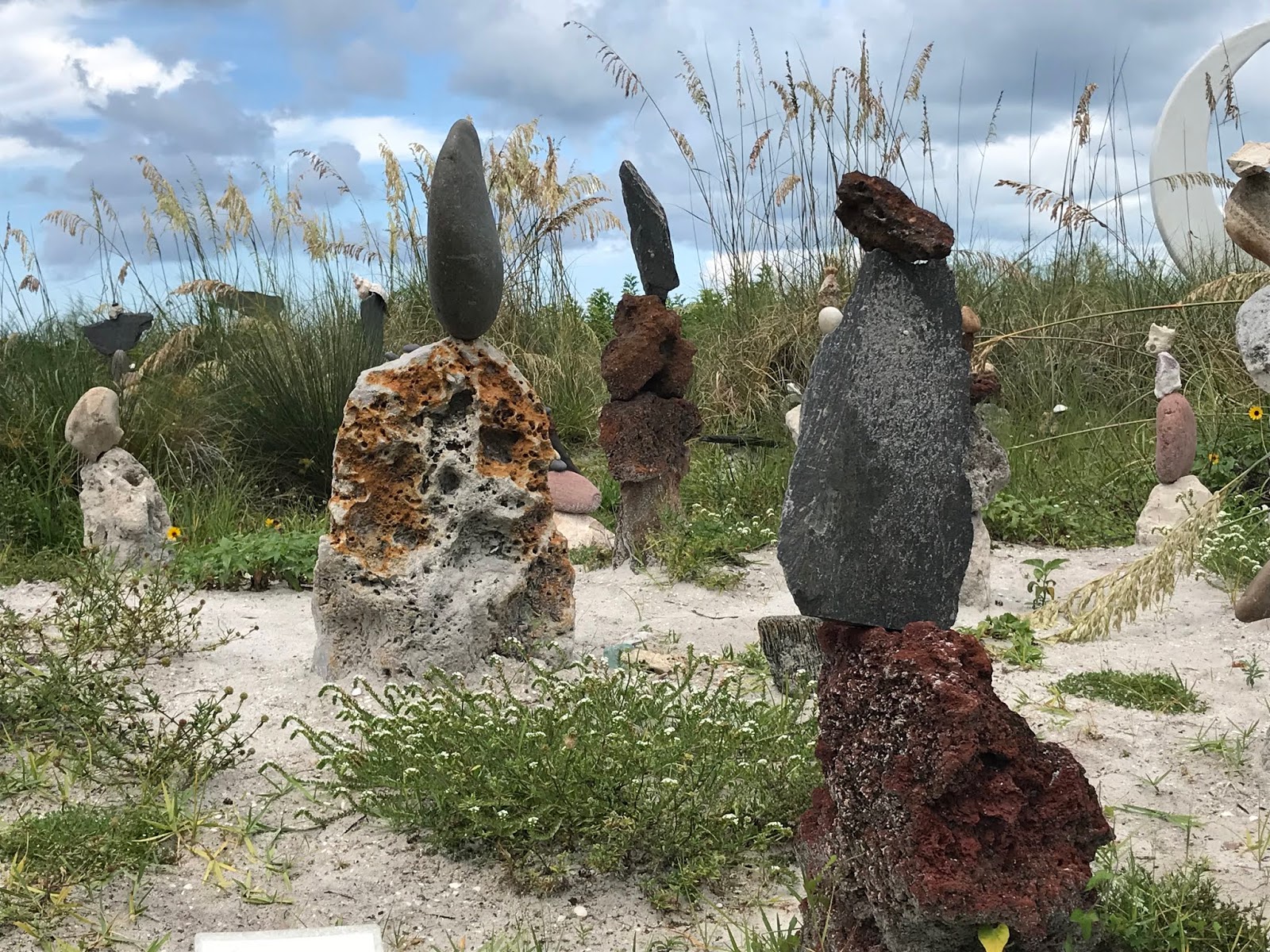
If rocks and shells could talk, these would laugh, whistle and shout. Look at us, they’d say. Someone has picked us up off the beach, spiffed us up, cast us as heroes in a crazy beach novel.

Here we are telling a joke:

Here we are sharing a tale:

We have no idea why we were willed into being, what our creator has in mind for us. But for now, we are alive and transformed on this Gulf Coast beach.

Dipping my Toes

Dipping my Toes

The sounds I heard outside this morning didn’t make sense. Were the taps and creaks from errant branches, from the building warming in the tropical sun? Only when I looked out the window did I see the rain.

It doesn’t matter; I have plenty to do inside as well as out. I brought books and notes and half-finished essays. Brain food. Things to think about and read.

A trip to the beach rests the body and the mind. So I sleep more, worry less (or try to!) and ignore weather reports. How long will it rain? The clouds are dark, but I see some blue. Did the storm break the humidity?

Only one way to find out. I’ll finish this post and my morning pages, then dip my toes into the day.

Grounding

Grounding

I had no sooner written about Japanese forest bathing than I read about “grounding,” which is … walking outside barefoot. Grounding, also known as “earthing,” is a way of touching base with the essentials. Those who favor it say that it might help prevent chronic diseases, and research shows that it can improve sleep and lower stress.

Sounds touchy-feely (in more ways than one!) … and yet, consider this: One theory that explains the positive effect of grounding is that earth’s negative charge neutralizes the free radicals that can damage our cells. Antioxidants not from fruits and vegetables but from the earth itself.

And then there is the circadian rhythm aspect of grounding, the fact that touching ground can help regulate our autonomic nervous system, our breathing out and our breathing in.

The article in the Washington Post explaining this research ended with suggestions: Walk barefoot on ground or sand (something I’ll be doing in a few minutes, as a matter of fact!). Garden in the earth, or even lean against a tree trunk.

We are only beginning to understand how connected we are to the natural world around us.

Tropical Morning

Tropical Morning

Here a rustling in the brush means a lizard not a squirrel. And the birds are different, too, though they still rub their beaks clean against a dead tree limb in that quick one-two way, just as the birds do at home, as birds do everywhere, I guess. 
There’s a loud clattering behind the palms. A lizard, too? Or maybe a squirrel after all. Maybe there is more familiar here than it first appears.
I’m sitting by the pool before 8 a.m., writing these words. A dove coos. Birds tweet. Air conditioners hum. The sounds of a tropical morning.

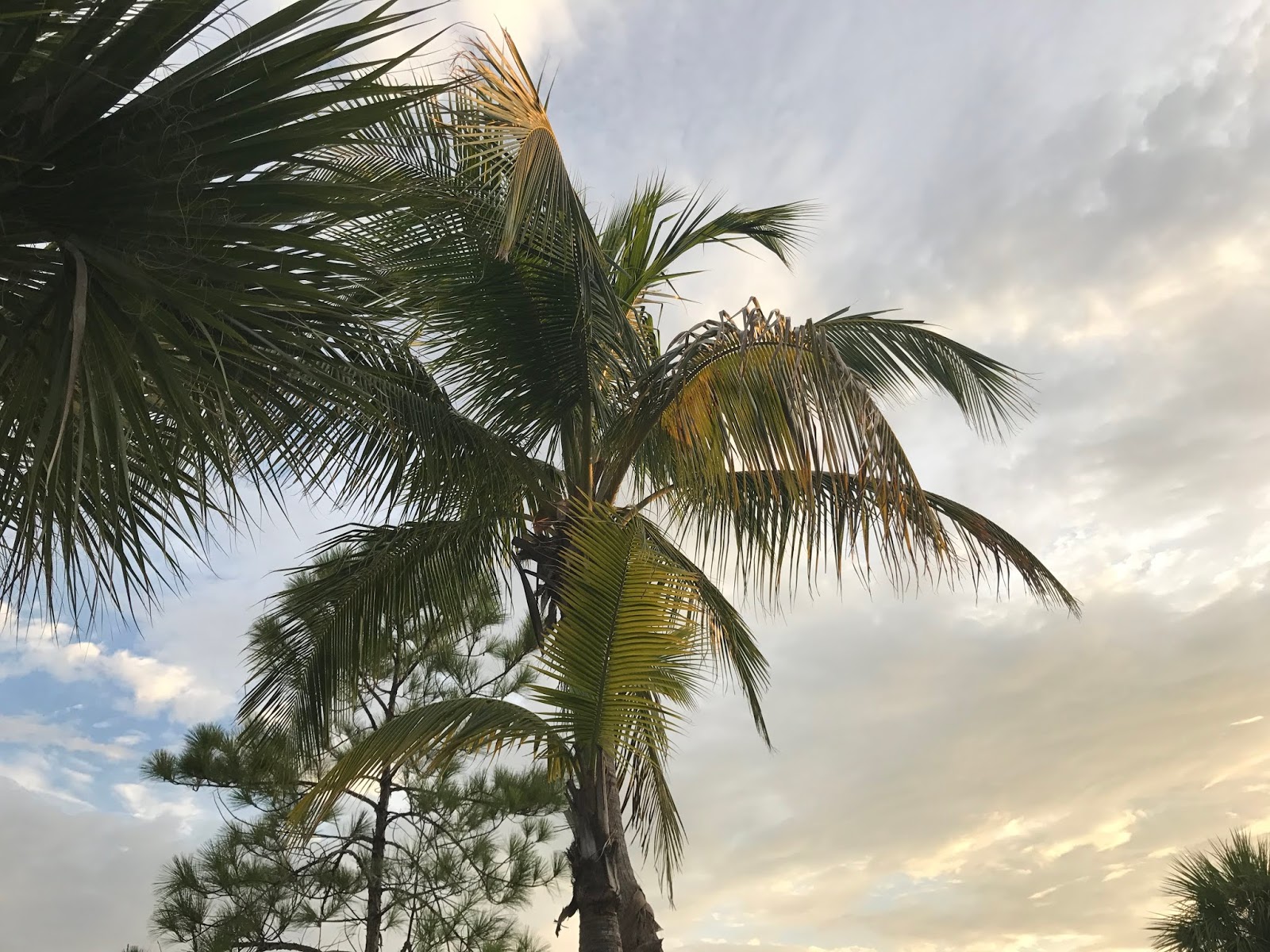
I’m looking at a tall banana tree now, at a big leaf in the process of shredding. A plant that bends  but does not break. Palm trees don’t crash to the ground in a tropical storm. They sway but stay rooted. That would be different, not having to worry about the great oaks falling.

Would I tire of the sameness here? Maybe … or maybe not.

Giant Exhale

Giant Exhale

Arriving at the beach brings a giant exhale. Here is the hotel where it always is, the bikers and walkers, the crowd outside the ice cream parlor. Here is the tropical air, the palm trees swaying, the lizards darting.

The rhythm of the surf is the rhythm of life. To walk beside it is to feel alive again, tasting salt spray and dodging sea birds. Finding my pace beside the waves, advancing as they retreat.

This time of day I’d be settling into my desk for the day, opening files, penciling in priorities, gearing up for our Monday morning meeting.

But not this Monday. Today is the first day of a week without days, without beginnings and endings. I’ll tell time by the slant of sun on water, hunger by a growl in the stomach.

I brought a journal and books, bathing suits and sun screen.

What more do you need?

Two Thousand Five Hundred

Two Thousand Five Hundred

We come now to one of those round numbers I like to celebrate. This one is 2, 500.  I’ve written two thousand and five hundred posts since February 7, 2010.

I began A Walker in the Suburbs during a blizzard. Now I sit outside on the deck, stealing a few minutes from my paid writing day, watching hummingbirds dive-bomb the feeder and listening to cicadas as they pulse with crescendoing sound.

Copper lies nearby at the top of the deck stairs, ever alert, gunning for the squirrel who dares to invade his turf. A gentle breeze ripples the bamboo leaves and the new buds on the rambling rose, which has come back to life as quickly as it appeared to die.

I have no idea why the rose dropped its leaves and no idea how it’s growing them back, but it’s a lovely metaphor for persistence and renewal, two principles of Walker in the Suburbs … which I will put to use as I write the next 2,500 posts.

(Photo of the St. Louis Arch, “Gateway to the West,” by Suzanne Abo)

Forest Bathing

Forest Bathing

Shinrin yoku — Japanese for forest bathing — is the practice of immersing one’s self in a forest or other natural environment to relieve stress. Practitioners walk slowly through the woods, marveling at the shades of green.They aren’t there to bike down a hill or hike up a mountain. The journey is their destination. It is enough simply to be outside, to inhale the scent of pine.

I like the imagery involved, the idea that one can slide into a forest as if into a tub of warm water.  That its beauty will surround and calm and lift up.

A walk in the suburbs is not always a bath in the forest. It’s too fast, too purposeful. Often, there are no forests involved.

But even the briefest and most cursory stroll works its magic. I leave the house with fists clenched, brow furrowed. I return renewed and refreshed, reminded that we are not just creatures of rooms and screens. That after all, we are born of earth and will return to it, that every visit there is going home.

Science and Miracles

Science and Miracles

“We are not sure if this was a miracle, a science or what,” wrote the Thai Navy seals of the rescue they had just brought about. I would say the recovery of the 12 boys and their coach from a Thai cave  was all of the above, first the miracle, then the science, then a mishmash of both.

That the world’s attention could be riveted on those 13 unfortunate people, that help could flow in from all corners of the globe, is in itself miraculous. We’ve gotten used to these stories, a little girl falls down a well and we will move heaven and earth to retrieve her, that the wonder of it all, that one story so captures our imaginations that it leaps out from every other shred of news, can be overlooked. But it is a wonder.

And then there was the technical cooperation required to mount the rescue, the assembling of people and equipment, the science part, the daring escape. I think about my own limited caving experiences — crawling between two large slabs of rock in the dark, the beam of my headlamp on pocked stone, thinking all the while what it would be like to be pinned between them. No wonder we marshaled every bit of expertise we could to help the youngsters.

And finally, there is the communal joy that is bigger than politics, bigger than soccer, bigger than national pride. That’s miraculous too.

(Photo: Wikipedia) 

On the Way Home

On the Way Home

We file out in khaki and denim, in summer cottons and linens. Battalions of commuters on the march, back from our first day after long weekends and festive 4ths. Back to the artificial chill of the D.C. cubicle. Back to the train and the bus, to waiting in the swelter.

Leaving Vienna yesterday, I spot a happy Metro employee. He’s wearing short sleeves, bounces when he walks. The trashcan he pushes has wheels and makes a sound on the tile floor not unlike a train clacking on its rails. He walks against a sea of commuters.

We are the tired ones, worn out from our office jobs, from moving the mouse, from having the meeting. He looks fit and happy and ready to go.

I hear his clickety-clack as I move out of the station, into the early evening, and my car. I want to compare our lives but I have no way to do so. He is moving one way, we are moving the other. That’s the story.