Browsed by
Author: Anne Cassidy

Happy Easter!

Happy Easter!

The trees are at their loveliest. “Nature’s first green is gold, her hardest hue to hold.” The azaleas shine out in their jewel tones, and there are buds on the rose bush by the deck stairs.


The refrigerator is stuffed with au gratin potatoes, deviled eggs, ambrosia salad, baked turkey — and asparagus and lamb that will be roasted today. Behind me, the smell of chocolate wafts from filled Easter baskets.

Soon it will be time to navigate the parking lot at church in hopes of scoring a seat at the 9:15 mass, to hear the words of that old story that is sometimes hard to believe but today seems completely possible. Soon it will be time to greet the family and friends coming here for an afternoon feast. 
But for now, for these quiet early moments, I have Easter all to myself.

(Mission San Xavier del Bac, Tucson, Arizona, built in 1797)
Work of Redemption

Work of Redemption

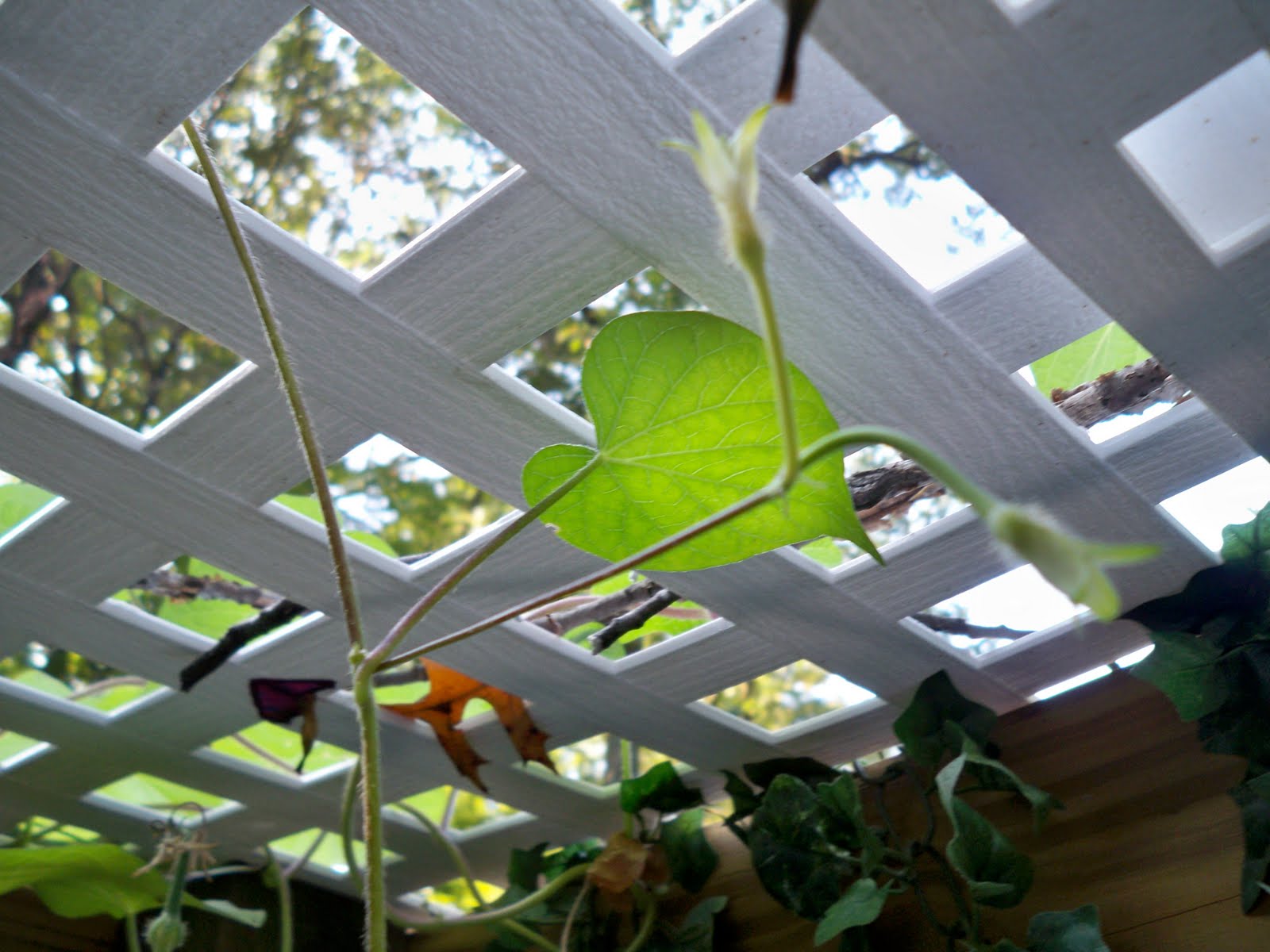
Trotting down the road this morning I looked to my right, at the trees just greening in the forest. Little leaves still so young, so tender. They were shining with the effort and the touch of early light.

Maybe it was the music playing in my ears at that moment, a string trio by Mendelssohn, or maybe it was the release of a work week’s tension, but I was suddenly overwhelmed by the bravery of those leaves, by the work of redemption they perform every spring.

Of course, there’s a biological explanation for what they do. I vaguely remember it from high school biology class.

But for me, the biological becomes the metaphorical, just as the walk becomes the lodestone, the anchor of a day.

View from a Ramada

View from a Ramada

Driving from Tombstone to Bisbee last week the wideness of the West really hit me. Not the wildness but the wideness. The openness. It’s what I crave when I’m here in Virginia.

But when I was there, I felt exposed. Where were the trees, the hollows; where could I sit quietly and take in all this grandeur?

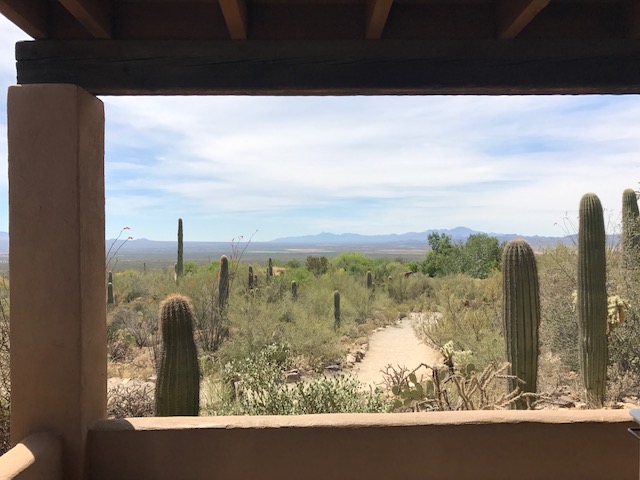
If shade does not come naturally, then it must be created. And so it is. At the Desert Museum I learned a new meaning for the word “ramada.” In the Southwest, a ramada is a open shelter, a roof with no walls. Made of reeds or brush or wood, it is the native way of putting a layer between one’s self and the sun.

I snapped this shot from a ramada in Tucson. It gave me a frame, a vantage point — a cool, sequestered way to take in the day.


The Art of Memoir

The Art of Memoir

At a gathering last week I was asked if I write memoir. It was a congenial group of bird-watchers at the Ramsey Canyon, and the discussion had veered from the black-crested titmouse to medicine and writing and the screen habits of young children.

No, I said. I’m a private person, and we live in a confessional age. What I didn’t say was that I devour memoirs, I share memoir-ish details in this blog — and right now I’m reading Mary Karr’s book The Art of Memoir.

Karr, the author of bestselling memoirs The Liar’s Club and Lit, has mastered the form and has much to share. Here she is on voice:

Voice grows from the nature of a writer’s talent, which stems from innate character. Just as a memoirist’s nature bestows her magic powers on the page, we also wind up seeing how selfish or mean-spirited or divisive she is or was. … So the best voices include a writer’s insides.

And here she is on sharing internal agonies:

Unless you confess your own emotional stakes in a project, why should a reader have any? A writer sets personal reasons for the text at hand, and her struggling psyche fuels the tale.  

These wise observations plus a list of titles I now want to read — Nabokov’s Speak Memory, Maxine Hong Kingston’s Woman Warrior and Tobias Wolff’s This Boy’s Life — have made this book worth chalking up a few days worth of late fees from the library.

Sky Islands

Sky Islands

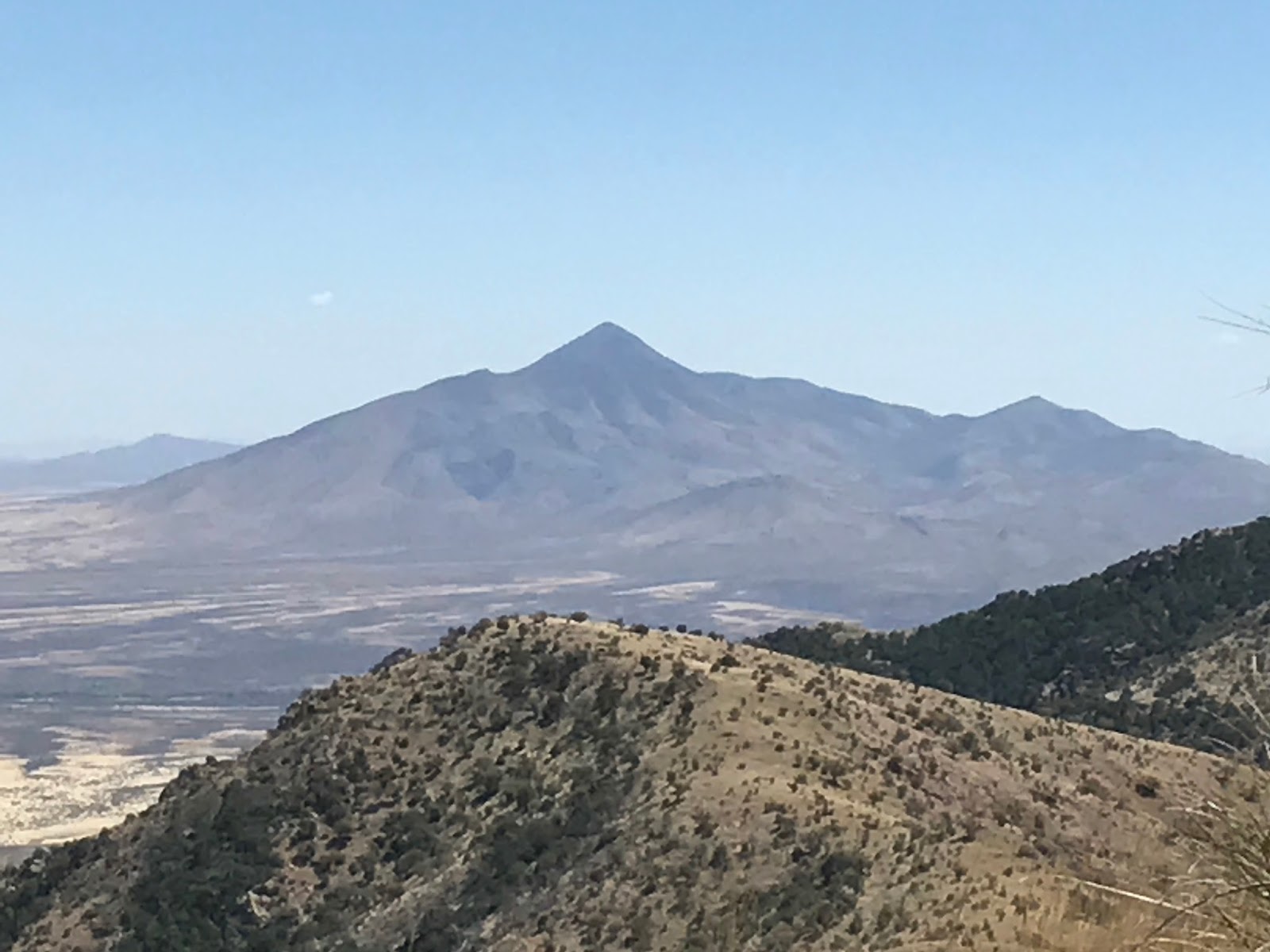
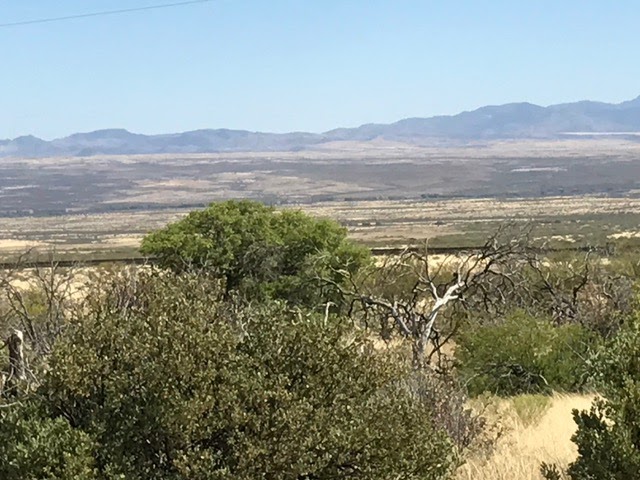
A sea of grass and plain. A valley of succulents. And then, seemingly out of nowhere, a mountain. And not just any mountain, not a rolling hill like those in the East, but a pointy-topped peak that shouts its difference from the surrounding terrain.

I’m still absorbing the sights of a week in the geological region known as Basin and Ridge, an area that takes in all of Nevada, much of Arizona and parts of Utah, New Mexico and California. It’s caused by tectonic plates sidling rather than colliding — or at least that’s what I can remember from Tom Clancy’s explanation (not Tom Clancy the novelist but Tom Clancy the Ramsey Canyon tour guide).

What matters now are the memories I have of those sky islands, the panoramic view off the ridge of Geronimo Pass in Coronado National Memorial or the piney forests of Mount Lemmon, forests made of trees that could not survive if they were plopped two thousand feet down at the same latitude.

It’s a lesson both expansive and tender, that we need what is immediately at hand but also what is far away, beyond the valley, where the next peak rises.

Altitude

Altitude

Attitude is everything, the self-help books tell us, and in many ways they’re right. But in the West, altitude is everything.

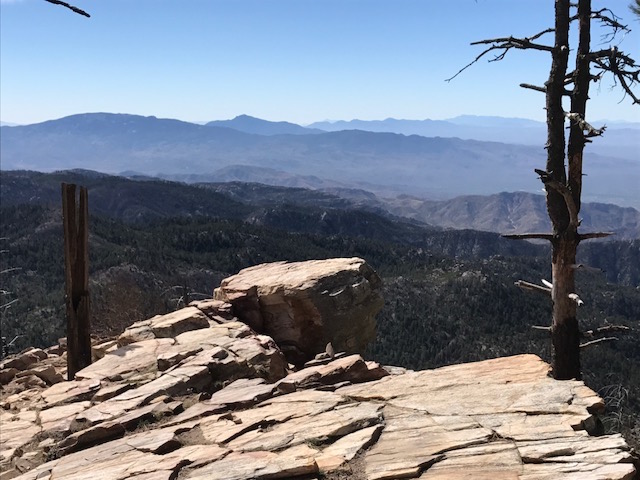
On Saturday, we drove to the top of Mount Lemmon, 9,200 feet. From a start in the Sonoran Desert, all prickly pears and Saguaro cactus, we ended up in a cool pine forest, with a few dead tree trunks thrown in from the Aspen fire, which happened more than a decade ago.

Every 1,000 feet gained is like traveling 300 miles north, said the helpful sign at the top of the trail. By that reckoning, we were somewhere near Banff, Alberta, Canada.

Not bad for a morning’s drive.

Desert in Bloom

Desert in Bloom

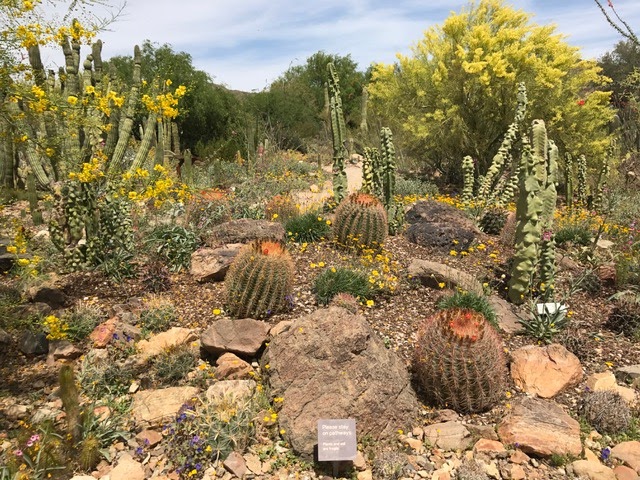
Yesterday at the Desert Museum, I saw more beauty than I could imagine: macro beauty and micro beauty. Should I go for the long shot or the short one? Simple: I go for both!

I shot pictures of javelinas (sleeping under the bridge), a bobcat, a Mexican jay — and every kind of cactus under the sun. And a powerful sun, too by the way, which makes its presence felt in every frame.

I have to leave the desert today, the desert in bloom. But I have hundreds of photographs and a few ideas riding home with me.


Bisbee 1000

Bisbee 1000

Bisbee, Arizona, is a funky old mining town built into a hillside with shops and houses tucked into nooks and crannies. There are no straight streets here. Which means that if you need to get from Point A to Point B you can walk a few blocks — or you can take the stairs.

The town is criss-crossed with stairways, some with railings and some without, some crumbling and some whole, some decorated and others plain. You might head up a flight thinking it leads to the street above only to find that it dead-ends at a lavender bungalow with Buddhist prayer flags flying.

I walked the Bisbee stairs yesterday — at least 1,000 of them, maybe more. In between I heard a man strumming a guitar in his carport, and a bird (a hermit thrush?) singing in a shiny green-leafed tree. I wandered into a church built a hundred years ago by men who worked a full shift in the mines then spent four more hours a day building a house of worship.

Stair-climbing builds character, as does life on the frontier. Arizona was the 48th state admitted to the union, which means its frontier days aren’t far behind it. Maybe that’s why it’s easy to imagine an earlier way of life here: a time when things weren’t quite as easy as they are now.

On the Border

On the Border

In southern Arizona a border wall is not a vague threat; it’s a reality. Or at least a border fence, a dark, menacing one that I spotted first from an overlook and then from a few hundred yards away.  A fence that people here call “the wall.”

Built to block the flow of humans and contraband, it’s doing a good job of containing animals, too. So Mexican wild turkeys like the one in yesterday’s post are less likely to be up this way now. And the lone male jaguar who’s said to haunt Ramsey Canyon will never find a mate.

The borderlands are rich in animal species that need to cross and recross in order to flourish. The wall has been hard on them. It will be hard on us, too.

Birders’ Heaven

Birders’ Heaven

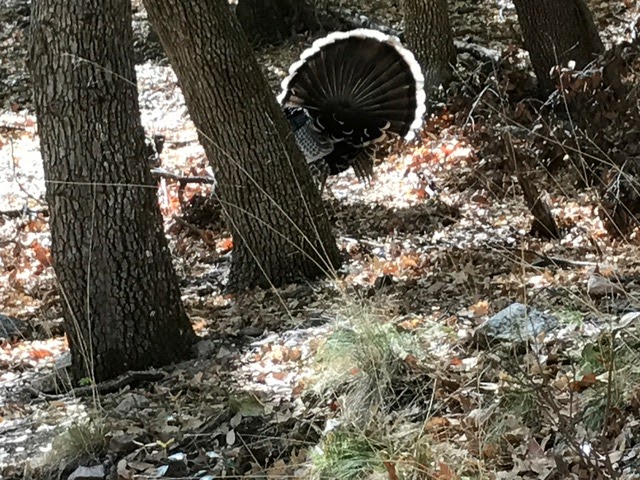
Ramsey Canyon is birders’ heaven, home to 14 species of hummingbirds — compared to the one or two we have at home — and plenty of other bird species that have crossed the border, like this Mexican wild turkey. He was courting the ladies and strutting his stuff.

He, of course, was an easy photographic target, large and slow-moving. Most birds are quicksilver flashes. To spot and identify them takes time, knowledge and patience — skills that I lack but skills that birders have in spades.

In fact, I wish I had a birder with me now to identify the flap of wings in the Emory oak, the source of the lovely song I’m hearing. Is it a hermit thrush? I’ve heard they live around here. I grab a bird book, look it up. Yes, it’s possible. It could be. And there’s just enough of the fudger in me to say, what the heck, let’s just call it a hermit thrush and call it a day.

Thanks to the birders we’ve met I can verify that I truly have seen an acorn woodpecker: hepatic tanager; calliope, blue-throated and broadbill hummingbirds; a white-winged swallow; Mexican wild turkey; Cooper’s hawk; a road runner; and a painted redstart, a “life bird” for many.

So from musing on birds, I come to musing on birders. What impresses me most about them is their dedication and gladness. They notice life around them. They savor its sights and sounds. They recognize its beauty.