Browsed by
Author: Anne Cassidy

Thirty

Thirty

Thirty years ago today, Tom and I were married in a snowy Lexington, Kentucky. We came here to Arizona to celebrate the day, and found colder than normal temperatures — but at least no snow!

A marriage is not just the union of two people; it’s also the beginning of a family, and today I’m thinking about the wonderful family that Tom and I have created. Three beautiful daughters, a new son-in-law — and a host of friends and connections.

It’s a web of relationships that sustain and nurture us, that make this day special in so many, many ways.

Seeing the Saguaro

Seeing the Saguaro

When I was a kid we drove along Interstate 10 on our way to southern California. I can remember seeing Saguaro cactus out the window, but there was never time to get out and walk among them.

Yesterday, there was time. Yesterday, the Saguaro were the destination. We learned about them, hiked around them, took pictures of them.

Saguaro are 20, 30 even 50 feet tall. They might be 70 years old before they grow a branch. Though  they’re found only in southern Arizona and parts of Mexico, they’re icons of the American West.

I wondered as I walked whether that’s why they seem so familiar. But there’s something else at work. Some of them reach out with open arms, others give a stiff salute. They look a little human out there, and in fact the Tohono O’odham Indians treat them as revered members of the tribe, not quite people but not quite cactus, either.

After just a few hours among the plants I can understand why.

The Righteous Mind

The Righteous Mind

In The Righteous Mind: Why Good People are Divided by Politics and Religion, Jonathan Haidt uses moral psychology to explain political polarization. One of his major points is that when we make decisions we may think conscious reasoning is in charge, but actually it’s just a puny human rider sitting atop a large, strong elephant (the automatic and intuitive part of our brains). The elephant almost always wins.

What does this have to do with politics? Actually it has to do with everything, but Haidt applies it to politics in this book by pointing out that we’re often unaware of the motivations that underlie our political choices and the narratives that bind us.

Published in 2012, this book long precedes the current political paralysis — but as I read it I had many aha moments. More than Hillbilly Elegy or any newspaper or magazine article, it explains how we ended up with the current resident of 1600 Pennsylvania Avenue.

It’s difficult to summarize the nuances of Haidt’s argument in one post, but here’s one of the passages I found most useful. “If you are trying to change an organization or a society and you do not consider the effects of your changes on moral capital, you’re asking for trouble. This, I believe, is the fundamental blind spot of the left. It explains why liberal reforms so often backfire … It is the reason I belive that liberalism — which as done to much to bring about freedom and equal opportunity — is not sufficient as a governing philosophy. It tends to overreach, change too many things too quickl, and reduce the stodk of moral capital inadvertently.”

What to do now? Most of all, try to understand ourselves and each other. And, of course, read. On my nightstand now: The Happiness Hypothesis, Haidt’s first book.
Finding the Source

Finding the Source

I’m skipping the cherry blossoms at the Tidal Basin this year, an annual ritual I haven’t missed in 10 years. This is in part because of the cold-stunted blooms this year and in part because I can’t easily walk to the show.

But cherry blossoms are everywhere. Even on my 12-minute walks around the block. And I’m not the only one who notices.

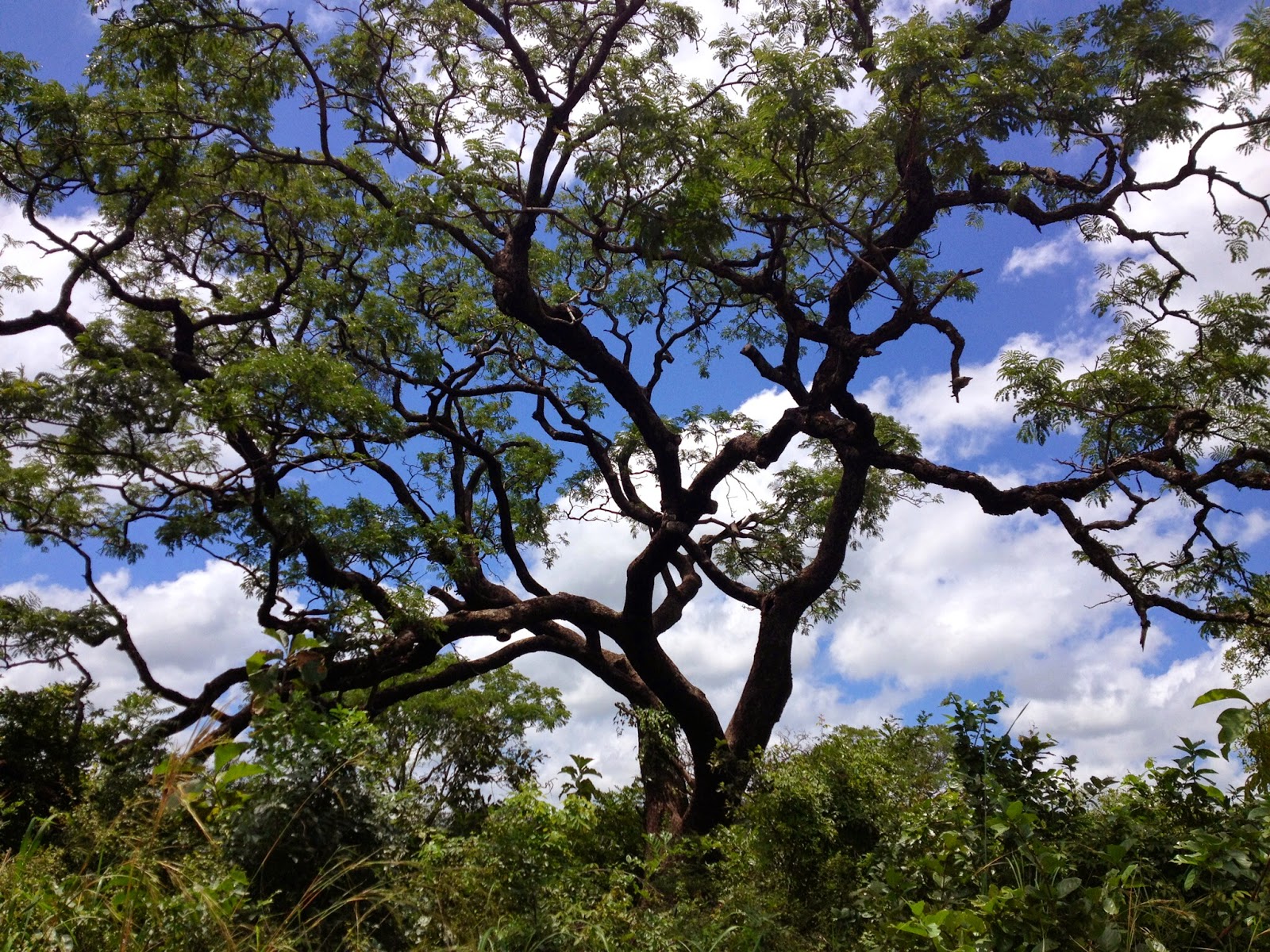
It’s not a matter of traveling to the source, but of finding the source wherever you happen to be.

Opportunities for Awe

Opportunities for Awe

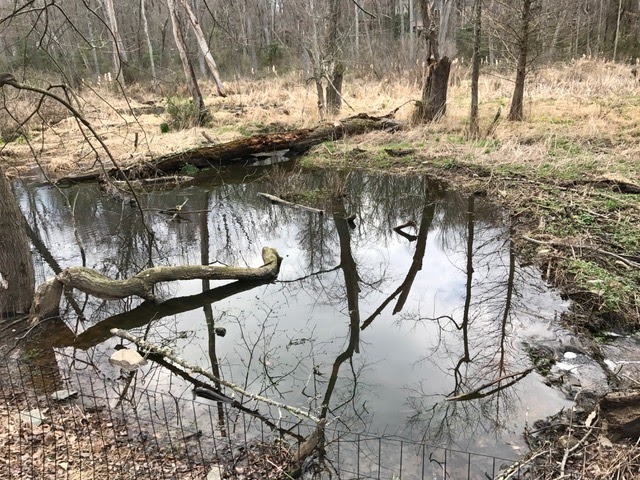
Yesterday’s walk took me along a Reston trail. It was late afternoon, balmy and blooming, with crows cawing in the swamp.

I thought about the name of this blog, “A Walker in the Suburbs.” I thought about how if you didn’t know my suburb, you might envision streets of sameness, void of nature and texture.

You might not imagine this immersion in a natural world: stream gurgling, peepers peeping, smell of loam in the air. You might discount the opportunities for awe.

Burrowing

Burrowing

I’d like to say the thunder woke me up, but I was already awake and reading when I heard the first clap. But it did jolt me, and, more to the point, it upset Copper so that he scratched on the door to be comforted.

I escorted him to the basement, his place of safety — though if he only knew how many precariously stacked books and boxes are down there he might seek higher ground.

But burrowing and sheltering have their appeal. I thought about this over the weekend when I draped a comforter over some chairs on the deck to air it out and was immediately reminded of the blanket forts my brother and I made when we were young.

How cozy they were, how beguiling, as if no one would ever find us, as if (it seems to me now), we would never grow up.

Georgetown Stroll

Georgetown Stroll

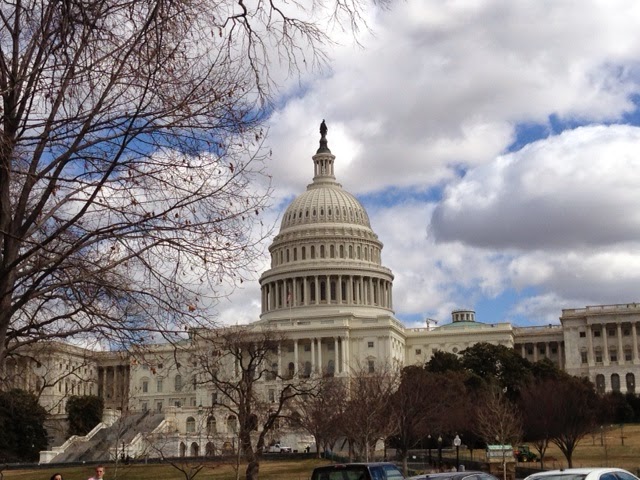
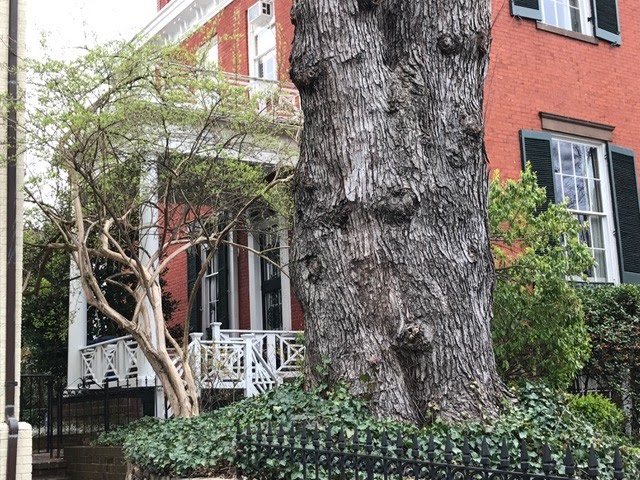
A Georgetown walk can be full of stops and starts. Crowds bustle and churn. Sidewalks narrow and buckle. Cars jockey for spaces.

This is one of the oldest parts of D.C., and it does not always hum to a modern pace. You can’t drive fast here; the four-way stops see to that. And you can’t walk fast here, either — at least not on a crowded Sunday afternoon.

But if you hit a lull, and the gods are with you, you can at least stroll. And if you do, this is what you see:

Sound Cues

Sound Cues

Our parakeets live in a world of sound cues. Even in the dark of early morning, even with their cage covered, they wake to the sounds of the day.

A pair of creaky knees coming down the stairs.  The jingle of a dog’s collar. The squeak of the back door as the dog is let out. The early wild birds waking with plaintive chirps.

And then there are the water noises: the filling of the kettle, the tea water coming to a boil.

I often keep them covered for a while because they’re so noisy, but they know when the day begins. They don’t doubt or second-guess themselves.

If only I could say the same.


(Sid and Dominique in 2012. Rest in peace, Sid, gone almost a year now. Instead of Sid there is … Alfie. And he’s another story altogether.)

Final Farewell

Final Farewell

First, it was the elephants. Then it was the clowns. Turns out, there was a good reason to feel sorry for the circus.

These are the final days of the Ringing Bros. and Barnum & Bailey Circus. Its last performances are in May, and the last ones here are next week.

I’ve never been a circus fanatic but there’s something so sad about the end of this tradition. I know, it’s kinda creepy and the opposite of PC. But it was a big deal before the advent of continual palm-held entertainment, something that linked the generations: my parents went, they took us and then they took my kids.

I wondered in my last circus post if this institution would be around in 20 years. I was off by 18. In little more than a month, it will be the end for the Greatest Show on Earth.

Evening View

Evening View

Now that we’re in Daylight Savings Time, I can bounce on the trampoline in the daylight, not the darkness. It’s more inhibiting, true. With tree cover still nonexistent this time of year, I have to keep my trampoline dancing moves to a minimum lest neighbors think I’m crazier than they already think I am.

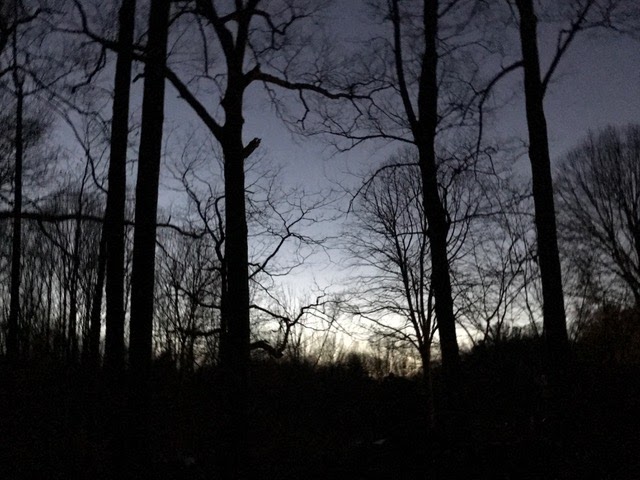
But what daytime bouncing lacks in concealment it makes up for in scenery.

As Copper ran around the yard squeaking his new yellow day-glow ball, I was treated to clear skies, a slow drain of color and finally … this view.

What a way to leave the day!