Browsed by
Author: Anne Cassidy

Paring Down?

Paring Down?

As the weather warms, the mind turns to thoughts of freedom and lightness and paring down.

My friend Kara told me about her decluttering guru, a person who not only helps you sort through your stuff and get rid of it but who also helps you deal with the emotional pull of your keepsakes.

This is a problem of affluence, right, that we should be so buried in our stuff, so loathe to part with it, that we must hire someone to tell us to throw it away?

Here’s the thing, though: I believe enough in this service, and in this person, that I’m afraid to seek her out. What if she actually does what she says? Am I ready to sift through the girls’ schoolwork from 2002? Or the boxes of old letters and birthday and graduation cards?

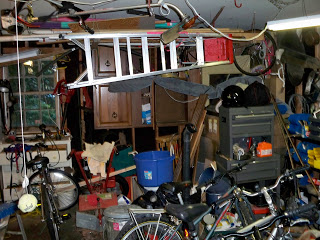
Motivation is what matters here. I want the final product — the fine, unfettered feeling — but I’m not ready to do what it takes to get there. So until then, it’s a full closet, full garage, full house.

Snowdrops: A Beginning?

Snowdrops: A Beginning?

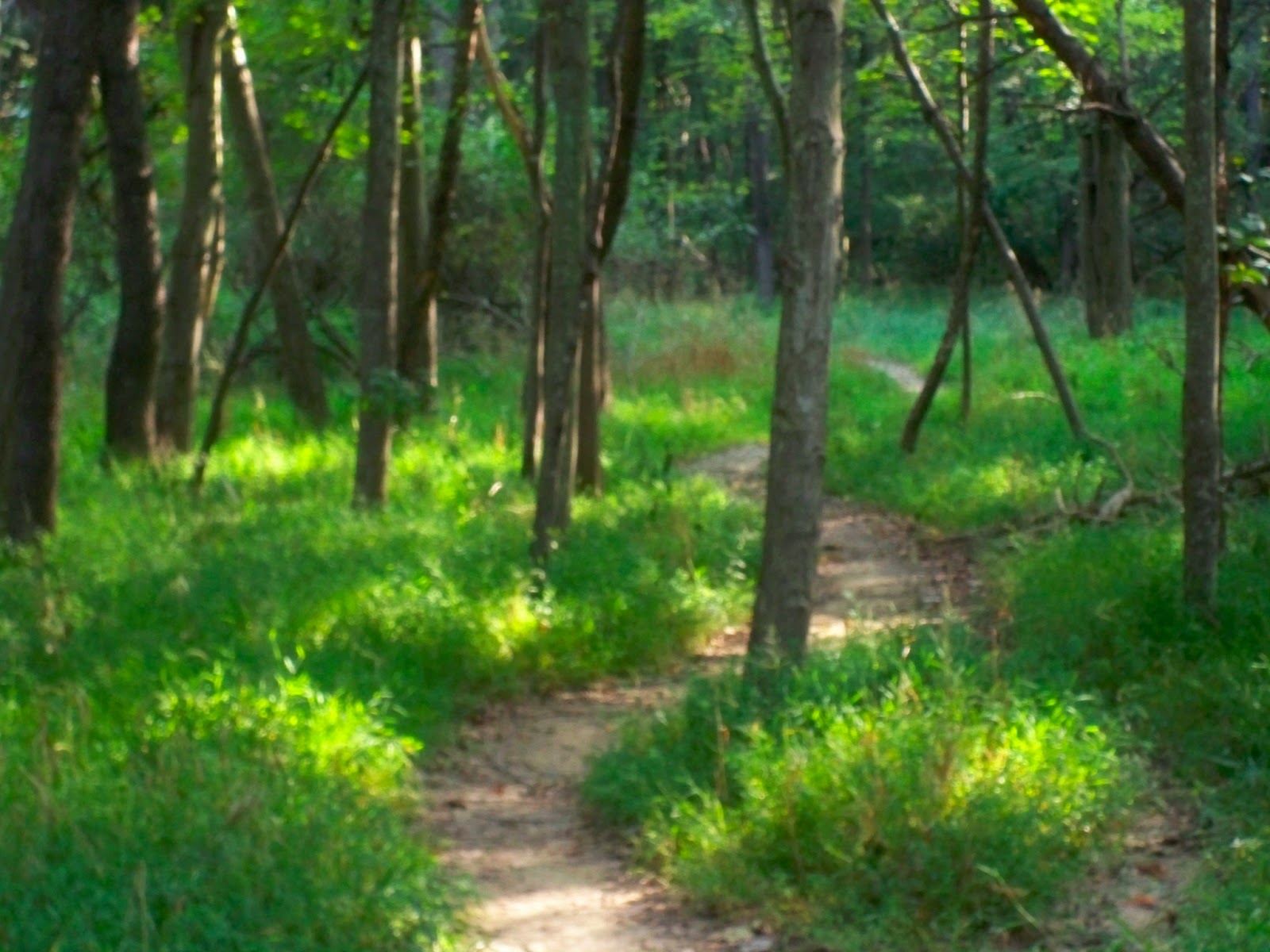
Last evening on the way home from work I realized that I had the time and the daylight to take a walk on a Reston trail. It’s the path that I’ll call CCC (Cross County Connector; see yesterday’s post!) because the last part of it merges with my beloved Cross County Trail.

What a walk it was! The birds were singing, the sun was lowering and the flowers were blooming. Great clusters of snowdrops peeping up not from the snow (which has been scarce to nonexistent this year) but from the leaves and brown grass. 
These are wintry flowers, white and delicate, but they are further harbingers of the season. They are proof that this balminess, this lovely light, is not just a preview but maybe, just maybe, a beginning.

Name That Path

Name That Path

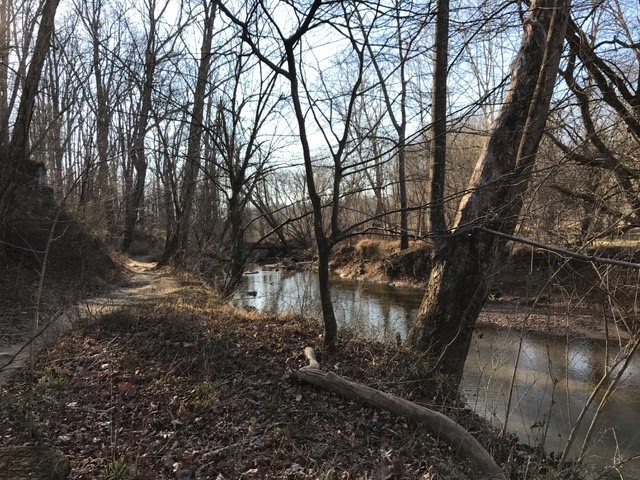
A recent walk through the Folkstone woods led me past a shady glade and creek curve where the girls used to play. They called it Brace Yourself. Maybe there was some feat of derring do they had to perform there, walking across the creek on a log or picking up a crawdad. I’m unclear why they gave it that name, but the point is that they did.

Brace Yourself got me thinking about the joy of naming places. I remember doing that when I was a kid. There was the Valley of Eternal Snows — a sheltered cove in the Ware Farm field behind our house, a place where I had once found some dirty snow late in the season.

And then there were the Block-up Boys — not exactly a place, I know. They were the bullies on the street who wouldn’t let me ride my tricycle to the top of the hill. (So there was a place involved, sort of.)

When we name a place we make it our own.  We look at it with fresh eyes; we see it whole. Why do we stop doing this as we get older? Do mortgages and responsibilities drive it away, this penchant for staking imaginative claim to the places we love?

I made a tiny vow right there at Brace Yourself. I decided to start naming the bridges and paths, the springs and glades. Even if no one else ever hears or knows these names — I will.

A Preview

A Preview

The witch hazel is an early bird. I’ve seen it bloom when there’s snow on the ground. No surprise that it’s erupted in yellow blooms these winter-spring days.

Looking at the witch hazel, being outdoors over the weekend, with the plants stirring and the birds singing — it’s enough to bring on a bad case of spring fever. Or at least to make us ask, Is this it? Is it really spring?

Of course we have some cold, gray days ahead, but in late February one can hope.

I guess the best way to think about this unseasonable warmth is is as a preview, a glimpse of what lies ahead.

Religious imagery is not always what comes to mind first with me, but for some reason I’m thinking about the Transfiguration of Jesus, when he appeared to his apostles all radiant and glowing from within. That, too, was a preview, a taste of the beyond.

Which is all to say that a preview asks us to see and appreciate, not grasp and pin down.

Staying on Track

Staying on Track

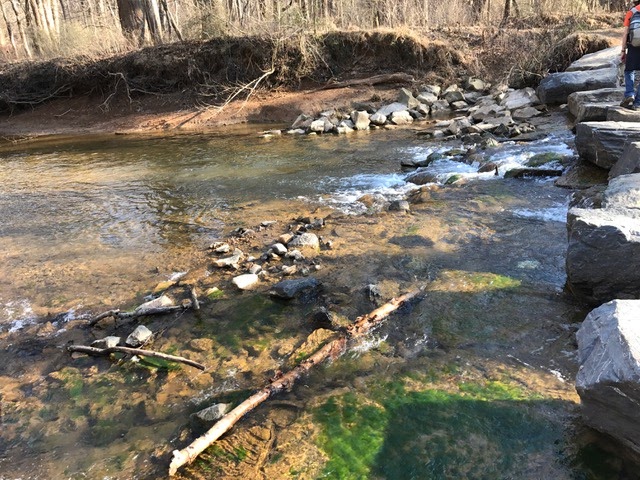
Yesterday, a return to a favorite hike, the Cross County Trail between Colvin Run Mill and Georgetown Pike. The path was busy with mountain bikers, runners, families with grandparents and kids — including one grandpa who stepped off the fair-weather crossing into this stream.

He righted himself quickly and kept on walking. That’s the spirit: staying on track!

I hope I do that when I’m a grandparent (which, with a married daughter and son-in-law, may not be too far in my future). The key with the hiking and the crossing is the keeping-on part.

Yesterday made it easy: a springlike day that made an unexpected step in the creek not the worst thing in the world.

Urban Trail

Urban Trail

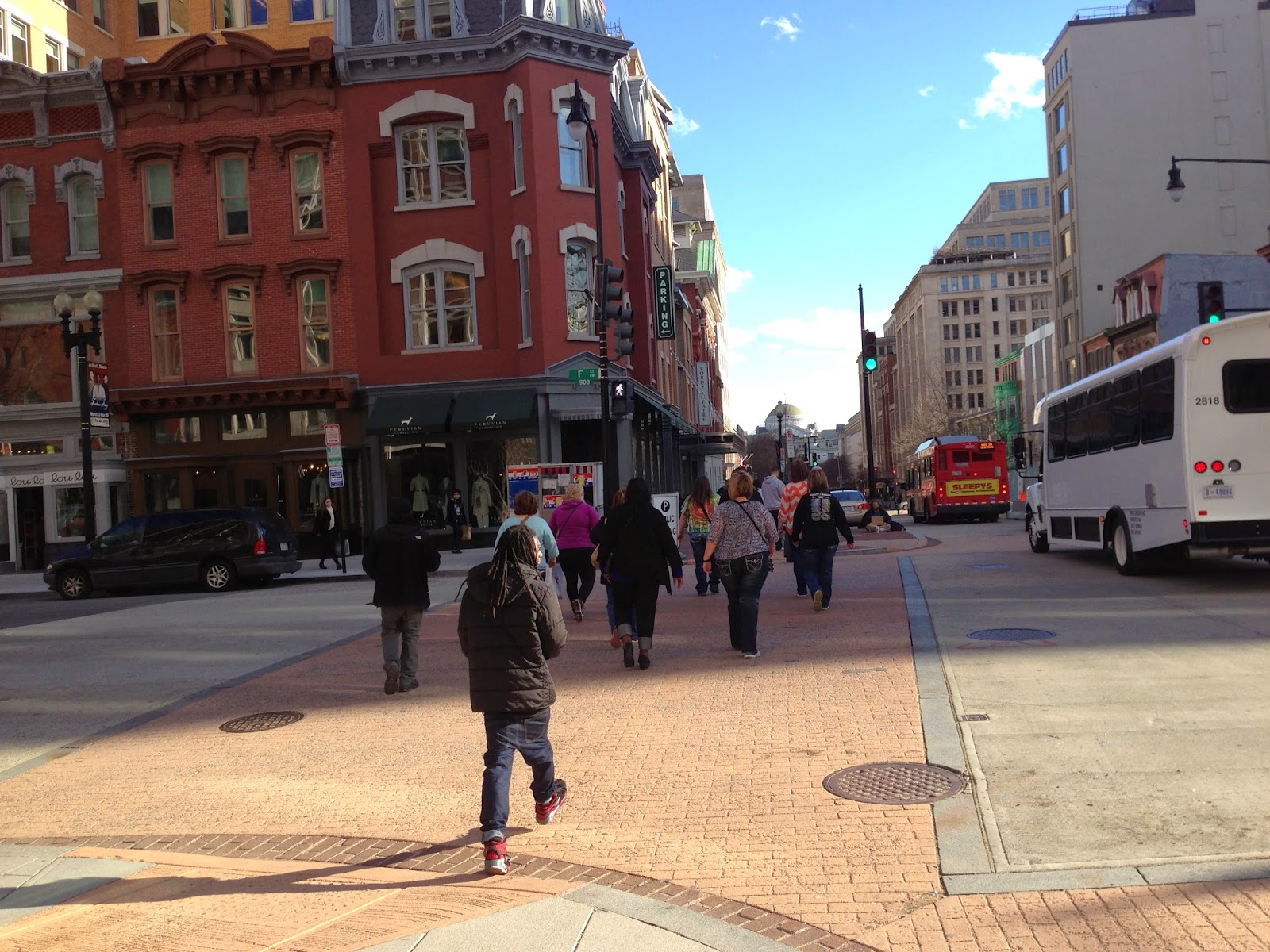
Ellen and I met for brunch in Bethesda yesterday — our favorite meeting place between Annapolis and Reston — and afterward I slipped on my tennis shoes, took off my scarf and jacket and walked four miles on the Capital Crescent Trail, one of my favorite urban walks.

It was 70 degrees, and the path was clogged with joggers and strollers and bikers and dogs. A carnival atmosphere — and everyone in amazement that we could wear shorts and t-shirts instead of parkas and gloves.

What to say about such an amble and such an afternoon? Only that it was filled with the life force, was virtually overflowing with it. And everyone I saw — whether zooming by on a bicycle or being pushed in a wheelchair — seemed to feel the same way.

Winter Bounty

Winter Bounty

This morning as I was making tea (in the daylight, for a change), I happened to look out the window as the rising sun struck the top of the oaks and drenched them in pale light. It was a simple moment but a lovely one.

Winter helps me see more clearly. It strips away pretense, withers it and blows it away. It leaves behind only the most essential.

This is a thought I often have this time of year, but for some reason this morning it hit me how it’s in thinning, in pruning — in loss — that we realize our bounty.

It’s hard if not impossible to see the structure, the underlying architecture, when it’s covered over and plumped up. But when all is laid bare and worn down — then we can see.

Pulling for Pansies

Pulling for Pansies

Every fall landscapers engage in the delightfully doomed act of planting pansies. False hope, I say to myself. These flowers will never make it.

And, for the last few years, I’ve been right. Cold temps and frigid winds nipped the plants, and come spring, there was nothing left but a few withered stems.

But this year the pansies are thriving. Look at these babies, resplendent in their midwinter glory.

I used to think I didn’t “deserve” spring if I hadn’t suffered through winter. Blame it on Catholicism — or on living in Chicago for a few years.

This year I consider any escape from winter a gift from the gods. I’m pulling for pansies.

Making Change

Making Change

One of the things  I like about my job is talking with people on the other side of the world. It’s an instant way to get perspective.

For one thing, they’re just ending their days while we’re just beginning ours. For another, they are dealing with problems we can barely imagine, problems like trying to keep food cold to prevent spoilage. (Pakistan loses almost 50 percent of its crops after harvest.)

I just heard a man who’s on the leading edge of change in that country, someone who tries to convince people they don’t have to do things the way they’ve always done them, describe walking into a cold storage facility filled with rats and mold. “I almost vomited,” he said.

But he saw the potential and made the connection that created change. These are not huge shifts. They are pebbles tossed into streams.

Toss enough of them, though, and you change the flow.

Radical Love

Radical Love

Usually on Valentine’s Day I write about personal love. And I’m certainly thinking of it today, feeling grateful for my family and friends, all those I hold dear. But these are extraordinary times, and they call for the most radical and extreme of actions.

They call for love.

“If we are stretching to live wiser and not just smarter,” says Krista Tippett in her book Becoming Wise, “we will aspire to learn what love means, how it arises and deepens, how it withers and revives, what it looks like as a private good but also a common good.”

Tippett, the host of NPR’s “On Being,” describes the love shown by 1960s civil rights workers, their belief in the “beloved community” that meant they were fighting for equality with courtesy and kindness.  “This was love as a way of being, not a feeling, which transcended grievance and painstakingly transformed violence,” Tippett writes.

Though her book was published just last year, it already seems to hail from another era, a time when were not yet as deeply divided as we are now. Tippett doesn’t address the division as much as she would had she been writing a year later, but reading her book makes me think about how much further we’d be if treated each other with courtesy and kindness.

Maybe love is what we need, love translated into forbearance and understanding, into biting our tongues and holding our applause. Divisiveness got us into this mess. Maybe love can get us out.