Browsed by
Author: Anne Cassidy

Schooling

Schooling

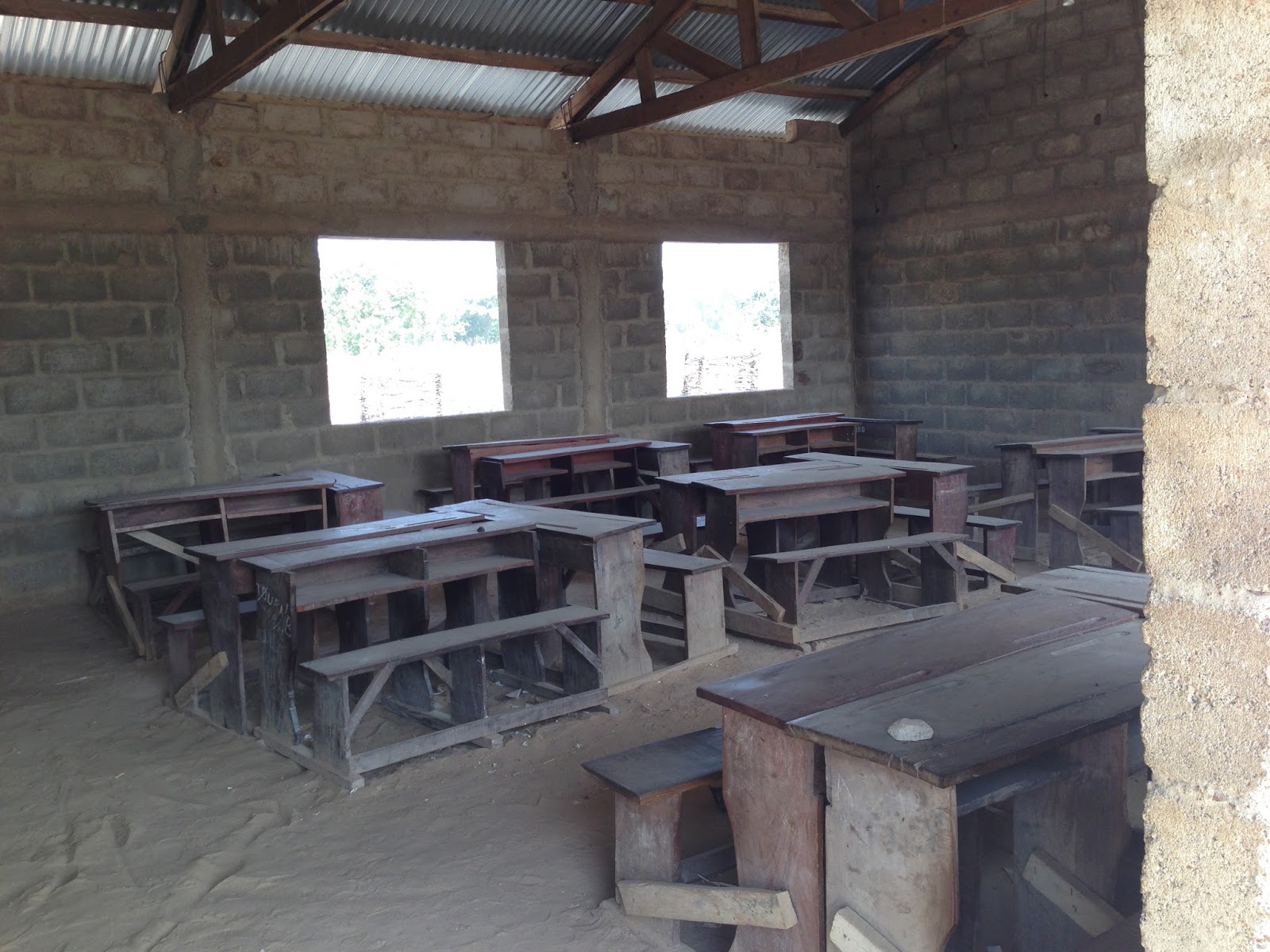
As part of my new job I’m writing and editing stories about people who have nothing. About school children from South Sudan dressed in tidy uniforms who must sit on rocks or tin cans because their school has no desks.

I think about the white boards and the wired classrooms here — and then remember the school in Toura where Suzanne and Appolinaire taught: the cinderblock walls and wooden desks that you see here.

It’s easy to romanticize learning, to say it happens wherever teachers are gifted and students inspired. But when children are cold or hot, when they cut their legs on the sharp rocks they’ve lugged to the school for seating, when they aren’t even allowed to go to school because they must help their families in the fields — there is no magic there. There can’t be until the basic physical needs are met.

I’m glad I have a chance to be reminded of this now, to write about people who have nothing. Because of the perspective they bring, of course, but most of all because their stories must be told.
Sunshine, Finally

Sunshine, Finally

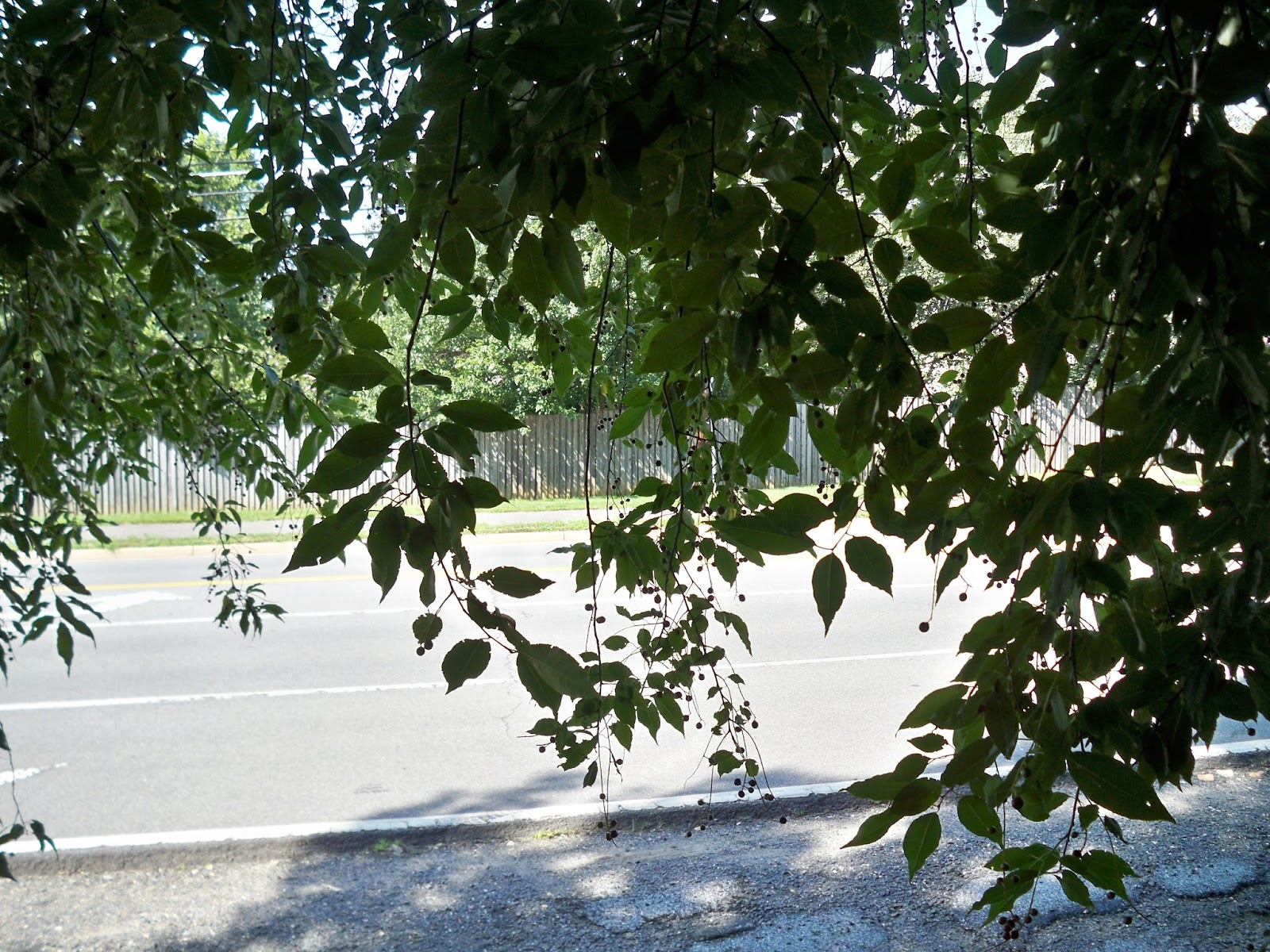
A friend who counsels people for a living said the last few weeks have been difficult for her patients. Depression, anxiety, fibromyalgia. People in the mid-Atlantic aren’t used to weeks and weeks of gray, rainy days — especially not in May — and they’ve taken their toll.

They would usually bother me more, but I’ve been caught up in a new job, and not paying as much attention to weather as I usually do.

Still, for a walker in the suburbs who’s been forced to row in the suburbs (on the erg in the basement, which means yet more — ouch! — sitting), it’s cramping my style, to say the least.

So today’s sunshine is more than welcome. It’s gratifying, life-enhancing, healing.

On Dad’s 93rd

On Dad’s 93rd

Today, on what would have been Dad’s 93rd birthday, I’ll attend a Mass that’s being said for him in my parish church. I reserved this date not long after his passing, had to book it about 20 months in advance. Dad would get a kick out of this. “I guess they give priority to the Catholics,” he’d say. (He was not one!)

Thinking of all the funny things Dad said to me growing up, the gentle religious humor. “Just tell ’em it’s your father’s feast day,” he’d suggest, deadpan, when I didn’t want to go to school.  We always got a holiday on the feast day of our pastor and principal, Father O’Neill.

It was the humor of an agnostic. Only Dad pulled a fast one. At the end of his life he reverted to the Methodism of his youth, went to church most Sundays. When I was in town, I would go with him, reveling in his rich baritone as he belted out the hymns he learned as a kid.

Was he hedging his bets by returning to church? Not Dad. It wasn’t out of fear that he returned, I think, but out of love. He was a deeply grateful man. I imagine he was saying a lot of “thank-you’s.” Today I’ll be doing the same.

Time Warp

Time Warp

Unseasonable weather creates a time warp.  Are these the first floundering days of March? A rainy patch in October? Or the sort of chilly midsummer I remember being called blackberry winter?

Strawberry winter is more like it.

These are usually our jewel-tone days, the azaleas and iris overlapping, rhododendrons too. They, by the way, are doing well this year; they thrive on moisture. But the others haven’t lived up to promise. They’ve been too busy staying alive.

I gave May a pass until we hit the double digits. But it’s the 11th. Time to get with it, May. We need some warm weather, and we need it now!

The Cake

The Cake

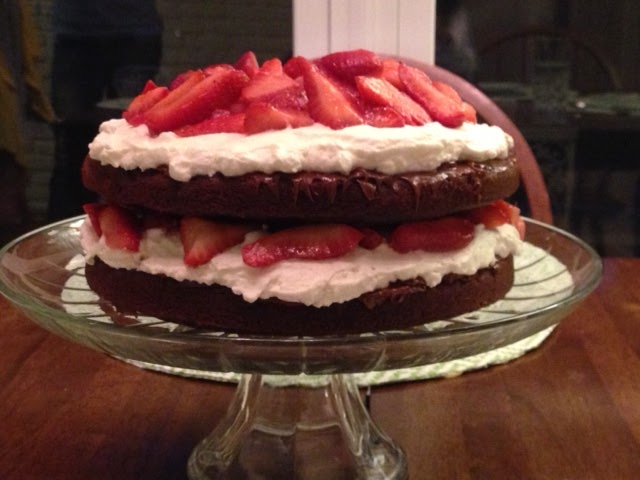
For the last two Mother’s Day in a row, Claire has whipped up this confection. It’s two layers of feather-light chocolate cake, iced and topped with a thin layer of hazelnut, a cushiony helping of whipped cream and a generous dollop of strawberries.

Five of us consumed half of it last night — and I’m embarrassed at how much I’m looking forward to nibbling on what’s still left in the fridge.

Yesterday, watching the girls in the kitchen together, thinking about all the meals I made when they were young, thinking about one in particular when Claire was just a newborn and I had for some reason decided to make lasagna. She was sitting in her little seat on top of the counter, amidst the ricotta and mushrooms and mozzarella — probably breathing it all into her little brain.

It was one of those times when I probably should have just heated up a frozen pizza. But the cooking and the kids just naturally went together. They still do.

How much of family life takes place in the kitchen, how many joys and sorrows, how many delights. When I think about it now, the cake in its yummy extravagance was the perfect expression of the day, of its bounty, of how much I have to be thankful for.

Mother’s Day

Mother’s Day

On this Mother’s Day, my first without Mom, I think about a scene I witnessed at the beach and have thought about often since. It was nothing special; in fact it (or something similar) happens all the time. A little girl in pink was running down the shore. She caught my eye because there were precious few people on the beach that day — it was cold! — and also because she seemed young to be on her own.

I had no fear for the child, assumed she was being watched from some distant towel. Instead, I thought about what the world looked like through her eyes. Maybe her first burst of independence. The horizon spreading out before her, endless sand and a squawking gull she wanted to catch.

Then I saw a woman in quick pursuit. “Marina! Marina! Where do you think you’re going?”

The little girl turned, ready to be caught. The woman threw her arms wide open and dashed toward Marina, who was now flying toward her. Soon they came together; the woman gathering the child up in her arms and twirling her around.

It’s the oldest story and the truest story. And it made me think of this passage from Annie Dillard’s An American Childhood, which I can never read with a dry eye, especially not today.

I write this at a wide desk in a pine shed as I always do these recent years, in this life I pray will last, while the summer sun closes the sky to Orion and to all the other winter stars over my roof. The young oaks growing just outside my windows wave in the light, so that concentrating, lost in the past, I see the pale leaves wag and think as my blood leaps: Is someone coming?

Is it Mother coming for me, to carry me home? Could it be my own young, my own glorious Mother, coming across the grass for me, the morning light on her skin, to get me and bring me back? Back to where I last knew all I needed, the way to her strong arms?

Background, Foreground

Background, Foreground

A quick lunchtime walk the other day found me on the Mount Vernon trail. The little connector path took me past banks of honeysuckle and edgings of little geranium-looking flowers.

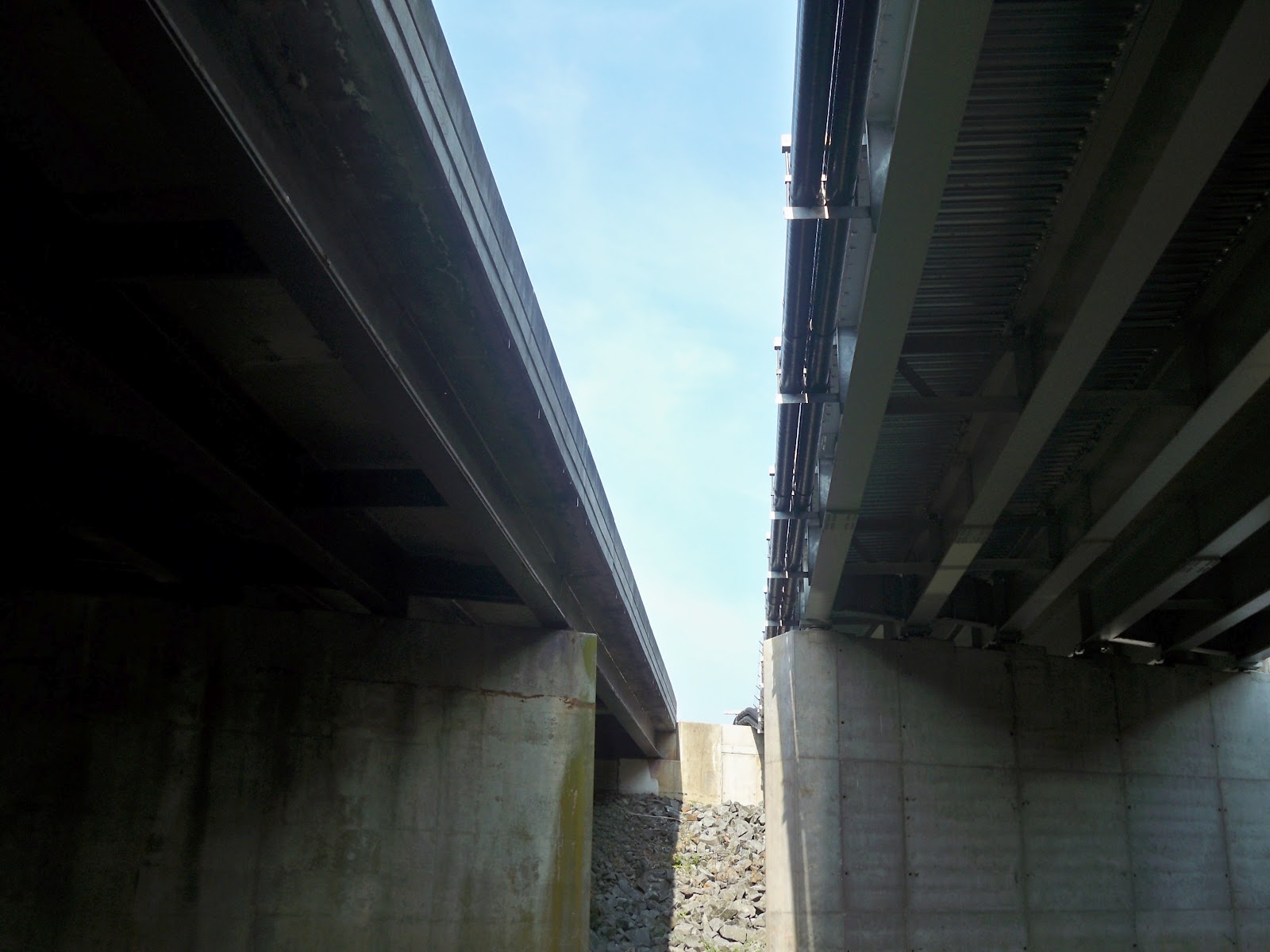
I kept shifting my gaze from the close to the faraway. In the background, the Washington Monument rose behind National Airport’s runways. In the foreground, all the bluster and bother of modern transportation: trains, buses, cars and jets.

Movement all around but striving for stillness within.

Leap of Faith

Leap of Faith

This morning I heard a minute of The Writer’s Almanac as I turned into the parking garage at Vienna Metro. It’s the birthday of Soren Kierkegaard, said Garrison Keillor in his mellifluous voice. Kierkegaard, the philosopher who gave us the leap of faith — “that faith is not possible without doubt. That one must doubt the existence of God to have faith in the existence of God.”

Thinking of the basement study room in my freshman dorm where I wrestled with Kierkegaard and (I think it’s safe to say) Kierkegaard won. Realizing then that philosophy was not just admiring big ideas, it was grappling with them, plumbing them, going deeper and deeper into their caverns until I wasn’t sure I could claw my way out.

But those same ideas are how we live our lives. The leap of faith, for instance. How difficult to summon it — yet how utterly imperative.

In Training

In Training

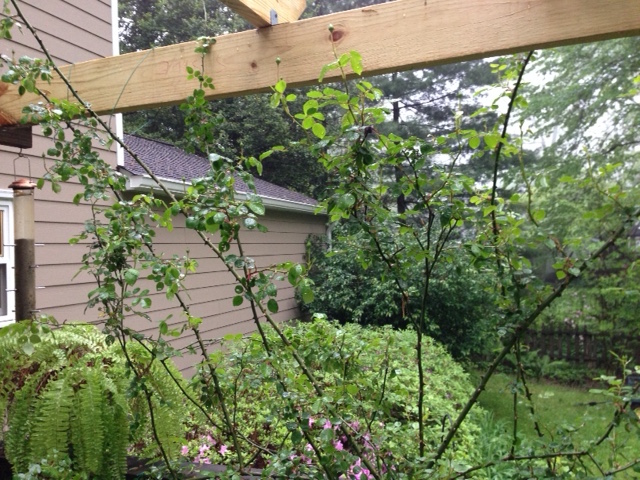
I spent some quality time with the climbing rose on Saturday. Well, it wasn’t quality time at first, but after a while we came to know each other better.

I was trying to train it, you see, to make its long sinewy branches go up rather than down, left rather than right. I was trying to create a rosy bower using the pergola that Tom and Appolinaire built a couple weeks ago.

At first I just stood there, stumped by the enormous tangle. The rose needs to grow up and out, but without something to anchor it, the poor thing had been an unruly mess. It didn’t like being pushed too hard, though. Quick movements guaranteed puncture wounds.

But in time I got into the zen of the task, moving slowly to avoid snags, taking off the gloves (which were just getting caught up on the thorns) and following each ascender to its descender — puzzling out the plant’s internal order before fastening branches to wood with twisty green wire.

It’s still a work in progress, this splendid, gangly plant — but at least it’s in training.

Still Life with Shells

Still Life with Shells

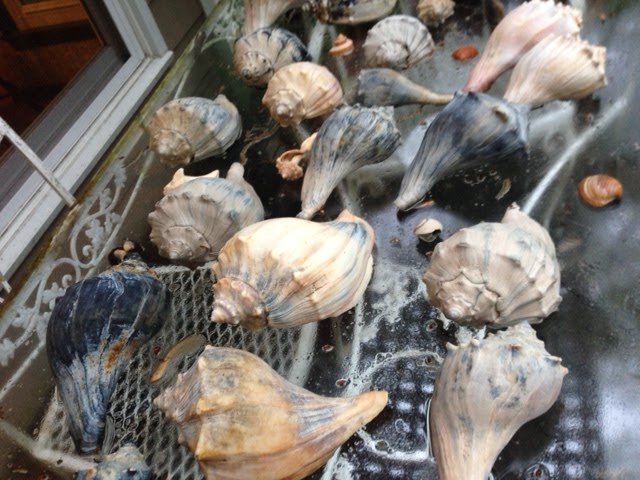
When I returned with the great haul from Chincoteague I soaked the shells for a week. The bucket was so heavy I could barely pick it up. But over the weekend I mustered the muscle and shook out each whelk, rinsed residual sand from its core, and put it on the glass-topped table on the deck.

And there they sit, rain doused rather than surf doused, collecting tree pollen and stray sticks. The damp weather clouding the glass, giving the shells a soft-edged frame.

Though I took no care in their arranging, they easily fell into a tableaux. A companionable collection. A still life with shells.