Browsed by
Author: Anne Cassidy

Anatomy of Cuteness

Anatomy of Cuteness

With babies, they say, it is in part the ratio of head to body and eyes to head that makes them so adorable. What is it, then, with dogs?

There is, of course, the way they cock their head to one side, as if to say, “Really?!”  And their warm, almost human, eyes. Their jauntiness and energy.

With Copper, there are his antics: racing around the house in circles, begging on his hind legs like a circus dog, thumping his tail on the floor then barking because he doesn’t realize that he just made that noise and not an intruder.

With Motet, who’s visiting us for a while, it’s her big ears, her tiny little body (she weighs less than 10 pounds soaking wet), her wiry coat (looking as if she just threw on a robe out of the bath) and her sweet little face.

Whatever it is, it’s cute.
In Sync

In Sync

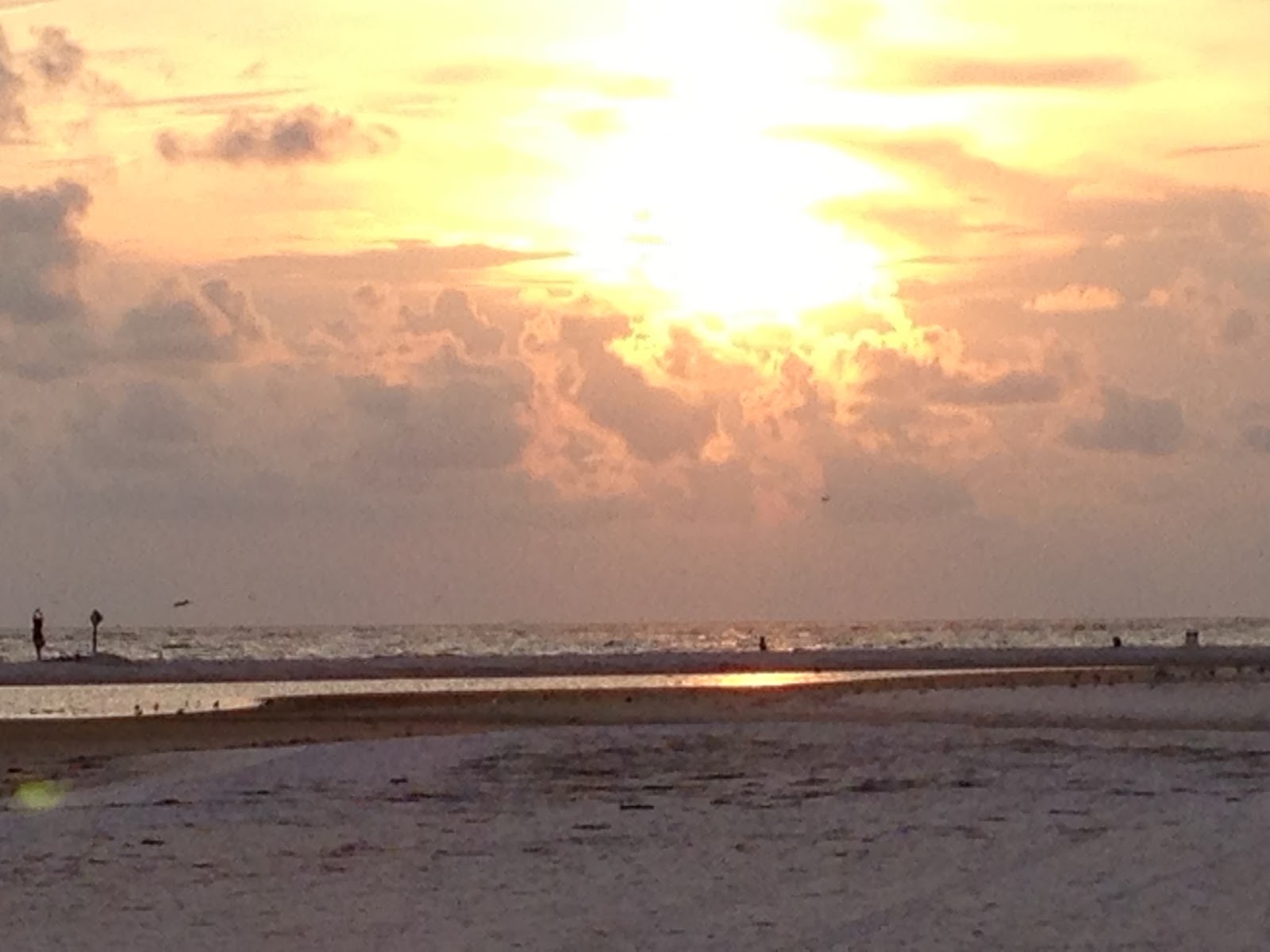
It’s been gray and rainy and I’ve been thinking about the beach. About the waves and the breeze and the elemental rhythms that flourish there. The sultry mornings and the afternoon thunderheads that pile up on the horizon and darken the skies.

Rain falls so heavily there that it floods the streets and sidewalk and beach, creates another world of detours and discoveries — the perfect excuse to stay inside and dream.

After the rain, the air is drenched clean, and the surf is stirred up enough to bring sand dollars to the surface. Reach down and find one, stamped from the ephemeral, the transient made tangible.

When the sun starts to set, the big show begins. This is the gulf coast, after all, and the afterglows set the western sky ablaze. Stand there long enough and it seems the sun will never leave, that it will hover on the horizon forever, perfectly in sync, perfectly in balance, perfectly in view.

Four Walls

Four Walls

Cold rain, and plenty of it. Wind, too.  Even the hardiest walker would have found yesterday’s weather tough going.

Commuting by public transport, though, makes us all walkers, which means we have a taste of the weather, like it or not.

So I dodged puddles on the street and jumped over them to reach the curb. I stood shivering on the platform, waiting for a train.

 I dashed into buildings gratefully, shook off the umbrella, stamped the feet, brushed off the coat. It was too cold for a raincoat so the wool one was pressed into service.

And at the end of the day I marveled at the warmth and dryness of this house I sit in now. Four walls that, among other things, keep out the elements. And yesterday, that was a very good thing!

Essays After Eighty

Essays After Eighty

I don’t know what prompted me to pick up the book Essays After Eighty by Donald Hall. I’ve read Hall before and liked him. The book was slender, could be read quickly. I like essays.

Whatever the reason, I’m glad I did. Hall is funny and wise and drops names only occasionally. But he is an honest chronicler of old age, of its limitations and indignities. The end of driving (two accidents), the end of his blue chair (he dropped a cigarette and the chair caught on fire), the end of mobility (being pushed through art galleries in a wheelchair) — all of these are related honestly, dryly, with no self-pity.

What remains for him is writing — and rewriting:

My early drafts are always wretched. At first a general verb like “move” is qualified by the adverb “quickly.” After sixty tries I come up with a particular, possibly witty verb and drop the adverb. Originally I wrote “poetry suddenly left me,” which after twelve drafts became “poetry abandoned me.”

Someone in his ninth decade who loves revising — that’s encouraging.

Binge-Watch Weekend

Binge-Watch Weekend

The Oscars are less than a week away. The Netflix movies had been piling up. It was time for a binge-watch weekend.

It began with “Under the Sand,” a French drama with Charlotte Rampling. I’d like to see “45 Years” before next Sunday, so this was a Rampling appetizer of sorts. Next up was “Bridge of Spies,” a best picture nominee already available for rent on Amazon. It was long, as advertised, but because I was watching it in the basement, I could pause and come back an hour later to finish it.

“The Revenant” was the only film I saw in a theater last weekend. It was also long, as well as beautiful and brutal (also as advertised). After an evening of “Foxcatcher,” a 2014 film for which Steve Carrell was nominated for best actor, I ended the day with an hour of “The West Wing” with Celia and Suzanne.

Yesterday was the Steve Jobs biopic, also available to rent, and just before bedtime, the second-to-last Downton Abbey. It, quite frankly, made the whole binge-watching weekend worthwhile.

A Vital Process

A Vital Process

In The Natural World of Winnie-the-Pooh: A Walk Through the Forest that Inspired the Hundred Acre Wood, author Kathryn Aalto takes us through Ashdown Forest, past Poohsticks Bridge and to the top of Gills Lap, with its panoramic view of England’s South Downs.

These are real places — but they are also places of the imagination, where A.A. Milne traveled with his real-life little boy, Christopher Robin, and perhaps saw peeking from the trees there a chubby bear and a winsome piglet.

Like many writers, Milne was a walker. And Aalto’s words describing that here could double as a mission statement for A Walker in the Suburbs.

A lifelong joy and habit for the author, walking sets the mind adrift, clarifying and organizing thoughts — a vital process for writers. Walking allows a pace for discovering small, new things: how gorse has the faint smell of coconut in spring, that the red dragonflies hovering over bogs are actually rare, and that the nocturnal bird calls are from the threatened nightjar.

Sets the mind adrift … clarifies and organizes thoughts … allows a pace for discovering small, new things …  Yes, yes and yes.

A vital process? Vital, indeed.

Anne Frank Tree

Anne Frank Tree

I usually walk right by it when I stroll around the Capitol, but for some reason yesterday I did not.

It seemed like nothing more than a fenced-in stick, so slender and insubstantial. But the fencing told me something important must be within — so I took a peek. I learned that the young tree is a sapling from the white chestnut that  grew outside the window of the Secret Annex of the Frank House in Amsterdam.

In May, 1944, less than a year before she would lose her life at the Bergen Belsen Concentration Camp, Anne Frank wrote, “Our chestnut tree is in full bloom. It’s covered with leaves and is even more beautiful than last year.”

The tree was brought down by a windstorm in 2010, but its chestnuts were gathered and germinated and the saplings donated. This little twig of a tree was one of its progeny. Here is what its parent meant to Anne:

Nearly every morning I go to the attic to blow the stuffy air out of my
lungs, from my favorite spot on the floor I look up at the blue sky and
the bare chestnut tree, on whose branches little raindrops shine,
appearing like silver, and at the seagulls and other birds as they glide on the wind. As long as this exists, I
thought, and I may live to see it, this sunshine, the cloudless skies,
while this lasts I cannot be unhappy.

(Photos: Wikipedia, Architect of the Capitol)

Good Walking

Good Walking

The day began early, but the only walking I’ve done is what was needed to take me to and from Metro. Which got me thinking about the difference between walking and good walking.

Walking is like writing. Both are humble and utilitarian occupations, something most people do all the time.

But like good writing — in which words are strung together in a way to arouse sympathy or disgust, beauty or ugliness — good walking elevates the pedestrian. It is more than just a way to move from one place to another. It is a conscious and reflective exercise.

Good walking wears out the body and fills up the soul. It turns otherwise dreary and muddled days into clear and purposeful ones.

Good walking — I hope to do some at lunchtime.

Rowing Thoughts

Rowing Thoughts

When weather makes walking impossible, I use the rowing machine in the basement. It’s a noble form of exercise, full-bodied and bracing. The first few minutes are agony.

But like most activities that require intense exertion, rowing eventually settles the mind. Arms pull forward, legs push back. The rhythm takes over.

And it’s only then, ten minutes in, that the mind can begin to roam. Rowing thoughts are bulleted and basic. They are not walking thoughts. But they are better than not-exercising-at-all thoughts. And yesterday, they were all I had.

Monochromatic

Monochromatic

More snow last night, a few inches, enough to coat the mud and the leaves, the daffodil and crocus shoots. Enough to make it clear that it’s still winter.

Temperature-wise there has been no doubt of late, with single digit wind chills. But palette is important, too, and today February looks the part.

We are back to a monochromatic world. Black trees, leaves, lamp posts and pickets. White everything else. It’s better this way, I think.