Browsed by
Author: Anne Cassidy

Millennials and Books
Millennials and Books

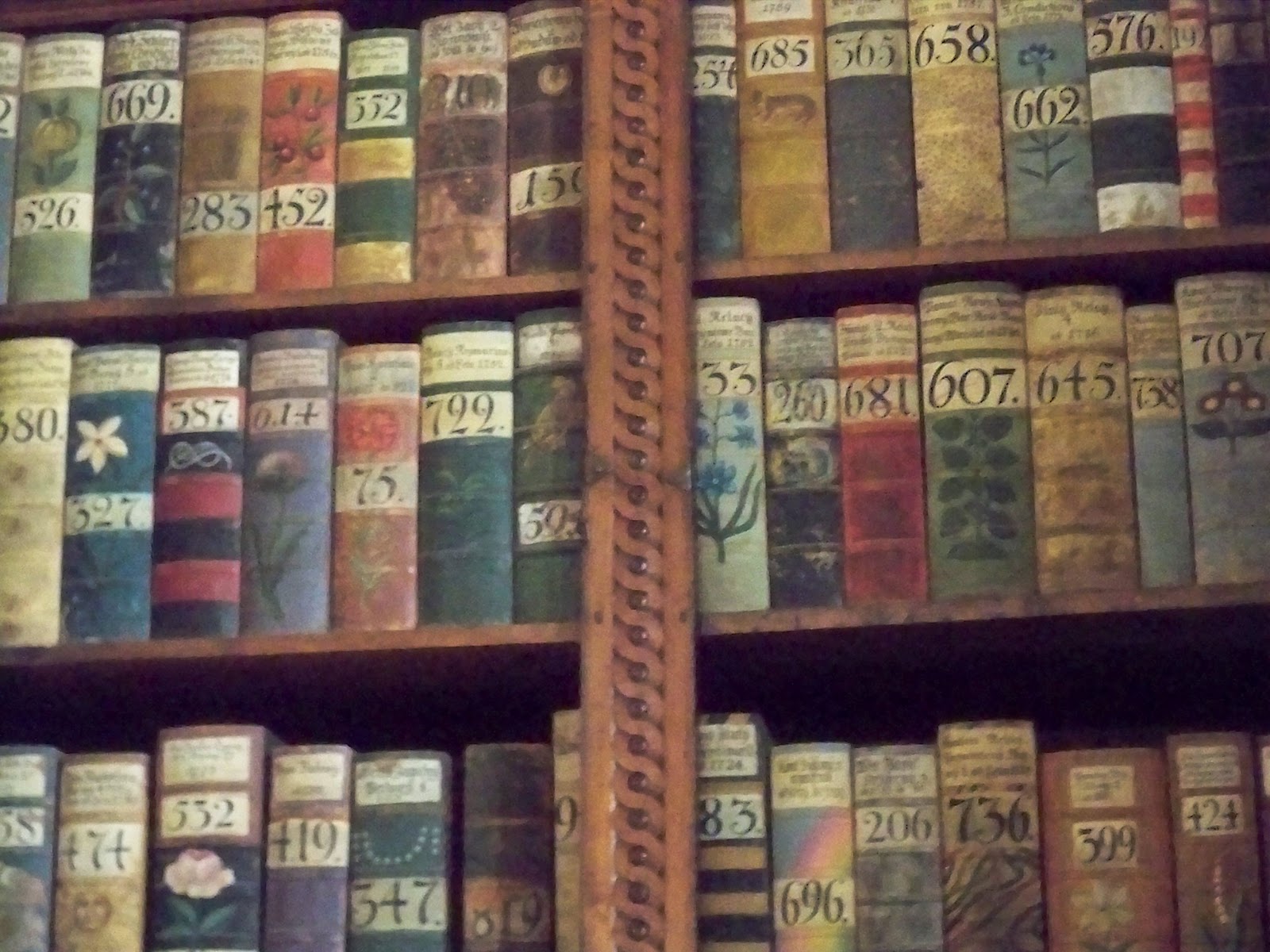
Talk about surprises, I almost missed one, tucked as it was beneath the Oscar photo. But the headline in yesterday’s Washington Post was unmistakable: “Wired millennials still prefer the printed word.” This according to textbook publishers, bookstore owners and the people themselves, those born 1980 and afterward — my kids, in other words.

They may text and snap-chat and send pictures by Instagram, but turns out they also like to read books. They learn better, they say, because there are fewer distractions. (Those who multitask while reading a printed book: 1 percent. Those who multitask while reading an e-book: 90 percent.)

A pilot study at the University of Washington found a quarter of students who were given e-textbooks for free still opted to buy the print version. Pew studies show the highest print readership rates among 18- to 29-year-olds.

That last statistic is hard to believe, but even if the data is slightly stretched, it’s still heartening to think that those who come after us will thrill to the smell of a new book, will feel the heft of one in the hand, will appreciate its superior knowledge delivery system! Maybe the sky is not falling; maybe the good old codex will be around a bit longer after all.

On Surprises

On Surprises

In the end it’s not about which movie won or lost. (Or at least it isn’t to me; I’m sure it is to the producers and directors!) It’s about seeing the movies beforehand, keeping my own little tally. It’s about settling in to watch the festivities and see what the evening has in store.

Of course, what it has in store is pretty much the same from year to year — bright lights and gorgeous gowns, highly scripted performances. And then there are the acceptance speeches, our best hope of real human emotion. Last night didn’t disappoint. There was J.K. Simmons telling us to call our mothers. There was an excited Eddie Redmayne sharing his award with ALS sufferers. And then there was the director of “Ida,” the Polish film about a nun discovering her Jewish past, which took the award for best foreign language film.

Pawel Pawilkowski told his Polish film crew to have a drink. He mentioned his late wife and parents, who were very much a part of the film, and his children, “who are still alive.” He fought against the music that was trying to drive him offstage. But his words stuck with me:

“We make a film about silence and withdrawing from the world and the need
for contemplation – and here we are, at the epicenter of world noise
and attention. Fantastic — life is full of surprises.”

Life is full of surprises, and sometimes even the Oscars are.

To Ruminate or Record?

To Ruminate or Record?

A journal can be a rumination, a venting, a hymn of praise. Or it can be a list, an outline, a series of observations.

For the last two days I’ve been reading the diaries of the late Ira N. “Gabe” Gabrielson, first director of the U.S. Fish and Wildlife Service and noted conservationist.

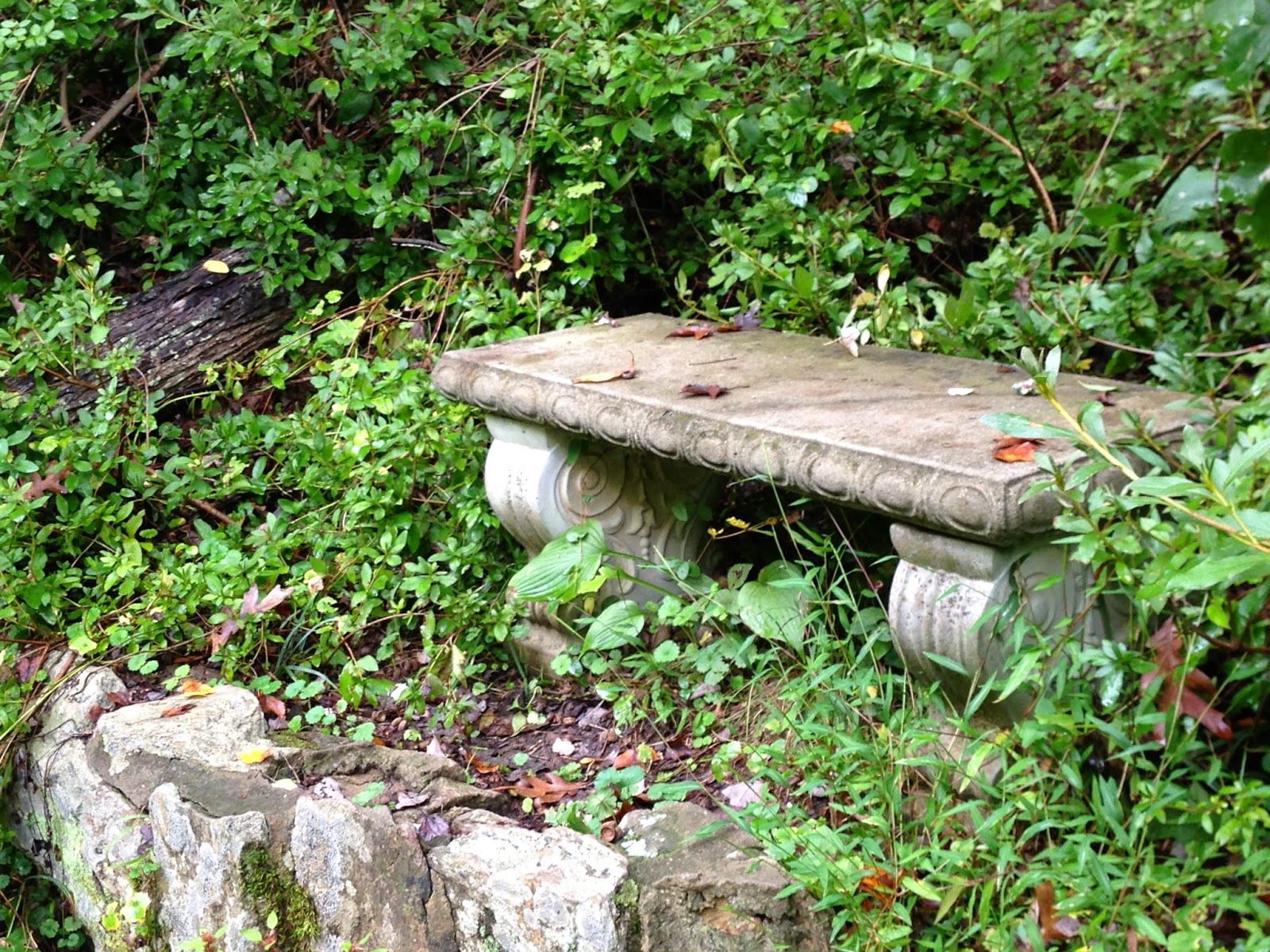
In 1966, Gabrielson sold his home, garden and lovely bamboo-fringed pond to the Fairfax County Park Authority. He and his family continued to live in the house for years, but after his death the property became a tiny tucked-away park called Gabrielson Gardens. I stumbled upon it this fall and have been interested in learning more about Gabrielson ever since.

This week I visited the Smithsonian Archives and began to read Gabrielson’s diaries. There is much to learn about the man. But one thing struck me immediately: In his journals he lists the vegetables he harvested and the birds he spotted. I think about the thoughts, ideas and feelings I write in my own journal. It’s another model. Both are time-honored. But this morning, after my usual entry, I noted that two bluebirds and a red-headed woodpecker perched on the deck railing and nibbled some suet.

Remembering the Colors

Remembering the Colors

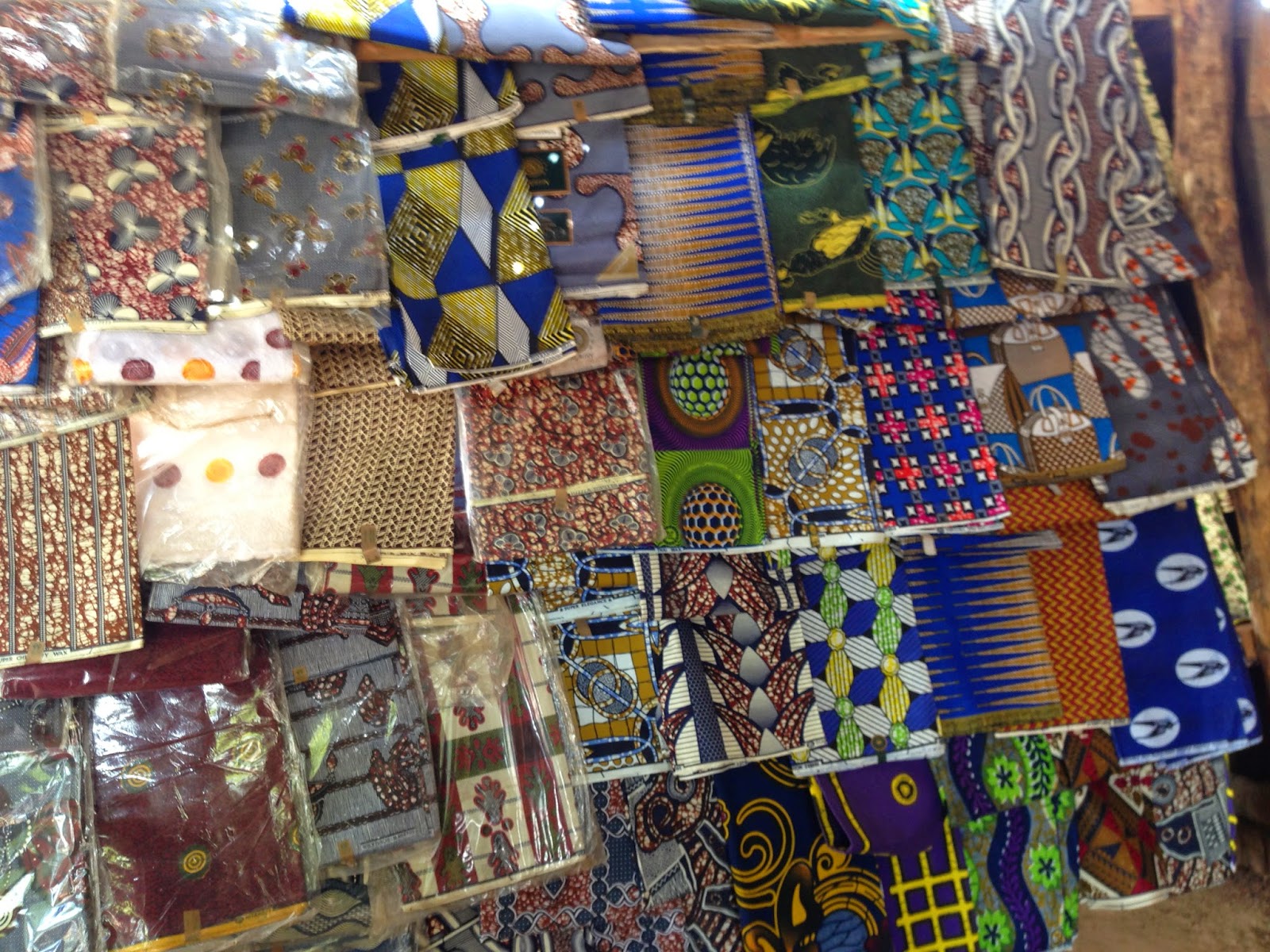
Too cold for me here. I’m going back to Africa. Not just for the hot sun and the balmy breezes, but for the colorful, always-summery cotton fabrics.

No more wool sweaters, high turtlenecks, thick socks. No more layers. I’ll live in the land of eternal heat with a pagne to cover me. Before I visited Benin, I never knew how versatile two meters of cloth could be, how from them you can fashion a headscarf, a skirt, a towel or a baby sling.

Because I visited during the dry season, the African landscape was mostly brown. The color came from the clothes. Not just the women’s but the men’s too. Bold patterns, bright hues, unusual combinations — I was filled with joy just looking at a street corner or a market, seeing the swirl of colors gathered there. And remembering them now warms me up completely.

Moving Quickly

Moving Quickly

The story today is the cold.

Record-shattering. Bone-chilling. Cold I must soon confront.

Which raises some questions: Why do I have no corduroy pants that fit? What can I wear that is warm enough for this craziness? And most importantly, when will it ever be spring?

Until there are answers to these questions there is only one course of action — plunging in. No, I won’t be skating anytime soon. But I will be walking, running, moving quickly. That’s my way to get through the winter — and the cold.

Winter White

Winter White

A light snow, easily cleared, meant a long walk yesterday — and a chance to contemplate how much better winter looks when it’s wearing white.

There is a time in late November when bleakness is becoming — bare trees, barren fields, a monochromatic palette. A soothing contrast to summer greens and autumn golds.

But by mid-February, bleakness is boring. The eye craves contrast, softness. It looks for shelter, for cover.

In the language of fashion, winter white is that which is worn after Labor Day — creams and oysters and parchments. But in the language of weather, winter white is the mantle only snow can bring. And finally, it’s here.

Fox Prints

Fox Prints

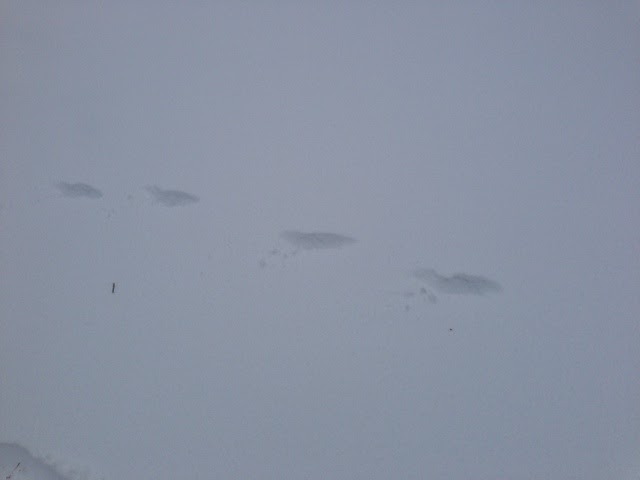
Our first real snow of the season — white, fluffy, measurable — and my first real glimpse of it out the front window. As I open the blinds a fox darts across the driveway from the right. He was spry, lean, red, dashing. He was moving from one stand of trees to another, to the woods behind the house across the street.

Maybe I startled him, or maybe not. Maybe he always moves that quickly, bushy tail flying. A wild thing for sure. But a wild thing with proprioception, aware in his animal way of how easily he was spotted.

I wish I could have caught him on camera. His redness so much redder against the sparkly whiteness of the snow. But my camera was many steps away.

Instead, I made do with the prints he left behind.

Laughing in the Face of Winter

Laughing in the Face of Winter

The best story I have about the weekend’s bitter cold weather happened as I was walking into the grocery store Sunday morning. I had dropped by after church to pick up bagels but was sorry I did. The parking lot was a sheet of ice, and the snow melt being tossed onto it by a earnest employee was being blown right back into the guy’s face.

Snow and ice bring out the little old lady in me. Instead of darting from one errand to another, which is my wont, I do a mincing two-step. My theory is simple: I would like to keep darting from one errand to another. I would like to avoid breaking my leg or wrist.

I was aware there were people behind me but I didn’t recognize them until I was walking in the door. It was the older woman and her son (son-in-law?) who had sat in the pew in front of me at church.

The woman seemed a bit remote during the service, but when a frigid gust struck her, she shouted “whoa” and then exploded with the most authentic, daring laugh. The temperature was in the single digits and she wore no hat or gloves; the 30-mile-per-hour wind was picking up the edges of her brown cape and tossing them around. But she treated the dangerous cold as a petty nuisance, a slightly unruly child. She laughed in the face of winter. She’s my new role model.

The Company of Writers (Again)

The Company of Writers (Again)

I’ve written about this before, but it bears repeating. The company of writers is unlike the company of other folks.

Others may take issue with this, of course, may say it’s the company of actors or stamp-collectors or plumbers that does it for them. And they would be right. It’s the company of those with whom you feel an affinity. Or, to put it another way, writers are my people!

Take last night’s bunch. We talked of safety in university laboratories, the manufacturing of steel, a murder in Centropolis, Kansas, in 1905. One of us read poetry aloud, from a memoir penned in verse. Another passed around a coffee table book on the Chesapeake that was back in print after 20 years. Still another talked about her plan to bring computers to African kids.

I don’t mean to brag here, but writers have many interests. They ask good questions. They are curious. They are also endangered, now that book publishing is in free fall and newspapers and magazines are fading away. So we also traded frustrations, gripes, gallows humor.  But somehow the upshot of it all was overwhelmingly positive.

It was a cold, blustery night. I had worked 12 hours. I should have been exhausted.

I wasn’t.

The Science of Walking

The Science of Walking

When I’m sluggish or stuck, when the ideas in my head have congealed into a hopeless mess, I take to the trail. Thoughts arrive as gifts, flowing from the rhythm of the stride and from the scenery I pass at the pace of footfall. When the brain stalls, the feet step in.

Seems like magic — and maybe it is. But it’s neuroscience, too.

Evidence is mounting that exercise is good for the brain, that it may even stave off Alzheimer’s. According to a recent article in the Wall Street Journal, exercise not only triggers the growth of new brain cells in the hippocampus but it also acts as “a kind of brain fertilizer, helping the brain to grow.”

The scientist Frederick Gage, says the Journal, has suggested that “new cells arise from long walks because, in an evolutionary sense, our bodies associate the exertion with moving from an existing territory, which had perhaps become depleted of food or too dangerous, to a new, unexplored territory whose details must be learned. In anticipation the brain releases new cells and growth factors, which create a more plastic state and make possible new neural connections.”

My exercised brain tells me he might be onto something.