Browsed by
Author: Anne Cassidy

The Guestbooks of Thule
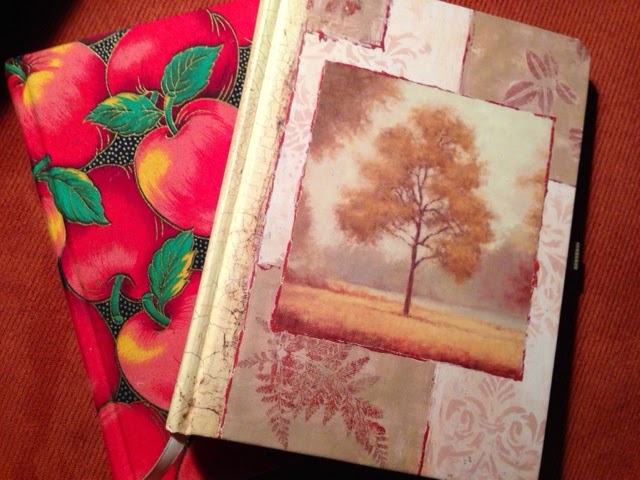
The Guestbooks of Thule

I’ve always been an adventurous traveler, preferring trips to places
I’ve never been before. I’m seeing now what great good comes from
returning over and over to the same place, a family place, in this case a cottage named Thule. 

Flipping through the old guestbooks here, seeing the girls’ handwriting change through the years, reading entries from those no longer with us, I gain for a few minutes what I’m always craving but so seldom have — perspective.

I remember the party boats, campfires and paddles into secret coves, the skits and the late-night swims. I also recall how nervous I was when the children were young. Would they fall out of the canoe? Could they swim across the lake and back?

Reading the old journals, it all comes back to me — the time when Claire split her foot on a shell, the visit when Suzanne almost drove her grandmother’s car off the road, the summer when Celia learned to kayak. All those visits are part of them, part of me — and part of this place. Reading the guestbooks brings them alive again.
Time for Sun

Time for Sun

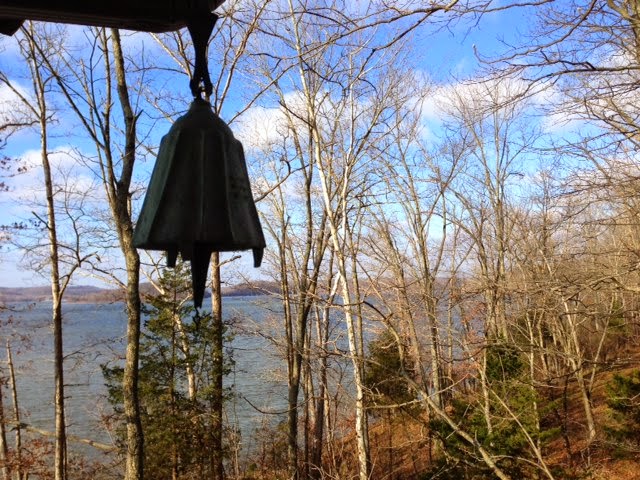
What a difference the sun makes. It’s cold, slightly above freezing, a steady breeze blowing off the lake. But the day is friendly, not the alien weather of yesterday, which was inhospitable to humans.

I say this from experience, after first rambling along the shore and then trudging up to the ridge, where the combination of exertion and distance from the lake made the temperature almost bearable.

Today there are sounds of life, some hammering next door, an occasional car engine. It’s time for me to go outside — if for no other reason than to know how good it feels to come back in! 

Lake Monroe

Lake Monroe

I’m writing from a cottage in Indiana as the wind whips whitecaps in the lake and sends the wind chimes into overdrive.

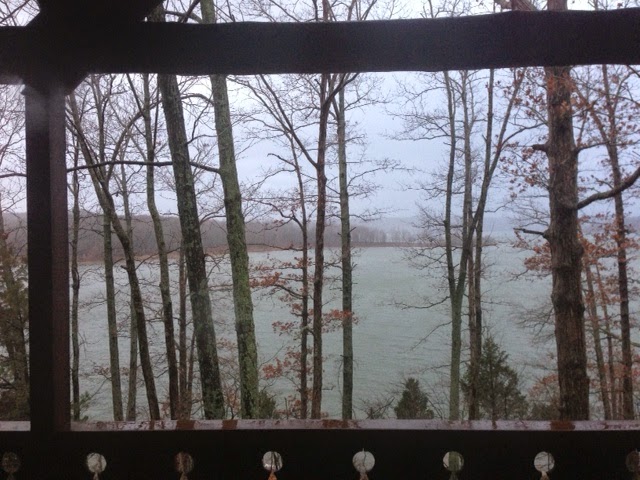
I’ve come here for years but never in the winter, never when the water opened up before me on three sides, never with a sky so leaden and gray. 

It’s a cozy place to hang out for a couple of days. And I’ve figured out how to create a “personal hotspot” to post these words.

Here, in a “frame,” is Lake Monroe, snapped from inside, the only place to be today.

Imagining Grounds for Hope

Imagining Grounds for Hope

First she made a joke about being shorter than the other people at the podium.  Then she told the audience that she was sharing her award —the Medal for Distinguished Contribution to American Letters — with fellow fantasy and science-fiction writers. Then Ursula LeGuin said this:

I think hard times are coming, when we will be wanting the voices of
writers who can see alternatives to how we live now, and can see through
our fear-stricken society and its obsessive technologies, to other ways
of being. And even imagine some real grounds for hope.

We will need
writers who can remember freedom: poets, visionaries—the realists of a
larger reality. Right now, I think we need writers who know the
difference between production of a market commodity and the practice of
an art. The profit motive is often in conflict with the aims of art. We
live in capitalism. Its power seems inescapable; so did the divine right
of kings. … Power can be resisted and changed by human beings;
resistance and change often begin in art, and very often in our art—the
art of words.

I’ve had a long career and a good one, in good company,
and here, at the end of it, I really don’t want to watch American
literature get sold down the river. … The name of our beautiful reward
is not profit. Its name is freedom.

 Within an hour I was at the library checking out three books by Ursula Le Guin. Here’s a writer whose voice I want to read.

Tysons from Below

Tysons from Below

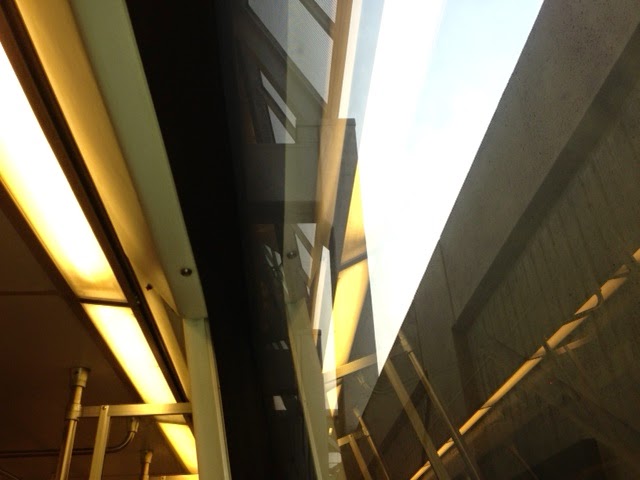
Ever since the new Silver Line went in I’ve been zooming through Tysons on rails above the ground. Sometimes I look down at the traffic, strings of light in the looming darkness, and feel good I’m up above it all.

But yesterday and today I drove to Tysons, saw Metro from below, was bewildered at the new traffic patterns. I was flexible, I was free — until I was sitting at lights and in lines.

Sitting and sitting and sitting …

Eating Crow

Eating Crow

Yesterday, for the first time in several years, I took a yoga class. Yoga is one of those activities I am theoretically for — until it comes time to actually do it.

I knew I was in trouble when I couldn’t do the first pose — sitting cross-legged on the floor. My knees don’t like that anymore. I quickly adapted a faux cross-legged position, one that put my legs farther out in the floor than the other students gathered in a circle around the instructor, John. And it went rather steadily downhill from there. When it came time to learn the crow or Bakasana position —balancing on arms with bent knees — I had to laugh.

I had taken a class with John before and remember it as challenging but fun. This time it was only challenging. Which raises the question, who has changed — John or me?

Both, I’d say. This was a more advanced class and John was subbing for it. But I’ve been ossifying, too, hardening into position. One hour of yoga didn’t do much to dispel muscle stiffness, but it did help me see how much I need to strengthen and stretch. And this morning — ouch! — it’s an easy lesson to remember!


(Crow position courtesy yogaoutfitters.com.)

The End of Sanctuary?

The End of Sanctuary?

When I wrote of barbarism yesterday I didn’t yet know about the slayings in Jerusalem. This time terrorism has reached much farther than Indiana. It has reached into the sanctuary itself.

It is difficult to measure grief and outrage, but this incident is striking in its brutality. The piousness of the victims, their vulnerability, the contested city in which these slayings took place — a city riven by religious violence.

I looked up how often murders occur in places of worship and found a Christian Science Monitor article reporting that as of last June there had been 780 deadly attacks in U.S. churches in the last 15 years, according to Carl Chinn, a church security expert who was himself a victim of church violence. Such violence was almost nonexistent before the bombing at the 16th Street Baptist Church in Birmingham, Alabama, in 1963, Chinn said.

The numbers worldwide are much bigger and more horrifying, I’m sure.

Religious-based violence is nothing new. But the ironies are too great to ignore. That a force intended for good has been hijacked for evil. That a place built for sanctuary has become a killing ground.

Barbarism Comes to the Midwest

Barbarism Comes to the Midwest

When I chose Hanover College as a shy, bookish 18-year-old, it was mostly because of its beautiful Georgian style buildings, its stunning views of the Ohio River, the long wooded drive to the bluff where the campus clusters. Only later would I come to appreciate the school’s fine teachers and midwestern modesty.

But one thing that was true all the time — and still is, I hope — is that like many small liberal arts colleges, Hanover was set apart from the world. I remember once as a prank someone set up a sign at the beginning of that long, winding drive. It said: “You are leaving reality.” And you were. Hanover was a bubble where your only job was to study, make friends and learn to live on your own.

Yesterday I received an email from Hanover College. I already knew what it would say:  Abdul-Raman Kassig, formerly known as Peter, and a former student at Hanover, was executed by ISIS two days ago. His father, Ed, was at Hanover the same time I was; he lived a few doors down the hall from Tom. Peter Kassig was working to help the people of Syria when he was captured last year. He converted to Islam only recently; his name means “servant of the most merciful.”

Sheltered by tall trees and cornfields, sitting serenely above the Ohio River, Hanover College seemed the last place terrorism would reach. If it’s here, then it must be everywhere.

Begonias: The Sequel

Begonias: The Sequel

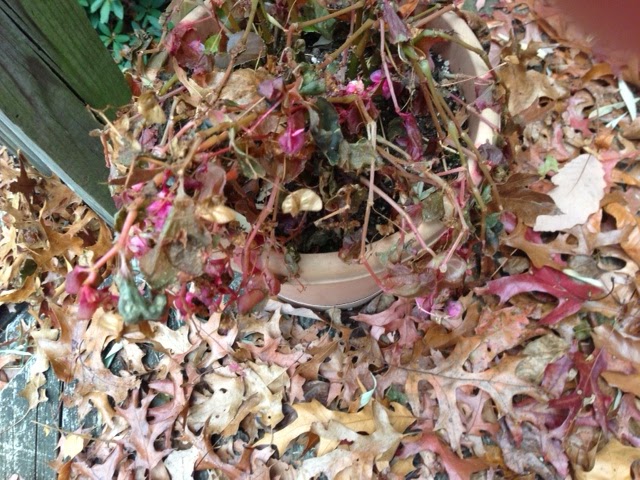
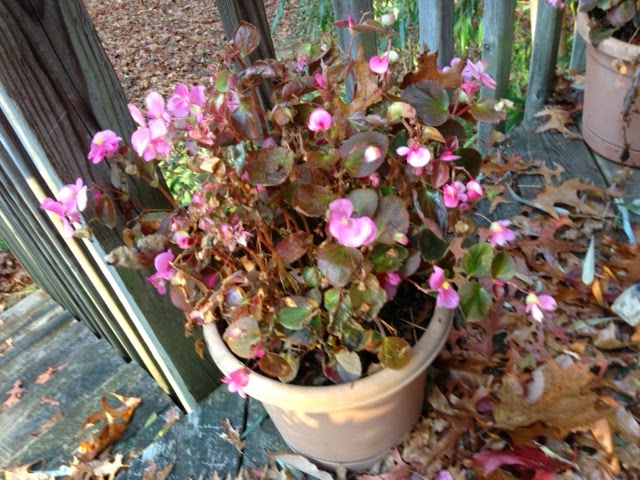
Were the begonias reading my blog? If so, not anymore. On Sunday morning, less than 24 hours after I wrote about their bravery and their continued existence, they finally succumbed to the low night temperatures.

I knew their time was up when I wrote about them, am surprised they lasted this long. It’s the life of an annual, as brief as the autumn leaves that I notice are so much more a part of this photograph than they seemed to be when I snapped the shot.

We know what happens next. In a few days or weeks I’ll rip out the old plants and let the soil rest until spring.

A few late roses are clinging to life, but for the most part the growing season is over. The begonias lasted from late May through mid-November —not a bad run.

Brave Begonias

Brave Begonias

Annuals don’t expect immortality, so I don’t give it to them. When the temperatures dip into the 20s and teens, I let them go gracefully, don’t bring them inside for the winter. I’ve seen enough thin, leggy geraniums to realize when a flower is past its prime.

Which is not to say I don’t care. This time of year I often look outside first thing to see if the begonias have made it another night.

And last night, for one more night, they did.