Browsed by
Author: Anne Cassidy

Capitol Walk

Capitol Walk

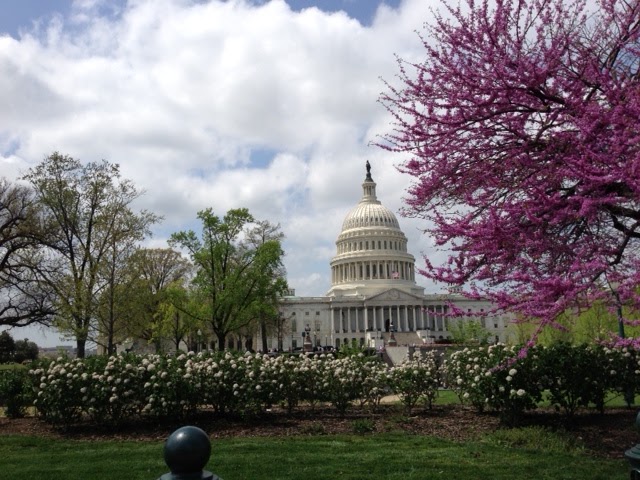
One of my favorite city routes is walking around the Capitol. So at lunchtime yesterday I did what I often do: strolled down New Jersey Avenue with its high-arching trees, skirted the Carillon (named for President Taft’s son, Robert, who served in the Senate from 1938 to 1953), and crossed Constitution Avenue onto the Capitol grounds.

From there it’s a clockwise sweep of the 58-acre park — dodging tourists, watching workers clamber on the scaffolding around the dome, keeping eyes and ears open to the kaleidoscopic scene.

There’s the slow pedaling of the bicycle cops patrolling their beat; the brisk stride of the office worker hurrying to lunch; the lingering saunter of tourists, guidebooks in hand.

At the southwest corner I stop to smell the last roses of summer, still blooming in the Botanical Gardens. The trees there are already orange.

Heading north, I cross the Mall, weave through parked cars, then take a paved path back to Constitution. Only 40 minutes out of the office. An eternity.

 
(The Capitol from the east, before the scaffolding went up.)
Cutting My Losses

Cutting My Losses

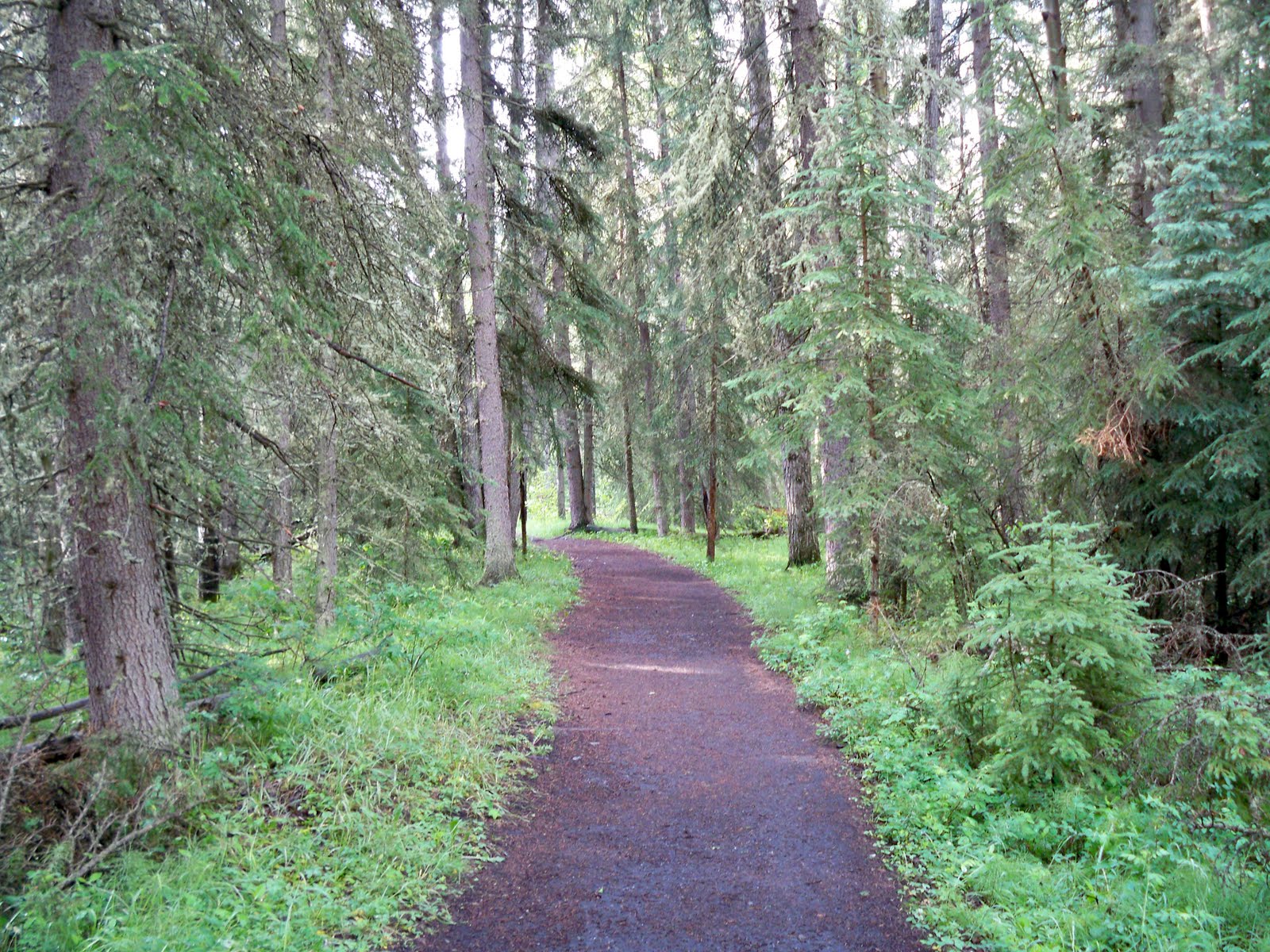
The walks I’ve been taking lately on the Cross-County Trail are not without their lessons, and one of the foremost is learning to recognize when I’m lost. The trail is well marked — most of the time — but on Saturday there was a stone crossing, a sudden turn and — voila! — I was in uncharted territory.

There was a path, of course, but there are many paths in the woods. Some are barely perceptible, the width of a deer (and given the skinny deer we have in Fairfax County, that’s not very wide); others are broad but lead in the wrong direction. The latter is what I was dealing with Saturday. It could have been the Cross-County Trail — except that it wasn’t.

When I’d walked for a while without noticing the distinctive CCT marker, I turned around and retraced my steps. There was a trail that went off to the left, but it was rockier and less cleared than I was used to — probably a dead end. There was another possibility, but it looped back onto the path I was on. I walked all the way back to the steppingstones before I found my error — and it was a big one — turning the wrong direction after I crossed the creek.

Once righted I could immediately tell the difference. The path was sure and springy beneath my feet. I had cut my losses quickly. I was on my way.

How We Learn About Meadows

How We Learn About Meadows

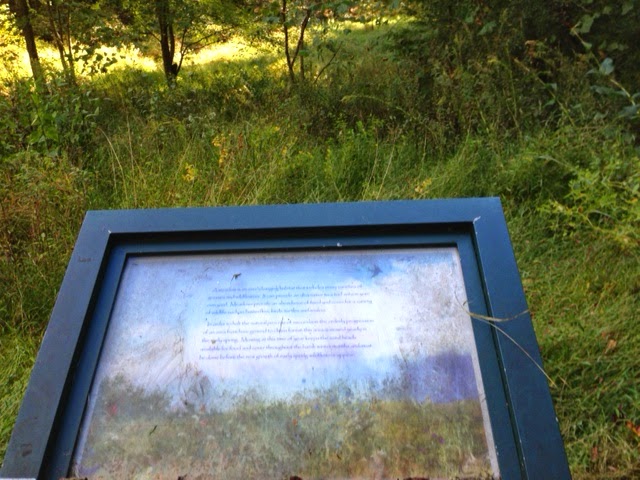
On Sunday’s walk I passed an informational display telling me what a meadow is, why a meadow is
important. How sad that we have to learn about meadows from a sign! How much
better to learn about them from the burrs in your socks, the poison ivy on
your ankles and the sunburn on your shoulders.
I grew up in savannah land — bald, barely treed land where
meadows ruled. I learned to treasure the shady tree line around the edges of fields and the majesty of the lone burr oak.
I
learned first-hand  the loud racket of meadows — cicadas chanting,
grasshoppers buzzing — but also the quiet heart at their center and how their beauty is best set off by the
presence of a grazing cow or thoroughbred.
 But mostly, I learned my way around meadows by tramping through them, by looking out at them from fence rows, or by harvesting them, collecting goldenrod, Queen Anne’s Lace and Joe Pye Weed. So when I came across this meadow sign on Sunday, I snapped a shot — but I made sure that there was a lot of meadow in the picture too.
One and Only

One and Only

Yesterday I walked the Twin Branches Nature Trail, which is now part of the Cross-County trail. The last time I walked it there was huge earth-moving equipment deep in the woods and a new dam going in. I got hopelessly lost on the detour, was caught in a fierce summer thunderstorm and rescued by a homeowner who saw me shivering under a tree and invited me into his garage.

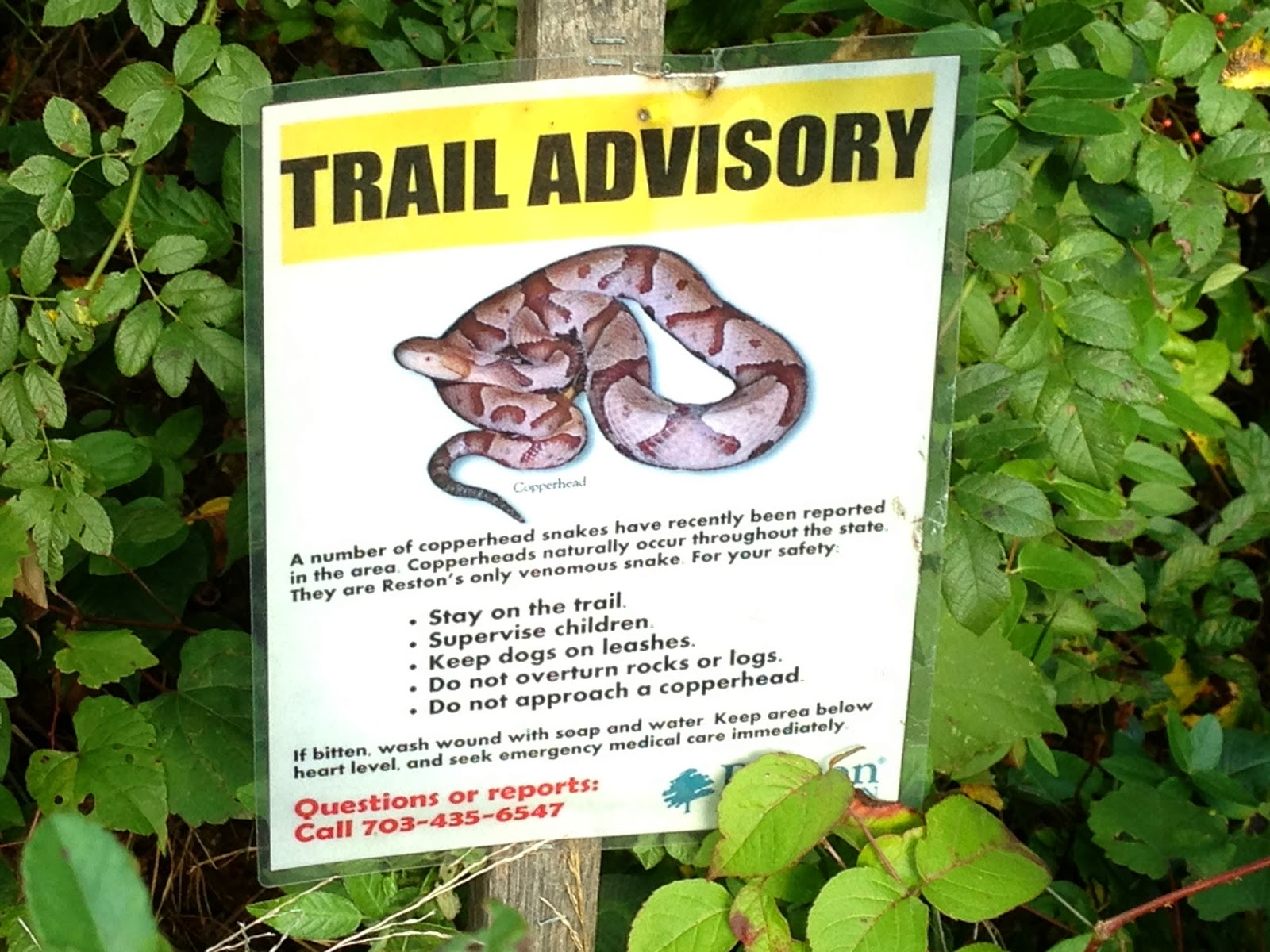
Sunday’s adventure was much calmer — although there was a little excitement. Here’s a sign I saw on my way into the woods. It was no problem heeding the warnings: Stay on the trail. Check. Do not overturn rocks or logs. Check again. Do not approach a copperhead. Check for sure on this one.

But my favorite part of the warning is this: [Copperheads] are Reston’s only venomous snake. Whew! I feel much better now.

Hidden Pond

Hidden Pond

Today I walked down an old section of Hunter’s Valley Road to twin stone pillars flanking a trail. A few hundred feet down a muddy path I came to a grove of bamboo so thick that light barely penetrated the thicket. It rained hard last night and everything was drenched. Moisture beaded up at the ends of the bamboo fronds and dripped on me as I shoved my way through the foliage.

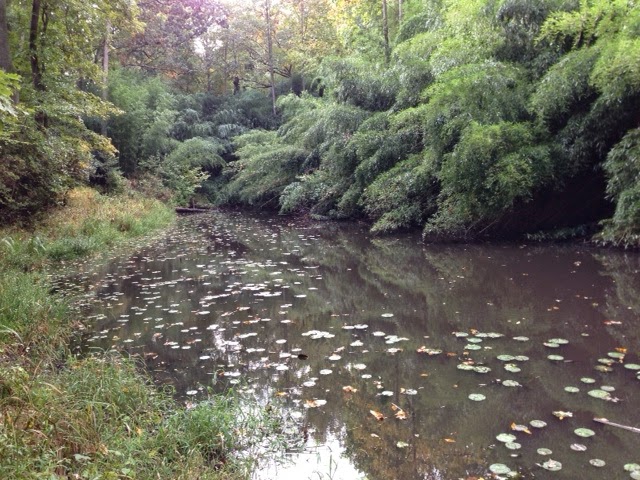
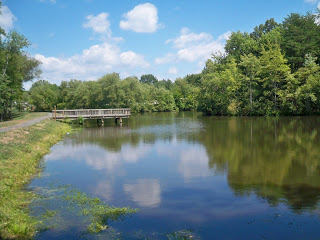
Once into the enclosure I marveled at the space. A pond, completely hidden from view, surrounded on three sides by bamboo and on the other by banked rows of rhododendrons and azaleas. Fallen leaves and lily pads dotted the surface, and the great shaggy bamboo, weighted by water, hung its head in the pool.

What is it about a hidden garden we find so appealing? Is it the incongruity of something outside and in the open but still out of sight? Or is it the feeling that it gives us, one of enclosure and safety. Whatever the explanation, the place had a magical effect on me; it calmed me, slowed me, made me want to stay.

Learning the Rules

Learning the Rules

I’ve been thinking about suburbia and suburbanites this morning — about those of us who make our homes in neither the city nor the country but in that place in between — and how we are the product of zoning laws, cheap mortgages and office parks.

I work for a law school but seldom think about how laws and policies have shaped the place I live. Even the open space I praise in this blog is mandated by regulations on density and the percability of soil. The same rules that give us a meadow isolate us from each other.

So what’s a walker to do? Keep walking, I suppose. Because walking knits together the here and now with the then and gone. It also makes me care. And if we are ever to change the way we live we must first care enough to understand how it came to be.

Possibilities of Place

Possibilities of Place

Since Sunday’s hike I’ve been doing a little research on the Cross-County Trail, Difficult Run and the watershed. I’ve learned about ongoing projects to manage the streams, to keep them healthy with drainage and tree buffers.

I’ve learned about the flooding that often occurs in the section I hiked a few days ago. Most of all, I’ve learned about the communities of runners, walkers and bikers who have traveled these trails before me.

I’ve read stories of single-day marathons, of Nordic pole-walkers, of runners wading waist-high across streams when the water tops the fair-weather crossings.

What these tales have in common is a sense of adventure and discovery. There is awe of the natural beauty, of the possibilities of this place.

Payday

Payday

It struck me yesterday as I was walking that it was the last day of the month — payday.

Like many people, I’m paid electronically. The money enters our account without a sound. No envelope opening, no bank teller tabulating. A silent acquisition.

This is a wonderful convenience and not something I want to change. But it means I seldom celebrate the wage-earning aspect of my work, the fact that every month a comfortable sum is exchanged for my toil.

So today I’m celebrating — with a silent cheer.

Six Twenty-Eight

Six Twenty-Eight

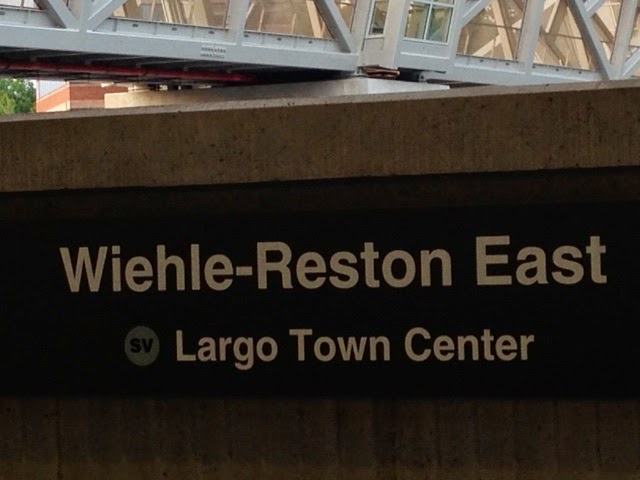
I’m learning a little more about Metro’s new Silver Line every day: where to stand on the platform so  I can transfer easily downtown; how to negotiate the confusing, multi-level garage; and, this morning, how to avoid the garage entirely.

There’s a free parking lot near the Reston Wiehle station, actually a series of parking lots. I’ve known about them for years — they were originally intended as park-and-ride lots for bus riders — but it suddenly dawned on me that they’re just a couple blocks from the new Metro station. Maybe they’re not open anymore, maybe they’re reserved — or maybe they’re a way to save $4.85! 

Today was the day to find out, so I left the house a little after 6, pulled up to the lots about 6:20 and found … pandemonium. Cars pulling in, cars circling, cars like vultures searching for carrion. I tried one section of the lot and found it completely full, then headed back the way I had come in to explore the other side. It looked tight. Most spots were taken but there, off to my left, wasn’t that an opening? Yes! It was! I pulled in quickly before someone beat me to it.

As I was walking to the station I fell in step with a fellow commuter who told me that this lot “always fills up by 6:28. Those cars there are the last ones that will find spots.”

Why 6:28 and not 6:29 or 6:31 I never learned, but the man seemed quite sure of himself. A full lot by 6:28 a.m.? Why not?

Walking to the Potomac

Walking to the Potomac

Yesterday a hike from Colvin’s Run Mill to the Potomac River, eight miles round trip on the Cross-County Trail. The river is the trail’s northern terminus and you have to work a little to get there. Floods have taken out part of the gravel walk along the stream and there’s a stretch where you must clamber over rocks or turn back. Combine that with two fair-weather creek crossings and I used up my courage quotient for the day.

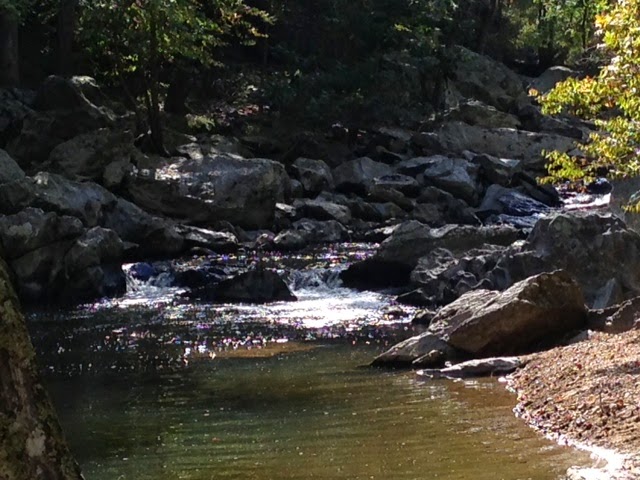
The destination was worth it, though, walking along the roiling waters of Difficult Run as it makes its way to the river, plunging and skipping over rocks, through channels narrow and deep. (Hard to believe it’s related to the rivulet that meanders through my neighborhood.)

And then coming finally to the Potomac, the orange and yellow kayaks glimpsed through the trees, Maryland on the other side. The stateliness and otherness of a river. And a walk that made the destination matter.