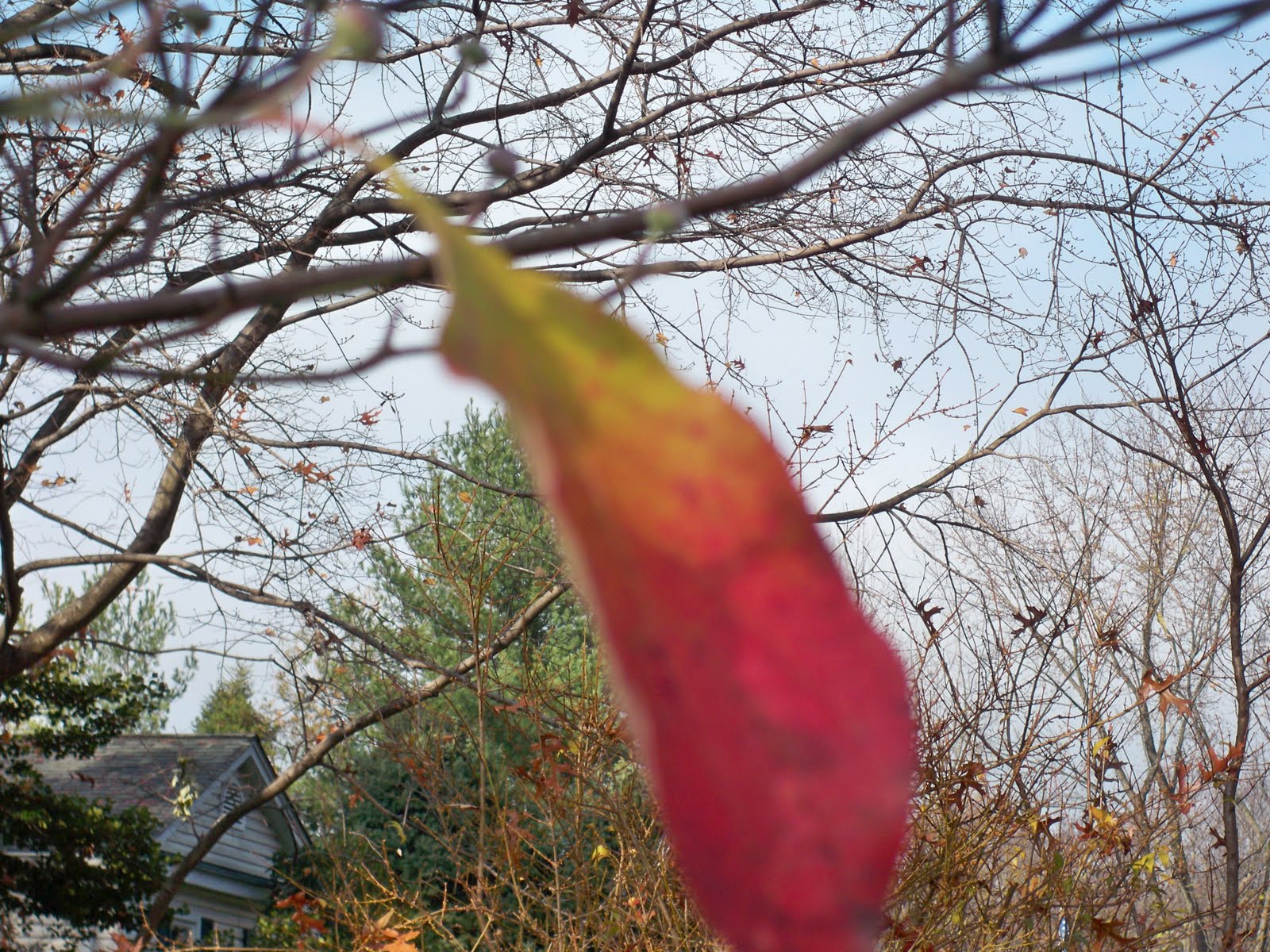
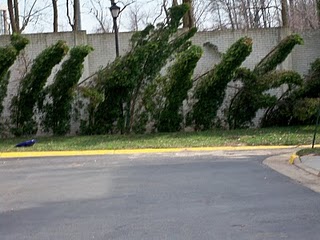
As we rush toward the solstice, as fall gives way to winter, consider for a moment the nearly bare tree. Dark trunk, tangle of limbs and — like so many prayer flags flying — the last autumn leaves, slender salutes to a fading season.
After months of having more leaves than we can count (or rake), the scene is as much about the absence as the presence, as much about the silence as the music. It is as if these last few leaves, so sparse, so perfect, so wan and lonely, are saying, here we are — look longingly on us world. You will not see us again for many months.
They are the last curtain call, the single painting on an expansive wall.
The path to serenity lies in living in the moment. But the moment is hard to find when Christmas shopping. So this year, I’m trying to shop mindfully, to enjoy the process a little more, to choose special gifts for the people I love but not obsess about finding the perfect item.
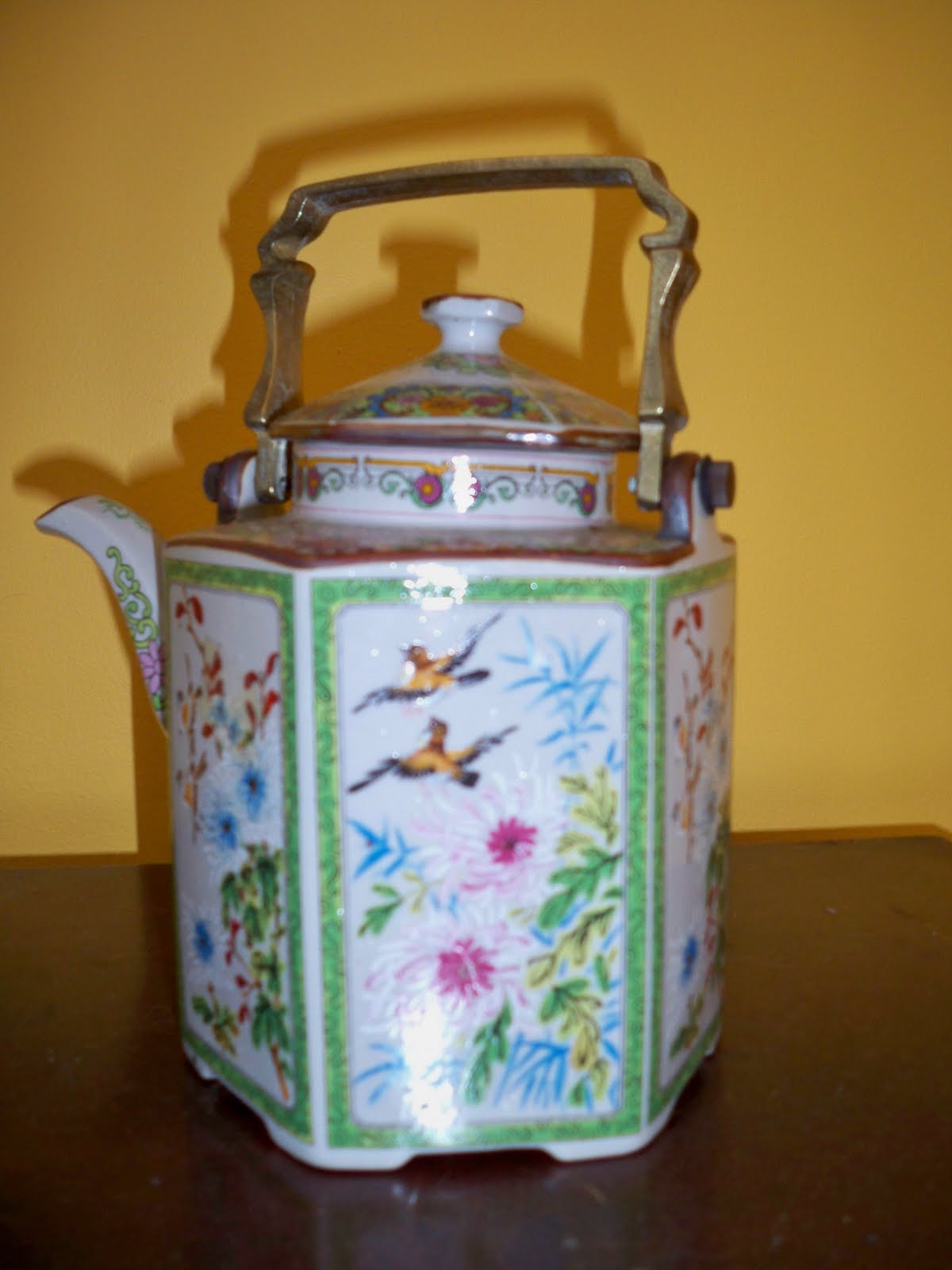
It’s an attitude shift. It’s about serendipity, stumbling across a scarf with texture and dash or a cunning little teapot. But it requires stores with odd jumbles of merchandise (which I’ve found by steering clear of the mall) and that the shopper (me) browse with open eyes and calm spirit.
Here’s where mindfulness comes in. I’ve noticed that it’s only when I leave behind any notion of finding the perfect gift that all the perfectly good gifts appear.
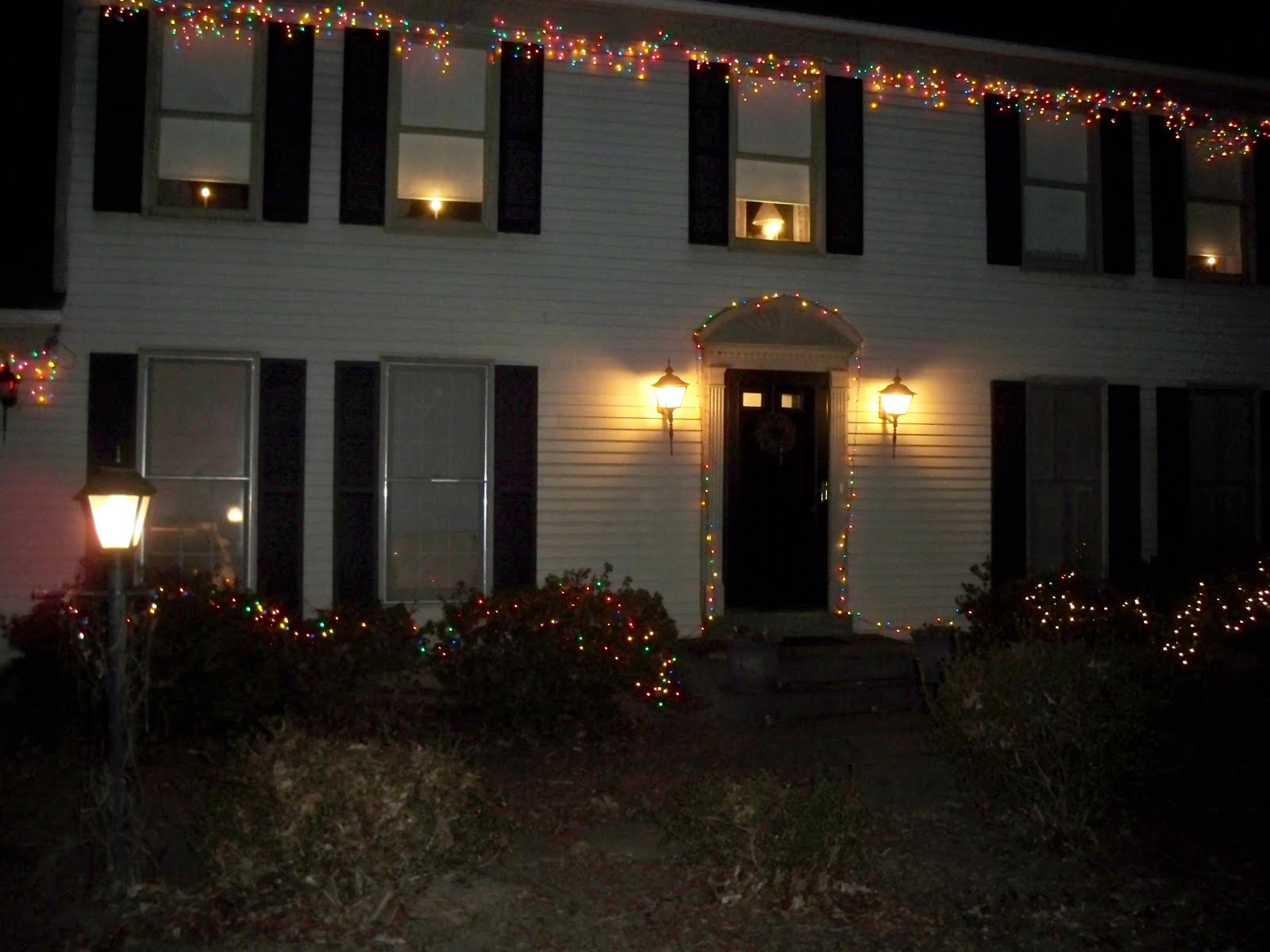
It is time for the annual Christmas lights show across America, when we put candles in windows, outline our houses, spotlight our doors — and in general thumb our noses at the darkness.
There are specific houses and entire streets I look forward to every year. One dripping in white icicle bulbs that looks like a winter wonderland, another crowded with mismatched Santas, Rudolfs and snowmen.
We have always decorated with colored lights rather than white, with no particular agenda in mind, just a choice. But I remembered as I began to write this post that the late Michael Kelly had written a column about white lights vs. colored lights, and so I found it online and read it.
White lights, Kelly said, “make the statement that one is a refined sort who appreciates that less is more,” and colored lights say that Christmas isn’t Christmas “without an electric sled and reindeer on the lawn, an electric Santa on the roof, an electric Frosty by the front gate and an electric Very Special Person in a manger on the porch” (that last phrase refers to the pageant at his Unitarian church).
While we have no inflatable Santas on our lawn, we are most definitely colored-lights people, a little mismatched and scruffy, never the first to put up our display and often the last to take it down. White lights would be false advertising.
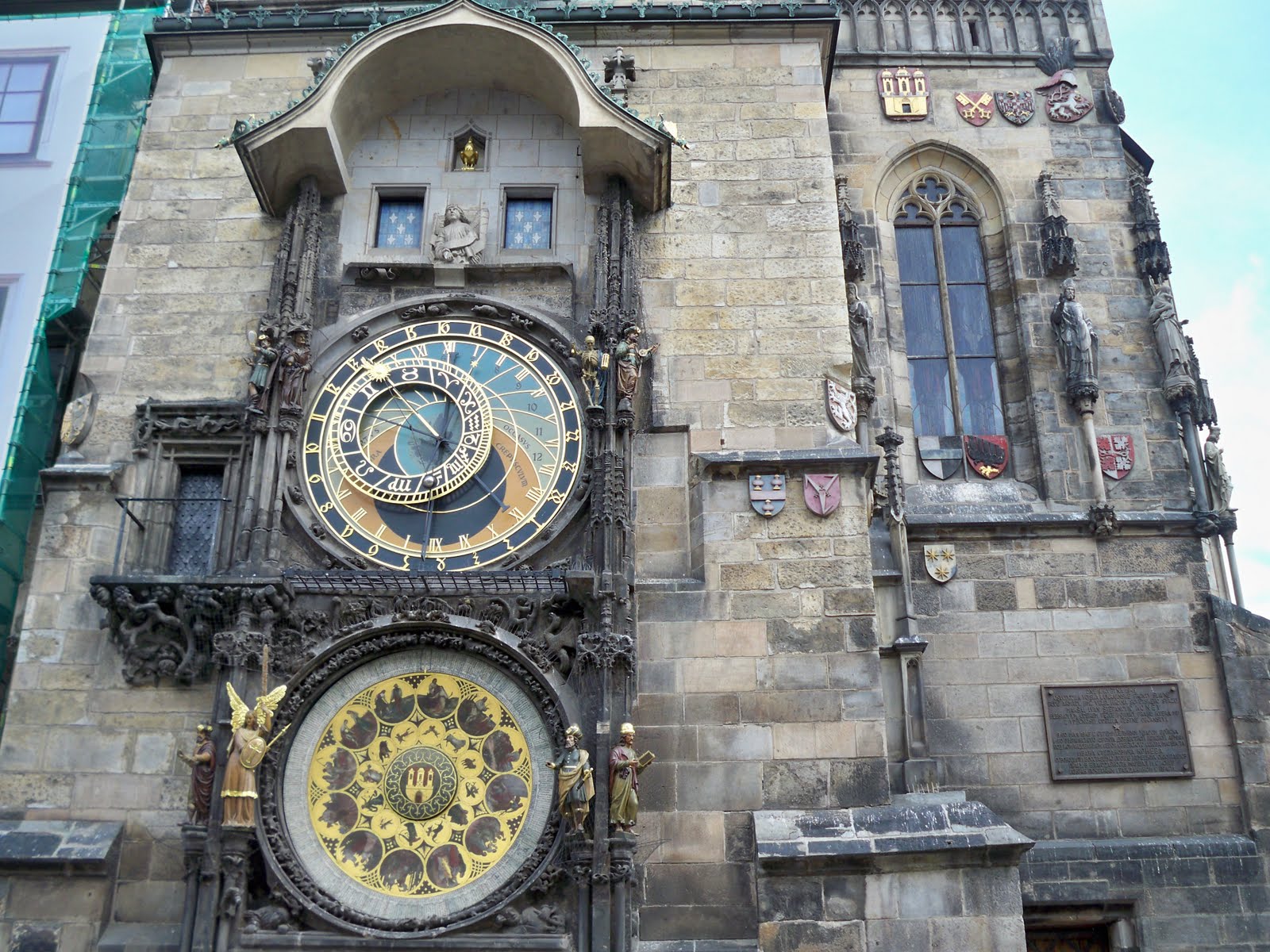
In these final days of 2010, I find myself meditating on time itself. Time-keeping began in the monastery, writes Lewis Mumford. There, inside the walls of the cloister, was regularity and discipline and order — the Rule of St. Benedict, with its strict adherence to seven devotions during the day.
Regularity requires time-keeping, and by 1370 there was a well-designed modern clock. And so, says Mumford, “one is not straining the facts when one suggests that the monasteries — at one time there were forty thousand under the Benedictine rule — helped to give human enterprise the regular collective beat and rhythm of the machine; for the clock is not merely a means of keeping track of the hours, but of synchronizing the actions of men.”
As bells tolled the hours not just in monasteries but in towns and villages, time-keeping jumped the fence of the cloister and moved out into the world at large. “Time-keeping passed into time-serving and time-accounting and time-rationing,” Mumford writes. “As this took place, Eternity ceased gradually to serve as the measure and focus of human actions.”
So as I dash from home to the office, as I parcel the hours of my day into discrete intervals — often wishing for nothing more than time without time — I am heir to this big invention, this new way of organizing daily life. Somehow, that makes the rushing around feel a bit more noble.
Last night we sat on the floor of the Kennedy Center lobby and heard 300 tubas, sousaphones and other lower brass play “Deck the Halls,” “Angels We Have Heard on High” and “Jingle Bells.” But the tune I can’t get out of my head this morning is “76 Trombones.”
That’s because we were introduced to some unusual members of the lower brass family, including a Russian bassoon (a gawky looking mix of wood and metal) and the double bell euphonium (pictured above), as in these lyrics from “The Music Man”‘s signature tune : “Double bell euphoniums and big bassoons/each bassoon having his big fat say.”
TubaChristmas concerts, the international phenomenon which began in New York City’s Rockefeller Plaza in 1974, were created by the late Harvey Phillips as a tribute to his teacher William J. Bell. The appropriately named Bell was born on Christmas Day 1902, and among other highlights of his illustrious career, played with John Philip Sousa. So Christmas and the 4th of July come together in the heritage of this fine musician — just as holiday carols and summer music came together in my head this morning. And why not? It’s the season to seek joy in unexpected places.
I can remember a time when sleep lasted eight hours, when nighttime was a clear barrier between one day and the next. But for many years now I can count on patchwork sleep at least a couple nights a week.
Sometimes I pop up, ready for the day — only the day is still night. I take full responsibility for this restiveness and have all sorts of strategies (occasionally successful) to counteract it.
But other times I wake up due to — ahem — environmental factors — the primary of which is having a teenager in the house. This teenager may not go to bed until 2 a.m. if she has a lot of homework. And sometimes she gets hungry after midnight so she cooks. During the summer, when we have two or three daughters at home the shower is as likely to be running at midnight as it is at noon.
In other words, for the last few years our house has come to resemble a 24-hour hotel, a full-service establishment with round-the-clock service. I love our house, I love our kids. But I’m exhausted.
Head bowed, hands stuffed in sleeves, I pushed my way yesterday through the strong west wind. After the balmy strolls of a lingering autumn, the power of this “arctic air” (as the weather people like to call it) took my breath away.
I’ve never minded exercising in still cold. You start off shivering but heat yourself up quickly. The body is a furnace.
But cold windy days are another matter entirely. Every bit of exertion-stoked warmth flies away in the breeze. You are at the mercy of the elements. A part of the landscape, bent but not broken.
More than a week into Advent and I am finally slowing to the measured pace of this liturgical season. It is my favorite. A time of reflection, hope and anticipation.
Perhaps it is the carol “O come, o come Emmanuel,” its plaintive chant, and early memories of singing it in my parochial school hallway, the waxy smell of the Advent candles. But for some reason Advent always makes me think of old stones and heavy draperies, the silence of the cloister. Because it is less trumpeted than Christmas, Advent has kept its ancient, monastic overtones. It is as barren as the earth scoured clean by winter winds. It is a preparation for the celebrations to come.
This morning our dog, Copper, was especially rambunctious. We don’t know what got into him exactly, but he came inside after his morning romp and skittered all over the living room and kitchen. He chased his tail. He ran loops in our house. He looked for all the world like a canine comedian, milking us for every laugh he could.
I let him back into the yard where he ran big loops with a red ball in his mouth. More laughs. It’s impossible to watch that little guy rocket across a space, his long, low body (one of our friends says he seems to be put together out of spare, mismatched dog parts) blurred by motion. He’s the life force itself. The very essence of joy.
When he’s done he runs up to us with a funny grin on his face, as if to say, aren’t you proud of me.
And at that moment I forget about the loud barking, the accidents on the carpet, the ruined back door, the times he’s run away and left us with our heart in our throats. I reach down and pat the little guy.
While most people watched the HBO miniseries “John Adams” four years ago — or read the book by David McCullough on which it is based — I’m just now catching the show. While I marvel at Paul Giamatti’s portrayal of Adams, “the forgotten founder,” and at the philosophical conversations between Adams, Jefferson and Franklin, what strikes me most about the series is how difficult life was 200-plus years ago.
Fire, pestilence, perilous travel — these people were not coddled. To what extent did the circumstances of our ancestors’ lives forge in them the character and ardor to build a nation? Life then was shorter, harder, more intense. I feel fat and shallow in comparison.