Browsed by
Category: birds

Like a Hawk

Like a Hawk

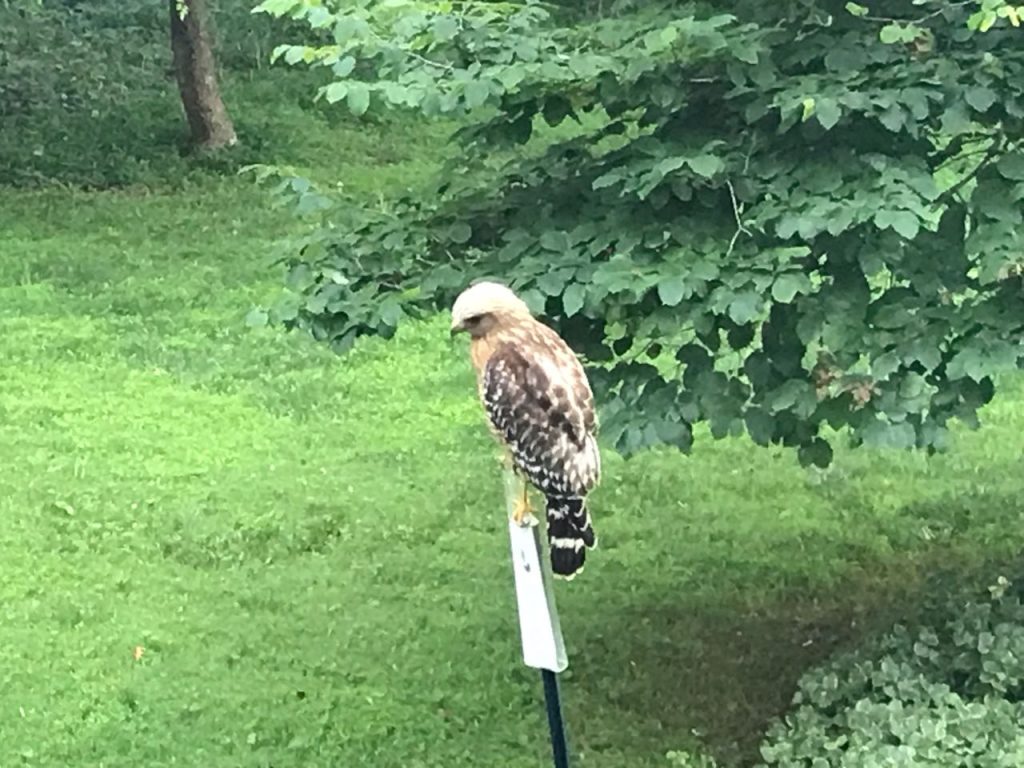
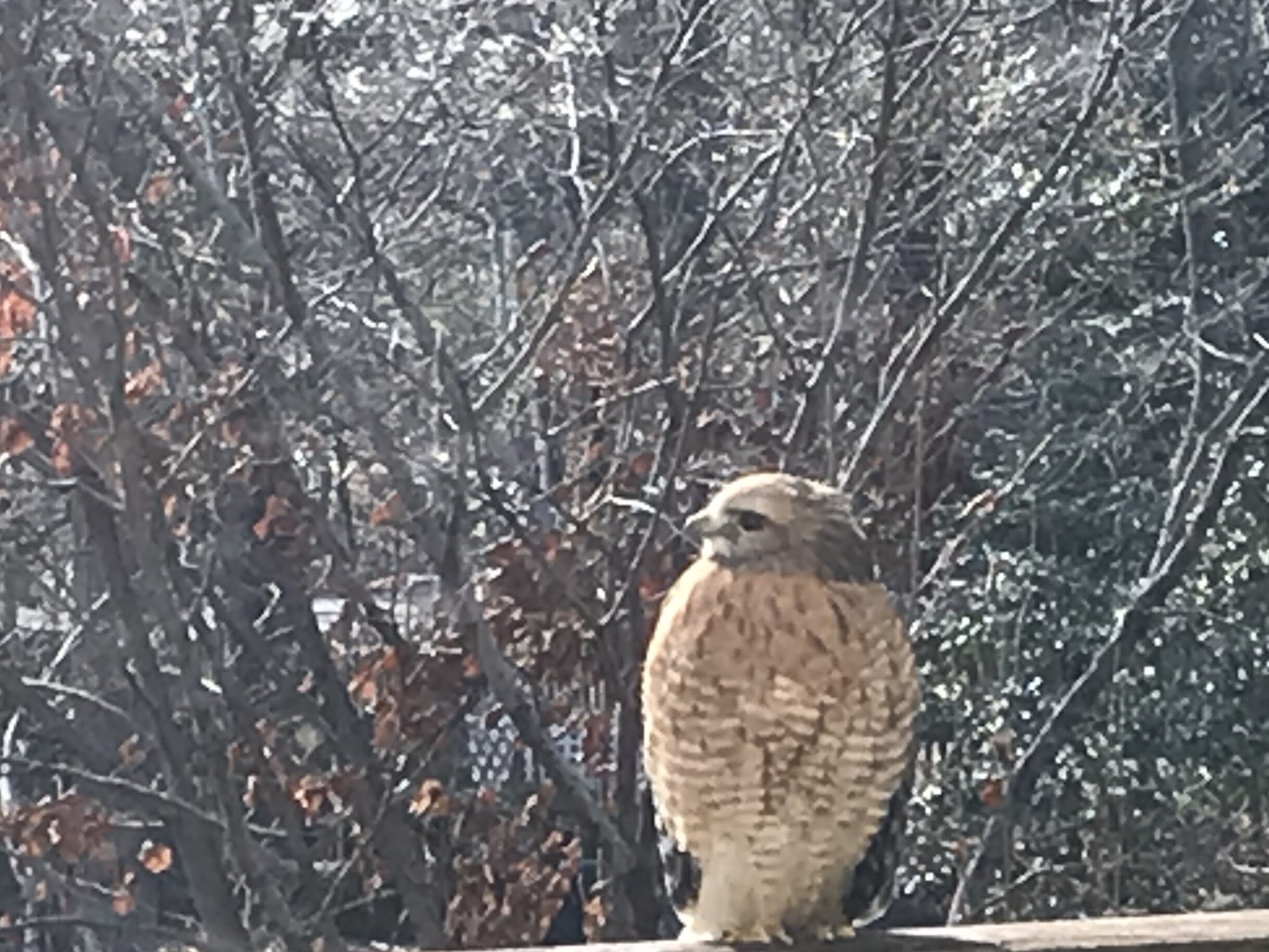
The hawk looks contemplative here, as if he’s pondering the world and his place in it. But in truth he’s looking for dinner. He’s watching his prey … like a hawk.

He showed up several times last night as we supped on the deck, making me wonder for a moment if he was sizing us up, too, but realized we were too big and tough.

The raptor was here a couple of nights ago, also, perching on the deck railing and on top of the rain gauge, as he does here. I imagine he’s keeping his eye on the bird feeder. There’s a resident chipmunk this summer, too — or at least there was.

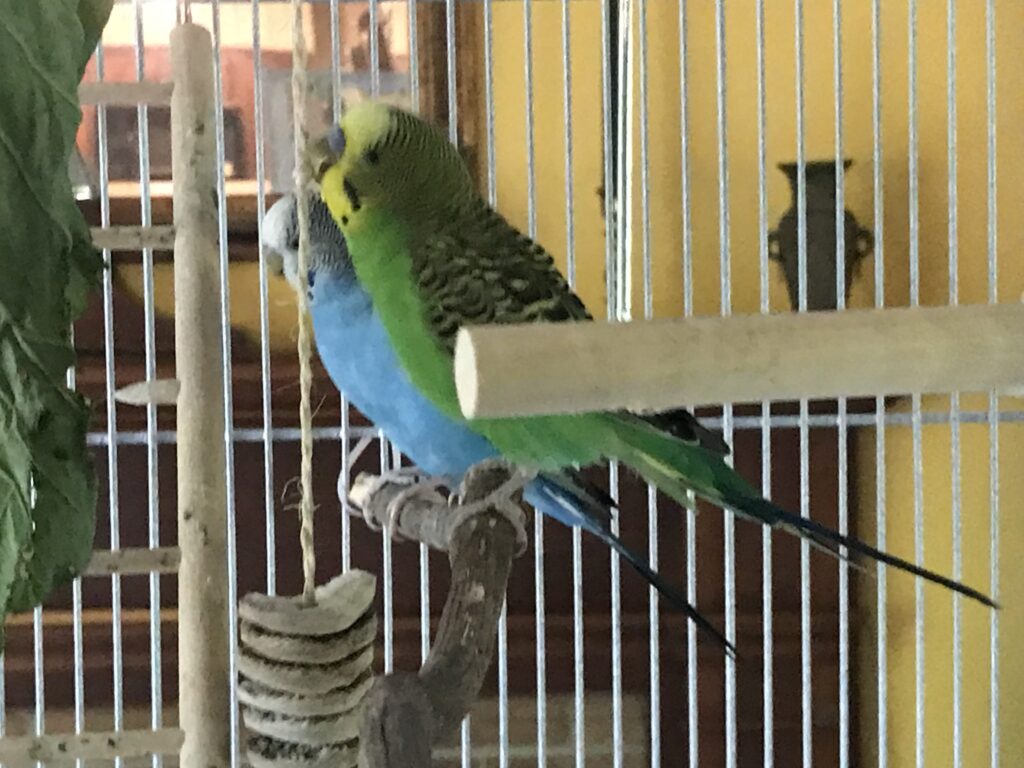
Whenever I see hawks now, I think of the close encounter I had with one a couple of years ago, how the parakeets barely escaped his talons, how they might have perished had I not been there. The parakeets stay inside now. The world is too wild for them.

But not too wild for me. How privileged we were last evening to spend long minutes gazing at this guy.

Waiting for Scouts

Waiting for Scouts

Hummingbirds typically reappear in these parts around the end of April. Often on April 28th. Which is not to say that you can set your calendar by them, but close.

This year, feeders have been in place for more than a week, installed during one of the hot days in this on-again, off-again spring. But I’ve yet to see one of the early arrivals, the so-called scouts, male birds who fly into an area a week or two before the females to search for food.

I look at the feeders, notice that one has lower levels of nectar than the other. Maybe I’ve missed a few birds, but I doubt it. Just to be sure, though, I’m writing this post from the deck.

The Redder the Better

The Redder the Better

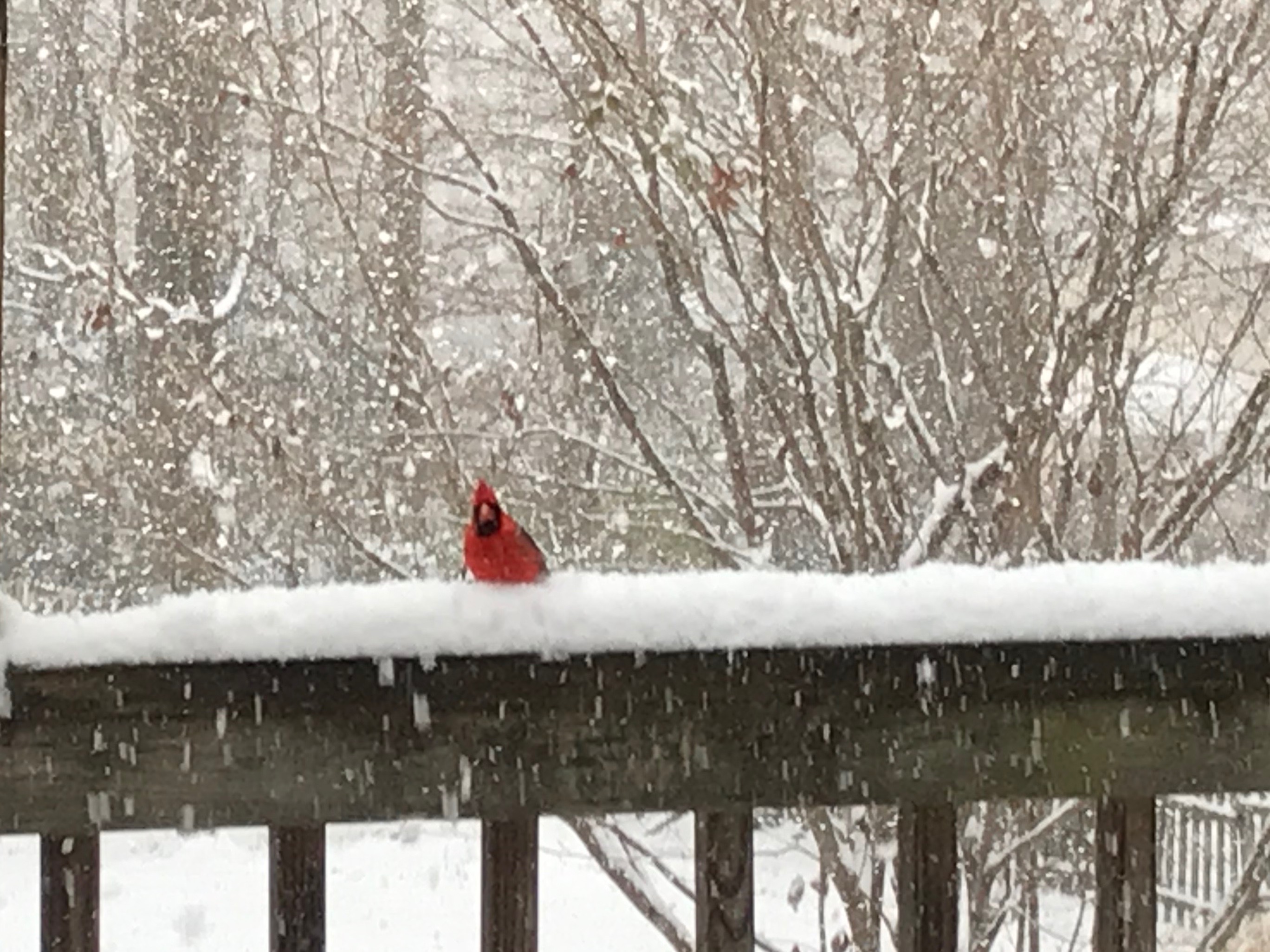
We are flush with cardinals here in my corner of Virginia, but the male at the feeder yesterday was one of the most vibrant I’ve ever seen. He practically glowed.

I did a little research, and sure enough, male cardinals are at their most vivid in late winter and early spring. Diet determines color, and females want a partner with a seed stash. The redder, the better.

You might wonder how such an outlandishly bright bird manages to be one of the longest lived, up to 15 years old in some cases. Male cardinals certainly aren’t hiding from predators.

The answer, according to the Cornell Bird Lab, is that cardinals avoid the stress of migration, and staying put gives them a longer breeding season. They are “habitat generalists” who can nest in a variety of locations, and the females of the species are far less conspicuous than their mates. They camouflage themselves in tangled shrubs (of which we have plenty).

It’s easy to be ho-hum about cardinals, given how many we have. But their springtime brilliance reminds me how lucky we are to have them in our midst.

(I snapped this photo during a late-winter snowstorm several years ago. This fellow was already an eye-popping scarlet.)

Like a Hawk

Like a Hawk

The small birds of winter are much on my mind, the sparrows and chickadees and downy woodpeckers, in part because it is winter and in part because a new suet block has them flocking to the deck.

The large birds of winter have found their way here, too. Which drives the small birds away. If you’re looking for an avian party-killer, just invite a hawk to lunch.

This robust fellow showed up yesterday, as I was munching on a salad. I knew he was looking for the meat-eater’s special so I kept my eye on him as I finished my greens.

The hawk was seeking prey, of course, watching the small birds like a … well, like a hawk. But he wasn’t the only one laser-focused yesterday. While he was watching the small birds, I was watching him.

Hummingbirds’ Farewell

Hummingbirds’ Farewell

In 2024, September 19th was the last day we spotted hummingbirds at the feeder. But so far this morning I’ve seen no sign of the tiny birds. We had two days of rain, which may have chased them off, or maybe they were following that mysterious call that sends them from suburban backyards to tropical rainforests.

They fly hundreds of miles, winging their way south over the Gulf of Mexico to their winter home in Central America. The calories they consume will help them make that journey.

On Tuesday, before the rains came, a hummingbird left the feeder and hovered right in front of me. Birds have done this before, almost buzzed me. They seem to be checking me out — or maybe they’re thanking me and saying goodbye.

I answer them in a soft voice, as I do to the parakeets inside. “You’re welcome,” I say. “Please come again next year.”

Hummingbirds’ Return

Hummingbirds’ Return

Hummingbirds were scarce early this summer. They showed up in late April, as usual — a scouting mission? — then vanished for weeks, lured by more tempting feeding troughs or blocked by the rain. But lately they’ve returned, sipping homemade nectar and supping on potted petunias.

Hummingbirds are my summertime companions — not exactly my spirit animal, but close. Their speed and hustle are the soul of the season. They live with abandon. They zoom, they dive. They perch ever so lightly on the thinnest of climbing rose twigs.

Sitting here, mired in words, I long to break free as they do. Romanticizing them? Of course. Their life is no picnic; it’s an ongoing quest for food and safety. But their presence is a balm to me. They remind me to live in the moment, to live free.

An Antidote

An Antidote

A humid morning on the deck, fan whirring, heat still tempered by some faint remnant of nighttime cool. I watch the birds, the tiny wrens whose songs took me so long to identify because their sound was so much larger than them. The hummingbirds who have returned after an early summer hiatus. A male cardinal, his plumage bright red against the green.

How soothing it is to sit here as the birds flit and flutter in front of me. They’re an antidote to the hard times and the bad news. A way to be present in the moment.

In The Backyard Bird Chronicles, Amy Tan writes that the birds she watches heighten her “awareness that life contains ephemeral moments, which can be saved in words and images, there for pondering…”

For me, today, they do that … and more.

Their World

Their World

The parakeets have moved to a new room of the house, what I think of as the morning room. It’s full of sunshine at this time of the day and the rays are enlivening the birdies, who are flapping and fluttering around their aviary cage.

Soon they catch their breath and perch side by side, looking out the window. What do they see? Not just the grass and trees and raggedy azaleas that I glimpse. It’s a landscape pulsing with colors invisible to the human eye; they can perceive ultraviolet light, too.

Having them here, in this room and this house, is a constant reminder of the “immense world” we inhabit, a term I borrow from a book by Ed Yong. It’s a book I’ve read recently and am only mentioning in this post — I hope to explore it more fully in another.

For now, suffice it to say that the parakeets sense their own slice of reality just as we humans sense ours. Having a better idea of theirs makes mine that much richer.

Party Animals

Party Animals

We have to keep a close eye on our parakeets. Any excuse for a party. This weekend there were two birthdays, so they went to town.

They can’t eat cake, and though they are extremely musical, have not yet managed to warble “Happy Birthday to you!”

But boy can they fly around, pull toys apart, and make a mess. It’s tempting to put them in time out … but they already live in a cage, so what to do?

Just realize that birds will be birds, crank up “Celebration” … and let the good times roll!

(The parakeet’s cage after a night of hard partying.)

Left Behind

Left Behind

I found the little guy on the deck yesterday, a fledgling that didn’t make it, a pile of bones and feathers and a faint blush of pink that promised the bright hues of a male cardinal.

I work in an upstairs office with two big windows overlooking the backyard. Sometimes there’s a thump when a bird hits the glass or screen, but usually it flies off and survives. Was this bird one that didn’t? Or did it starve? Unlikely given the bounty of seed so close at hand with our feeder, though juveniles can be crowded out there.

Nights have been cold lately. Could this wee creature have frozen in the chill? The pruned azalea offers less shelter than it did pre-shearing. Whatever took him, I hope it was quick and painless. Birds belong in the air and trees, full of breath and life.

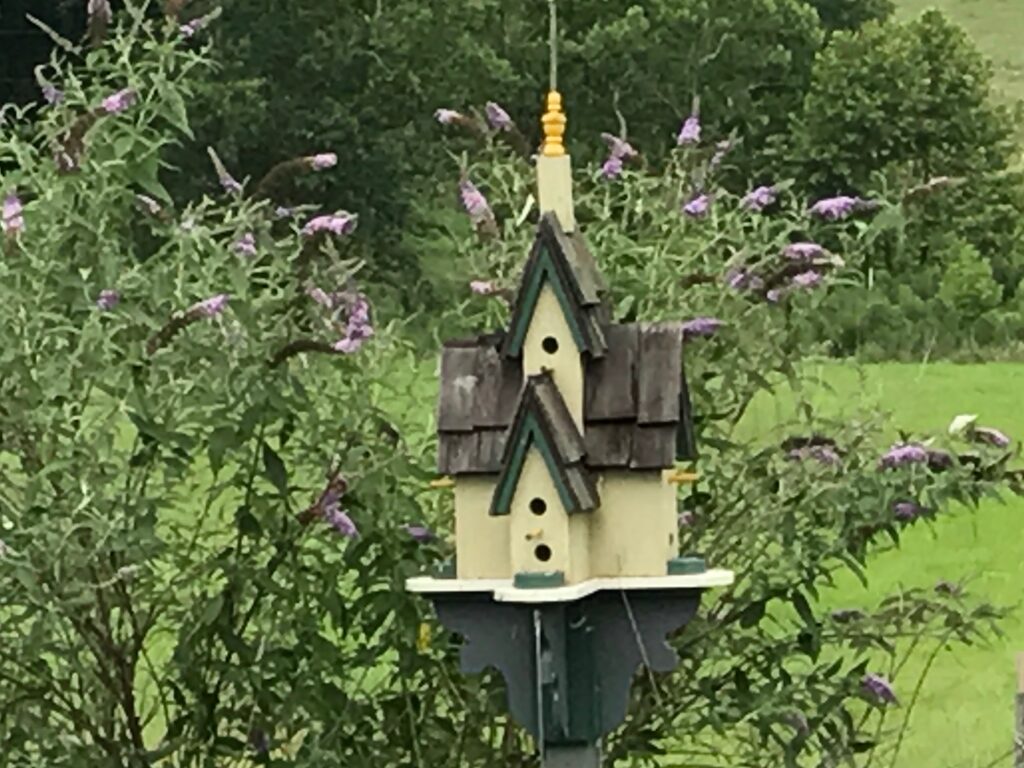
(Maybe all that little bird needed was a house like this.)