Browsed by
Category: entertainment

Viva Italia!

Viva Italia!

Like many people these days I find myself relying on streaming entertainment more heavily than I would like. This has become a winter-time occupation, slowly supplanting my race to watch Oscar-bound films in theaters since so many of them are available online.
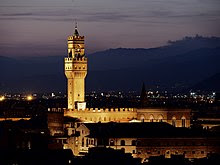
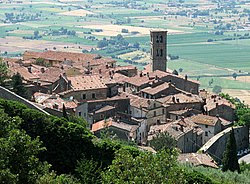
As we enter our third year of pandemic-enforced staying-put, I’m gravitating toward films that feature faraway climes. Films like “Under the Tuscan Sun.” I read this book years ago, even own a copy of it. I happened upon the movie a couple days ago, looking for something to watch while exercising in the basement. 
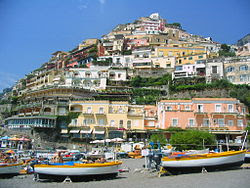
What a vision! I don’t mean the sexy Italian guys … I mean the gorgeous Tuscan countryside. There is the walled city of Cortona, the Amalfi Coast marvel of Positano. There are the tall, skinny Italian Cyprus trees, the olive groves, fountains and love of life that flourish in this sunny land.

Oh, I know there are gray days in Italy, too. It’s not the garden of eden. But right now it looks like it to me. 
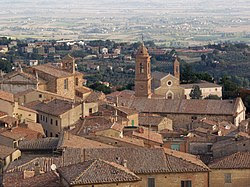
Photos: courtesy Wikipedia, alas I have no recent Italy photos of my own

Picketing

Picketing

When you’ve seen a movie as often as I’ve seen “It’s a Wonderful Life,” the lines you may not have noticed on first or second viewings pop out at you later.

One of the exchanges I noticed this past December, during my umpteenth watching of this holiday classic, happens when Mary sees George Bailey walking back and forth in front of her house, presumably getting up the nerve to knock on her door. “Are you picketing?” she asks, in a lovingly jocular way that would come to characterize their relationship.

I think of that line often as I walk Copper, an old doggie whose idea of a long stroll is making it one driveway down and back. First we turn right out of the driveway. After a brief mosey on that side of the yard and a careful sniffing of the planter at the foot of the mailbox, we turn the other way and stroll over to the forsythia and its band of encircling liriope, where there are more sniffs to be had, long lovely inhalations, as if Copper was about to swill a fine wine.

Sometimes we repeat this backing and forthing several times before we go inside. Does it feel like picketing? Absolutely! All we need is a sign: “More meat, less kibble!”

Exorcist Stairs

Exorcist Stairs

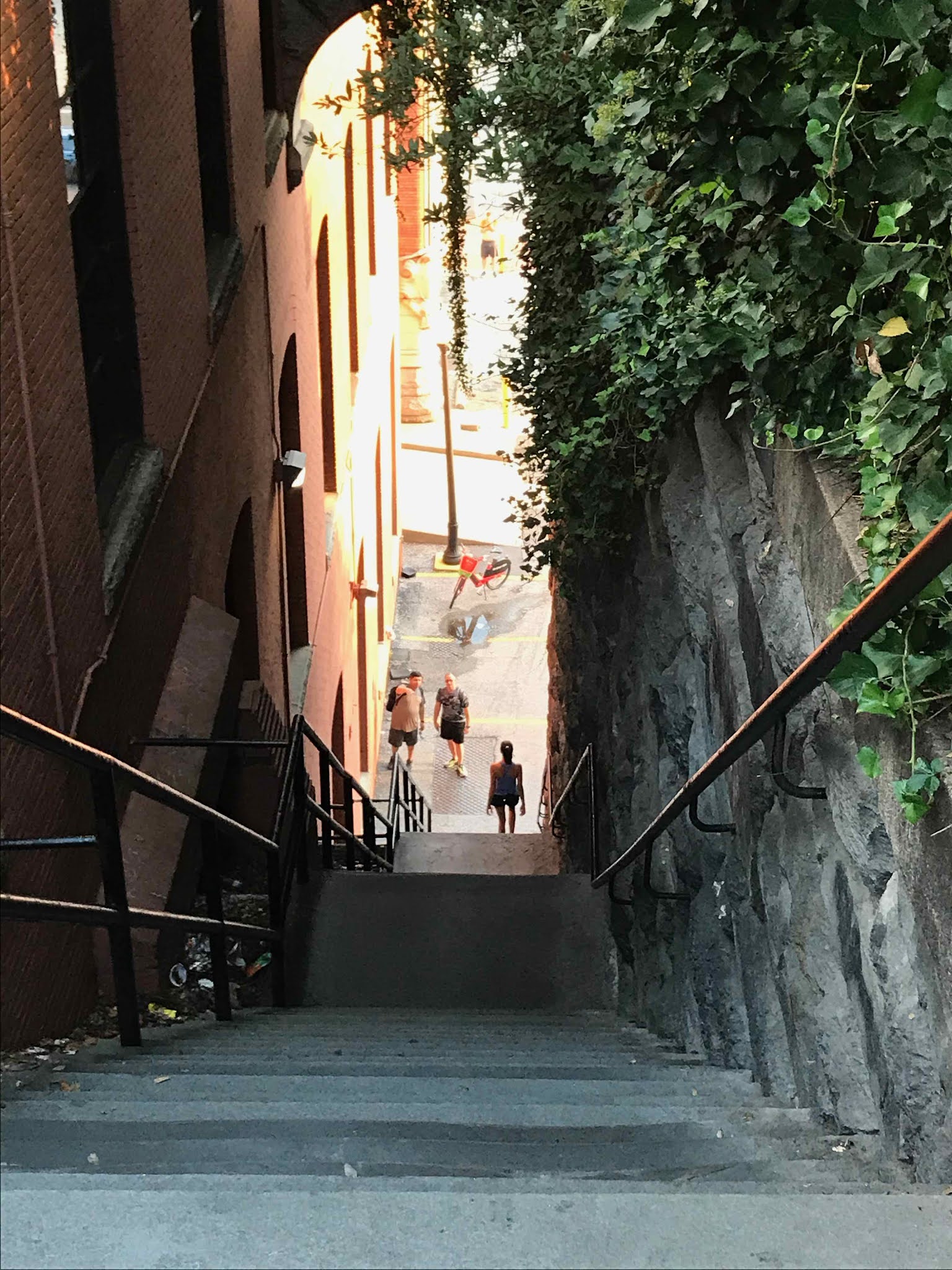
Even watching the trailer sends chills down my spine, so I will probably not be watching “The Exorcist” this Halloween. But tonight I will be attending class right next to the “Exorcist Stairs,” the Washington, D.C. landmark where the movie’s final scene was filmed. 

In this scene, Father Miller, who’s attempting to rid the 12-year-old Regan of the demon, falls from Regan’s window down these narrow steps to his death. According to Culture Trip, the stuntman assigned this task had to fall down the stairs twice to perfect the scene. 

I found the stairs a couple weeks ago after walking past them earlier in my rush to get to class. But once a classmate told me where they were, I made a point to walk them the next week. 

I’m happy to say that I did not fall. But I did huff and puff a little. And I definitely felt a sinister vibe. The stairs are steep and creepy, just as billed, and apparently, if you try to count them, you’ll never come up with the same number twice. 

Beethoven’s Seventh

Beethoven’s Seventh

An open door, a world of light — and a piano. Scarcely a day passes that I don’t play it, or wish I had. To touch the keys and realize, I own this thing, I can walk over here and pound out a Brahms Intermezzo or a Bach Prelude whenever I want — well it’s been months since I bought this piano but it still thrills me. 

Writing about the playing is something else entirely, though. That’s because music is the other, the part that can’t be pinned down by precision. It flows where the words won’t go. 

A few nights ago, I found a book of music I’d forgotten I had, transcriptions of orchestral works, including the second movement of Beethoven’s Seventh Symphony, which I took out and played. 

This was a piece popularized by an impressive scene from “The King’s Speech,” but whenever I hear it I will always remember the University of Kentucky’s Piano Institute the summer before my junior year of high school. There was a young assistant professor there who taught music theory, and for one class he had us sit in a dingy room in basement of the Performing Arts building with big clunky earphones on our ears and our heads down on our arms listening to this music. 

I can’t remember now what lesson we were to take away from that experience. All I know is that in the darkness and with the earphones, the soft dirge of the opening chords built slowly to the crescendo at the piece’s midpoint in a way that made my heart fill near to bursting. And somehow, the other night, I was able to capture a bit of that feeling again … on the new piano. 

Small is Beautiful?

Small is Beautiful?

It was a different kind of Academy Awards ceremony last night, but I still watched the whole thing. Set in L.A.’s Union Station, the nominees and their guests sat around little tables, as if at a supper club. All of which made the event seem warmer and more intimate, though admittedly strange, without the usual glitter and fuss.

With no host and no big song-and-dance numbers, the event focused our attention on what matters most: the awards themselves and the people who receive them. Though a few recipients went on too long and there were the usual political diatribes, I enjoyed the relatively unscripted moments. You could tell people were speaking to a small audience (only 170) from the way they talked. 

By now most of us are ready for a return to normalcy, watching movies on the big screen — something Frances McDormand urged us to do when she accepted her Best Actress award — and maybe even the four-hour-long extravaganza every year that honors those films. But the performances at this year’s Oscars make a case for small over large. 

(Info booth at Union Station, pre-transformation. Photo: Wikipedia Peetlesnumber1 

Seeing Mom

Seeing Mom

I find it interesting that to me the most fascinating character in Ken Burns’ new documentary “Hemingway” is not Papa H himself (though I realize I’ve not read many of his short stories and most of his nonfiction), but Edna O’Brien, an Irish novelist who shines as one of the talking heads Burns uses so beautifully.

O’Brien is calm but intense, and her comments cut to the quick of Hemingway’s novels. In one of her earlier appearances, she takes on detractors who say that Hemingway hated women and wrote adversely about them. 

To answer these criticisms, she reads a passage from Hemingway’s short story “Up in Michigan,” considered scandalous when it was published. The passage occurs near the end of the story, after a sexual encounter that the female character did not want, and O’Brien reads it slowly, the camera panning down to her hands, which gesture slightly as she reads the words with that Irish lilt in her voice. 

I don’t see O’Brien then but my mother, who was roughly O’Brien’s age when she died. I see the same set of the jaw, the same hair, full and of a color not found in nature. The same unbridled truthfulness. 

Mom was a writer, too — though most of her stories were never told. 

(In honor of O’Brien and Mom, a photo of the green fields of County Clare.) 

New Normal

New Normal

Over the weekend, a taste of normalcy: dinner out — in a restaurant — with friends who are also vaccinated.  The restaurant was empty save for one table of three seated 20 feet away. The server was properly masked. In that sense, it was not business as usual. 

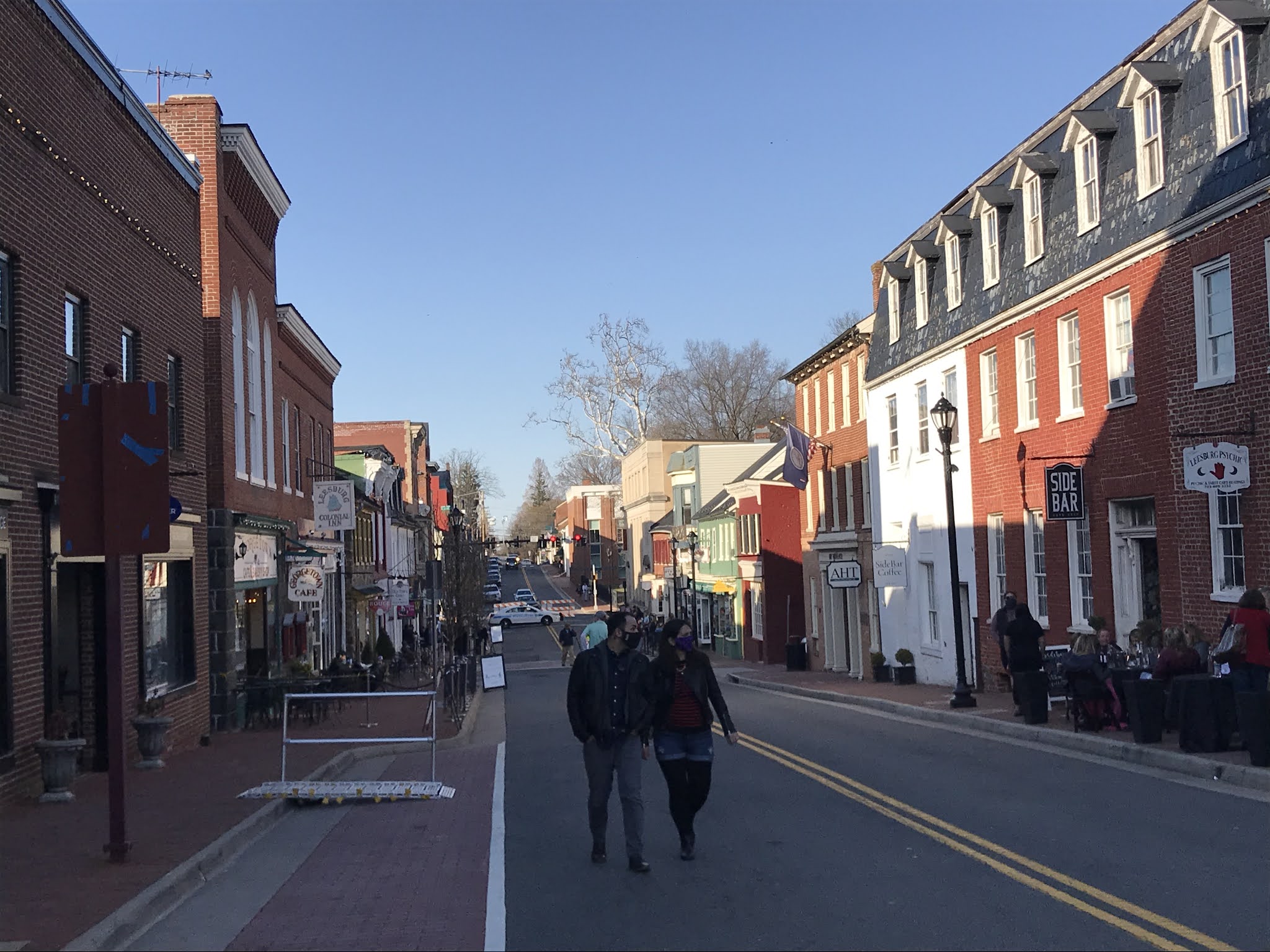
But what a thrill to see actual human faces, not squares on a screen; to enjoy full human expressions, not the crinkle of eyes above an oblong of cloth. There were appetizers and stir-fries and shrimp with vermicelli. There was much catching up. And afterward, there was a stroll through the narrow streets of a small, quaint downtown.

It was not the kind of dining experience I might have sought 14 months ago, folks crammed together talking and laughing, the clink of glasses, the buzz of alcohol and laughter. It was the new normal. And it was absolutely wonderful. 

Cold Training

Cold Training

As a chill rain falls and I curl up on the couch, swaddled in three layers, I wonder if my cold training project is working as I hoped it would. Since early fall I’ve been on a mission to be less of a ninny about winter weather, to work outside in temperatures I wouldn’t have dared to before and thus train myself, little by little, to be more comfortable in brisker breezes. 

The premise is simple. In these Covid days, to be outside is to be free. But to be outside in winter requires a tougher skin that the one I was born with. Cold training to the rescue. 

My model in this is the filmmaker Craig Foster, who began free driving without a wet suit in cold South African waters in order to win the confidence of an octopus. In the film “My Octopus Teacher,” Foster describes how he gradually acclimates himself to the water and, as a result, is able to share the life of this shy creature in a way that wouldn’t have been possible had he been more fully clad. The message: Discomfort in service to a higher ideal is not only bearable, it is noble. 

I’m nowhere near this point, of course. The most I can hope is to keep the heat set at 65 instead of 68. But, I tell myself, every little bit helps. 

The Raven’s Debut

The Raven’s Debut

Last night I caught most of “You Can’t Take it With You,” Frank Capra’s 1938 film staring James Stewart, Jean Arthur, Basil Rathbone and … Jimmy the raven. It was first of many appearances for Jimmy in Capra films, most notably (at least for me) in It’s a Wonderful Life

I’m not a Capra expert, but I certainly picked up on themes I’ve known from his other films — the little people against the big people, the importance of friendship, the corrupting influence of money, and the dearness of animals. 

In this film Jimmy the raven helps make fireworks (don’t ask) and a small kitten sits charmingly atop a sheaf of papers that one of the characters is typing up for a book. She decided to become a writer when a typewriter was accidentally delivered to their house. Perhaps as good a reason as any to take up the profession.

Whether it was the writing, the raven or the sheer zaniness of the plot, the film left me light-hearted. Not a bad way to end the day.  

The Late Show

The Late Show

Like many people these days, I’m not skimping on the indoor entertainment budget. I’ve splurged recently and signed up for two online streaming services. Add to that the DVD rentals to which I still subscribe, plus cable television, which has its own delights, chiefly the movie channels.

I’ve been watching one of those the last couple of evenings. Strangely enough, though I could choose from a wide variety of streaming programs, it’s the more limited menu of old black-and-white films that’s holding my attention most these days. 

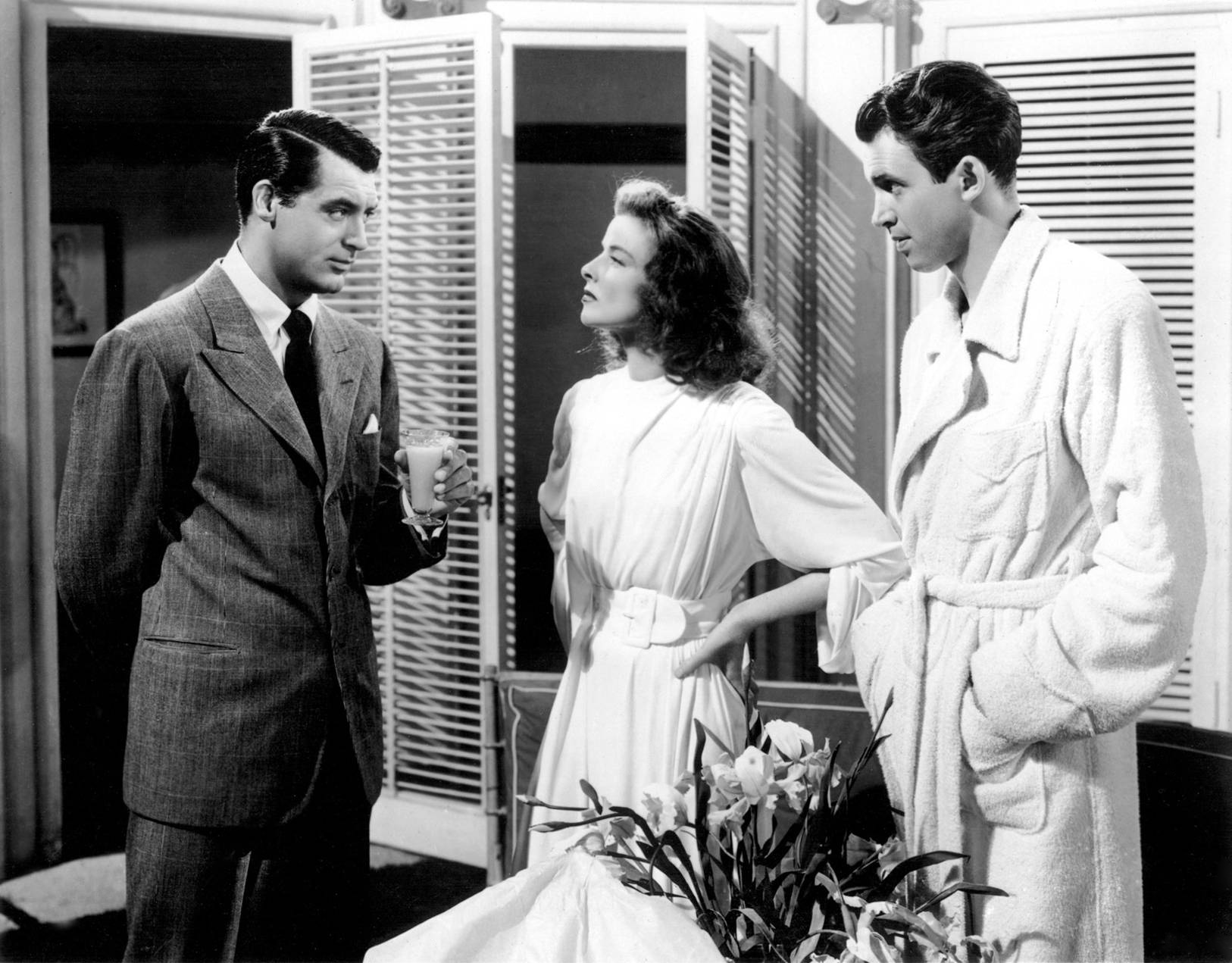
This probably says something about the limits of choice, but what it’s doing most is reminding me fondly of those old-fashioned late shows. Back when television had a sign-off time and binge-watching wasn’t yet possible, I would stumble upon “The Blackboard Jungle” or “The Philadelphia Story” when I was babysitting or after returning from my 3-11 p.m. shift at Jerry’s Restaurant. 

I was the only one awake in the house. It was just me and the movie — be it comedy or drama or romance. It was then, I think, that I learned to love film. And watching these old movies now, sometimes once again the only one awake in the house, reminds me of those early discoveries. How good they were then; how good they are still.

(Photo of “The Philadelphia Story” courtesy IMBD)