Browsed by
Category: events

Missing the Derby

Missing the Derby

For the first time since 1945 there was no Kentucky Derby on the first Saturday in May. There were no thoroughbreds thundering down the back stretch at Churchill Downs. There were, I hear, some fans — many wearing fancy hats — who couldn’t stay away. They appeared, crowned and masked, to traipse around the track and take photos of vacant betting windows and empty paddocks.

We’ve lost many of our traditional markers this spring. No tournament basketball in March, no first day of baseball in April. And now … no Derby in May — to be followed by no Preakness or Belmont, either, at least for the time being.

Of all the pain, sadness and disruption brought on by this pandemic this is hardly the greatest. But for this transplanted Kentuckian, who has never missed a Derby either live (twice) or televised (every other time), it was a loss indeed.

Four Years

Four Years

Four years ago today I started what I still think of as my “new” job. I moved from print to digital journalism, from editing a magazine to being a jack-of-all-trades writer/editor penning op-eds, success stories, profiles, advertising copy and whatever else needs to be done.

On the Friday of my first week I wrote a brief history of the organization. Seven months later, I was sent around the world to report and write stories in Indonesia and Myanmar.

Before I started, my new manager told me that working at Winrock was a little like drinking from a fire hose. He was not exaggerating. There’s hardly been a dull moment.

Turns out, I’m a little addicted to the fast-paced workplace. I thrive in it, though increasingly it wears me out. But I always do better with too much on my plate than not enough. And right now, of course, I’m grateful to have this work.

One thing I know for sure, and I say this with great fondness: In this job, I’l always have too much on my plate.

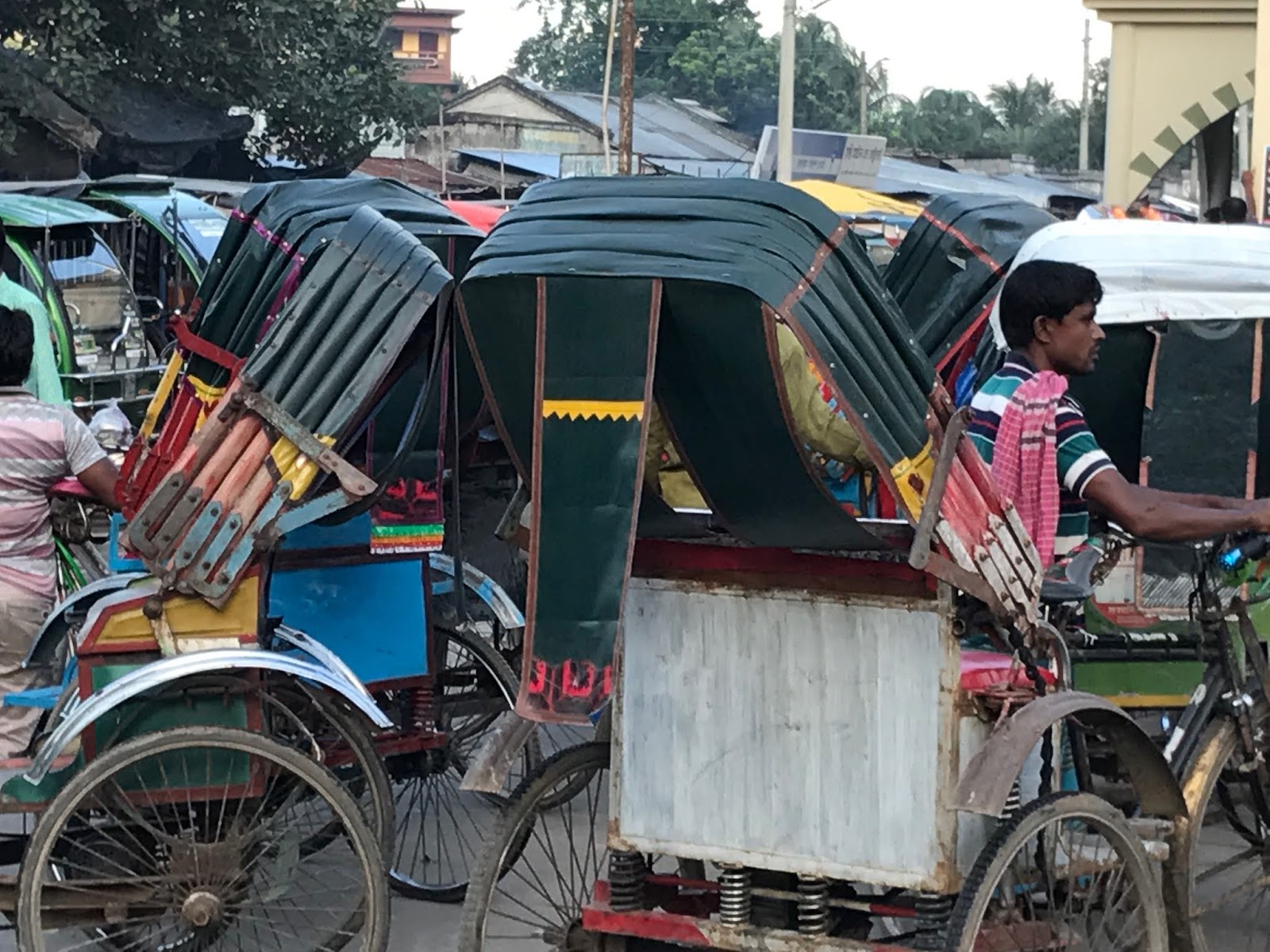
(Street scene in Khulna, Bangladesh, just one of the amazing sights I’ve seen through my “new” job.)

Earth Day at 50

Earth Day at 50

If Earth Day was a person, it would need reading glasses by now. The holiday that once seemed the epitome of peace, love and kumbaya may look a little dated in these decidedly less than peace, love and kumbaya times. But although reduced travel and worldwide lockdowns are giving us a tiny reprieve from global warming, Earth Day is still more important than ever before.

Last night I watched a documentary about Norman Borlaug, a Nobel prize winning scientist who is credited with saving up to a billion lives by launching the Green Revolution. The film described his laser-like focus to solve the problem of world hunger — and the selfless way he went about it (for instance, he never patented one of his new hybrids).

But the documentary also pointed out the legacy of the hybrid wheat Borlaug created, the water and fertilizer it requires to grow, the damage it has done to our environment and to social structures as displaced farmers flocked to cities, swelling their populations to the breaking point.

The film made clear that the seeds of one generation’s problems are planted in the solutions of the previous generation. We all do the best we can with the time we have.

What will we do, now? That’s the question Earth Day asks of us.

Things Not Seen

Things Not Seen

“Now faith is the substance of things hoped for, the evidence of things not seen.” 

This quotation popped into my head this morning. I had to google it to learn that it’s from the Old Testament, not the New (Hebrews 11:1). But surely what it expresses is perfect for a day when Christians around the world celebrate the resurrection of Jesus Christ.

We are still in the tomb. Four weeks into quarantine, with a death toll that’s just put the U.S. into first place in a tally we didn’t want to win, it’s easy to feel hopeless.

But — I remind myself on an early walk, looking at the purposeful new leaves of the dogwood — it’s when we’re in the tomb that we need hope the most.


Adventure Stories

Adventure Stories

Maybe it’s because I just read a book about exploring caves and catacombs, but I’m finding myself drawn to adventure stories these days.

Which is why Into Thin Air is on my nightstand and in my backpack. Jon Krakauer’s tale of the 1996 climbing disaster on Mount Everest is nothing if not gripping. Even though I’ve read it before, even though it’s dedicated to the ones who didn’t make it, I’m still pulled along by the power of a good story well told.

Adventure books are good for pandemics, inspiring in their accounts of adversity overcome. Some day, people will be writing stories about this time. They will know by then how the virus behaves, how long it lasts on surfaces and why (thank God) it spares children. They will know how we handled it here in this country, what we did wrong and what we did right. They will know how it all turns out. But for us, right here, right now, the adventure story is still being written.

Counterbalance

Counterbalance

The coronavirus has arrived along with the crocus and the daffodils, the sweet woodruff and forsythia. It’s arrived along with the balmy breezes and the occasional rumble of thunder.

I’m wondering if there’s a connection between the two, the virus and the early spring, and have decided that only in the most general, humans-messing-things-up kind of way. That and how they both heighten the disjointedness I’m feeling these days, a sense that the world is out of kilter.

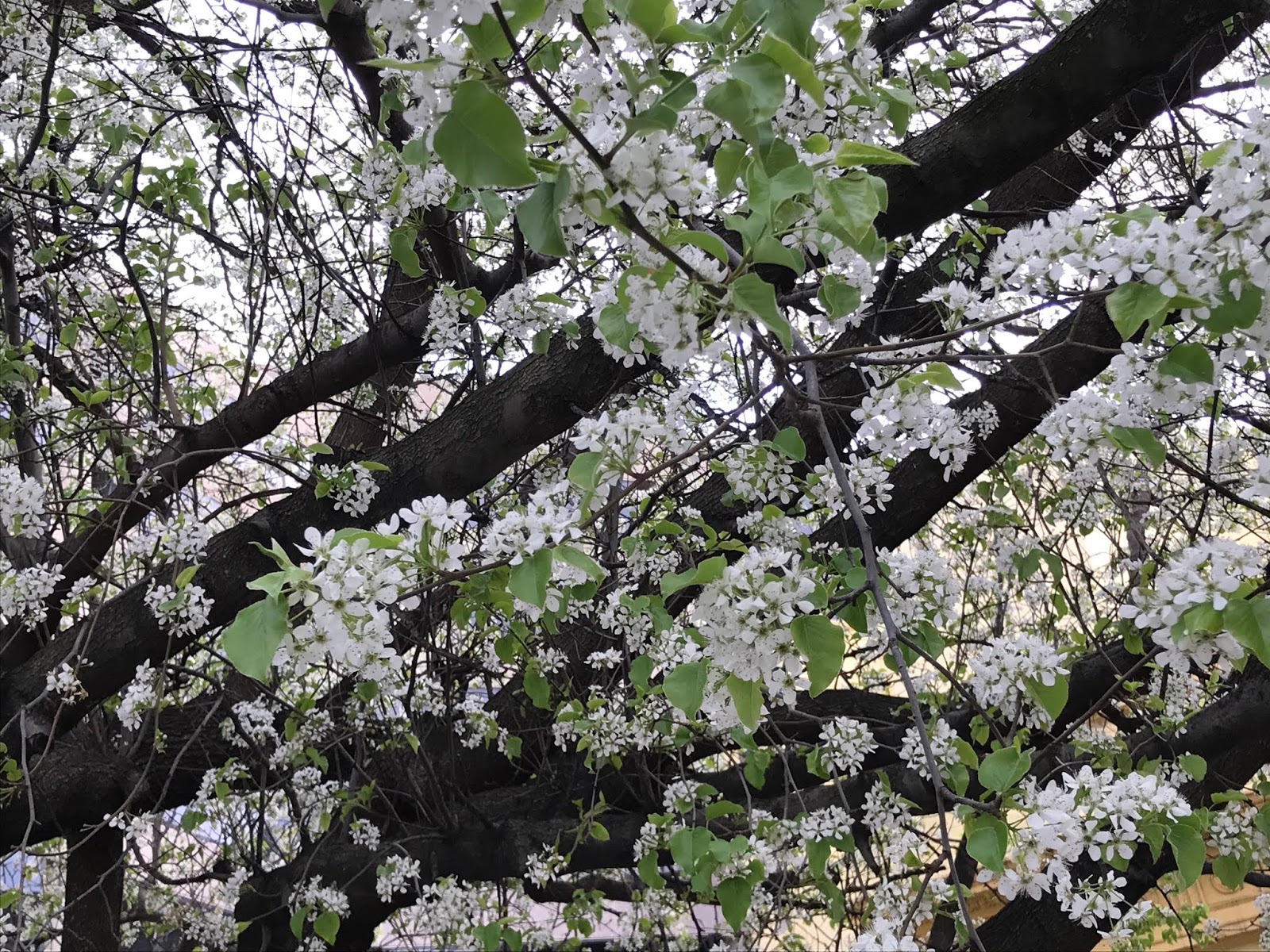
Still, the one can be a balm for the other. Pulling into my driveway last night, I glimpsed the blossoms that popped during the 70-degree day and felt all tingly and alive again. Yes, I still rushed in to wash my hands — but then I rushed back out again to snap this photo.

ISO Hand Sanitizer

ISO Hand Sanitizer

I’ve read enough psychology to understand when my actions are simply seeking a little control over a situation that’s beyond any. And for me, these last few days, it all boils down to hand sanitizer.

No matter that I’ve been washing my hands like a fiend. I want hand sanitizer to carry in my purse and backpack. I want to know I can slip a glob of it in my hands when soap and water aren’t available.

Of course, as anyone who’s been shopping knows, there’s no hand sanitizer to be found. Not in pharmacies or grocery stores or anywhere else. When I enter a store and find no hand sanitizer, I buy paper towels or bleach or something else. This is getting expensive!

Which is why I’m glad to hear you can make the stuff. Combine two-thirds cup alcohol with one-third cup aloe vera gel. Of course, you must have aloe vera gel, which strangely enough, I do. It was buried in a bag in the garage where I keep sunscreen and insect repellent.

I still feel out of control … but not quite so much.


(Photo chosen for serenity enhancement)

Not So Super Tuesday

Not So Super Tuesday

Yesterday began with a meditation session — a few minutes of peace that were quickly blotted out by the panic in the air. Had I bought enough staples at the grocery store? Should I pick up extra dog food? What about dried beans and noodles? And hand sanitizer? I hear there are runs on that in the stores.

At meetings and at the water cooler, talk of Covid 19 alternated with talk of Super Tuesday, with a similar degree of cheer, which was none at all. Disasters seem to be looming on both fronts.

One searches for a center of gravity, for normalcy, for what passes as calm. Is it better to be informed or stay ignorant?

At this point, I vote for the latter.

Doing Nothing

Doing Nothing

A day that comes but once every four years ought to be celebrated. We ought to do things on this day that we do on no other. What could this be?

For me, it would be to do … nothing.

Copper is quite good at it. I could learn from him.

The Plague

The Plague

And so it begins. The averted handshake at this morning’s Ash Wednesday service. The shunning on Metro of anyone who’s coughing or sniffling. The headlines and newscasts and public health warnings.

It will worsen, no doubt. There will be closures and restrictions, dire predictions. There will be confusion and panic. Truth will be elusive.

It’s no less than what other eras have had to bear, but for us it will be novel (in more ways than one).  Because we were raised with vaccines not quarantines.

I’m reminded of the ending of one of my favorite novels, Albert Camus’ The Plague:

He knew what those jubilant crowds did not know but could have learned from books: that the plague bacillus never dies or disappears for good; that it can lie dormant for years and years in furniture and linen chests; that it bides its time in bedrooms, cellars, trunks and bookshelves; and that perhaps the day would come when, for the bane and the enlightening of men, it would rouse up its rats again and send them forth to die in a happy city.