Browsed by
Category: family

Home Leave

Home Leave

Yesterday word came from Suzanne. Her home leave is approved! She will be arriving at Dulles Airport at 1:30 on October 20 — and she’ll be in the U.S. for six weeks!

The Peace Corps grants paid home leave to folks who sign on for a third year. Suzanne has already started her new job, as technical assistant to Population Services International and its Beninese partner, planning and training for the peer-education program there known as Amour et Vie. PSI estimates that in 2012 alone its services helped prevent 1,340 HIV cases, more than 70, 000 unwanted pregnancies and almost 30,000 cases of diarrhea.

The peer educators now give Ebola prevention suggestions, too. But their primary work is to bring about the sort of deep-boned changes that will someday lift the country out of poverty — and these will continue long after the epidemic is in check.

It’s good, important work — but it’s thousands of miles away. I’m beyond excited to know that our girl will be home soon — at least for a while!

Rush Hour

Rush Hour

My walk yesterday nudged right up against the morning rush hour. Not the D.C., Reston or Vienna rush hour — but the Folkstone rush hour.

Because my subdivision’s “main drag” leads to the local elementary school we have a half hour in the morning and a half hour in the afternoon when active pedestrians risk being run over by a convoy of mini-vans.

Not so for me today; I squeaked in before the brigade. But I wasn’t too early for the bus stop coffee klatsch. Whether by choice or requirement, every child now waiting at the bus stop waits with at least one parent. Gone is the small kid society my children enjoyed during those years — with its own hierarchy and pecking order, sixth-grade patrols at the top, morning kindergartners at the bottom.

Now it’s a time for parents to chit-chat and kids to revolve around them. It’s another way that childhood is changing, another thing I miss about the way things used to be.

A Little Enchanted

A Little Enchanted

Like many children, especially now grown-up ones, I spent hours reading fairy tales. I don’t remember special favorites, only the joy I knew at the covers of the books, some of them still vivid in memory. Those stories took me to another shore, and then, when it was time to come home, they deposited me safely back again.

I know there are theories of why fairy tales are good for children, that they allow kids to face fears and work out complex feelings. But over the weekend I read the best explanation yet of what fairy tales meant to me. It comes from an essay by C.S. Lewis:

“Fairy land arouses a longing for he knows not what. It stirs and troubles him (to his life-long enrichment) with the dim sense of something beyond his reach and, far from dulling or emptying the actual world, gives it a new dimension of depth. He does not despise real woods because he has read of enchanted woods: the reading makes all real woods a little enchanted.”

So here’s to the real woods I walk in that will always be touched with magic, and here’s to the magic of this lovely explanation why.

Little Voices

Little Voices

It’s summer time and into the click-click of computer keyboards and the businesslike tones of those  in Important Meetings comes another sound, a welcome sound — the high-pitched ping of little voices.

A couple days ago a colleague brought her baby to the office and I could hear the babbling and squawking from many doors down the hall. And both Wednesday and Thursday I ran into daycare kids on campus — yelling, laughing, taunting and teasing.

It brought me back to the days of the little voices in my own life, how I treasured them even then, knowing how precious they were, how fleeting. Now they’ve matured into the voices of adult women, not even a “like, you know” left from the teenage years. They are still precious to me, but they are different.

When I was knee-deep in child rearing I used to wonder why older folks would smile as I extricated  one of my noisy children from underneath a clothes rack or a church pew. Now I understand. They liked the sound of little voices too. Like me, they listened and remembered.

Late Arrival

Late Arrival

First there is the wakening, slightly panicky, the feeling that something is not right. Next, a peek at the clock. After 2 a.m. Surely she should be home by now.

Should I get up and look out the window? If the car is there I’ll rest easy; if it’s not, I’ll be awake till she gets home.

Last night it was the latter. A late arrival, but not much later than my wakening. I fall back to sleep, happy and grateful.

The morning after the late arrival is another story: Bleary and disbelieving. How can it already be day?

Did Someone Say Fudge?

Did Someone Say Fudge?

It’s the last day of school in Fairfax County, which means little to me now except less traffic in the morning. It was our first year in 20 to be rid of elementary, middle or high school dates and deadlines.

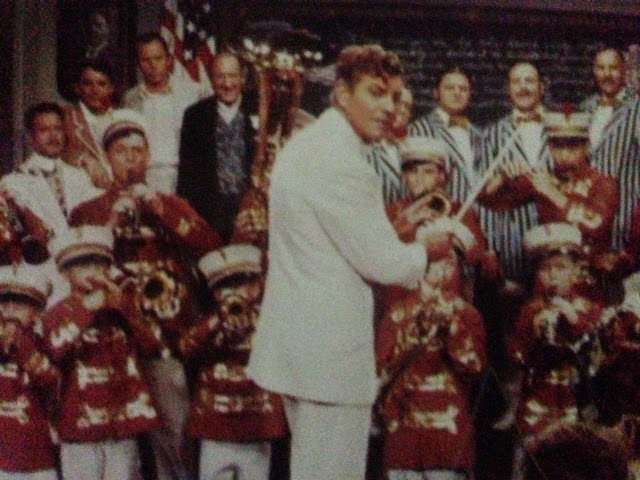
But today is still special. It’s the day that for years we celebrated with matinees, lunches out, shaving cream fights at the bus stop — and a peculiar ritual: watching “The Music Man” and making fudge.

The tradition started more than a decade ago, when we popped in a video of this musical to watch in the evening after an afternoon at the pool. There’s a scene where Marian and her mother make fudge. And so we started making fudge, too. It’s a delicious summer pastime anyway, fudge being the most boardwalk of candies.  But even if it wasn’t, we’re conditioned now: Hum the first few bars of “76 Trombones” or “Till There Was You” and we’ll start to salivate.

So tonight, Celia and Claire will gather at the house and we will measure out the sugar and the cocoa powder and the milk. We’ll set the pan on the stove and tend it till it bubbles and boils. We’ll test it (often) and finally take it off the flame, beat it to glossiness and pour it onto a plate. If it all works according to plan we will be on a sugar high before it’s dark.

School’s out for summer! Who needs champagne?

Two Years and Counting

Two Years and Counting

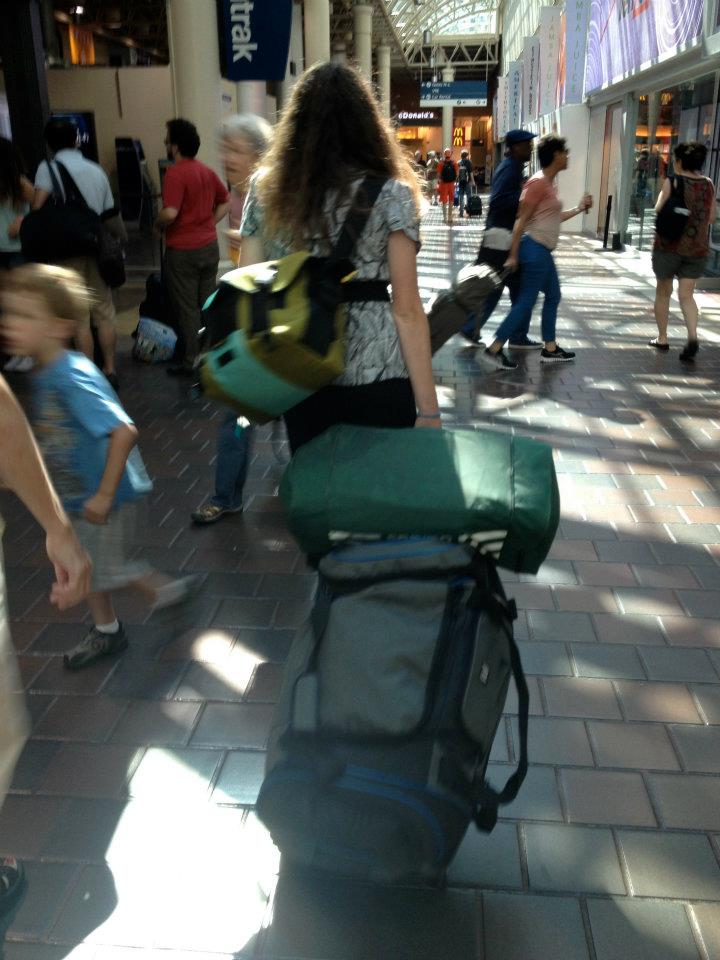
Claire and I escorted Suzanne to the train station when she left for the Peace Corps two years ago. It was Sunday, and not much traffic. Inside the train station, another story. The ancient rituals of leave-taking. Ours loomed large. As well it should. I haven’t laid eyes on my oldest daughter for two years to the day. When I tell people how long it’s been, they will often ask, “Skype?” “Once,” I tell them. Only once. It’s a lack of electricity compounded by a lack of bandwidth compounded by, well, Africa, I guess.

But I have seen Suzanne through the eyes of her father, sister and friend, all of whom have visited.  And I hear her every week or two on the phone.  And between these first-hand accounts and my mother’s ear listening for tone, inflection and the spaces between the words — I know what I need to know. She is, for the moment (God willing, “Inshallah,” as she has taken to saying), happy and healthy (minus — or plus! — an intestinal parasite or two).

Last year when I write “One Year and Counting” I thought Suzanne would be home by now. But she will stay another year in Benin, take on another Peace Corps job, another challenge. Still, my count-down to seeing her is only months, since she’ll be back this fall on home leave.

One observation I’ll repeat from last year’s post, because it only deepens with time: Suzanne is the happiest person I know.

(Photo: Katie Esselburn)

Summer Reading (in Tandem)

Summer Reading (in Tandem)

Yesterday on the way home from work, I picked up a quart of local strawberries, a loaf of French bread and two books. I like thinking of books that way, as staple and delight.

When at the library I saw the poster for the summer reading program, which starts today. “Paws to Read” is the logo.

It all rushed back to me then. The lists of titles each of my girls would keep — each in her own distinctive scrawl. Our trips to the library on sultry afternoons, laden with bags of picture books and chapter books. Searching the shelves for old favorites — and discovering new ones in the process. The coupons the girls received upon completion. Redeeming them for a cookie at the bakery or an eraser at the office supply store.

I live in a different universe now, but the girls and I still trade titles and lists and favorites. We may not read together anymore, but we do read in tandem.

(Illustration: Courtesy Fairfax County Public Library)

Gratitude

Gratitude

Parents need children, I once wrote, because they help them remember what it was like to be coming alive to the world. As a parent to young adults, I will amend that slightly. Parents need children because they remind them what it was like to be … a young adult. And no matter how wondrous and exciting that can be, it makes me appreciate every creak in my middle-aged body.

What prompts this revelation? Having one daughter return from a four-day music festival, for one thing. Apparently it was difficult to sleep more than a few hours at a time there because the music blared all night. No shade, no quiet, no privacy. No thanks!

And then, from another daughter, a description of her Monday. A double shift at the restaurant: working lunch followed by a two-hour break when she ran and worked out at the gym followed by working dinner. Waitresses are on their feet constantly. I remember because I once was one.

So I head into Tuesday glad that I’m not 19 or 22 anymore. Takes some of the sting out of the day, doesn’t it?

(Photo: Claire Capehart)

World That Was

World That Was

I see them everywhere. They’re made of straw or cloth; they are jaunty or slouchy. Are men’s summer hats making a comeback? In my limited experience on the streets and in the conveyances of Washington, D.C., the answer would have to be yes.

The question is whether this trend is dermatologically or sartorially driven. Given the fraught nature of our times, I’d go with the former.

Whatever the explanation, I’m enjoying it. The other day on Metro, my seat mate removed his straw fedora and for an instant I was back in the dark, downtown church we sometimes attended with my grandfather when I was very young. There were hooks in those old wooden pews, little pincers perfect for playing with during Mass, and that’s where my grandfather would hang his hat.

Metro cars, of course, do not supply this amenity, so my seatmate simply held his awkwardly on his lap. I shifted in my seat, tried to give him and his hat as much room as possible. I thought about anachronisms like hat hooks and how they seem so fussy and antiquated in our streamlined days. And I thought about what the world was like when we had them.