Hunted and Gathered
On my way to breakfast, I found four ripe blackberries, courtesy of my morning walk. It’s a bush I’ve known for years, quite accessible to deer and other passersby.

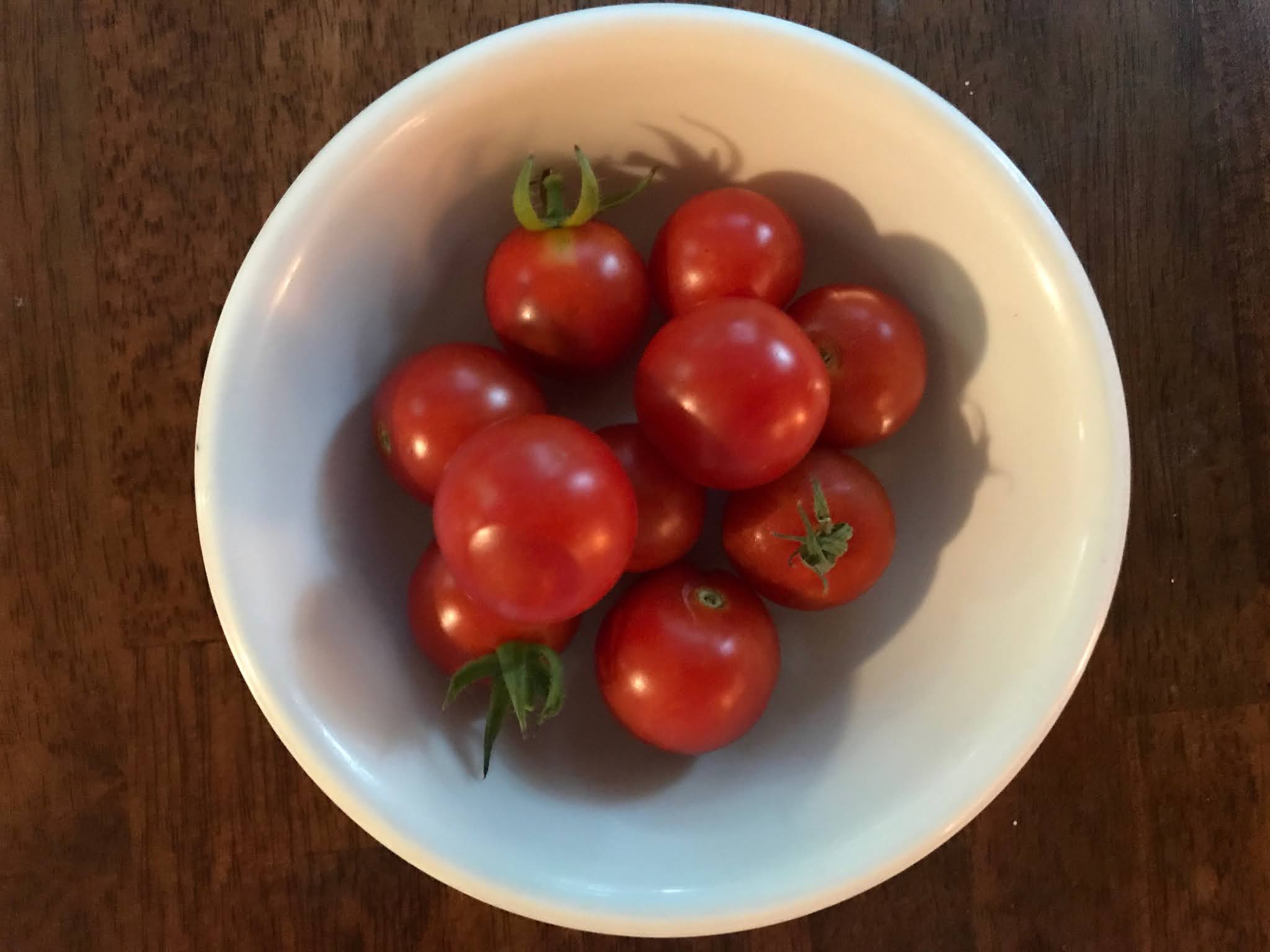
The tomato plant on the deck is bending from the weight of its top-heavy stalk. There are almost a dozen little tomatoes-in-the making in various stages of fruitiness. Toward the bottom of the stalk one of a trio is almost completely red. It will no doubt ripen while I’m gone next week.
Meanwhile, in what seems like Jack-in-the-Beanstalk fashion, the plant continues to climb, with clumps of tomato flowers turning, magically, into tomatoes themselves, albeit still tiny.
As backyard garden operations grow, it’s not a big one. But like any backyard garden operation it’s a reminder that much of what we eat comes from the soil — or from animals who eat things that come from the soil — not from hermetically sealed packages in the grocery store.
Soil, fertilizer, summer sun and rain … when the combinations are right, there is growth, there is harvest — there are tomatoes on your plate.
It’s ironic that after months of wearing gloves for grocery shopping, a doctor’s visit and most any other time I’ve ventured into a public space, I wasn’t wearing them when I needed them most — in my own kitchen.
Last night’s dinner was a Thai shrimp dish I’d never made but which sounded good when I found it online. It called for a jalapeno pepper, two of them, in fact, with or without seeds. I settled on one and one-half without seeds. That was about right, flavor-wise. Blended with the coconut milk, fish sauce and Thai curry paste, they provided just enough kick.
But my hands told another story. Hours after I’d rinsed, de-seeded and diced the peppers my fingers and palms felt like they were on fire. A couple of hours of keeping them wrapped in a cool wet washcloth or on top of a bag of chipped ice left them little better than before.
When I finally googled the symptom, I learned that I should have been slathering my hands with milk or yogurt instead of cold water — and, most of all, I should have been wearing gloves. Now you tell me!
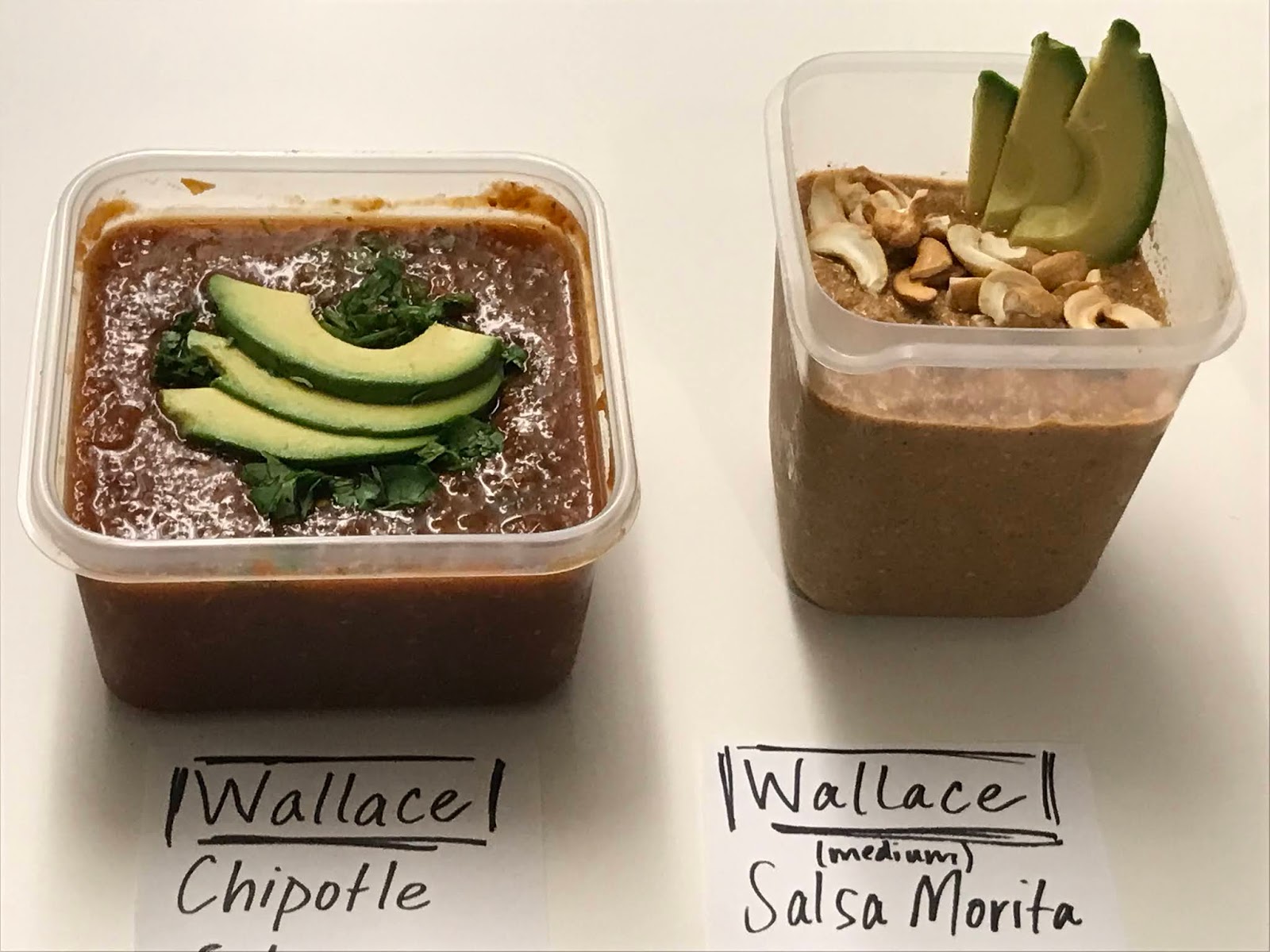
(Entries from a salsa competition last year at work.)
As the physical reality of my world shrinks to house and yard, each individual room looms larger. The living room has become my primary work space, the basement an entertainment hub and gym, and the kitchen — ah, the kitchen is getting a workout.
Like many of us stuck at home, I’ve been eating more — and better — than usual. This is because there’s more food in the house and because my typical excuses for not cooking — what a horrible commute! such a day I’ve had at the office! — are no longer viable.
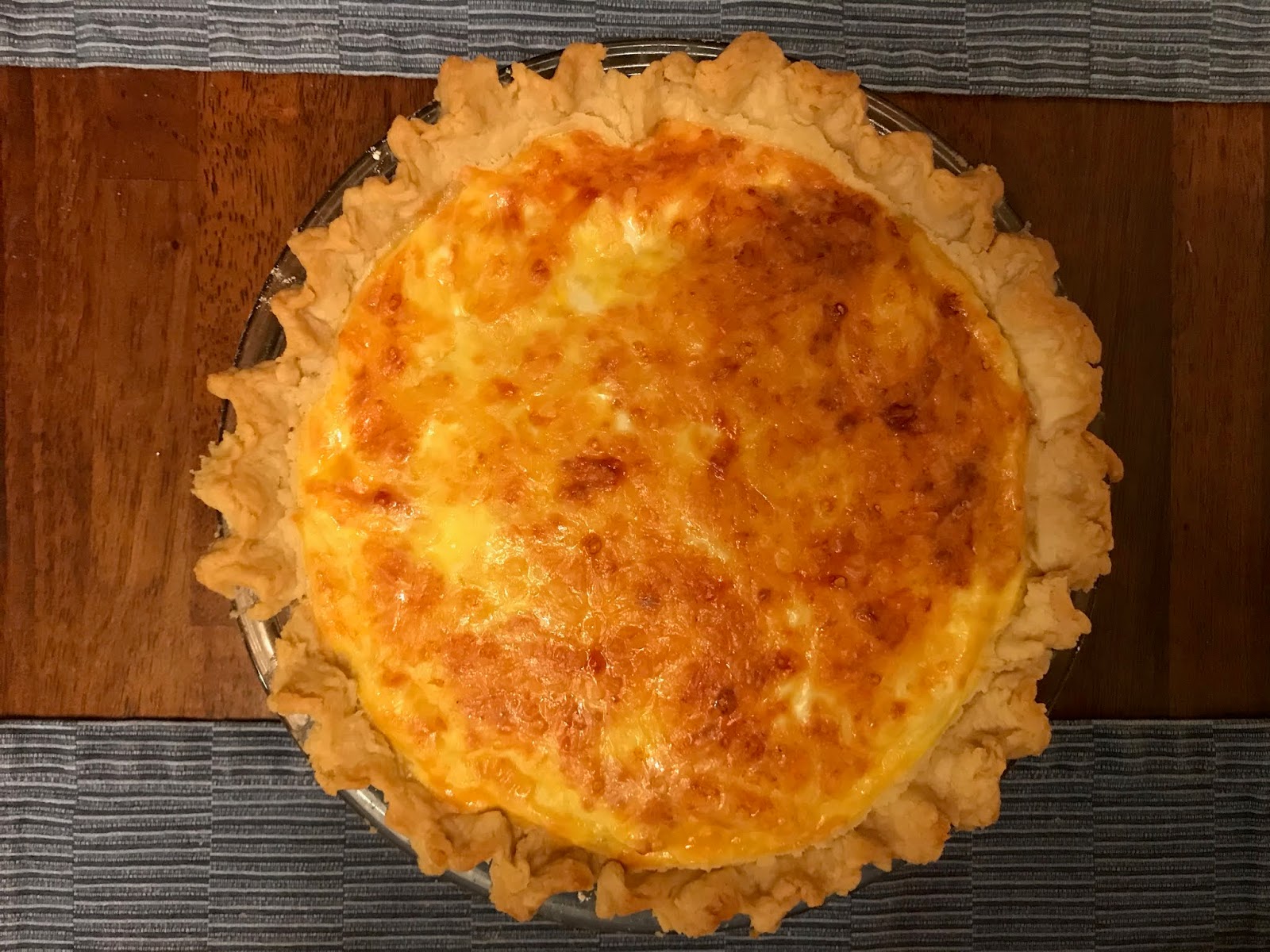
So when I come downstairs in the morning I’m greeted with distinctive cooking smells — with the tang of last night’s curry or the aroma of last week’s (reheated) quiche.
It’s a more full-bodied, full-aroma’ed house I live in these days. And I have to say … I like it.
The grocery store signage of the hour doesn’t advertise the latest sale, doesn’t promise half price or double coupons. The grocery store signage of the hour says “Limit Two.” Customers are told they can buy no more than two liquid soap dispensers, two gallons of milk, two dozen eggs, two pounds of butter and two boxes of pasta.
It is the language of scarcity, the language of a pandemic and, in this topsy-turvy world in which we now live, perhaps also the language of the future.
Are we, after so much abundance, entering an era of scarcity? It certainly seems so. There are fewer jobs, fewer certainties — and most definitely fewer rolls of toilet paper.
But even after the production of goods has been ramped up I wonder if we will keep the “Limit Two” mentality. It wouldn’t be such a bad thing. Because what Limit Two does most of all is to acknowledge that there are those who come after us — and they will be wanting their milk, eggs and butter too.
(Photo: NJ.com)
I’ve been late to jump on the baking bandwagon. Despite an accidental oversupply of flour — bought long before the pandemic emptied grocery store shelves of it — I’ve had neither the time nor the inclination to bake my way out out of this crisis.
Instead I’ve picked up my pen and my journal. I’ve taken two walks a day instead of one, or bounced on the trampoline in the backyard. Moving through space and time have been my remedies.
Until recently, that is. Yesterday, I finally used the stick of butter that had been softening on the counter for days to bake brown butter chocolate chip cookies, a delectable treat first shared by my daughter Claire from the Pioneer Woman Cookbook. These are made with tiny M&Ms, and the ingredient that sets them apart is the brown butter, which gives them a crispness and a richness that must be tasted to be believed.
So, for the second time in a week, I share a food picture.
We must be quarantined or something.
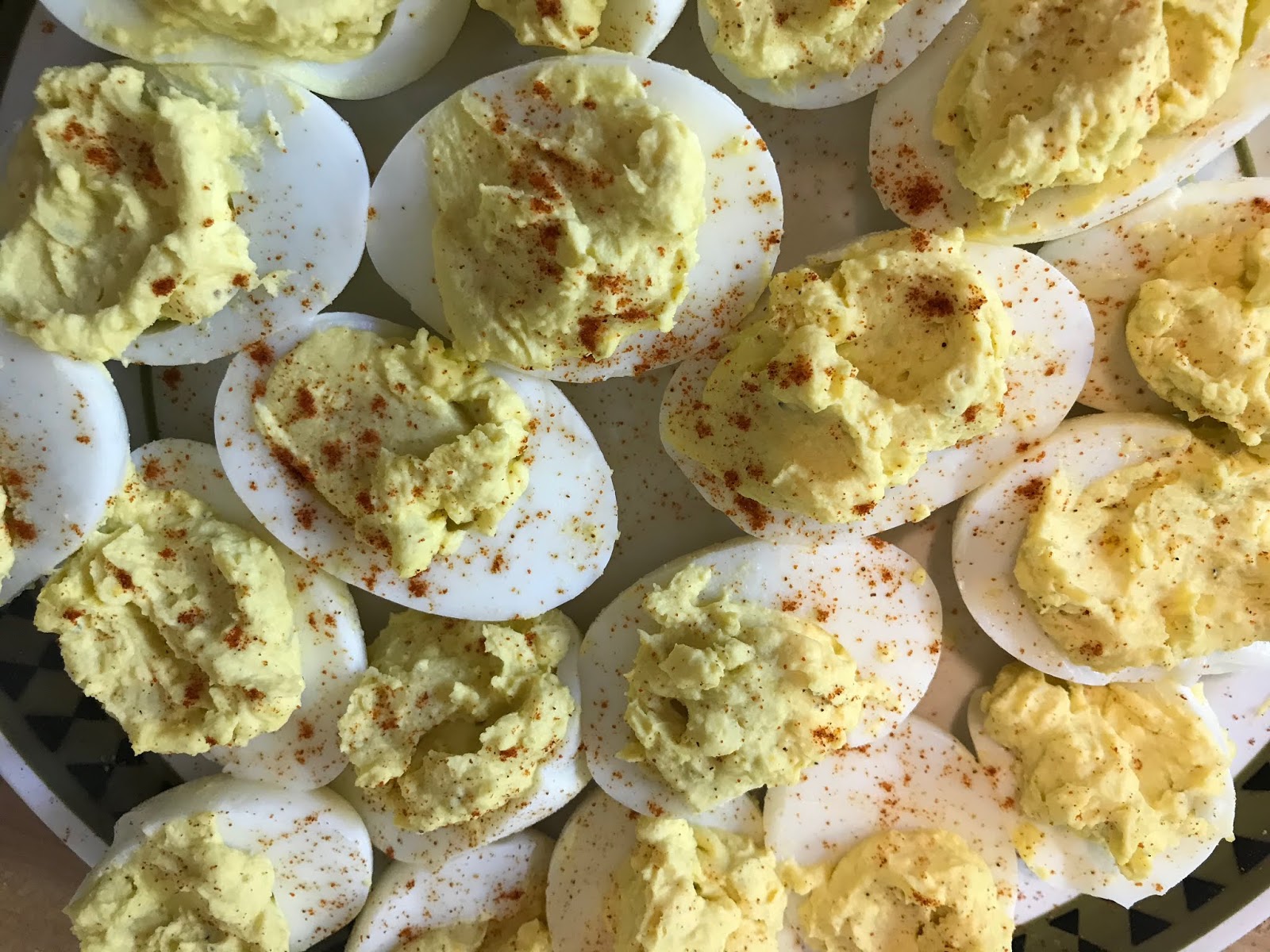
Even when it will just be the three of us for actual Easter dinner (as opposed to the virtual one that will take place on Zoom), I still make too much food. A huge bowl of ambrosia, and 18 eggs, which means 36 deviled ones.
I make too much food even when there’s a crowd to consume it. So this year there will be leftovers galore. But they will be eaten, I’m sure of it (quarantines being good for cooking and eating, if not much else).
These deviled eggs — or dressed eggs, as I grew up hearing them called — were made the way I usually make them, which is by taste. I never recall using a recipe. Instead, I imagine Dad whipping up the yolks, adding vinegar and mayonnaise, asking us to taste and tell us if he had the balance right. In my memory, he always did.
These eggs aren’t exactly ready for a close-up, but they were made with love.
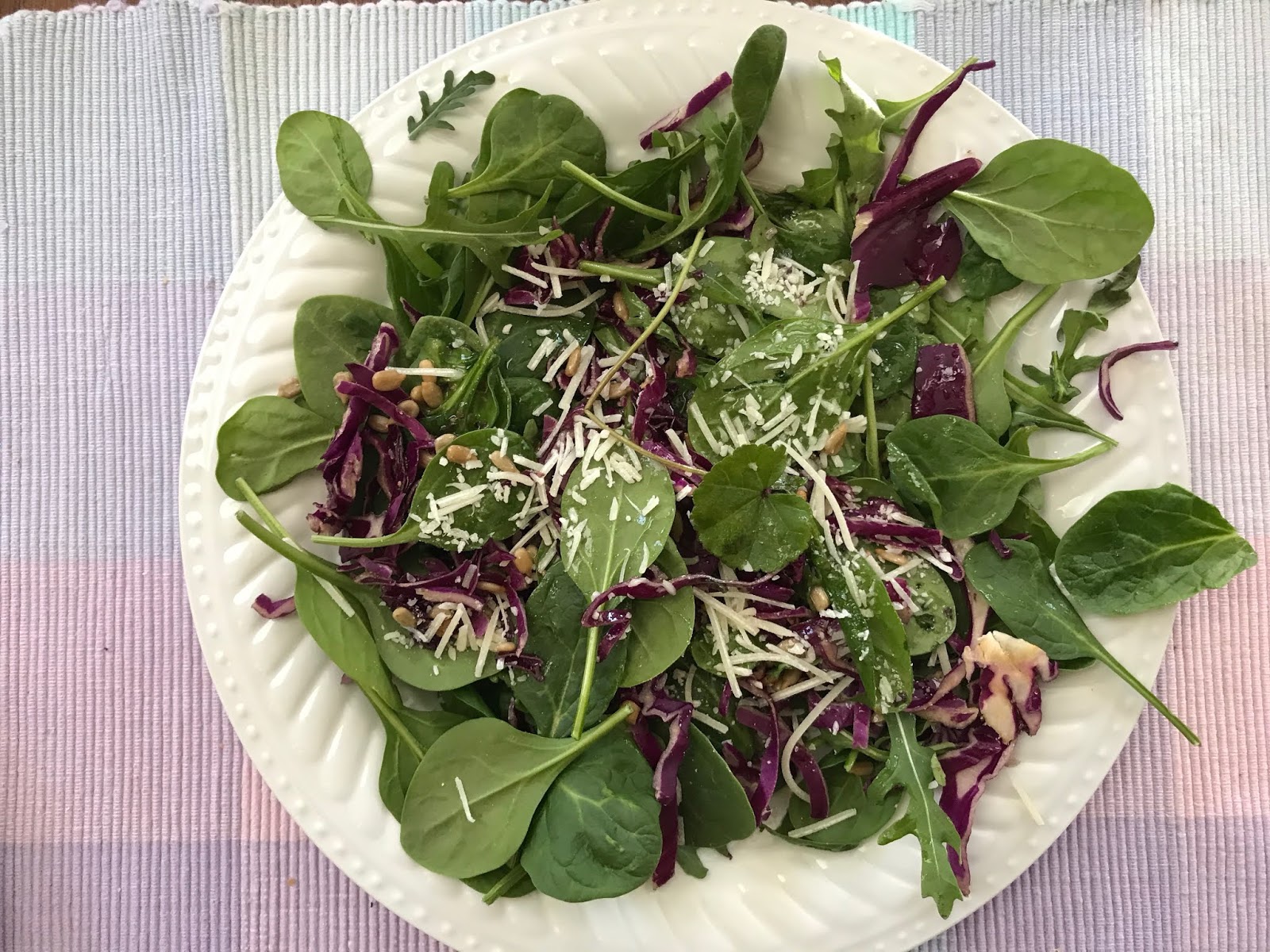
I’m not one to photograph the food I eat, though I know for some it has become second nature, what passes for a blessing in this secular age. And isn’t there a similarity, after all?
When we photograph, we pay attention. We study the subject, frame it, seek the best angle. And isn’t this a type of gratitude, an attentiveness that elevates the meal from just a quick downing of protein and carbohydrates into a ritual?
Maybe this takes it a bit too far. But picturing our food means we preserve it, means that long after I’ve eaten and digested these greens, they live on in memory.
For the last couple of years I’ve shopped for food at a discount grocery chain where prices are low and brands are simple: basically there’s one. This means there’s limited selection, and I like it this way. There’s no need to deliberate, so I save time and energy.
A couple days ago I found myself in the antithesis of this grocery store. I found myself in a Food Palace. There were a dozen types of pate, mushrooms so exotic I’d never heard of them and a bakery to die for. It was chaotic and amusing. I was often bewildered. But the mushrooms were delicious when sautéed in butter — and I tore into the chewy but tender Tuscan pane on the way home.
It was as if the food choices I’ve eschewed these last two years had gathered around and started taunting me. See what you’ve been missing, they said. Look at this richness, this bounty.
I looked, I appreciated. But the very next day I went back to my discount grocer.
A grocery store is a funny place to find one’s self on the day after Thanksgiving. There was a hair-of-the-dog quality to it.
On the other hand, it was a very good time to be food shopping. I had the place almost to myself.
I bought more eggs and bread and dinner fixings for tomorrow night (tonight will be leftovers) and some for the week to come. I avoided the Thanksgiving-themed napkins that were 75 percent off. Yes, they’re a good deal, but I won’t be able to find them next year.
In that way, emboldened, I enter the holiday shopping season.
(Alas, I did not shop at a picturesque farmer’s market this morning.)