Browsed by
Category: people

Annie Dillard: 1945-2026

Annie Dillard: 1945-2026

Late yesterday, I learned that Annie Dillard died Tuesday at the age of 81. Losing her so soon after Wendell Berry leaves me reeling. Two of my literary heroes, two poets of place, gone within 15 days of each other. I’ve quoted Dillard often in this blog. Here is a post I wrote on April 30, 2012, Dillard’s 67th birthday, which I titled “The Poetry of Pittsburgh.”

When I began this blog more than two years ago, I didn’t think long about the quotation I would use across the top. I knew it would come from Annie Dillard’s book An American Childhood.

“When everything else has gone from my brain — the President’s name, the state capitals, the neighborhoods where I lived, and then my own name and what it was on earth I sought, and then at length the faces of my friends, and finally the faces of my family — when all this has dissolved, what will be left, I believe, is topology: the dreaming memory of land as it lay this way and that.”

A few years ago, on our way home from visiting Tom’s family in Indiana, we stopped in Pittsburgh, where Annie Dillard was born on this day in 1945. It was a literary pilgrimage for me. Our first view of the city (where I had lived as a toddler, pre-memory), came at dusk, as we drove through a tunnel and suddenly there were the three rivers and the bridges crossing them all lit up with white lights. It seemed magical to me, this old city of groaning steel and trestles.

Was it the place itself that exerted this magic, or was it because I was primed to love it by Dillard’s words? “I will see the city poured rolling down the mountain valleys like slag, and see the city lights sprinkled and curved around the hills’ curves, rows of bonfires winding.”

It was both, I think. The place of poetry. The poetry of place.

(Photo: Downtown Pittsburgh viewed from the Duquesne Incline, courtesy Wikimedia Commons.)
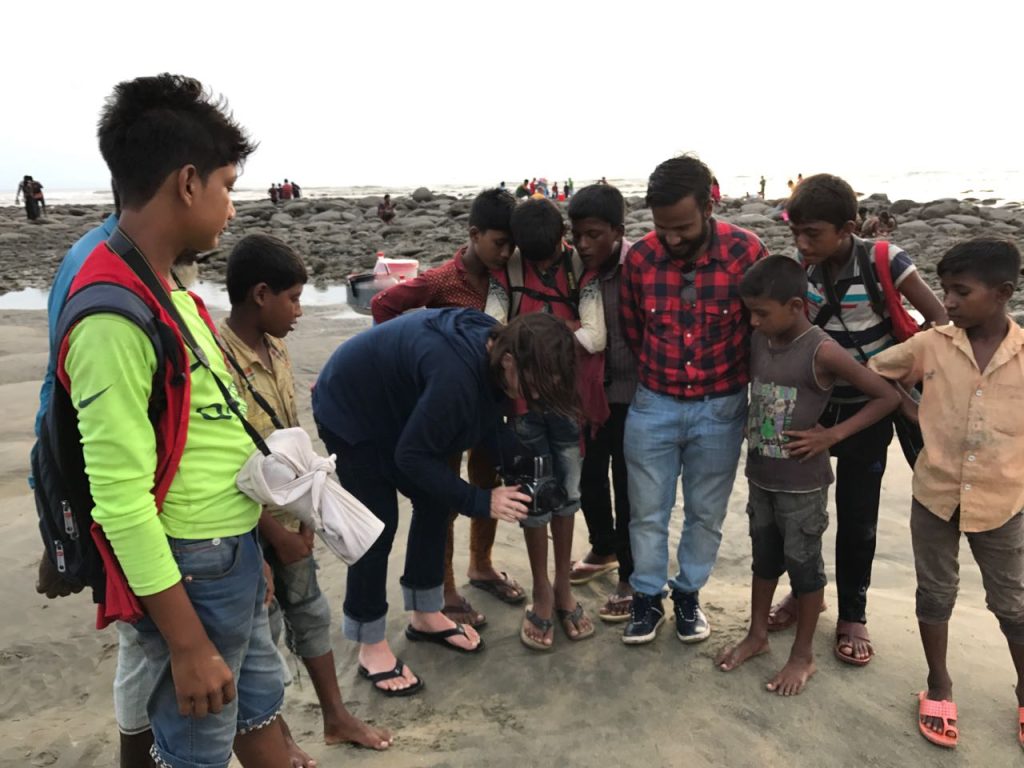
Working With People

Working With People

As we celebrate Labor Day I’m thinking about work, what it means, how it changes as we grow older. Last week, I penned an appreciation of the writer Wendell Berry, who died a week ago. I proposed the piece, wrote it quickly, and the editor turned it around in hours.

It was the sort of thing that happened all the time when I was part of a magazine staff or a communications team, but it doesn’t happen that way much anymore. The pieces I’m assigned usually have generous deadlines, as do my papers for school. Writing is much more of a solo occupation than it used to be, and this has made me think about the part of paying work I miss most: collegiality.

I remind myself that even if I was part of a magazine staff again, I would likely be writing and editing from this desk in my upstairs office. I worked at home for years, quite happily. But one of the reasons I became part of a magazine staff again was for the people.

Do we underestimate the people part of labor? Kind colleagues can make a difficult job bearable, while snide, backbiting ones can make each day a prison.

When we talk of labor, I think we often concentrate on the tasks at hand, items on a to-do list, the headwind of the working life. Good colleagues are the tailwind. They help us glide through the labors of life.

(Colleagues, friends and bystanders on a work trip to Bangladesh.)

Alive on the Page

Alive on the Page

I’ve been reading Oliver Sacks’ Everything in its Place: First Loves and Last Tales, a posthumous collection of essays by a master of that form. That he was a master of so much else — neurology, weightlifting, chemistry — ripples out from every page.

Sacks loved to swim, to walk in botanical gardens, to study ferns in Central Park, and the book contains short chapters on these topics and many more, easy explorations in the personal essay form. They move from the particular to the general, are informal and discursive. 

Sacks is most well-known for his book Awakenings, which chronicles his treatment of patients with a rare sleeping sickness, people who had missed whole decades of life then woke up and found themselves once again in the land of the living. 

Awake is how I feel after reading the work of this scientist and writer, gone almost 10 years but alive to me now thanks to this final, exhilarating collection. 

(Sacks’ signature courtesy Wikipedia)

For Charlie

For Charlie

Today I note the passing of Charlie Clark, journalist extraordinaire. I met Charlie our first month in Northern Virginia. His wife is a former colleague and dear friend of one of my best buddies. Charlie and I had writing in common, too, so when we bumped into each other, we traded tales. 

Charlie was an energetic reporter, a storyteller, a lover of words and community. He brought the two together in his “Our Man in Arlington” column for the Falls Church News Press, which he wrote for years. In his last few weeks he interviewed philanthropist David Rubenstein and covered a court hearing on the “missing middle” debate in Arlington. 

In addition to his day job and his column, Charlie wrote a novel, several books on local history, and a biography of George Washington’s step-grandson. When I planned to leave the world of paid employment, I asked Charlie for advice. He encouraged me to take the plunge — and was a model of productivity right up to the end.  

Today I’m mourning Charlie and thinking of the verses he always included in his holiday card, funny couplets like “have more fun in 2021.” He left us wanting more in 2024. 

Rest in peace, Charlie. 

Good Words

Good Words

Today is the birthday of Eleanor Roosevelt, mother, teacher, writer, wife, first lady and activist, whose 2020 biography was unputdownable. 

One of Eleanor’s many noteworthy traits was her capacity for growth. She was not afraid to plunge in, assess, take action, and, when necessary, reverse course. She was ahead of her time. 

Perhaps this quotation helps explain some of her courage: “You wouldn’t worry so much about what others think of you,” she said, “if you realized how seldom they do.”

Good words to take into the day. 

(Writing about Eleanor gives me an excuse to feature a Washington, D.C. photo.)

Hairy Coo

Hairy Coo

What do you get when you put 16 people and one tour guide into a small van? If you’re lucky something like what we had these last three days with Stewart. 

This guy took a random assemblage of humans (albeit some of them related) from three continents and made us into a community with routines, in-jokes and a quest: We had to find a “hairy coo” — a Highland cow — not only for the six-year-old among us but for all the other lovers of these gentle, shaggy beasts. 

Stewart backed up the van and practically drove us into the field where a few of the cattle were grazing. Photos were snapped … and snapped …. and snapped. It’s a testament to these creatures’ docile natures that they put up with it all.

As for our tour group, we have scattered to the four winds, to a lot more places than this famous sign at John O’Groats, the northern-most point in mainland Britain.

Fellow Travelers

Fellow Travelers

This afternoon, on the way to see a rock formation called the Old Man of Storr, we ran into the young people of Aalst, a group of Belgians we met on the way up Ben Nevis. We had run into them later that same day, hiking back from the visitor’s center, so this was actually our third meeting. 

It’s not the first time on this trip that we’ve run into people we just met. We sat beside a couple from Philadelphia on the train from Oban and ran into them again near Ben Nevis. And there are others.

Traveling is like that. You meet people you think you’ll never see again — and then bump into them the very next day. Fellow travelers can make all the difference. 

A P.S. to this post: we met our Belgian friends again the very next day. 

He Died Walking

He Died Walking

I don’t read the newspaper obituaries everyday, but on Sunday one particular one caught my eye: it was about Esteban Volkov, who died at the age of 97 in Mexico. He was the grandson of Leon Trotsky.  

A mini history lesson, this article describes how Trotsky fled Russia after a power struggle with Stalin following Lenin’s death. Volkov’s father, a political supporter, was imprisoned and killed, and Volkov’s mother, Trotsky’s daughter, committed suicide. Volkov eventually ended up in Mexico City, living with his exiled grandfather. 

Volkov returned from school one day to find his grandfather dying in the arms of his wife and a security guard. After escaping assassins other times, Trotsky was killed with an icepick by a man who pretended to be his admirer. Young Volkov wasn’t safe, either, once hiding under his bed as a gunman fired shot after shot into his mattress. 

Volkov promised his grandfather he’d never go into politics, becoming an engineer instead. But after the fall of the Soviet Union, Volkov, by then retired, opened a museum about Trotsky in Mexico City. It now hosts 50,000 visitors a year. 

The obituary has a noteworthy conclusion, as Volkov’s daughter describes her father’s many positive traits: “He liked nature, mountains, the ocean and loved music, with Shostakovich and Stravinsky his favorites. He never stopped walking and even died while walking, outside his nursing home.” He died while walking, three years shy of his 100th birthday. That’s something to aspire to.

(Volkov, lower right, with his grandparents. Photo courtesy Wikirouge.)


It’s Baaaack!

It’s Baaaack!

Where to start, except to say that this place I once lived, this place I once feared had fallen prey to the emptiness and ennui that plagues many cities these days, has not only survived, it’s thrived. 

New York City is back … and it’s better than ever! Or at least that’s my humble opinion, influenced no doubt by a spot-on day of walking from east side to west side, uptown to down. Others might disagree, might say it’s dirtier, more crime-ridden. And I wouldn’t argue, given my tourist perspective. 

But as a place of great energy and drive, where people of all types rub shoulders with each other, where sirens blare, horns honk, street music sings, it cannot be beat.  

Fellow Travelers

Fellow Travelers

Some emerge just past dawn for their morning stroll, eyes blinking, still taking in the light. They leave early for the office or they can’t sleep or they feel dutiful getting in their steps early. 

Others require a cup of tea or other sustenance, so you might find them in the 8 or 9 o’clock hours.

Still others just squeak by calling their daily perambulation a morning walk. They start at 11 a.m. and return just in time for lunch. 

What all of these people have in common, though, is that they are regulars. I see them most every day, depending on when I hit “the track” (also known as the main street of my neighborhood). Some of them I know well, others only by sight. But they are my companions, my fellow travelers, and I honor them all.