Browsed by
Category: people

Hacked!

Hacked!

I left my desk for a cup of tea. When I came back 10 minutes later I had 30 or more returns from an email I didn’t send.

I’m not the most computer-savvy person in the world, but it didn’t take long to figure out what had happened. Someone (some people? something?) had hacked into my email account and sent everyone in my address book a link to some crazy product, a bunch of German words — or in some cases just my email signature, which includes a link to this blog.

It was inconvenient and embarrassing and took time to resolve. But strange to say it had an unexpected silver lining. It reconnected me with folks I hadn’t been in touch with in years. 

So what was triggered by the anonymity of the modern world became a powerful connector to real human beings.

Yes, I was hacked. But then I was healed.

Blossoms for the People

Blossoms for the People

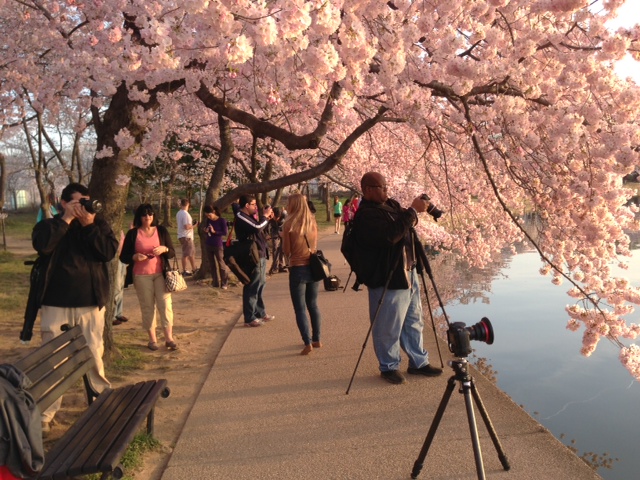
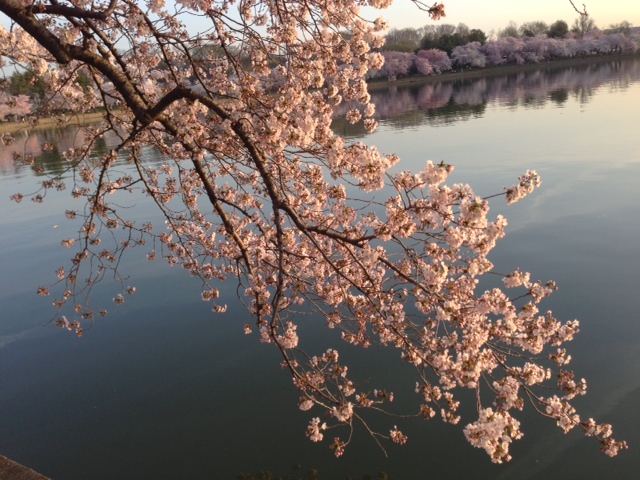
I used to wait for the perfect photograph, hold my camera steady until a split-second unobstructed view. But on today’s early morning stroll around the Tidal Basin, I didn’t mind including people in the picture. It was the people I noticed most.

The joy on their faces, not a sour look in the bunch. These are cherry blossom devotees, early risers,  up before 6 to be downtown before 7.  Joggers, bikers, picnickers, photographers — all here for one reason, to get their fill of beauty.

Here’s what they saw:

Grand Central Centennial

Grand Central Centennial

Saturday marked not only the 127th Groundhog Day celebration in Punxsutawney, Pennsylvania, but also the 100th birthday of Grand Central Station. It was the second train station on that site, and it opened on Sunday, February 2, 1913. More than 150,000 people visited the first day.

For me, for years, Grand Central was the place I passed through on the way to work. My office was in the Helmsley Building, an ornate wedding cake of a structure that straddles Park Avenue north of the station.

Grand Central was where we grabbed a newspaper and a bagel before starting our day at the oh-so-civilized hour of 9:30 a.m. It was where we went out to lunch for a splurge on our assistant editor salaries. It was where we met people for drinks or dinner. It was even sometimes where we caught the train.

Most of all it was — and still is — a grand public space. One of the grandest. And its currency is not stone or steel but motion. Of trains, of people. 

To stand at the clock in the middle of Grand Central is to be caught up in a great whirl of activity — but somehow to feel the stillness within the movement.


(Not Grand Central, but something of its scale…)

Morning After

Morning After

Amid yesterday’s electoral busyness and drama came word came of a high school classmate’s death. He was a wild man and a lover of life who lost his own life far too soon. Hearing this sad news from my hometown put everything else in perspective.

Not just the brevity of it all or even the wonder of it all but the preciousness of each individual person. Each one a world apart, each with aspirations and aggravations that we, on the outside, can never know. As we emerge from the collective that is an election season, when people are numbers, weights on a swing state scale, we return to what really matters — the individual.

This is the morning after, the day we cheer or sigh. But tomorrow is a new day, and like every new day, composed of the individual actions of individual people.

The Kindness of Strangers

The Kindness of Strangers

My new assignment (which I gave myself): Walk the Cross-County Trail in earnest. Cover the sections I haven’t covered (which are most of them). Chart the great green heart of this populous county.

The timing of the assignment: regrettable. I left later than I’d intended and was little more than halfway on my route when the low clouds and heavy air gave way to the severe storms that had been predicted (and which I had ignored). Forced from the trail at a detour, I picked my way through the wind and rain to a nearby street. I huddled for a while under trees that were short enough not to kill me if they fell but full enough to shelter me from the brunt of the storm.

Ten minutes into the deluge the wind picked up, the rain fell slantwise and I decided to make a run for it, to find an intersection where I could call for help. It was then, as I tried to make a phone call, that there emerged from the storm a kind soul with a large umbrella.

He motioned me over, I ran toward him, and together we dashed to the shelter of his garage. He disappeared for a minute and returned with two towels. For the next 20 minutes we talked about the storm, the fearsome way it blew up and (typical suburbanites) the siding we had on our houses. I never learned his name.  This morning I read in the paper that a tornado touched down less than two miles from where I hiked.

I went to the woods for wilderness and solitude; what I found instead was the kindness of strangers.

I wasn’t far from here when the storm struck.

Team Sport

Team Sport

I was out earlier than usual this morning and stumbled upon some bustling pavement in the neighborhood next to ours. There were runners and bikers and dog-walkers. A couple of joggers looked familiar, like people I knew vaguely from church or the kids’ school. One man I recognized from the pool; he arrives after 8 p.m. and does an exquisitely slow breast stroke.

Seeing these walkers put some pep in my step. They reminded me that, while walking is for the most part an individual activity, it can also be a team sport. Not that we’re keeping score. But in some palpable way these fellow travelers cheered me on.

We’re all in this together, they seemed to say, as they looked up from the pavement with a wry grin or a raised hand or a good morning. Our strides may be slow, our breathing labored, but we know there’s something golden in these still mornings.

Fellow walkers in Lower Manhattan.

Judith Crist: 1922-2012

Judith Crist: 1922-2012

Four days ago, in my “morning pages” (my non-blog writing), I riffed about how film critic Judith Crist, who I had the pleasure to study with many years ago in journalism school, told me to
limber up my prose style, to shake myself like a runner prepping for a race.

Yesterday, Judith Crist died. She had taught at Columbia for 50 years. Generations of students are mourning her death. She was a brilliant critic and a devoted teacher.

When I was accepted into her class, Personal and
Professional Style, I was shocked and delighted. If getting into J School was
the cake, getting into her class was the icing. “Crist’s class,” we called it.
And it was nerve wracking. Never before or since have I had such a reliable
stomachache. Every week, like clockwork, right before and during her
class.  And no wonder: She had no tolerance for inelegant, insincere, pedestrian writing — and she would let you know it. 
But oh, when she liked your stuff, well, there was nothing
better. And even more importantly, she  zeroed in on what was wrong with our prose (see above for what was wrong with mine!) and helped us start to fix it.
In Crist’s class, writing mattered.  In RW 1 and my other classes, reporting
ruled. Good leads, snappy kickers, clean copy — yes, they were taught and
idealized. But they were always secondary to the facts and quotations I managed
to assemble.
But in Crist’s class tone
and voice were the focus. We were writing editorials, for God’s sake, opinion pieces. We didn’t have to attribute everything. We could
loosen up a bit. Never let down our guard and never, ever, do sub-par
work, of course, but we could let our imaginations wander into metaphor. We could pull
up the rug and study what was swept underneath.
Decades later, I’m still writing, still pulling up the rug, still trying to limber up.  Thank you, Mrs. Crist. Rest in peace.
Sweet Charity

Sweet Charity

Her name is Lois. She works at the McDonald’s where Dad’s coffee group convenes. Always cheerful and friendly, Lois didn’t like to smile. She would hold her hand in front of her mouth to cover up  her missing front teeth.

A few weeks ago, the guys (and the few gals) who meet to solve the world’s problems over a cup of senior coffee (the same as regular coffee but it costs only 59 cents) took up a collection to buy Lois a new set of teeth. Lois accepted the gift, got the teeth — and a new life to go with them.

I didn’t meet her, but I did read the thank-you note she wrote to her customers and friends. She said she can’t express the happiness she feels now, being able to smile without embarrassment, without wondering what everyone is thinking when they see her “ugly teeth.” “You gave me back my life, my joy, my confidence,” Lois wrote.

The note was photocopied so that everyone could read it. But they have already received all the thanks they need — it’s right there every time they buy their coffee. It’s right there in Lois’s smile.

Heeeere’s Johnny!

Heeeere’s Johnny!

I stayed up late last night watching Johnny Carson. Tom and I laughed in front of the set as my parents had so many years ago. I remember hearing them from my little bedroom upstairs. Dad would pop popcorn and open a Pepsi; the Tonight Show was a grownup party I wasn’t invited to.

But there would be plenty of time to watch Carson — when I was in high school; during college summers, when I came in from my 3-11 p.m. waitress shift; when I was single and living on my own; and (less so) after I married and had kids. Johnny’s last show was in 1992. Our middle daughter was not quite one; our oldest was three. I slept whenever I had a chance — including through the last Tonight Show. This is something I’ve been sorry about through the years, so when I heard there would be a documentary about Carson on last night, I made a point to tune in.

There they all were — Ed McMahon, Doc Severensin, Johnny in his natty suits  — all of them young, so young. There was Johnny bursting through the curtain, fiddling with his tie, swinging his imaginary golf club. There he was running from a baby cheetah and jumping into Ed’s arms, wearing a turban as Carmak, deadpanning after a guest’s wacky comment, saying things he would surely be called sexist for now. Johnny worked a flubbed joke better than anyone in the business.

It seemed like most everyone watched Carson, liberal and conservative, gay and straight.  Carson has been off the air for 20 years — and the world has become a more brittle, more divided and less funny  place. Don’t you wish we could all stay up late again watching Johnny?

Photo: dvdtalk.com

Lee’s Place

Lee’s Place

Today is the birthday of Harper Lee, who was born in 1926 and still lives in her hometown of Monroeville, Alabama. She has written one book,  To Kill a Mockingbird; it won the Pulitzer and has sold more than 300 million copies. 

“I still plod along with books. Instant information is not for me. I prefer to search library stacks because when I work to learn something, I remember it,” Lee said in a 2006 issue of Oprah magazine.

The Monroe County Public Library, I wonder, is that the library she searches? Or the library of Alabama Southern Community College, located in Monroeville? I scan the college website and find a notice for the 15th annual Alabama Writer’s Symposium, with its topic “Write Out of Place,” being held (yes) this weekend.

Here’s how the symposium is advertised, first with this quotation from Katherine Mansfield: “How hard it is to escape from places. However carefully one goes they hold you — you leave little bits of yourself fluttering on the fences — like rags and shreds of your very life.”

And then with the following: “When Mansfield wrote those lines, she could have been describing the way that Alabama authors often find themselves in relation to their home. Whether they set stories lovingly in Alabama, loathingly in Alabama, or deliberately not in Alabama, place becomes a part of who they are. …  The 2012 Alabama Writers Symposium explores the ways in which Alabama writers are affected by their ‘placehood,’  the ways in which Alabama as a place informs their literary efforts.”

Lee lived in New York for a while, and she spent time away in college and when she was helping her childhood friend, Truman Capote (another native of Monroeville), research In Cold Blood in Kansas. But she has spent most of her life in Monroeville. She has not escaped from her place; she doesn’t seem to have wanted to.