Browsed by
Category: place

Wendell Berry: 1934-2026

Wendell Berry: 1934-2026

Wendell Berry, the poet of place and placedness, Kentucky’s native son, died August 31st at the age of 92.

“I can’t believe it,” I told my brother Phillip, who called from Kentucky to share the news. “I was just thinking about him.” Phillip said he had just been thinking about him, too.

I imagine many people felt that way. Once you knew Wendell Berry and his work you thought about him often. He was an American original.

Berry taught Phillip freshman English at the University of Kentucky. “I don’t think he much liked my writing,” Phillip said.

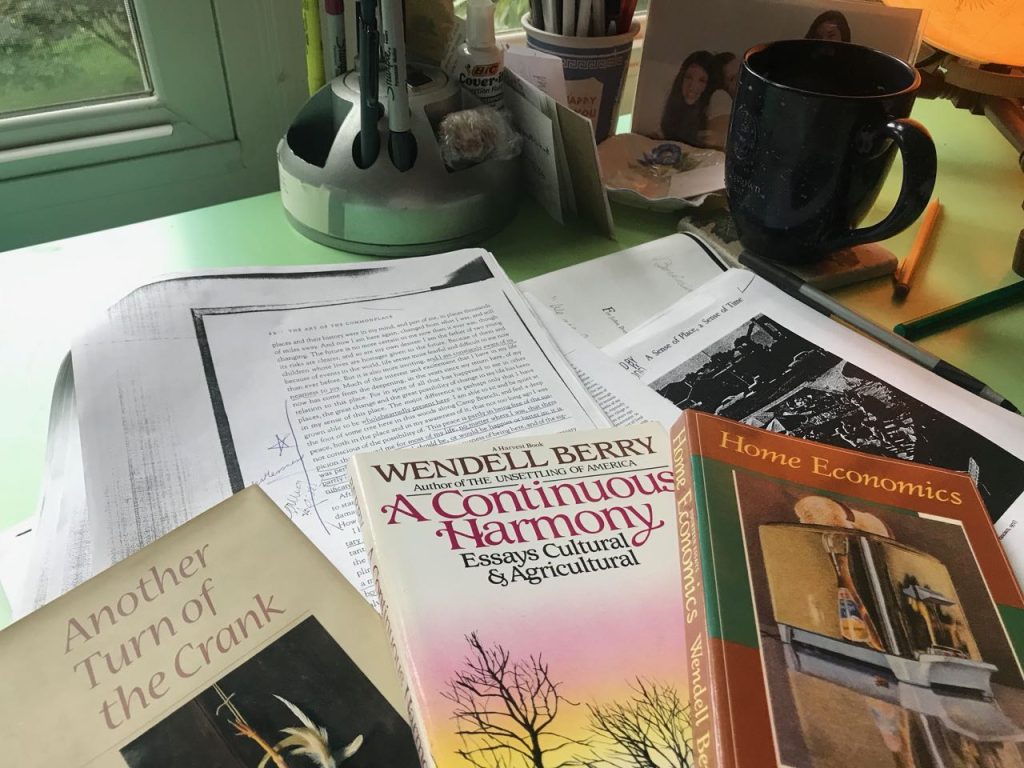
I never studied with Berry. But I did study his writing. In fact, just last week I was thumbing through one of this books, Home Economics. And after hearing of his death I re-read one of my favorite Berry essays, “A Native Hill.”

As I begin the thesis-writing year of my academic program, I’m turning once again to Berry, who was both a walker and a philosopher. He, more than most contemporary writers, articulated the delicate but indelible bonds between people and place, and especially, between writers and place. Rest in peace, Wendell Berry.

Crabgrass Frontier

Crabgrass Frontier

Many Americans have grown up in the suburban world created after World War II, our once-vaunted frontier of prairies and mountain peaks reduced to a series of 8o x 100-foot lots with a house and a garage. For decades, home-ownership has been an essential part of the American dream, though it’s become inaccessible for many folks these days.

It’s worth considering, then, that this suburban world did not arrive by accident and there are many other ways to live.

“Nowhere in Europe was there the land, the money, or the tradition for single-family home construction,” writes Kenneth T. Jackson in Crabgrass Frontier. Postwar development n Germany, France, Denmark and Spain did not follow this course. Single-family homes are much more of a rarity in Europe.

It was a combination of ample space, low-cost loans and other federal policies that produced American suburbs. And they happened in the blink of an eye.

“By 1961, when President John F. Kennedy proclaimed his New Frontier and challenged Americans to send a man to the moon within the decade, his countrymen had already remade the nation’s metropolitan areas in the short space of sixteen years,” Jackson writes. “From Boston to Los Angeles, vast new subdivisions and virtually new towns sprawled where a generation earlier nature had held sway.”

Such a short time, 16 years, but life in these United States hasn’t been the same since.

A Word on Walkability

A Word on Walkability

As my thesis year approaches, I find myself thinking about sense of place, my thesis topic. It’s an interest in place that inspired this blog and continues to generate material — not only from walking through the suburbs but from reflecting on them, too.

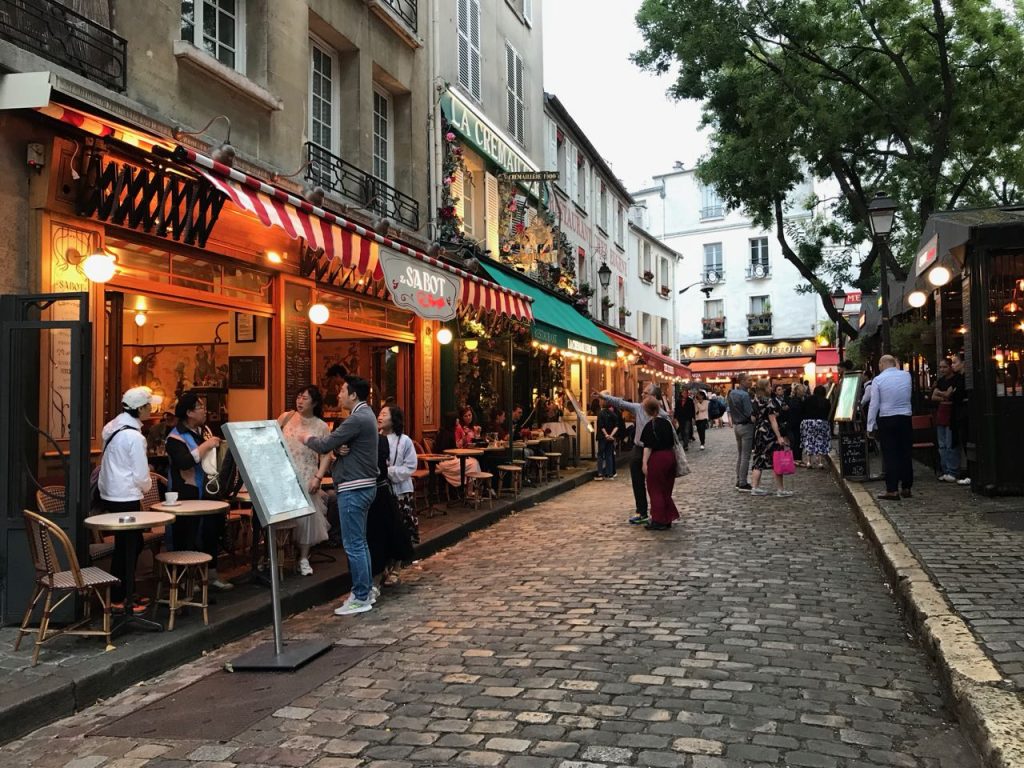
The last two weeks we’ve been hosting a visitor from Paris, someone used to walking in a city, running errands on foot, relying chiefly on public transportation. He enjoys the green abundance of our corner of the world and appreciates our space, but he misses the walkability to which he’s accustomed.

In another, similar, vein, I recently lunched with a young acquaintance who decided to stay put in a condo rather than buy a house because she loves living in a walkable community. She would rather have less space and more mobility. My oldest daughter and her family have made a similar decision.

I see in this the small but important vanguard of a movement to value more than just space: to appreciate density and walkability — and be willing to sacrifice for them, too.

Earth Day 2026

Earth Day 2026

The day before Earth Day 2026, I wandered along Reston trails, no particular destination in mind. I turned left where I usually turn right and right where I usually turned left.

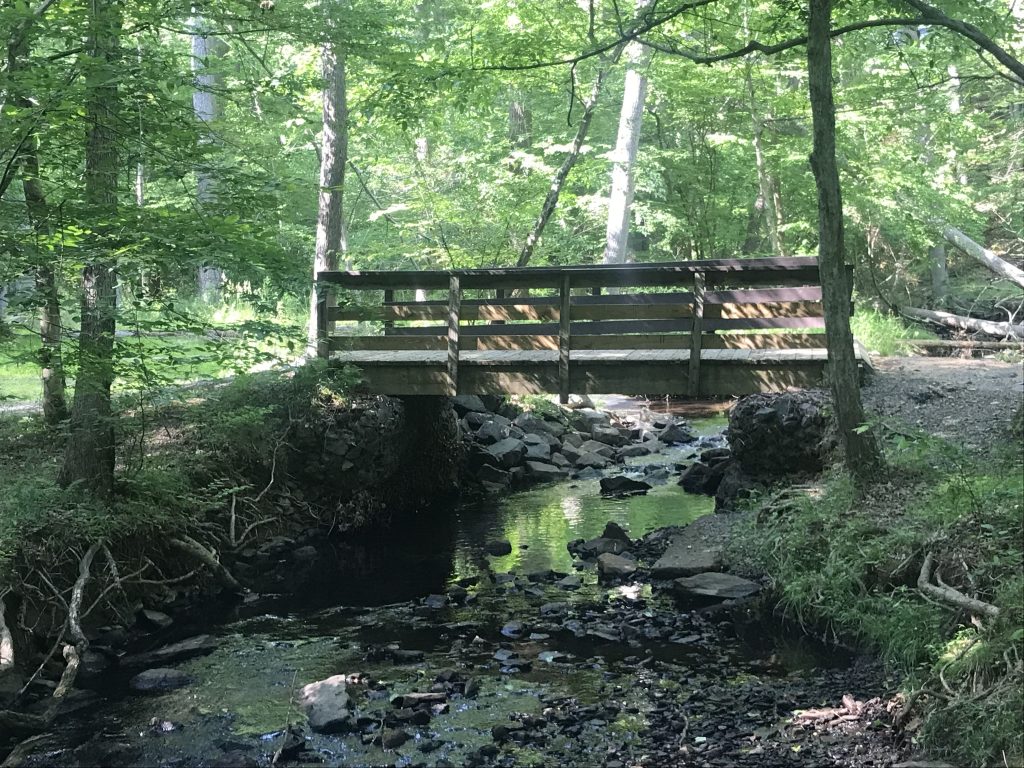
A chilly morning had blossomed into a spectacular spring afternoon. Recent rain filled the creeks, sent water tumbling over rocks, gurgling and singing. I stopped at a bridge and took in the scene, inhaled deeply. I have my problems with the suburbs, but I could have landed in worse.

How prescient are these paths and the woods that surround them, how lucky we are to have them, portals to the sublime.

So on this day devoted to nature and preserving the bounty of the planet, I salute my place, my tiny dot in the universe. May it thrive for many millennia.

The Aroma of Home

The Aroma of Home

When it rained in Bruce Springsteen’s hometown of Freehold, New Jersey, the place smelled of coffee grounds from the Nescafe factory. In his memoir Born to Run, Springsteen says that he didn’t enjoy the taste of coffee but he did like the smell.

“It’s comforting,” he wrote. “It unites the town in a common sensory experience.” To Springsteen the smell of coffee meant that there was “a place here—you can hear it, smell it—where people make lives, suffer pain, enjoy small pleasures…”

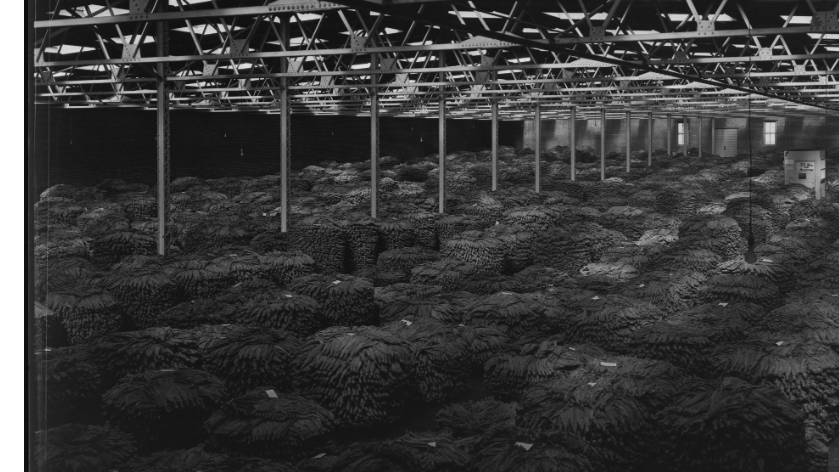
In Lexington, Kentucky, it was the scent of burnt peanuts wafting from the Jiff factory or the tang of drying tobacco leaves from the auction houses on Angliana Avenue.

I never smoked but I loved that autumn bouquet. And now, if I happen to catch a whiff of tobacco, it takes me back to the land of my youth, when the local television news would carry the fast-paced patois of tobacco auctioneers and downtown Lexington smelled like a cigar bar.

Burley tobacco was a livelihood, an industry, and later a pariah and an embarrassment. But for me, it was always the aroma of home.

(Circa 1930s tobacco warehouse photo courtesy Lafayette Studios, Lexington, via the Explore UK photo archives.)

For a Few Days

For a Few Days

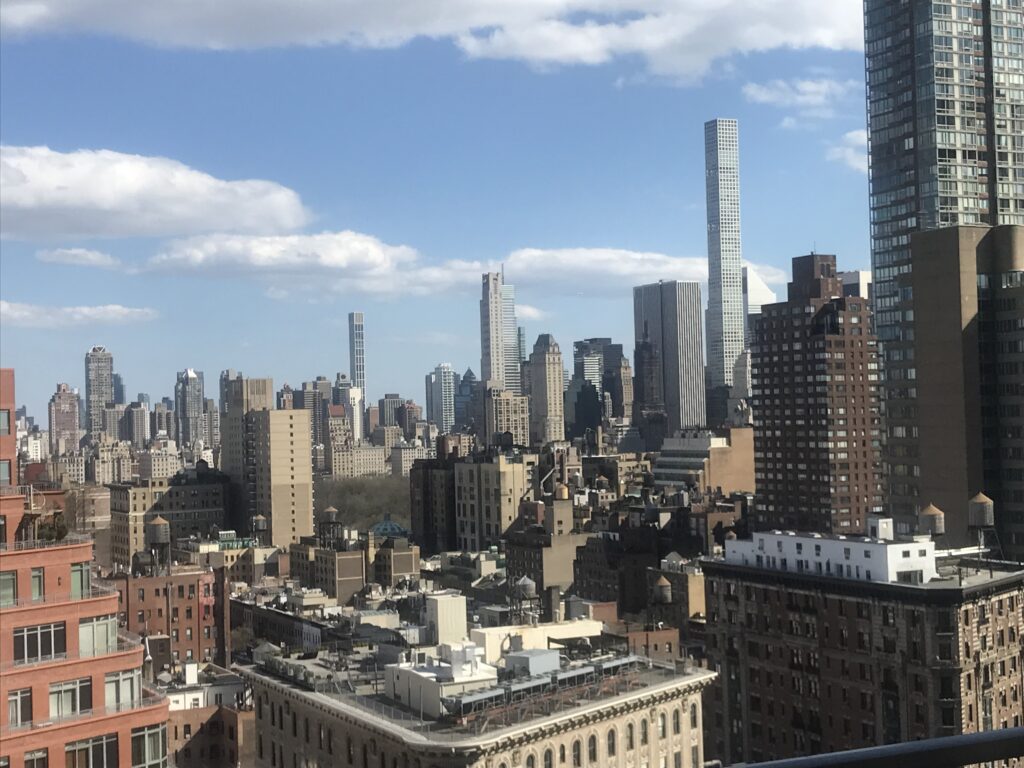
It’s almost as if the suburbs knew where I was going. Yesterday, a few hours before leaving on a train for New York City, I took a walk in the neighborhood. The redbud, dogwood and tulips clamored for attention. See how beautiful we are, they seemed to say. Why visit the concrete jungle?

Because it’s energizing and life-enhancing. Because it’s where I lived for five and a half years — at a time in my life when half-years counted.

I haven’t lived in the city in decades, but I’ve missed it and longed for it and visited it as often as possible. All it takes is a return — a getaway like the one I’m on now — to rekindle that excitement.

The suburbs threw everything they had at me yesterday. But I left them anyway — for a few days.

Meandering

Meandering

Yes, I’m continuing to walk slowly, but that’s not why I’m meandering. I’m meandering because I’ve just received the inaugural copy of Meander Magazine, which includes a reprint of a book review I wrote last year.

These days, my essays and reviews appear mostly in online publications because there aren’t many hard-copy magazines being printed. It’s exciting to witness one take shape and land in my mailbox with a satisfying thunk.

Although the dearth of hard-copy publications is good for reducing clutter, I do miss holding a hefty magazine, turning the pages, seeing what delights each new page holds.

Meander’s cover impressed me with its headline, too. “Returning to Place: Embracing reconnection and belonging” — which is what I try to do with my walking and writing. Meander and I are on the same page, you might say. I wish it all the best!

Postcard Weather

Postcard Weather

My trip to D.C. last Friday happened to be on one of those perfect late-summer afternoons. The mall was strangely empty — school’s in session, which has cut back on visitors — and those who work in the area must have taken off for a weekend at the beach.

I felt like I had the place to myself as I walked toward the Capitol, snapping a photo every few yards. I couldn’t help myself. Each view was better than the next.

This is the kind of day the postcard photographers should be out and about, I thought, before catching myself. Postcard photographers? Were there ever any? There can’t be many now given how few postcards are in circulation.

Meanwhile, I crossed Fourth, Third and First, the big white building coming into sharper focus. Snap, snap, snap. I soon had a dozen photos. Here are some of them.

House Fire

House Fire

It happened a week ago, on an ordinary suburban Monday. No one knows exactly why yet, but there are theories: a leaky gas meter, an air conditioner clicking on, a spark that ignited a conflagration. The occupants escaped with their lives, but they lost most everything else.

I live in a neighborhood of two-story and split-level houses. This one was split-level, with a more open floor plan than most. It went quickly, despite the efforts of numerous trucks and firefighters. Neighbors say the smoke was visible miles away, and I still catch a whiff of acrid air from time to time.

The ruined house now stands sentinel on my neighborhood walks. Part of its brick front remains but the garage and rear are mostly gone. Stalactites of charred wood loom eerily from its interior. It’s a sad and bracing reminder of how quickly it can all disappear.

(Photo courtesy Wikimedia Commons)

Decoration Day

Decoration Day

The graves roll with the landscape. They rise and fall with the hills that wind to the river.

I’ve seen the cemetery darkened by the low clouds of late October, seen it filled with the crisp precision of a military honor guard, seen it empty of living souls.

But yesterday I saw it bustling with loved ones, each grave decked out with a small American flag and many with flowers.

It was Decoration Day, and I was in Kentucky. I could place two pots of mums, one for Mom, one for Dad. Afterward, I snapped this shot.