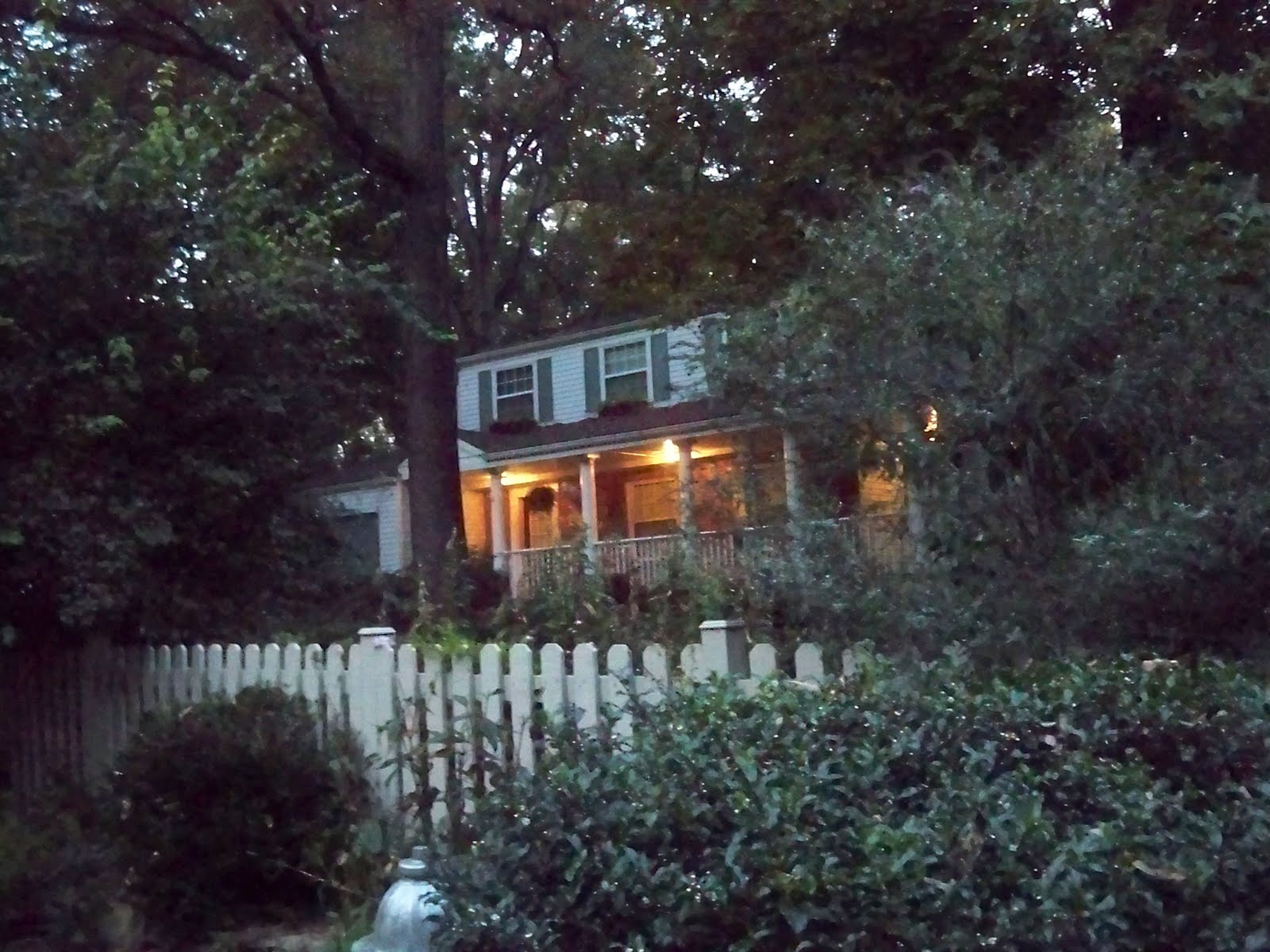
Yesterday I drove to the old part of town, to a D.C. I seldom visit, where the houses are stately and imposing and the yards settled and calm. I was struck, as I often am, by how various neighborhoods and landscapes create different moods.
How wide open and exposed is the world of the outer suburbs, how on the edge of things. I think about the medieval town, walled and protected, houses clinging together for survival. And I see in our wide yards a sort of bravado.
Openness has its appeal, but so does the fenced yard, the closed gate, the hedged garden. There is something in here precious enough to protect — to make you long to be inside.
Last night I went to a gathering of old college friends. We asked the inevitable questions (where do you live? what do you do? and — the clincher — when did you graduate?) and then we told stories. I heard about some great pranks and learned that two paintings in the reception area of my freshman dorm were recently found to be worth millions of dollars.
At some point our conversation turned to why we chose Hanover in the first place. And for most of us it was the physical beauty of the place. Hanover College sits on a bluff overlooking a double bend of the Ohio River. A winding forest road leads to the classical campus with old brick buildings in the Georgian style. To unwind, students stroll to the Point to look at the river.
I transferred from Hanover after my sophomore year, decided I wanted a campus near a big city. But when I think of college it’s Hanover I remember most. The low, mournful call of the barges passing, the broad Ohio curving; it’s a view that, every time I return, seems too perfect to be true.
I just finished Bill McKibben’s short book Wandering Home, his thoughts on environment and place as he walked through Vermont’s Champlain Valley and New York’s Adirondacks.
Here’s one passage, about how it feels to arrive somewhere on foot: “It’s not like arriving in the car for a dinner party. On foot you arrive late or early, without excuse, and settle into whatever conversation is under way. It took you a while to get there, so you’re obviously going to stay awhile. It feels like visiting in an older sense of the word…”
And here’s McKibben on the loss of old codgers: “It’s as if someone came and knocked down a thousand-acre stand of mature timber, as far as I’m concerned.” When these people were alive, McKibben says, “there was a quality of memory that I believe informed the place. It was tangible. It was in the air, it made the place what it was for me.”
In the suburbs, old codgers, or even young ones, are in short supply. Perhaps that is one reason why there’s no “there” here.
A trip through the suburbs this weekend helped me see our corner of the world with fresh eyes. Yes, we have congestion here, and within walking distance are large houses on small lots. But our neighborhood has a wooded, tucked-away feel, and my shoulders relaxed as we drove home under low clouds and a gathering wind.
What makes the difference in Folkstone is having a sense of the land we lie on. The houses work in tandem with topography rather than trying to overwhelm or undo it. We are an older subdivision, too, with houses in the 2,000 to 2,500 square-feet range rather than double that amount. How much easier it is to harmonize when you have room to do it in.
There is a sense of proportion and scale here that soothes the spirit. It’s good to be reminded of this.
Yesterday I learned that a friend I’d corresponded with for years, the editor who hired me at McCall’s Magazine, passed away in May. I hadn’t seen her in years, but I was always fond of her. She was the second person gone on my Christmas card list this year (the other my old boyfriend Gerry, who I eulogized seven months ago in this blog) and I was so sad to learn of her death. Sad for her family above all, but sad also for the passing of an era that she represents.
Lisel was first an agent and then an editor. She was smart and funny and wore her hair in a simple page boy style. She was the one who called me after I dropped off my resume and clips a few days after finishing up a graduate program in journalism. “Well, you’re sort of old to be an intern,” she said, with an endearing New Yorkish bluntness I was just beginning to understand. “But we’d like to have you for the summer.”
The summer turned into five years, and I went from editorial assistant to articles editor. Lisel became executive editor. She was always the calm heart of the magazine, which (like all the “Seven Sister” publications at that time) was edited by a man. I can still recall her big-looped script and her slightly distracted air. She was an intellectual, as many women’s magazine editors were then, and though we had our share of “Lady Di” covers, inside McCall‘s you could still find splendid fiction, elegant essays and controversial reports.
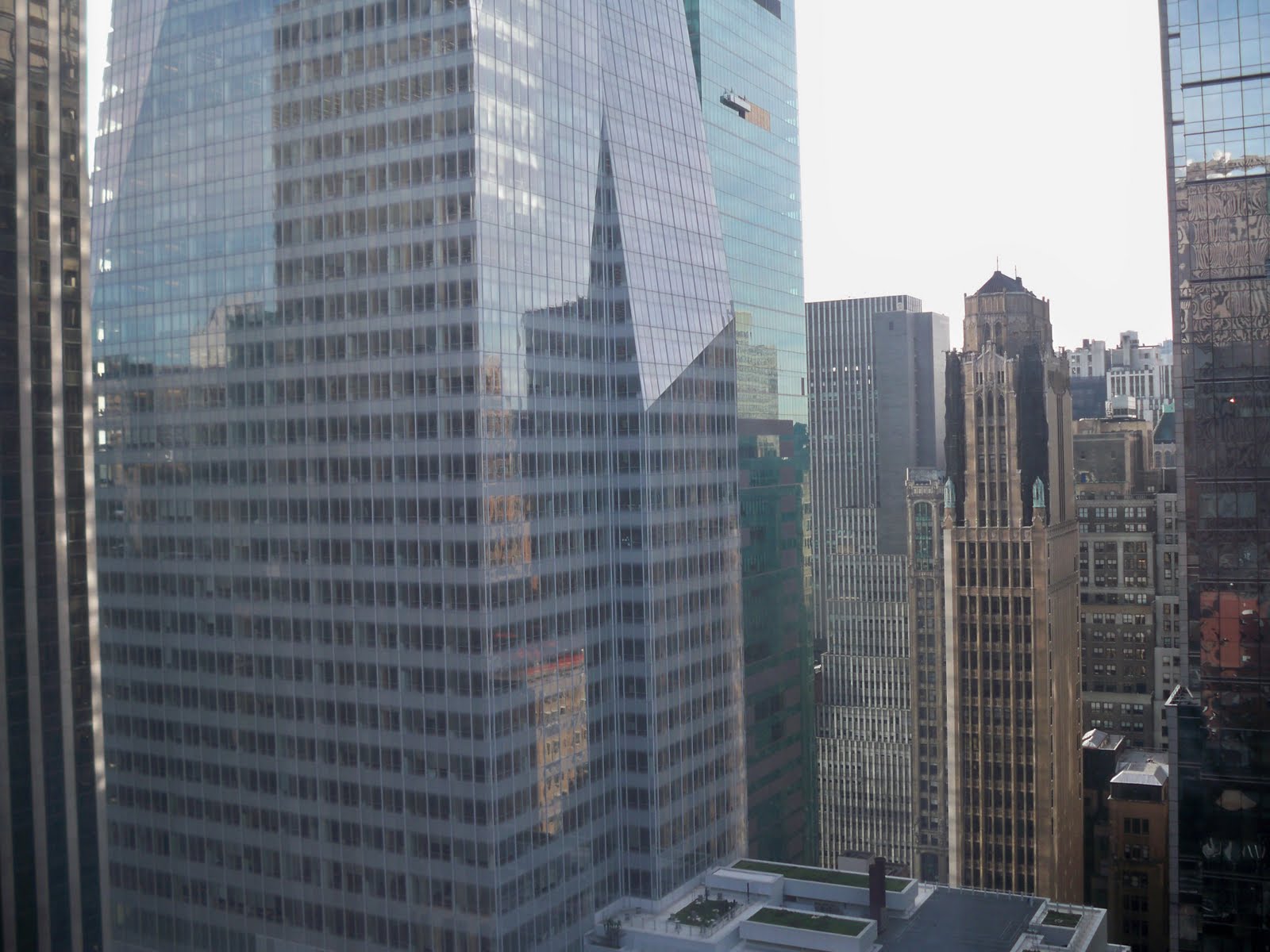
The magazine offices were housed at 230 Park Avenue, the ornate building which straddles that great thoroughfare. The elevators had painted clouds on their ceiling; they made me feel like I was in heaven. And in so many ways, I was. I’ve thought a lot about that place and those people since hearing the news of Lisel, about the long hall where she and other top editors had their offices. They all had an uptown view of Park Avenue; the whole world was at their feet.
We gathered for the last time last night. Eighteen people more different than alike, drawn together to explore the special places in our lives, whether real or metaphorical. Whatever lead me to the class — call it grace, serendipity or dumb luck — I am grateful for it. And I will miss these folks; we have come to know each other well these last few months.
I haven’t quite figured out how to tackle the big subject that intrigues and bedevils me. I’m still “in process.” But I’ve had a few epiphanies along the way and the class readings, discussions and blog posts have dug deep furrows, turned soil that will produce something in the future (at the very least the required paper due next week!).
As I made my way home last night, though, it wasn’t place that was on my mind; it was people.
Last night I went to our neighbor Jeanine’s house for an in-home shopping show. The clothes were beautiful, finely cut and tailored, the fabrics a pleasure to touch. At the end you get to try them on. The point of the party is to buy stuff, of course, but I went for neighborliness. For connections.
We chose our neighborhood because of its friendliness, and in large part we have stayed here for the people. In the suburbs you don’t rely on folks the way you do in the country. When we lived in Arkansas we never went “down the mountain” without asking friends what they needed from the store. That happens here only when there’s a snow storm or other natural disaster.
Buying clothes from a shopping consultant isn’t exactly like building a barn or harvesting hay, but it’s what passes for pitching in around here. It doesn’t banish the anonymity of suburban living, but it tries.
Here on the outer edge of Eastern Standard Time the sun is late to rise. But when it does, it floods the backroom with morning light. That’s what it’s doing right now.
A riot of rays spills in from the east, silhouetting the lamp and globe, which turn into out-size back-lit shadows.
It dawns on me that I can make hand puppets in this light, and I do, a long gangly goose that laughs and quacks his way into the morning.
The light promises a good day, a freshening season. No Black Friday for us. We are after sunshine and ice-skating, the three-mile trip downtown (yes, we can handle that, we suburbanites), and a little more family time.
“Here before me now is my picture, my map, of a place and therefore of myself, and much that can never be said adds to its reality for me, just as much of its reality is based on my own shadows, my inventions.”
from Map of Another Town: A Memoir of Provence by M.F.K. Fisher.
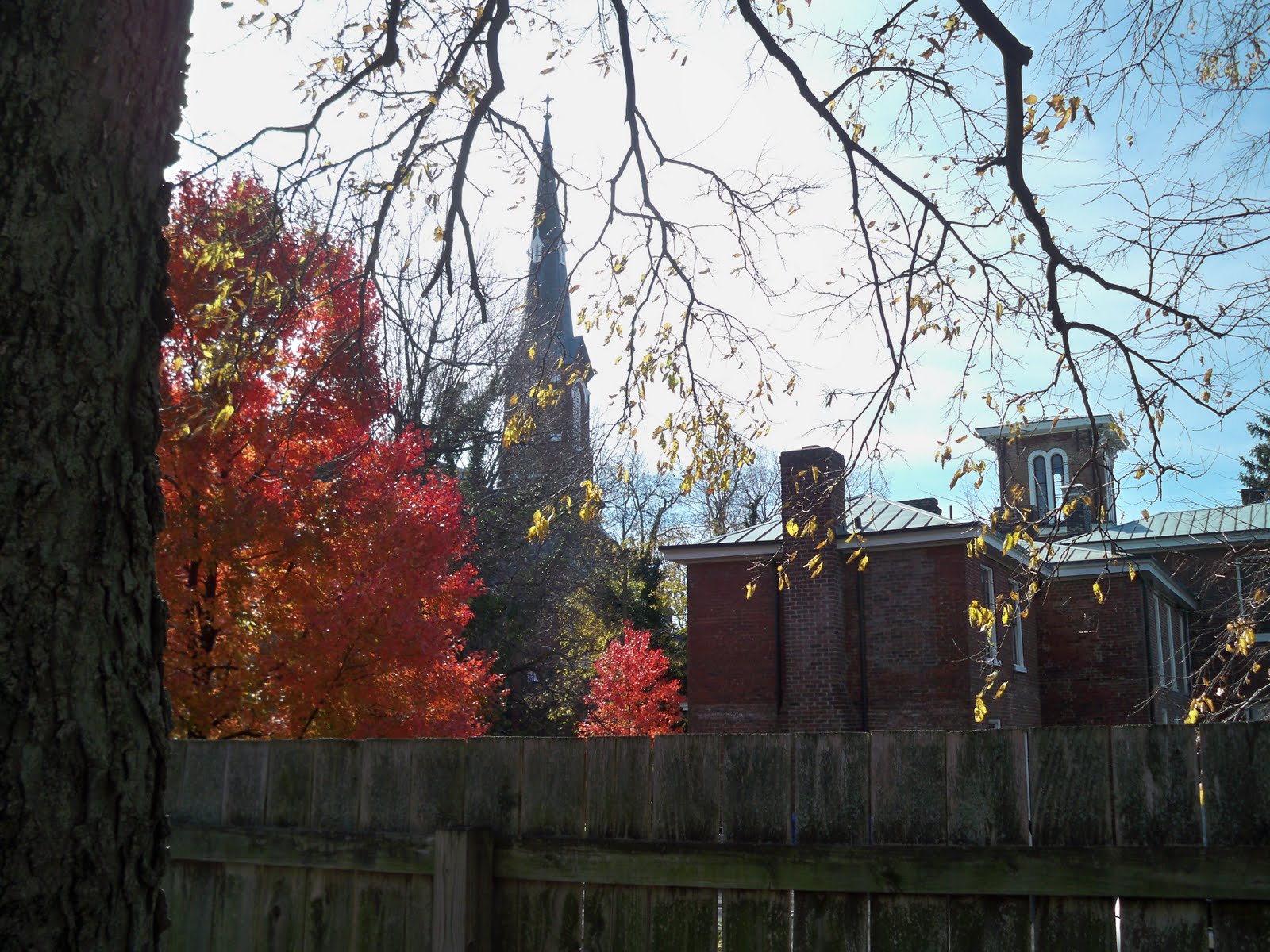
On my way home from the funeral Saturday, I stopped for a moment to snap this shot. It is a view of downtown Lexington from the parking lot of St. Paul’s Church, where Tom and I were married. I turned my head and there it was, this vision of old Lexington with the bright sun overexposing the steeple and the red brick rectory shining by its side and the late autumn foliage adding a spot of color on the left.
Seeing my town from this unconventional angle I see also the old towns of Europe, their cobbled streets and ancient airs, all the living that went on within their walls, the stones somehow absorbing this life and reflecting it back to us centuries later.
Surely when we talk about place we talk about all the living that goes on within the cities and the towns and buildings, and our noble — and ultimately futile — struggle to hold onto what passes too quickly through our hands.
A death in my extended family has me thinking about final resting places, their importance and value. On Saturday, my aunt was laid to rest next to her husband in Kentucky. She was born in the state, but lived much of her life in Ohio and Michigan. My cousins are scattered from Saginaw to Katonah to Cleveland to Washington, D.C. But now they are doubly bound to this plot of soil on the west side of Lexington.
What helps us decide where to end up? It is a complicated and intensely personal decision, of course, and it brings into high relief questions of place and belonging. Because even if we’re scattered to the four winds or kept in a vase on the mantel, we still have to end up somewhere. It is our final decision, where we stop when we can roam no more.
This is Mozart’s grave in Vienna, though there’s a good chance the composer was interred elsewhere in this cemetery.