Browsed by
Category: seasons

Bittersweet

Bittersweet

Labor Day is a bittersweet holiday. While other nations celebrate their workers on the first day of May, we do it on the first Monday of September.  So instead of welcoming the warm weather, we are saying goodbye to it (or good riddance, depending upon your point of view and tolerance level).

The fact is, if you love summer, as I do, you may not be a big fan of Labor Day. It always makes me think of the last jump in the pool when I was a kid, my parents saying, “OK. But this is absolutely the last one. We have to go home. You have school in the morning.”

School in the morning. A line guaranteed to chill the soul of any child, a phrase that still, decades later, makes my stomach do a little somersault.

As the years pass more quickly, though, and as each Labor Day (and Memorial Day, 4th of July and other holiday) leads more surely to the next fete in the lineup, I’ve come to see the first Monday in September as a bellwether in reverse. If summer is good, Labor Day is not so bad. If summer has been summer — hot, sticky, filled with enough swimming and biking and eating of ice cream bars — then I reluctantly, but without reservation, say farewell.

Dry Season

Dry Season

We live in a part of Fairfax County laced with runs and rills. Last fall, torrential rains swelled these small streams into wide rivers that spilled across our narrow lanes, taking tree limbs and other debris with them.

You wouldn’t know that now. Most creek beds are bone dry; the deepest are only a trickle of their former selves. This is not good news for the water table, but it is a boon for the walker.

Routes without bridges, paths that lead to narrow log crossings (or none at all) are now open for business. For the last two weeks I’ve been walking trails I hadn’t walked since 2007, when, in an attempt to ford a stream, I pulled myself up with what turned out to be poison ivy vines. (I somehow grew up without knowing that the second half of the rhyme “leaves of three, let them be” is “only a dope would touch a hairy rope.”)

But this summer I can easily cross that stream on a concrete spillway that is usually under several feet of water. And this opens up an entire network of trails through woods and along country lanes. 

 The dry season reveals worlds that are invisible under high water.

Meadow Music

Meadow Music

A walk through the meadow. I pull out my earphones to hear the rustle of grasses in the wind, the sound of children playing, a ball bouncing. Past the pond, where a family fishes. The mother is veiled, the little boy intent upon his lure.

Along the ribbon of pavement that bisects a field, I breathe in the scent of pine and cut grass. The Queen Anne’s lace is nodding, the tall weeds waving. Insects buzz, the backdrop noise of summer.

But soon enough, I dart into the woods. There was a place there where I had to duck under a tree that had collapsed upon itself in the storm. But only a bare patch remains. Already I smell autumn in the air, the acrid aroma of dry leaves. I shiver as I stride.

Longest Day

Longest Day

Tom and Celia head to Montana today, which means their longest day will be even longer. And which means that last night was the last time in a long time that we’ll all be together.

We sat on the deck until well past 10, picking at what was left of the quiche I made for dinner, lighting candles, discussing everything from ESPN to circular time. At one point we stopped talking to check on Copper, who was tangling with some wild creature (a fox?) in the back of our yard. Our little dog can always be counted on for comic relief.

Eventually the conversation came around to Africa, to the trips we’ll make there and what we’ll do when we arrive. It was a good topic on which to land. It is the optimistic approach, the sunny approach, what you think about on the longest day.

Last Day, First Day

Last Day, First Day

Last day of school, first day of summer. The weight of the world would slip from my shoulders. Time stood still, and days were warm and without purpose. There would be cool shady mornings and long lighted evenings. There would be watermelon and iced tea and potato salad;  filmy cotton dresses and new Keds that I’d get dirty right away.

And later, when the children were young, there was their joy to witness, the shaving cream fights at the bus stop on the last day (see above), the creek wading and romps in the woods, the road trips to Kentucky and Indiana and Montana and Maine. Summer was a time to put the world aside. Now the world pushes its way into every season.

One daughter packs for Africa, another is about to be a senior in college, the youngest a senior in high school. Time didn’t stand still after all.

Eight or Later

Eight or Later

I heard yesterday on the weather report that the sun will not set before eight p.m. from now until August 18. It’s a good way to celebrate May Day and the start of a new month, with the promise of light.

Hot autumn days with an unshakeable air of melancholy are proof that it’s not lack of warmth that makes me mourn the end of summer. It’s the early darkness.

Extra daylight means early mornings and late nights. It means tomatoes and zinnias and basil. It means after-dinner strolls,  evening swims and long suppers on the deck. And of course, it’s the perfect excuse for insomnia. Summer is often thought an indolent time, but when you consider the extra daylight it gives us, it’s better thought of as an active season, a heroic season.

Knowing we have three and a half months of late sunsets ahead of us gives me a sense of calm — even after solstice comes, we will still have light on our side.

A Photo of Phlox

A Photo of Phlox


Waking from brief sleep, I make some tea and slowly come alive. We’ve moved from summer back to spring. The first birds are stirring. It’s the hour before dawn, when the day is just a hint on the horizon.

Soon I will drive in the gloaming past the shimmering azaleas, the fading dogwood. I will, in my haste, not have time to look, to really see, what I am passing.

But on an earlier day I have let the camera look for me. Here, on our normally sedate corner, a vivid crop of creeping phlox.

Blue and Gold

Blue and Gold


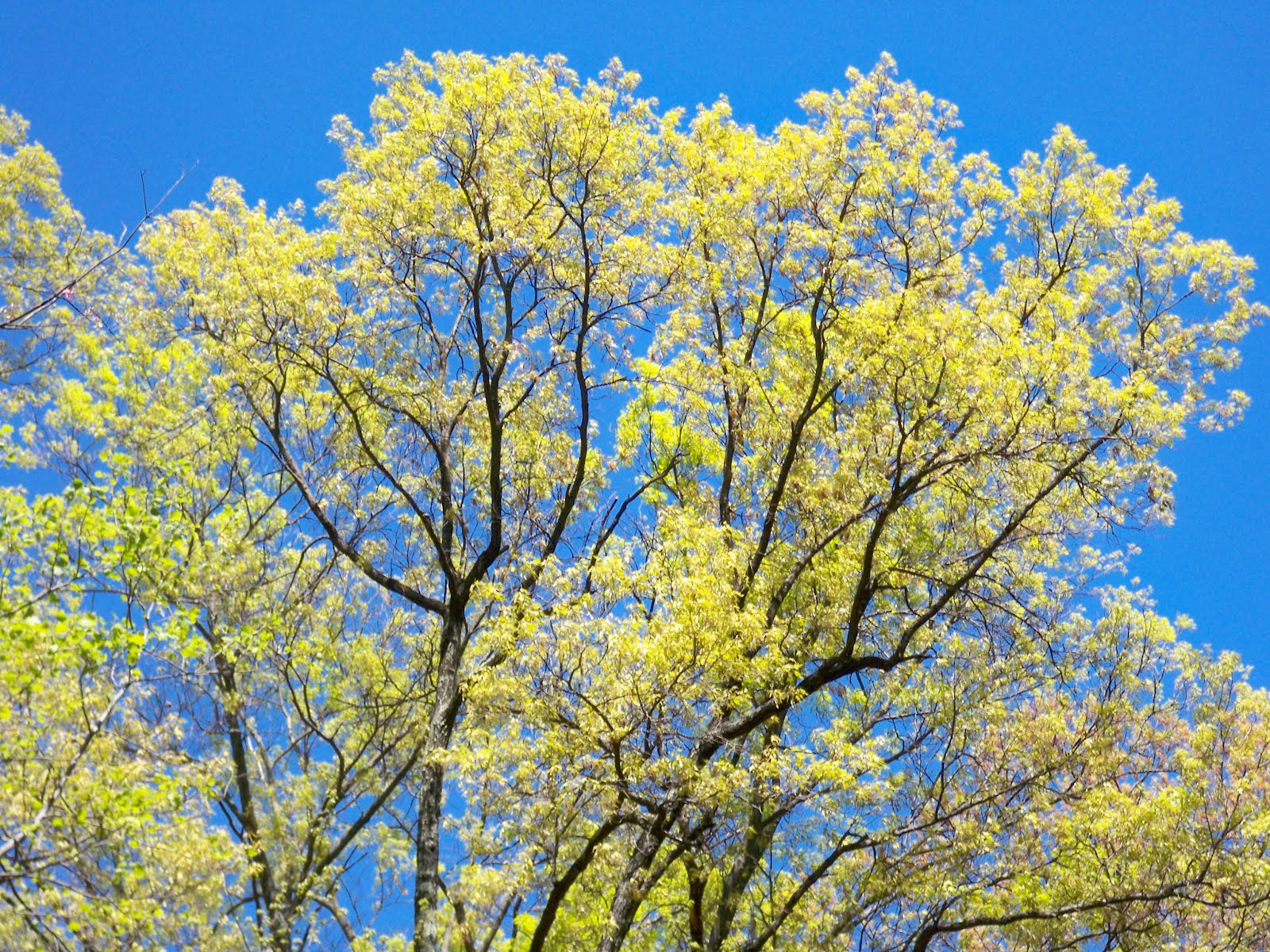
A string of cool days and cold nights has put spring into slow-mo. I love it when this happens. It prolongs “nature’s first green,” which is gold, as Robert Frost said. Precious. Fleeting.

So, in advance of the weekend’s warming trend, I celebrate this first green, best as viewed against a blue, blue sky. And again, nature has cooperated, has given us low-humidity azures. So rather than looking down at the parched and powdery soil, I’ve looked up at the heavens. And the gold.

The Birth of a Fern

The Birth of a Fern


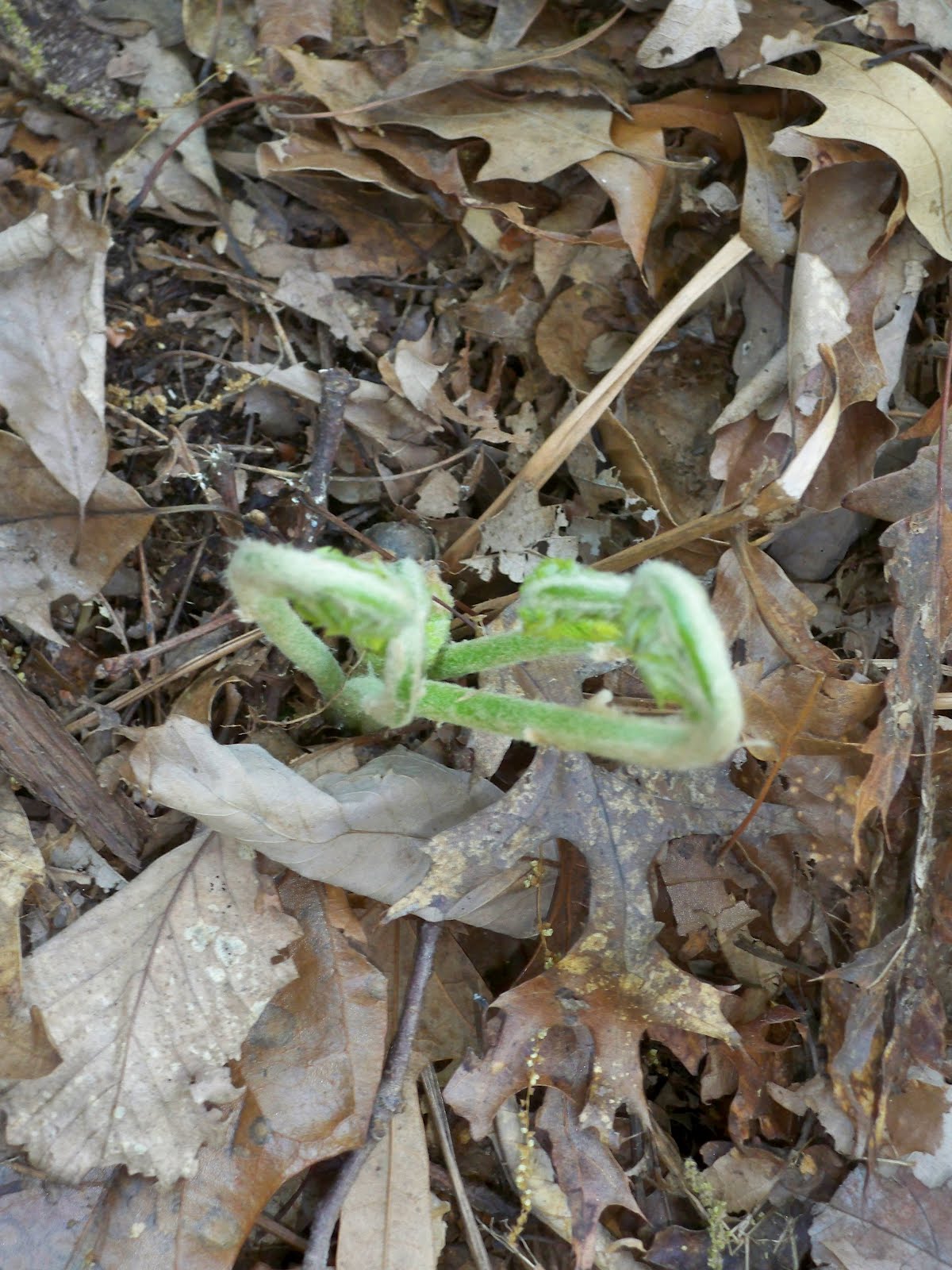
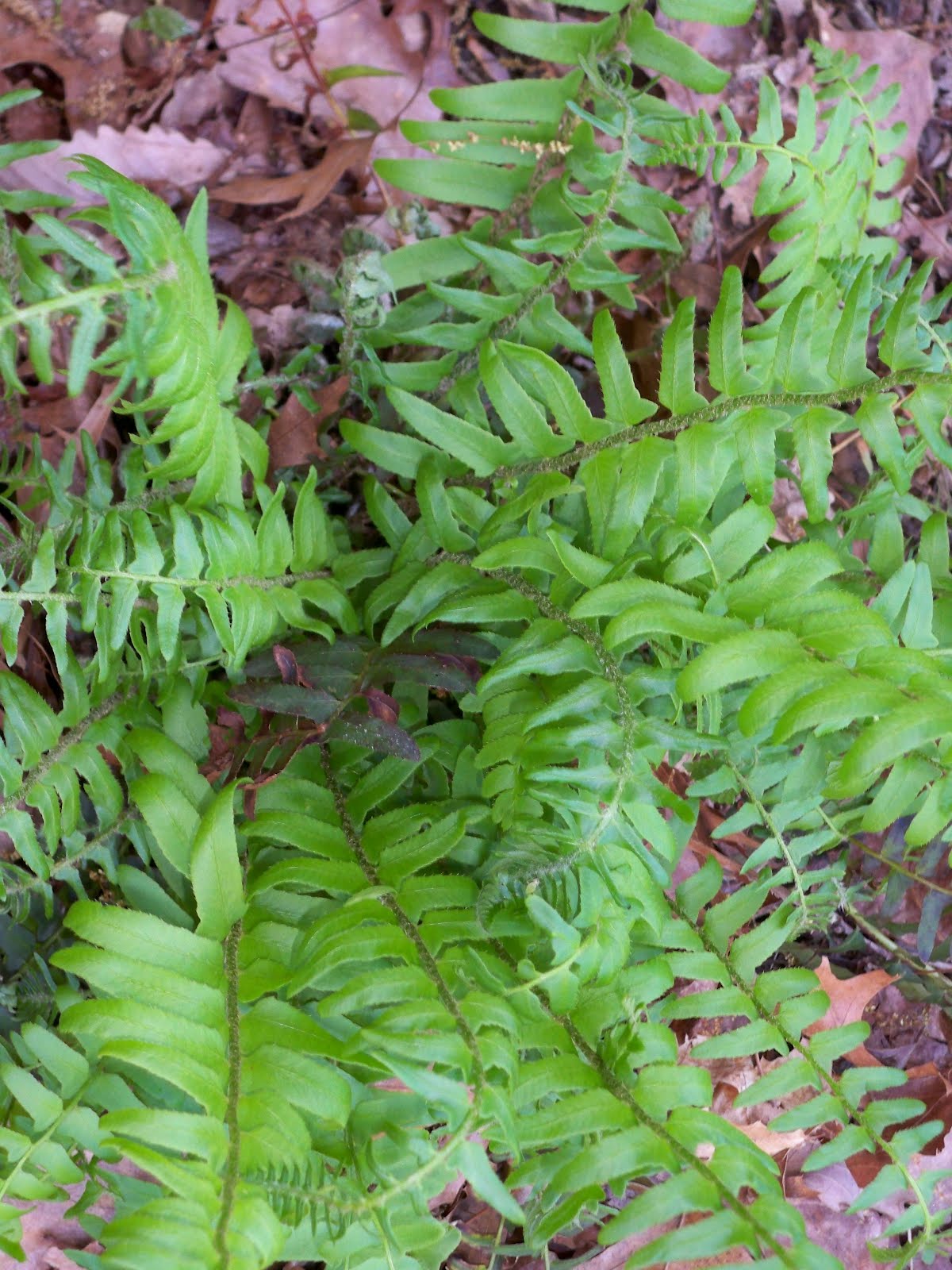
It emerges not as a shoot but as a tendril. Furry and curved, something prehistoric, of the grave. One does not ooh and aah over the baby fern. One is curious, to be sure. And circumspect. A bit in awe. But not giddy or giggle-prone. Adorable the young fern is not.

But as it grows, it comes into its own. It unfurls, straightens out, becomes the plant it was meant to be. Lacey and delicate. At once contemporary and old-fashioned. Ferns give me faith.

Virginia Bluebells

Virginia Bluebells


I know where to find them, walked right to them on Friday, crossed Soapstone, turned left onto a springy woods trail and there they were. Early, of course. But then everything is early this year.

Tall, nodding flowers, pink as buds and becoming a heavenly blue in maturity. A blue edging toward periwinkle. A color seen less often this time of year, so dominated are we by yellows, pinks and purples.

The Virginia bluebell thrives in woodland soil, rich, loamy, leaf-strewn. There are few of these wildflowers in our woods. Which makes seeing them each spring all the more essential. I make my way to their home as if visiting a national monument or a famous painting. It’s one of my rites of spring.

Photo: Bellewood Gardens.com