Browsed by
Category: travel

Chesapeake Steamboats

Chesapeake Steamboats

One of the reason I love to travel is that it opens up worlds you’d never know if you didn’t leave home. It’s not just seeing the sights and meeting the people. It’s imbibing the history and culture.

Things like the Chesapeake steamboat culture, for instance, which flourished from the 19th century into the 20th.  Boats plied the rivers, creeks and inlets of this watery world, picking up tobacco, produce, seafood — and people — and taking them to Baltimore or Norfolk. Neighbors would gather at the wharf when the boats made their return trip to retrieve the tools, lumber or lace they’d ordered from the big city.

Steamboats served as buses, ambulances, bars (you could get a drink on one during Prohibition) — and stages. The musical “Showboat” was based on an Edna Ferber story she wrote after spending time on the James Adams Floating Theater, which mostly plied the Chesapeake.  These floating stages might be the only live entertainment a family could count on all year long. It was a big deal when the Floating Theater came to town.

Chesapeake steamboats — until this afternoon, I never knew they existed.

(This is the pilots cabin from the steamer Potomac, which is being restored in the Irvington Steamboat Museum.)

Virginia Tidewater

Virginia Tidewater

This is a land of inlets and bridges, of boats and buoys. It’s the Virginia Tidewater, home of three peninsulas — the Eastern Shore, the Northern Neck and the Middle Peninsula.

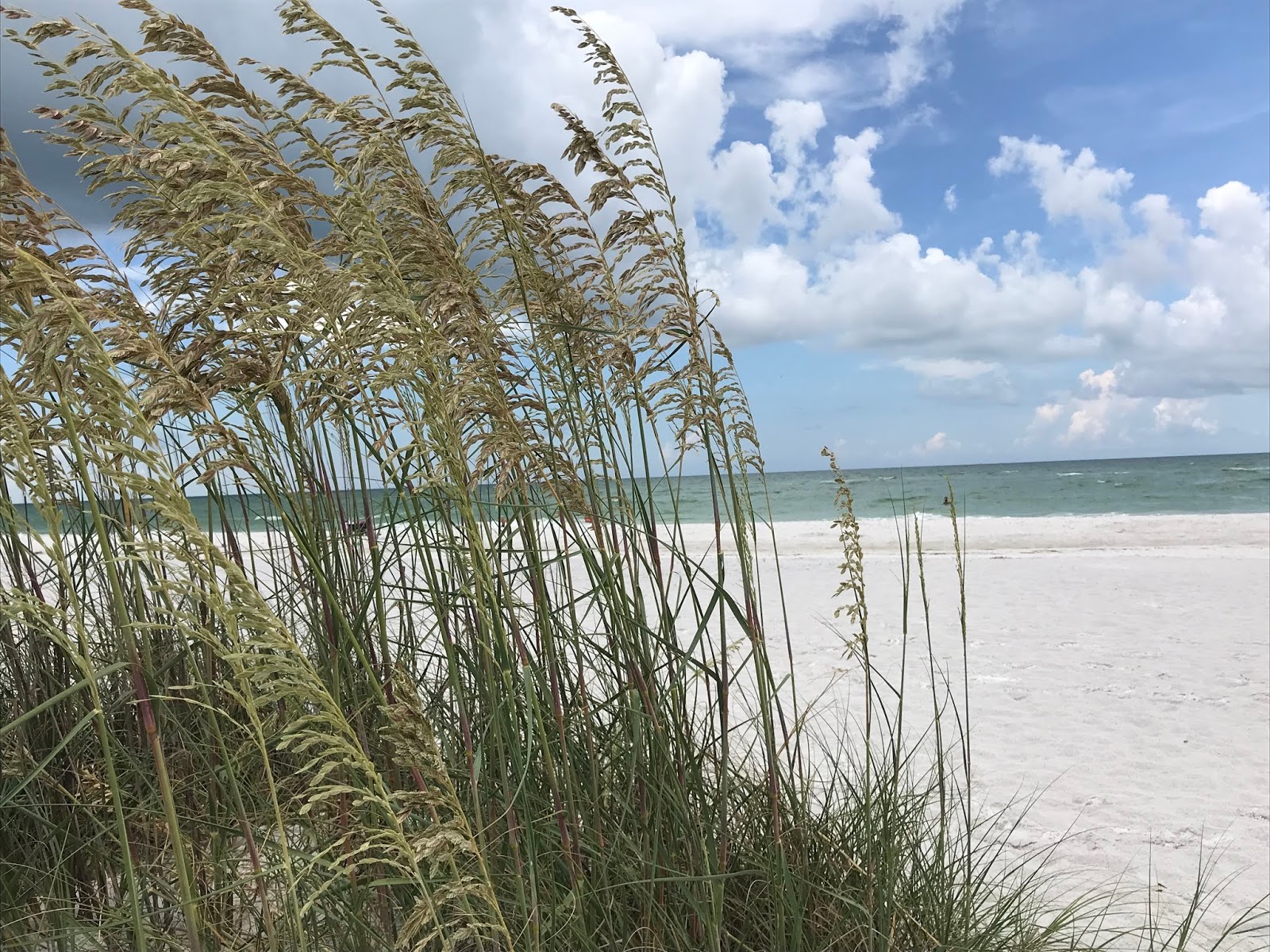
It’s a place of fringed coastlines, of oat grass waving in a stiff breeze off the Chesapeake. There are beaches here, but they are small and riverine. And the water is salt, fresh and brackish.

As if to mimic this variety, the landscape holds colonial churches, ancestral estates, boardwalks for bird-watching — and even an oyster academy.

It’s not a matter of what to do … but of how much we can cram in.

ROVA

ROVA

It’s the morning of a four-day weekend and we’re off soon to Virginia’s Northern Neck, a spit of land that lies between the Potomac and the Rappahannock.

It’s a land of marsh and water fowl, of water vistas and sailing ships. Known for its oysters and wineries — also the birthplace of five early presidents.

I know far too little of this state that I call home. To be a resident of Northern Virginia (NOVA) is often to be far less familiar than one should be with the Rest of Virginia (ROVA).

Today we put that at least partially to rights.

Holding On

Holding On

What helps the beach state remain? I’m asking myself that question today, as I feel it slipping away.

I was off to a good start on the way home: a plane so empty that each passenger had his or her own row of seats.

Then a late-day landing that showcased the Washington Monument and the Capitol, the graceful spans across the Potomac, the compact graciousness of the place.

But today there was the long commute into Arlington, the work call that came in before I reached the office, the emails, the to-dos that piled up when I was gone.

Welcome back, they say.  I try not to listen. I hold onto the beach state for dear life!

Beach State

Beach State

Today I leave the beach. That much is indisputable. But I hope to keep the beach state.

The beach state, as you might suspect, is the habit of pondering clouds and palm trees. It’s also the habit of not caring as much about every little thing. It’s the habit of letting go.

Beaches, after all, are receptacles. Onto them is thrown the flotsam of the sea, and from this random collection of shells and plastic bits comes sand both smooth and powdery (depending upon how close it is to the ocean). The beach, in short, is accomplished at acceptance.

This is something I would like to emulate, the beach state of acceptance. So it’s that I would like to take home with me.

It’s easy to think about retaining the beach state with the smell of sun on my skin and a tropical breeze moving palm fronds to and fro. Much more difficult when I’m standing on a crowded Metro train or sitting at my office desk, up to my ears in work.

But that’s when the beach state is needed most of all.

Beach Clouds

Beach Clouds

Beach clouds differ from their mainland cousins. They cluster in the distance, looking gray and ugly. They throw down sheets of rain, giving themselves away.

Sometimes they scoot over the beach, leaving just droplets in their wake. We beach-goers take the brief pelting and shrug. We can see the sun breaks up ahead. We know we will have blue skies again soon.

I used to dread clouds at the beach; now I welcome them. They block some rays, cool me down, let me stay a few more precious minutes on the shore.

The Contemplative Life

The Contemplative Life

Shortly before leaving the house on Saturday, I panicked about what books to bring.  I jettisoned the hefty library book, a novel scheduled for September book group. There will be plenty of time for it, and it hadn’t grabbed me yet.

I thought about packing a book I’d already read, a security blanket of sorts. But that seemed too unadventurous.

I ended up with Virgin Time: In Search of the Contemplative Life, by Patricia Hampl. It is part travelogue, part memoir and part spiritual exploration.

The contemplative life is what Hampl is after, but to get to it she takes a walking tour to Assisi, home of St. Francis.  The walking feeds the contemplation, and provides authentic moments like the one when a woman in a kerchief runs out to offer the pilgrims two bottles of her homemade wine, a gesture “a million years old, far beyond courtesy, rooted in ancient communion.”

“Walking allowed such timeless moments, making us slow-moving parts of the landscape we passed through. Maybe the world isn’t, at its daily heart, as modern as we tend to think. As we walked, it kept reverting to an ancient, abiding self.”

And it is in that “ancient, abiding self” that Hampl discovers — and perhaps all of us could find — the lives we are looking for.

The Vacation Typo

The Vacation Typo

If relaxation means typing “vest” instead of “versa” or “swet” instead of “swerve” then I’m officially in vacation mode.

Those errors, since corrected, remind me this morning that my editing eye must be officially closed for the duration.

What I hope is not, what I hope is wide open, is the “inward eye,” the one that helps me notice all the hues in pool water, the liquidity of the cerulean, the merging of the teal and the turquoise, the azure and the ultramarine.

That’s the part of me switched off too often, the part bypassed for efficiency’s sake. And oh, how I want to reawaken it!

I’ve Got Rhythm

I’ve Got Rhythm

It’s the rhythm that does it to me, the waves lapping, advancing and retreating, moving in and out.

It’s the palm trees swaying and the birds here, different from the ones back home.

It’s the landscape. Semitropical, lush — hot, yes, but where isn’t it hot these days?

The rhythm of Florida has become the pace of relaxation for me.

Bach to the Beach

Bach to the Beach

One of the joys of a beach vacation is how few decisions need to be made. I love the hustle-bustle of a traveling getaway, one where you must decide which states or countries to visit, which sights to see, where to stay, which routes to drive.

But on a beach vacation you know what you’ll do. You’ll walk, read and swim. You’ll look at the ocean and marvel at the immensity of it all.

Yes, you must decide how to divvy up your days. Beach in the morning, pool in the afternoon — or vice versa?

And what you must also decide is what to listen to while striding down the strand. Yesterday, it was Bach. To “Sleepers Awake” I watched gulls swoop ands swerve. To “Sheep May Safely Grace” I dodged lizards in the dunes. To the “Toccata and Future in D” I saw thunderheads pile up in the east.

They almost chased me inside, but I kept walking and they blew over … for a while, at least.