Browsed by
Category: walking

Turning Right

Turning Right

I left the house early, out for a walk and an artist’s date. The walk was one of the usuals — until I turned right instead of left at the end of Glade and ended up on an unpaved section of the Cross County Trail.

It slowed me down, this packed-dirt, root-strewn path. And slowing down was a good thing. I noticed the light filtering through the early autumn leaves, some just starting to change. I heard a bluejay squawk. Finally, I took my earbuds out so I could hear Little Difficult Run sing as it tripped over its large smooth stones.

Back to my car and inspired by the trail, I decided to drive past houses that line it. Some of them look small and down-sizable, worth a second glance.

Now I’m writing at a coffeeshop I recently discovered. The Doobie Brothers are playing, I’m tapping my feet and trying to concentrate.

Maybe not the perfect artist’s date, but it’s a start.

Ambulatory Romance

Ambulatory Romance

In Elizabeth Gilbert’s new novel City of Girls, a man and woman get to know each other by exploring the streets of New York City.  They walk and talk and fall in love not by touching but by rambling.

There are unique reasons for their unusual relationship, but even putting those aside, they are onto something. Walking frees the soul, and if one soul is strolling with another, confidences are easily shared.

It may be the same process that loosens thoughts in the solitary walker, or it may be that the sheer mechanics of it means you are looking ahead and not at each other. Whatever the explanation, walking invites intimacy, as it did for this couple:

Nobody ever bothered us. … We were often so deep in our conversations that we often didn’t notice our surroundings. Miraculously, the streets kept us safe and the people let us be.  … We were devoted to each other.

The Teabag

The Teabag

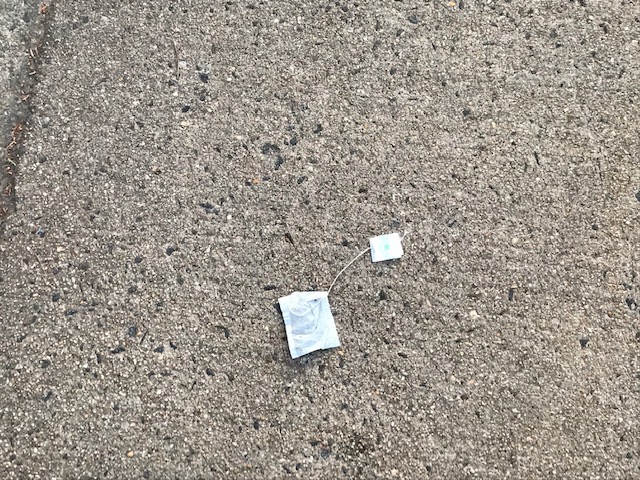
The first time I saw the tea bag, I barely noticed it was there. It was morning, I’d parked at the high school and was walking through the tunnel to the station. I was rushing, of course, and I figured it was there because someone else had been rushing, too. I paid it little mind.

But the tea bag was there in the afternoon when I walked back to my car. Nothing had disturbed it. No animal had burrowed in it to see what was inside. No one had kicked it into the grass. It looked as clean and untouched at 6 p.m. as it had at 7 a.m.
So I thought more about it. Did it fall out of a box of teabags? Was it perched on top of a cup, its owner unaware until reaching the office that his hot water would never become tea?
The next morning, I decided that if the teabag was still there, I’d snap a shot of it. And so I did. Not because it was anything special. But because it was not.
The Golden Hour

The Golden Hour

I almost bailed at the last minute. Standing on the platform in Crystal City, worn out from the usual, I almost jumped on the Blue Line train, which would have connected me to the Orange Line and home.

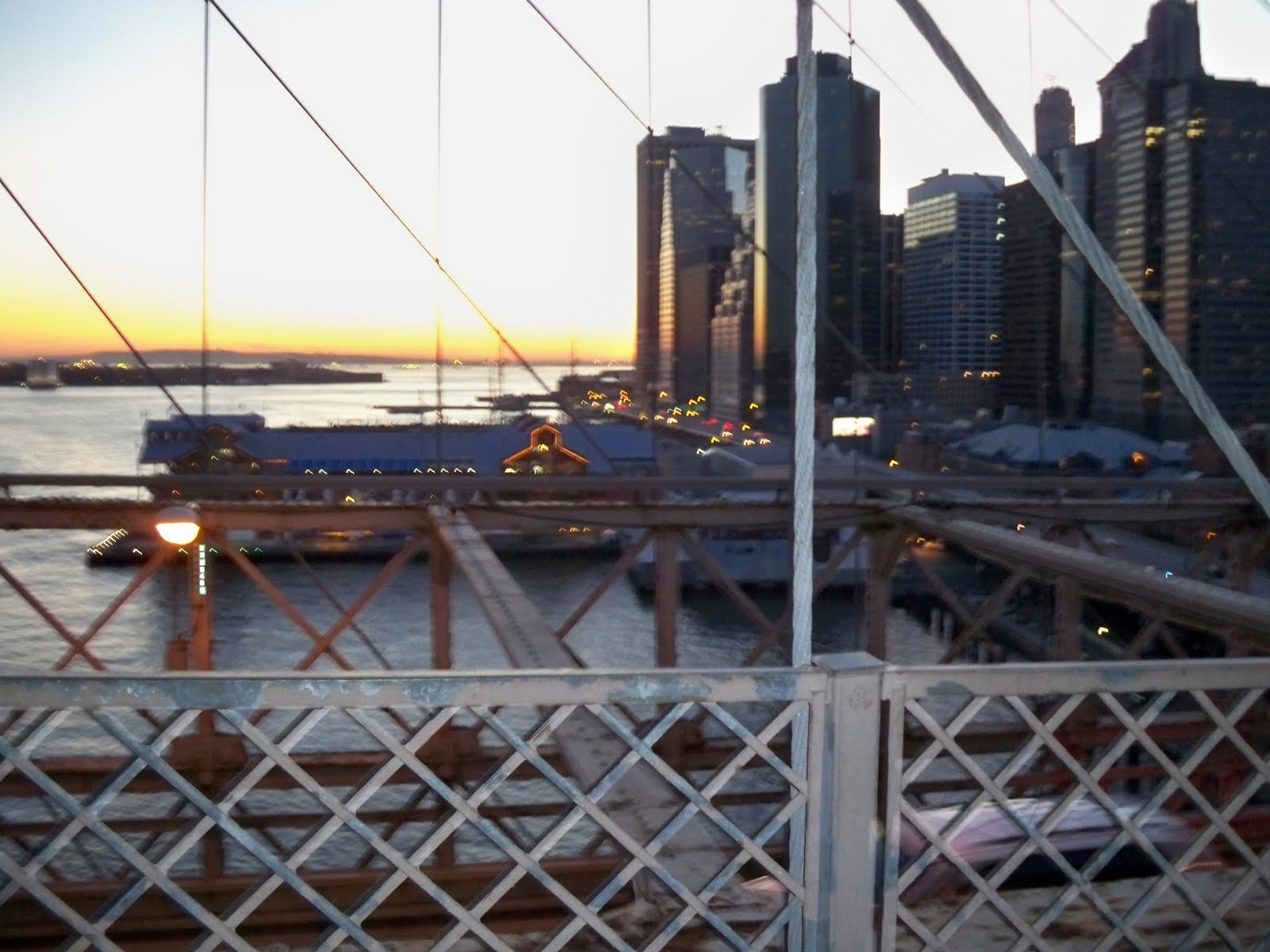
But I stuck to the plan I’d come up with earlier, which was to drain the last drop from the day, to walk around D.C. in the “golden hour,” the one favored by photographers, when light slants low and fetchingly across the landscape.

So I hopped on a Yellow Line train, rode a few stops north into the District, and exited at L’Enfant Plaza. I strolled east down the Mall toward the Capitol, then pivoted and walked west, directly into the setting sun. I missed the bustle of the lunchtime crowd, but the light made up for it.

It created an aurora behind the Monument, dramatic and striking. But I preferred what it did to the red sandstone of the Smithsonian castle, how it warmed and illuminated it, changing it from dour to delightful.

Ambling through the Enid Haupt Garden with its orchids, magnolias and dhobi trees, I felt like I was in some Mediterranean palace. The red stone was terra-cotta and the splash of the fountain was the distant sigh of the sea.

Shaggy Beauty

Shaggy Beauty

A cloudy walk on the Washington and Old Dominion Trail bridle path. Or at least I call it the bridle path. It’s the cinder trail that runs alongside the main paved road.

Taking it meant I could avoid the “On your left’s” that would surely have been the soundtrack of my walk had I jockeyed for position with the speeding cyclists who cruise up and down the 26-mile ribbon of asphalt on weekend mornings.

The road not taken was just right for the day. I had a close-up view of the autumn foliage, the goldenrod and chicory and wild clematis cascading over greenery. It was a shaggy beauty —profuse, casual, easy on the eye.

Foot Traffic

Foot Traffic

We are mothers and fathers, sisters and brothers, daughters and sons. We are accountants and writers, baristas and producers. But mostly … we are two legs at the bottom of which are two feet.

That’s what matters in the morning. That our feet propel us up the escalator and into the street, where we stride and sidestep, move from conveyance to office. 
Every morning there are slight deviations:  the blaring of a siren as a fire engine rushes past us on 18th Street, the sound of jackhammers as a building is demolished on Crystal Drive. We must wait at the corner, skirt around the window-washers. 
Some days we move quickly, there is a spring in our step. Other days we find ourselves dragging. But the movement is ineluctable. The current moves us ever onward, forward to our days. 
Contemplative Tasks

Contemplative Tasks

A walker in the suburbs spends a lot of time thinking. So does a writer in the suburbs (or the city, depending upon whether I’m working at home or at the office).

I think best, though, when I’m doing something else. And I was thinking the other day (see?!) about how certain tasks are perfect for contemplation.

This will come as no surprise to monks and nuns who pray ceaselessly whether they’re hoeing a field or baking a fruitcake. They’ve long since realized how much physical labor lends itself to thought and prayer.

Walking, of course, is one of the most contemplative occupations, which is a large part of why I do it. Others include weeding, mowing, sweeping and ironing.

Each of these deserves its own post (and some have them), but I’m focusing today on what they have in common, on the pulling and the stretching, the pounding and the smoothing — on all the repetitive motions that exercise the muscles so the mind can roam free.

(Once freed, a mind can go anywhere.) 

Still Green

Still Green

An evening walk after rain, fir trees dripping, sky a mottled blue with pink around the edges.  I take my time, and Copper wants to saunter, too.

It’s slightly cool and very moist. The sound of gurgling from the neighbor’s fountain matches the general wetness, though I notice that our driveway seems much damper than the street.

Two doors down I spot a bluebird flitting from branch to branch, flashing its bright plumage in the dusk.  A few steps away a giant arborvitae towers over a small culvert that is fenced off with split rails and a tough vine that sports purple flowers earlier in the season. In the meadow, a soft mist is gathering in the twilight.

Copper and I turn around under the large maple that will be flaming scarlet in a month or so. But for now … it’s still green.

Endangered Evenings

Endangered Evenings

For the last couple weeks, I’ve been stepping out after dinner to stroll a few blocks as the light fades.

This is a bonus amble, usually after a more serious effort earlier in the day. It’s a wind-down walk, time to take in the night air and watch bats careen through the sky.

One night, a big orange moon hung on the horizon. Another, a post-deluge sunset purpled the sky and diffused the light so there were glimmers from all sorts of unusual corners. 
These late-August rambles are more precious because they’re endangered.  The sun sets earlier, long twilights are on the way out. In yesterday’s newspaper, a short article noted that for the first time in months, the sun would set before 8 p.m. Sunday night.
I walked anyway. And it was lovely. 
The Thinker

The Thinker

For the walker, what you do with your feet is simple. You put one in front of the other and move forward.

Much trickier is what you do with your arms. If you’re fast-walking, you pump them until they look like the connecting rod of a steam locomotive or the blurred, dust-kicking feet of a cartoon roadrunner.

If you’re a bit slower, you swing them at your side, freewheeling, in time to the music in your ears or the rhythm of your heartbeat.

And then there is the meandering, meditative walk, which is best accomplished with arms behind and hands clasped behind the back. It’s open, stilled and expansive — and it, more than the famous seated Rodin, is the true posture of the thinker.

There’s only one problem: When I walk with my hands clasped behind my back, I feel much wiser than I actually am.

(Photo: Pixabay)