Browsed by
Category: walking

Moving Quickly

Moving Quickly

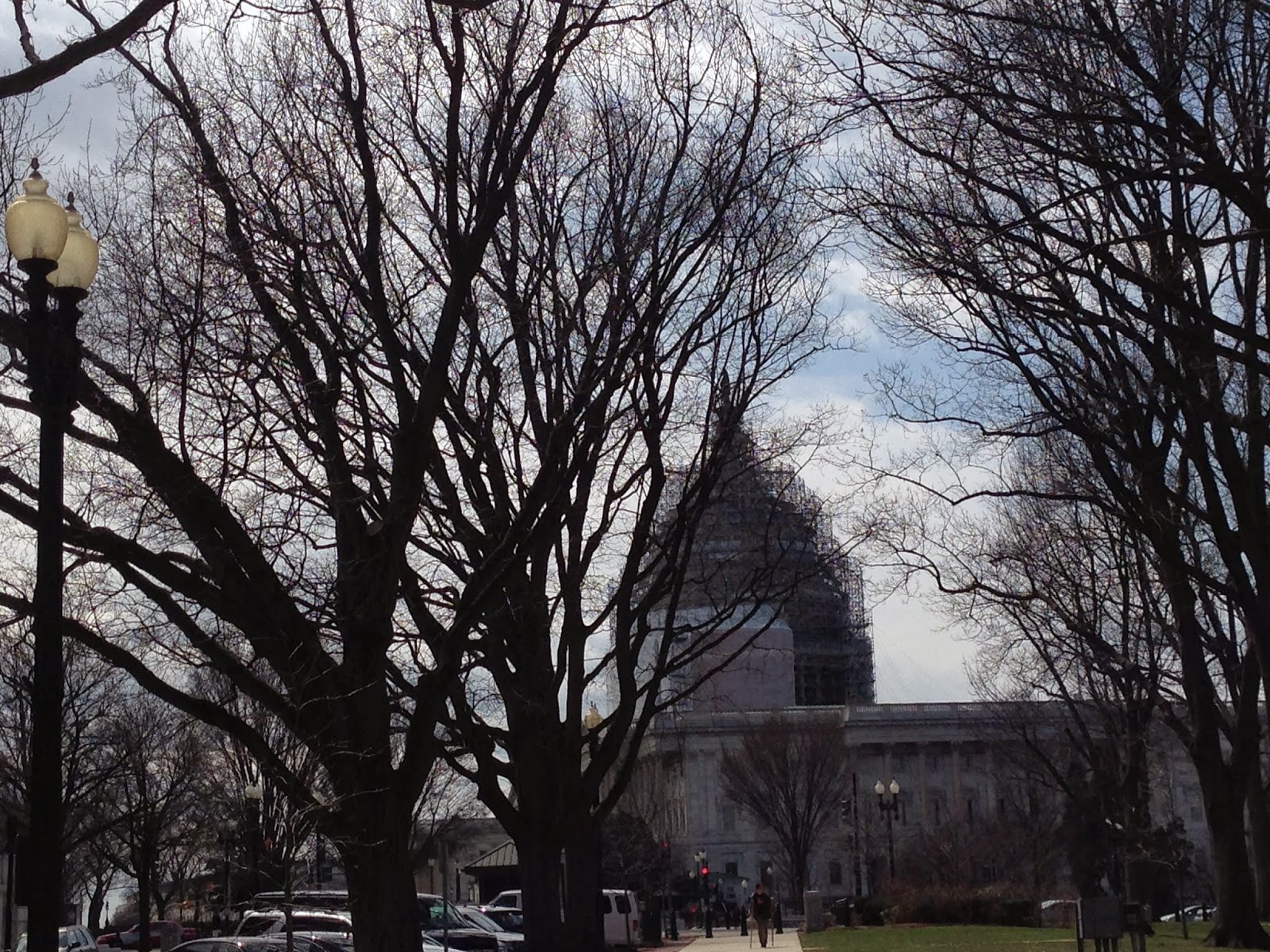
The story today is the cold.

Record-shattering. Bone-chilling. Cold I must soon confront.

Which raises some questions: Why do I have no corduroy pants that fit? What can I wear that is warm enough for this craziness? And most importantly, when will it ever be spring?

Until there are answers to these questions there is only one course of action — plunging in. No, I won’t be skating anytime soon. But I will be walking, running, moving quickly. That’s my way to get through the winter — and the cold.

The Science of Walking

The Science of Walking

When I’m sluggish or stuck, when the ideas in my head have congealed into a hopeless mess, I take to the trail. Thoughts arrive as gifts, flowing from the rhythm of the stride and from the scenery I pass at the pace of footfall. When the brain stalls, the feet step in.

Seems like magic — and maybe it is. But it’s neuroscience, too.

Evidence is mounting that exercise is good for the brain, that it may even stave off Alzheimer’s. According to a recent article in the Wall Street Journal, exercise not only triggers the growth of new brain cells in the hippocampus but it also acts as “a kind of brain fertilizer, helping the brain to grow.”

The scientist Frederick Gage, says the Journal, has suggested that “new cells arise from long walks because, in an evolutionary sense, our bodies associate the exertion with moving from an existing territory, which had perhaps become depleted of food or too dangerous, to a new, unexplored territory whose details must be learned. In anticipation the brain releases new cells and growth factors, which create a more plastic state and make possible new neural connections.”

My exercised brain tells me he might be onto something.

A Grisly Discovery

A Grisly Discovery

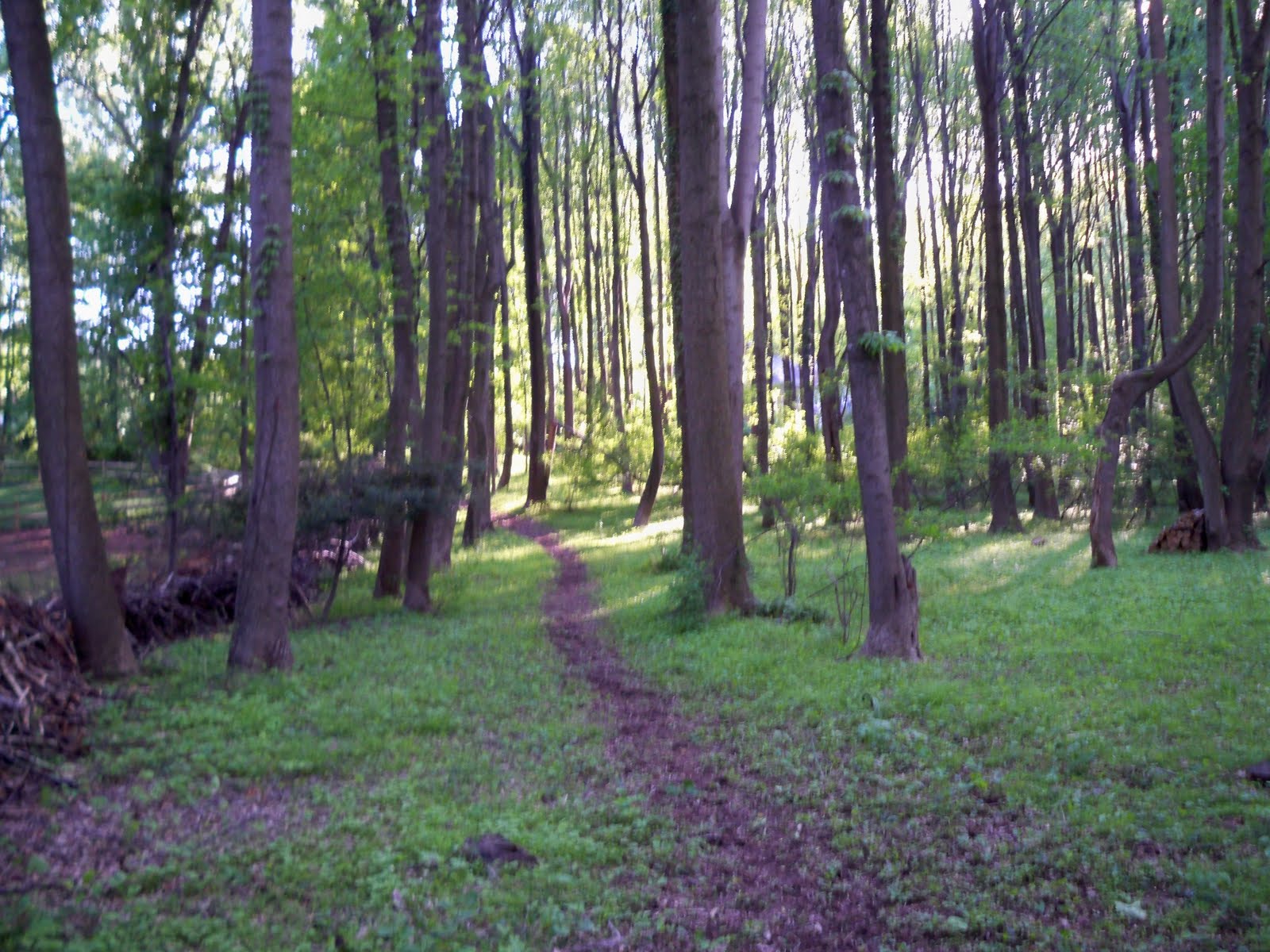
I woke up this morning to the news that human bones had been found alongside a trail in my neighborhood. A walker noticed the bones on Sunday, called police, and yesterday the remains were tested and found to be human. That’s all we know for now.

I walk those trails all the time. We all do. Copper sniffs seemingly every tree and bush. Apparently he missed a spot.

The police have asked anyone with information to call. Here’s what I’d like to say: This is our safe, snug little corner of the world. Please let there be some logical and non-scary explanation for this. Please let our woods remain the quiet sanctuary they have always been. Please don’t let this happen here.

Step Lively

Step Lively

When bitter winds howl in from the west, when temperatures dip into the teens, when the sidewalk harbors little patches of black ice and there’s a quarter-mile of pavement between me and the next warm building, this is what I do. Step lively.

It’s what some Metro conductors suggest. “Step lively,” they say. “Doors closing.”

It’s what race-walkers do, with a bounce in their gait and a swivel of their hips.

Step lively, with its whiff of the nautical, its sprightliness and energy and pep.

Step lively. It’s more hop than saunter, more snap than sizzle. It’s quaint and practical and fun.

Step lively. It’s a good way to get through winter.

Land Between Fences

Land Between Fences

I still have wrapping to do, cooking and baking, too. Yesterday’s rainy walk was a calm oasis amidst the holiday to-dos.

At one point I found myself walking along a fencerow. To my right, a golf course. To my left, a tangle of trees and brush. It was only halfway down the path that I realized there was a fence on my left, as well.

So this was a double fencerow, the land between fences, uncultivated, unclaimed. Except … it has been put to the best of uses. It leads from the eddies and ripples of Little Difficult Run to the sleek office parks of Blake Lane and Waples Mill Road, and from there (I now know from experience) to lakes and dams and ridges.

It’s a trail, a passageway. It takes us from one place, one reality, to another. And it looks very inviting here, I think — in a Thomas Hardyesque way!

The Sound of Rain

The Sound of Rain

I began in a light rain, parking the car at a gravel turnout
and approximating where I left off on this section of the trail a couple months
ago. Not the best weather for walking, but I had two hoods,
one on my sweatshirt and the other on my down jacket. Together, they kept most of me dry so that only my shoes and jacket took a hit.

The thing about hiking in the rain — in any
weather, really — is that the weather becomes part of the walk. In this case,
the splatter and the damp made their way into the setting. There was mud, of
course, and lots of it. In a couple of low-lying spots someone had thoughtfully
laid long two-by-fours as makeshift bridges through the muck. 


And there was the
acoustic aspect, the splash of drops on leaves — fat drops that seemed more
solid than liquid (and afterward, on the radio, I heard we were expecting
freezing rain). 

This was my accompaniment on today’s stroll. A quiet world, just the sound of rain hitting earth.

Time for Sun

Time for Sun

What a difference the sun makes. It’s cold, slightly above freezing, a steady breeze blowing off the lake. But the day is friendly, not the alien weather of yesterday, which was inhospitable to humans.

I say this from experience, after first rambling along the shore and then trudging up to the ridge, where the combination of exertion and distance from the lake made the temperature almost bearable.

Today there are sounds of life, some hammering next door, an occasional car engine. It’s time for me to go outside — if for no other reason than to know how good it feels to come back in! 

Long Way Home

Long Way Home

The Building Museum on a warm, sunny day.

When the day is long, the air is cold, and the bag is heavy (last night’s contents: piles of work, a newspaper, magazine, shoes and gym clothes) the Judiciary Square Metro stop is the natural choice. It’s five minutes away from the office.

But last night I pushed on to Metro Center. It’s a mile or so down the road: Down E Street to Ninth Street to F Street to Thirteenth and almost to G. I walk past the Building Museum and the National Portrait Gallery, through Chinatown and Penn Quarter, get almost as far as the White House before I head down to the train.

I catch snatches of conversation (“Well, there’s that Italian place down the street…”),  spot the remnants of a farmer’s market, see scores of tourists milling around the Spy Museum.

My bag is heavy, I think of the errands I have to run before I get home. But I’m glad I chose this route. I was tired when I started. But I’m not anymore.

Legacy Trail

Legacy Trail

In Lexington this weekend I was in mild trail withdrawal. For a couple of years I’d noticed what appeared to be a paved path running along Newtown Pike, my way out of town. And every time I’d notice it, too late to explore, I’d tell myself, next time.

This time was next time, so I did a little Googling, figured out approximately where it began, and stumbled upon the Northside YMCA trailhead by a happy accident. This is no cross-county trail. It’s 12 miles, not 40, and it has a self-consciousness that the Fairfax County trail lacks.

But it did what all good trails do: It took me out of the here and now, plunked me down into some other realm where roads are crossed at odd angles and places I normally zoom by are viewed slowly and in great detail.

It was sunny when I started, but I walked so far that it was almost dark by the time I got back to my car. The lights of Lexington blinked in the distance. I was in my hometown but I was not. I was in some other place, on a trail.

How to Live? Walk.

How to Live? Walk.

I’ve been reading about the 16th-century writer Montaigne, who invented the essay, from the French essayer, to try. The idea of “writing about oneself to create a mirror in which other people recognize their own humanity has not existed forever,” says Sarah Bakewell in her book How to Live or A Life of Montaigne: In One Question and Twenty Attempts at an Answer. “It had to be invented. And, unlike many cultural inventions, it can be traced to a single person: Michel Eyquem de Montaigne.”

“Unlike most memoirists of his day,” Bakewell writes, “he did not write to record his own great deeds and achievements. Nor did he lay down a straight eyewitness account of historical events.” Instead, he used ordinary topics — friendship, names, smells, thumbs, wearing clothes — as a way to explore the question “How to live?”

Here are some of his answers, according to Bakewell: Pay attention; read a lot; wake from the sleep of habit; see the world; reflect on everything and regret nothing and, finally, let life be its own answer.

I’ve been taking notes, as I often do, and there are many passages I’ve recorded to reflect on later. Here’s one of my favorites:

Montaigne did not brood in his tower, Bakewell writes. “He liked to be out walking. ‘My thoughts fall asleep if I make them sit down. My mind will not budge unless my legs move it.'”

Every hike, saunter, amble, walk and run I take tells me he’s onto something there.