Browsed by
Category: walking

Shoulders Back

Shoulders Back


The correction came when I walked into exercise class Thursday, and the instructor, the jolly British Maureen, said she noticed my posture as I walked toward the gym. “You’re leaning forward, ” she said. Of course I am, I think to myself. This is how I barrel through life.

“Pull your shoulders back, tilt your hips forward,” Maureen said. “Walk as if you have a pillow on your head.” So yesterday, as I did my three miles, I righted my shoulders, felt a plumb line stretch from my head to the sky. My chest filled with air. I felt taller and a little uneasy, as if I was on stilts. As if I was pretending.

In Need of Stile

In Need of Stile


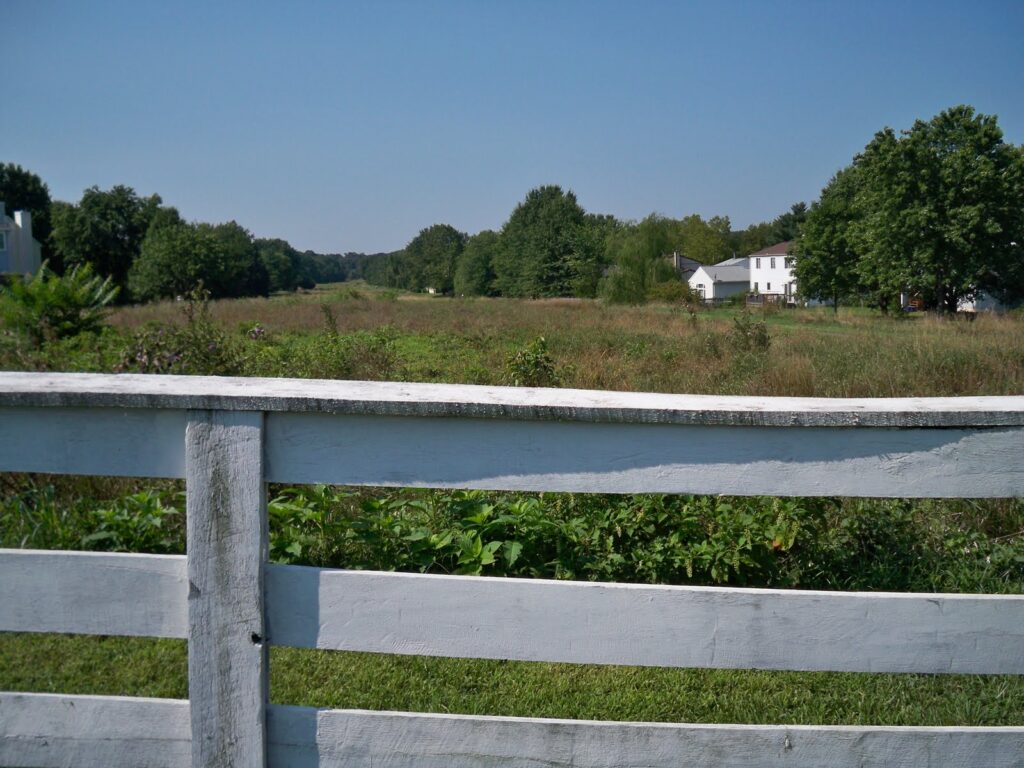
One of my walking routes requires that I hop a fence. I’m not trespassing (though I’ve been known to in search of a good path). But I am saving myself a few steps by clambering across the fence rather than looping around it. I climb as quickly as possible, since I can only guess how a middle-aged woman doing this must look. What I need, I thought today, is a stile, a wooden device used to cross a wall or a fence and found predominately in the British Isles.

The absence of stiles — in fact, the absurdity of even imagining them here — is proof of how the suburban world is not designed for walking. Yes, there are paved paths and trails, and I appreciate them. But the trails peter out randomly. Or they run into fences.

In short, this world is built for the automobile. Roads are wide and car-scaled, and many neighborhoods (ours included) have no sidewalks. It is not the English countryside, with narrow lanes, paths from village to village, and stiles across the hedgerows. It is fenced and paved, every walker for herself.

Still, you can’t keep a walker from dreaming. I may be strolling down a suburban street, but in my imagination I’m ambling from Upper to Lower Slaughter in a fine English mist.

Setting Goals

Setting Goals


She carried a flashlight, so I could spot the goal-setter a mile down the road. It was my neighbor, Nancy, another walker in the suburbs, though a more regular one. It was well before dawn but she was already pounding the pavement.

About 12 years ago Nancy started fast-walking in earnest. She started, she said, because she had to use it or lose it. She keeps going for the same reason.

I caught her late one afternoon on her second walk of the day and asked her why she was out again. “I was two miles short of my goal,” she said. “Twenty miles a week.”

We talked some more, about routes and roads, suburban stuff, but all the while I’m thinking about goals. Setting them, keeping them, how they work to keep us young. How goals of distance are more weighty and tangible than goals of time. Twenty miles a week is a thousand miles a year. That’s from here to Kentucky and back. It’s a lot of miles to walk, a big goal to keep.

I don’t keep track of my miles. Maybe I should.

Walking in Circles

Walking in Circles


Yesterday afternoon after work I walked to the containment pond. It was cold and calm, and once I reached the pond, I pulled the earphones out of my ears. I wanted to walk without distraction.

The pond was so full of life in the spring and summer, buzzing with insects. Now it is clogged with cattails that have dried and turned brittle. There was a seasonal lesson here I could better contemplate in silence.

I’ve always thought it would be boring to exercise on a track, to walk in circles, but yesterday I saw the point of it — because each round brings a new revelation. There is a peacefulness that comes from such repetitive movement, a cleansing.

I only made one loop yesterday. But I’ll go back to the pond soon to search for its quiet center.

The Acoustics of Walking

The Acoustics of Walking


The winter walk is full of sounds: the cawing of crows, the whir of a distant chainsaw, the crunch of frozen ground underfoot. Along the woods path are pockets of crunchiness, where leaves have splintered and crumbled, become packed and moistened and are now brittle and fun to pop.

I think of winter as a silent season — and it is. But try as hard as I might, the fall of foot on land is never noiseless.

Ghostly White

Ghostly White


The ghostly white on suburban streets is the residue of salt from a snow storm that wasn’t, a phantom blizzard. Rock salt crunches underfoot as I walk. The wind blows into my face, makes my eyes tear and my nose run. Other than that, all is frozen hard.

It’s a bleak landscape, unadorned by snow, wind-gouged and silent. Just being outside is an accomplishment, and walking through the cold reminds me that we have to keep going or freeze. Extreme temperatures are a great motivator. Besides, in my ears is a most unusual version of “The Four Seasons” by Vivaldi, full of strumming and thumping and trills. I could hear the birds singing, the streams gurgling. I listened, I lowered my head, I walked as fast as I could till I got home.

A Walker in the Wind

A Walker in the Wind


Head bowed, hands stuffed in sleeves, I pushed my way yesterday through the strong west wind. After the balmy strolls of a lingering autumn, the power of this “arctic air” (as the weather people like to call it) took my breath away.

I’ve never minded exercising in still cold. You start off shivering but heat yourself up quickly. The body is a furnace.

But cold windy days are another matter entirely. Every bit of exertion-stoked warmth flies away in the breeze. You are at the mercy of the elements. A part of the landscape, bent but not broken.

A Walkway in the Sky

A Walkway in the Sky


One of the world’s greatest walks is the pedestrian path of the Brooklyn Bridge. Stroll across it at sunset on a balmy late fall afternoon and see the city at its finest.

If you’re walking toward Brooklyn, on your right is South Street Seaport, lower Manhattan and, once you’re out far enough, the Statue of Liberty. On your left is midtown, with the Empire State Building and the Chrysler Building. Ahead of you is this view, the towers and cables of the bridge itself, built six times stronger than it needed to be, built for the ages, and now 127 years old. A bridge that has inspired poets and madmen and ordinary citizens who need to believe in beauty.

Solvitur Ambulando

Solvitur Ambulando


The phrase jumped out at me from the page, in this case a review of Tony Hiss’s new book In Motion in yesterday’s New York Times Book Review. I was reading the paper in the car, and the sunlight fell over my shoulder and onto the words. The letters seemed to glow:

Solvitur Ambulando. “It is solved by walking.” An adage beloved by pilgrims and monks and wandering scholars. The belief that there is wisdom in stepping out the door, putting one foot in front of the other, leaving the world as we know it behind.

Had I heard it sooner, I might have named my blog Solvitur Ambulando. Too late now. There is already a blog called Solvitur Ambulando.

But I move forward in the spirit of this phrase: that when the mind spins, when the spirit sags, it never hurts to lace up the old shoes, grab the Walkman (ancient technology though it is) and take to the road. “It is solved by walking.”

Meadow Grass

Meadow Grass


I took the path along the Fairfax County Parkway the other day, a road that didn’t exist when we moved here but is a major thoroughfare now. A road we first heard about from our sheepish real estate agent, who only acknowledged it when we asked her about those ominous-looking orange-flagged stakes at the corner.

It was a house off Thompson Road, a lane that retained a hint of its country charm then but one I’m glad we don’t live on now, so close is it to this busy highway. I like how our neighborhood is tucked away from the traffic and surrounded by woods. I appreciate the quiet of the place, the birdsong.

Walking along the parkway I studied the different varieties of meadow grass. One is cattail-like, another is taller and skinnier. I should know the names of these grasses, but whatever they’re called, they look good together, waving in the wind. Their movement was like so many flags flapping, a brave and jubilant salute.