Once More to Metro

Once More to Metro

Yesterday I went to D.C. via Metro, a trip I used to make most mornings but which I had not made since March 12, 2020.  That’s 15 months … a fact that even now I can’t quite absorb.

The parking garage was almost deserted at 2:30 p.m., likewise the platform and the train itself. I did quickly realize, however, that one of the other two souls on my car seemed to be psychotic, so at the first stop I moved to the next car.  That’s my Metro! 

Otherwise, though, the old system was gussied up and spit-polished, with new announcement boards and shelters and someone cleaning the elevator in the middle of the afternoon. 

I rode three lines, the Orange, Red and Silver. I read the newspaper, as I used to do, and noticed the changing scenery out the window. 

It was almost like old times … except there were almost no people riding with me. 

The Leveler

The Leveler

It’s a flag-snapping, low-humidity day, the kind I was hoping to have all month long. Weeping cherry boughs are swaying in the breeze and the back door is open to the sounds of the day, which is strangely bereft of cicada song (more on that, or the lack of that, later). 

A walk took me through the neighborhood, up and down the main street and the cul-de-sacs, my new home route: longer, as befits my schedule, and slower, as befits my joints. 

Which gave me more time to ponder the grand equation, one seldom acknowledged but always there, somewhat akin to Newton’s Third Law — “for every action there is an equal and opposite reaction” with a touch of Ecclesiastes — “to everything there is a season.” 

In other words, there’s a built-in leveler that sees to it that we are paid back for sweltering humidity with perfect days like these. 

Thoughts on Emergence

Thoughts on Emergence

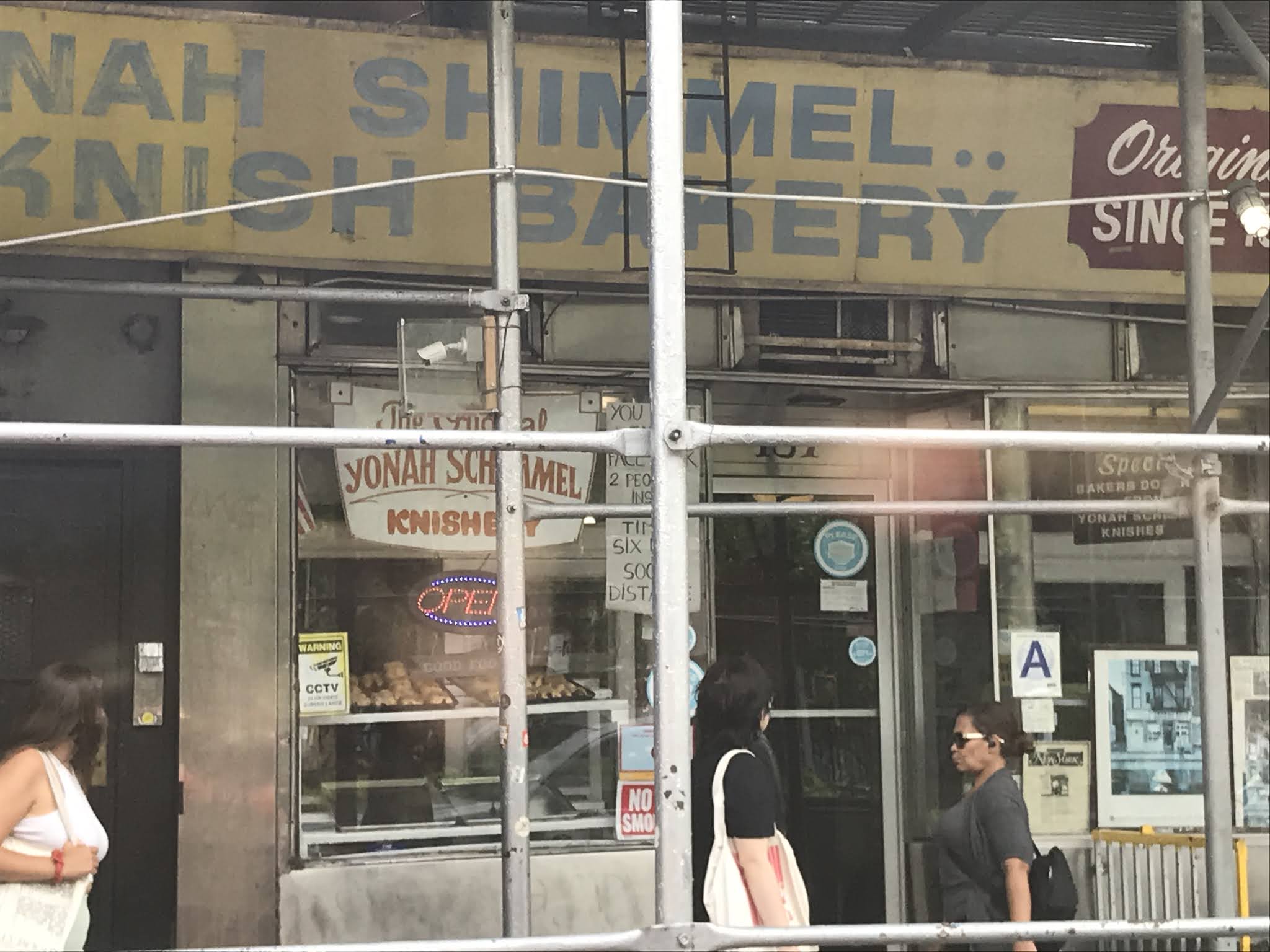
In a single afternoon last week, I masked up and was led to a hand-washing station before a doctor’s appointment. Later, at a small boutique, I had my temperature checked and was told to use hand sanitizer before venturing in. 

At my last stop of the day,  a small shop that sells Catholic books and gifts, I was one of the few folks wearing a mask. “How do people expect us to breathe in one,” grumbled the proprietress, sans mask, as she wrapped up my purchase.  

Such is life as we emerge from pandemic restrictions here in northern Virginia.

In my travels to the Northwest almost a month ago, we wore masks most everywhere, including on the sidewalk in some neighborhoods, attempting to fit in with the locals. Yesterday, at a brunch in Arlington, the restaurant was fully occupied with scarcely a mask in sight. 

It’s a weird hodgepodge and infinitely preferable to what we had this time last year. So I’m not complaining, only observing that if there is one truth somewhere, one right way to do things, I’m not sure who knows it. 

(Disinfectant, anyone? At Pike Place Market in Seattle, May 15.)

Lifespan

Lifespan

Get ready to meet your great-great grandchildren, says David Sinclair in his mind-boggling new book Lifespan. Sinclair, a Harvard geneticist, makes a simple but earth-shattering claim: Aging is a disease, and soon science will be able to cure it. Sinclair is not just talking about extending life, but about prolonging health, as well.

It would be easy to laugh this off if Sinclair was a no-nothing diet and exercise guru, but he’s a serious scientist whose theory on aging is as brilliant as it is well-informed. 

Epigenetic changes drive aging, Sinclair says, and they can be reversed by certain supplements and by stressing the body in such a way as to trigger the survival response — intermittent fasting, low-protein diets, intensive exercise and exposure to hot and cold temperatures. 

I had long heard that one of the few ways known to prolong life was to consume fewer calories. This book helps me understand why. And though I’m not exactly eating one-third less than I usually do, I am skipping an occasional meal — and would love to get my hands on some of those supplements. The cost, after all, is relatively low — and the payback, enormous. 

(A two-foot tall, 90-year-old spruce tree from the Japanese Garden in Portland.)
 

Love Bites?

Love Bites?

Skin: For so much of the year it’s just there, boon and barrier, boundary between world and self. 

In winter it may chap or dry, nothing lotions can’t handle. But in summer, ah, in summer — well, I forget every year that I’m not the only one who likes to be outside all day and into that evening, that there are skeeters and spiders and no-see-ums that leave their marks.

In time (starting day before yesterday!), I’ll spray on repellent if I venture beyond the deck. But up until then I’ve weeded and bounced and walked with springtime abandon, forgetting that the insects are out there too, biting and stinging their way into summer. As a result, I’ve been making liberal use of the hydrocortisone cream. 

On the other hand …  it’s finally warm. My sweaters are packed away with cedar balls.  I don’t exactly love the bites — but they’re worth it.  

(Photo of cicadas, which do not bite but which may confuse your arm or leg for a tree trunk.)

From the Top

From the Top

It’s been two weeks since we returned from our Northwest jaunt, and I often catch myself looking through photographs when I have a spare minute. Which means that I’ve noticed trends.

For instance, I was often pointing my phone camera at flowers: roses, rhododendrons, formal gardens, cottage gardens. You would think I have no blossoms whatsoever at home, which is not the case. 

But also, whenever possible, I snapped photos from ridges and hilltops. Luckily, both Portland and Seattle cooperated, providing expansive views where I least expected them, like the one above — which appeared out of nowhere on a walk — and others (like the one below) where I huffed and puffed to reach it.

Reliving these vistas now, I feel like chucking it all and buying a piece of land in the Shenandoah. It can be small, it can be humble — all it needs is a view. 

The Blocks

The Blocks

You can stack ’em, you can nest ’em — but before little hands touch them, you must wash ’em. 

So I did that, as much as you can when the blocks are made of cardboard. And before they were barely dry, someone found them!

These are blocks that Isaiah’s mother remembers, that all our children played with — and now, our grandchildren. 

It’s a little more incentive to tidy up the basement.

Lake Anne, Part 2

Lake Anne, Part 2

I’m so used to walking clockwise around Lake Anne that the other day when I strolled counter-clockwise with a friend I felt the world tilt a little. I also saw unexpected vistas. But this isn’t about that walk. It’s about three days later, when I went around the lake the right way (my right way, that is!).  Maybe I needed a stroll in the opposite direction to balance things out. 

Leaving the plaza behind, I passed quickly onto a wooded trail and then to a sunny embankment where morning light touched the tall grass.  

From there it felt good to slip into a shaded neighborhood, cool and inviting, lake water lapping at the shore. The townhouses here are some of Reston’s oldest (old being a relative term in Reston). I admire the variety of plantings, the lavender and roses, the whimsical touches.

Everywhere I looked was sparkling lake water, supporting a flotilla of kayaks or sending plumes of spray into the June sky.

I knew I’d come full circle when I reached an arched footbridge over a tributary. I wish I’d snapped a picture of that, too. But alas, it seems the only part of the walk I did not photograph. Next time …

Lake Anne: Part 1

Lake Anne: Part 1

While I am in no mood for a staycation, I did feel like a tourist in my own town when I walked around Reston’s Lake Anne Saturday morning after buying strawberries at the farmer’s market.

I parked near a pedestrian tunnel and entered the plaza near the fountain. A brunch crowd was gathering at Local VA, an outdoor spinning class was in full swing, and merchants in booths were selling homemade ceramics, finger puppets, filmy scarves, imported rugs and hand-painted notecards. 

The big show was in the parking lot farmer’s market, where you could find tomatoes and greens and other seasonal delights. After I stowed the berries in the car, I walked around the lake, snapping photos as I strolled. More on the Lake Anne walk tomorrow …

The Afternoon Amble

The Afternoon Amble

Twice this week I’ve found myself out for a jaunt not at 10 or 11 a.m. but at 3 or 4 p.m. It’s warmer by then, so I drive to the Glade Trail where tall trees arch across the paved walk and shade pools in deep pockets along the way. 

There are fewer cars parked along the road at that hour, fewer walkers, too. And the ones I see tend to keep their heads down. I’m fine doing that, too, so strolling at that hour tends to feel more solitary.

The air is heavier and the pace is slower, with time to sniff the honeysuckle or take a detour on one of the side paths that wind into the woods. 

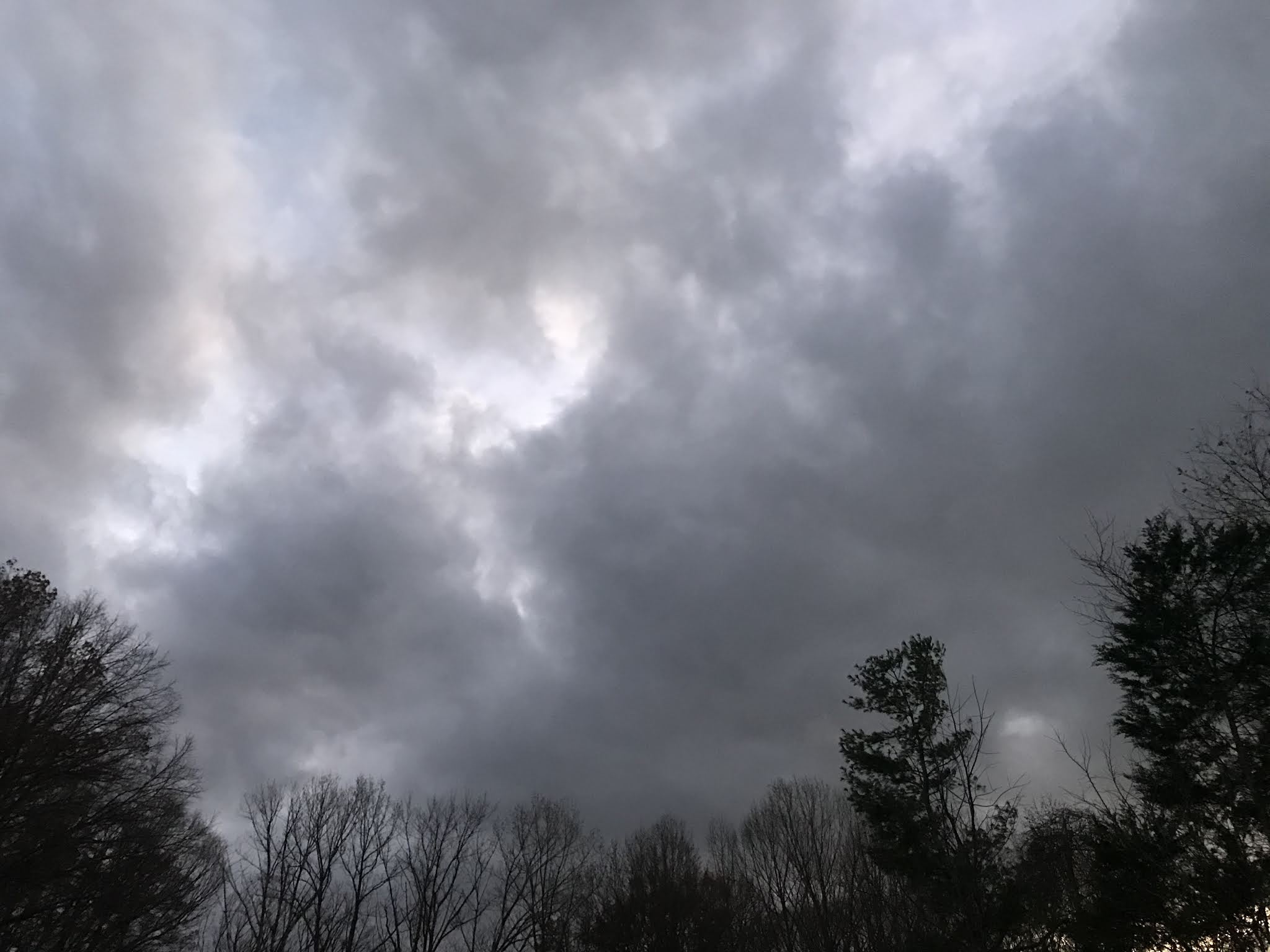
On Thursday, the air was so steamy that I felt as slow-moving as the stream, now in full summer dawdle. Forty-five minutes in, I noticed that heavy clouds had moved in and there was a pre-storm excitement that made me pick up my pace. 

I hadn’t been home more than 15 minutes when the skies opened and rain sheeted the house and yard. 

An afternoon amble, just in time.