Growing Family

Growing Family

At my house, the longest day passed in a blur of baby giggles, burgers and corn on the cob. Not the most elegant Father’s Day repast, but one suited to young families.

These days are golden, and when the last toy is collected and stuffed into the diaper bag, and the cars disappear down the street, I’m left marveling, as I always do, at how our family has grown.

It will always be miraculous to me, which is, I suppose, how it should be.

(The elephant ear family is growing, too.) 
Bye Bye, Brood X!

Bye Bye, Brood X!

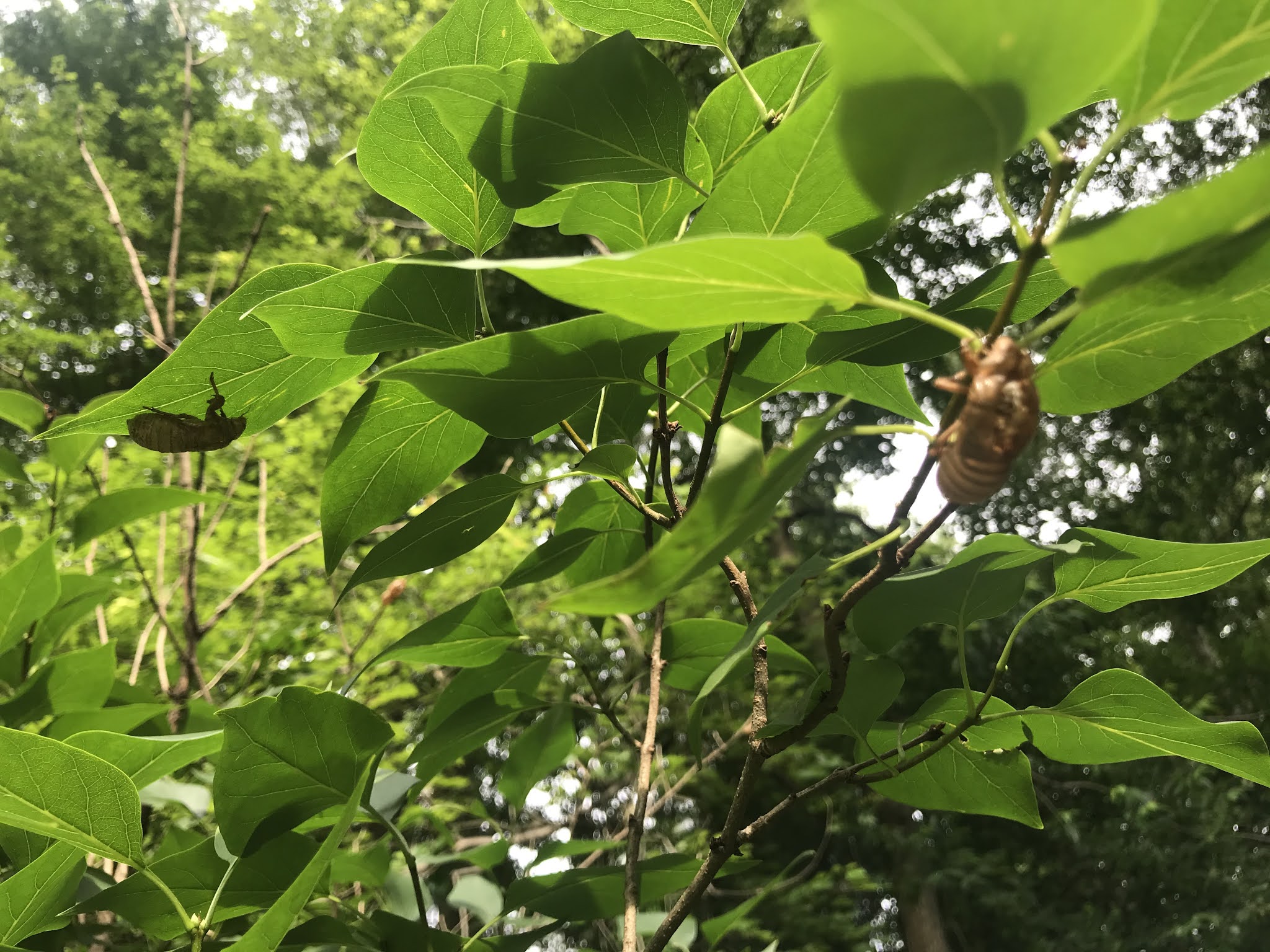
There’s no way of knowing who he or she will be, no way of pinpointing the last cicada in Virginia. Will it be a female dragging herself to a Kwanzan cherry tree to lay her eggs, perform her final duty. She walks so slowly up the trunk, settles herself with infinite tenderness. 

Or will it be a male, singing forlornly to the ether, no ladies left with whom to mate but warbling his most beguiling tune anyway. Beguiling to other cicadas, that is, shrill and sad to us.

The rest of their brood has been swept off of decks and stairways. Cicada carcasses have piled up at the base of crepe myrtles or road berms, marking where the insects met with predators — birds, dogs, automobiles. The tiny corpses litter the yards and driveways. 

Except for a few stowaways, Brood X is becoming a memory, a moment, a thing of the past.

And yet … even now the young are burrowing into the dark soil, tunneling down to their long sleep. In their species memory is a golden era, filled with flitting and humming and loving. They know, if they bide their time, it will come again. 

Voice as Vehicle

Voice as Vehicle

I’ve just finished Gail Caldwell’s Bright Precious Thing, her third or fourth memoir but only the second one I’ve read. I found it while browsing at the library last week and picked it up immediately, based on how much I liked Let’s Take the Long Way Home, which is about Caldwell’s friendship with the late Caroline Knapp.

Bright Precious Thing is a slender book, and I didn’t bond with it at first. But 20 pages in I was hooked — not so much by what Caldwell was saying — the women’s movement and its effect on her life — but how she said it.

This has me thinking about voice, writerly voice, the tone and style a writer uses to communicate with her readers, and how personal it is. 

Voice is the vehicle, and when it’s humming along, I don’t much care where the reader is taking me. As long as we’re together, I’m content.

(The vehicle above is a Seattle-bound Amtrak train, this coach almost empty.)

Empty Tables

Empty Tables

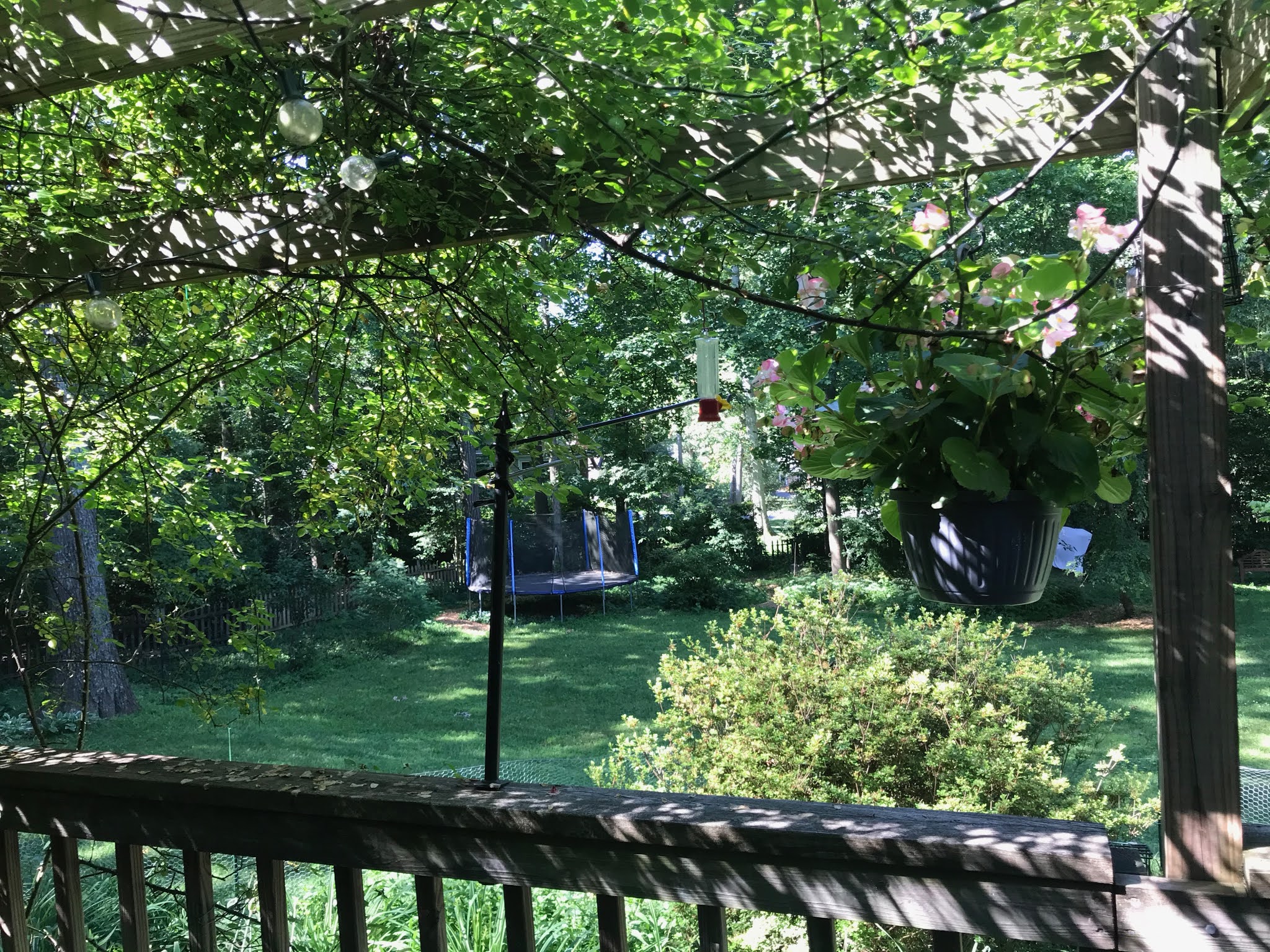
There’s a mournful tune from the musical Les Miserables, “Empty Chairs at Empty Tables,” that describes the way I’m feeling about our bird feeder today, closed at the request of numerous local authorities in response to reports of sick and dying birds in the area.

Birds flock to feeders and spread the disease as they eat. Removing the feeders removes at least one source of contagion.

But it also removes the pushing and the preening, the darting and the chirping. It takes away the front row seat we have on avian life and the chaotic, swooping joy of it.

A downy woodpecker just landed, hopped on the deck railing, then flew away. A few minutes later, a confused chickadee perched on the bird feeder pole, gave a forlorn chirp, then zoomed off to a nearby azalea bush.

I know it’s for their own good,  but I miss the critters … and I like to think they’re missing us.

Once More to Metro

Once More to Metro

Yesterday I went to D.C. via Metro, a trip I used to make most mornings but which I had not made since March 12, 2020.  That’s 15 months … a fact that even now I can’t quite absorb.

The parking garage was almost deserted at 2:30 p.m., likewise the platform and the train itself. I did quickly realize, however, that one of the other two souls on my car seemed to be psychotic, so at the first stop I moved to the next car.  That’s my Metro! 

Otherwise, though, the old system was gussied up and spit-polished, with new announcement boards and shelters and someone cleaning the elevator in the middle of the afternoon. 

I rode three lines, the Orange, Red and Silver. I read the newspaper, as I used to do, and noticed the changing scenery out the window. 

It was almost like old times … except there were almost no people riding with me. 

The Leveler

The Leveler

It’s a flag-snapping, low-humidity day, the kind I was hoping to have all month long. Weeping cherry boughs are swaying in the breeze and the back door is open to the sounds of the day, which is strangely bereft of cicada song (more on that, or the lack of that, later). 

A walk took me through the neighborhood, up and down the main street and the cul-de-sacs, my new home route: longer, as befits my schedule, and slower, as befits my joints. 

Which gave me more time to ponder the grand equation, one seldom acknowledged but always there, somewhat akin to Newton’s Third Law — “for every action there is an equal and opposite reaction” with a touch of Ecclesiastes — “to everything there is a season.” 

In other words, there’s a built-in leveler that sees to it that we are paid back for sweltering humidity with perfect days like these. 

Thoughts on Emergence

Thoughts on Emergence

In a single afternoon last week, I masked up and was led to a hand-washing station before a doctor’s appointment. Later, at a small boutique, I had my temperature checked and was told to use hand sanitizer before venturing in. 

At my last stop of the day,  a small shop that sells Catholic books and gifts, I was one of the few folks wearing a mask. “How do people expect us to breathe in one,” grumbled the proprietress, sans mask, as she wrapped up my purchase.  

Such is life as we emerge from pandemic restrictions here in northern Virginia.

In my travels to the Northwest almost a month ago, we wore masks most everywhere, including on the sidewalk in some neighborhoods, attempting to fit in with the locals. Yesterday, at a brunch in Arlington, the restaurant was fully occupied with scarcely a mask in sight. 

It’s a weird hodgepodge and infinitely preferable to what we had this time last year. So I’m not complaining, only observing that if there is one truth somewhere, one right way to do things, I’m not sure who knows it. 

(Disinfectant, anyone? At Pike Place Market in Seattle, May 15.)

Lifespan

Lifespan

Get ready to meet your great-great grandchildren, says David Sinclair in his mind-boggling new book Lifespan. Sinclair, a Harvard geneticist, makes a simple but earth-shattering claim: Aging is a disease, and soon science will be able to cure it. Sinclair is not just talking about extending life, but about prolonging health, as well.

It would be easy to laugh this off if Sinclair was a no-nothing diet and exercise guru, but he’s a serious scientist whose theory on aging is as brilliant as it is well-informed. 

Epigenetic changes drive aging, Sinclair says, and they can be reversed by certain supplements and by stressing the body in such a way as to trigger the survival response — intermittent fasting, low-protein diets, intensive exercise and exposure to hot and cold temperatures. 

I had long heard that one of the few ways known to prolong life was to consume fewer calories. This book helps me understand why. And though I’m not exactly eating one-third less than I usually do, I am skipping an occasional meal — and would love to get my hands on some of those supplements. The cost, after all, is relatively low — and the payback, enormous. 

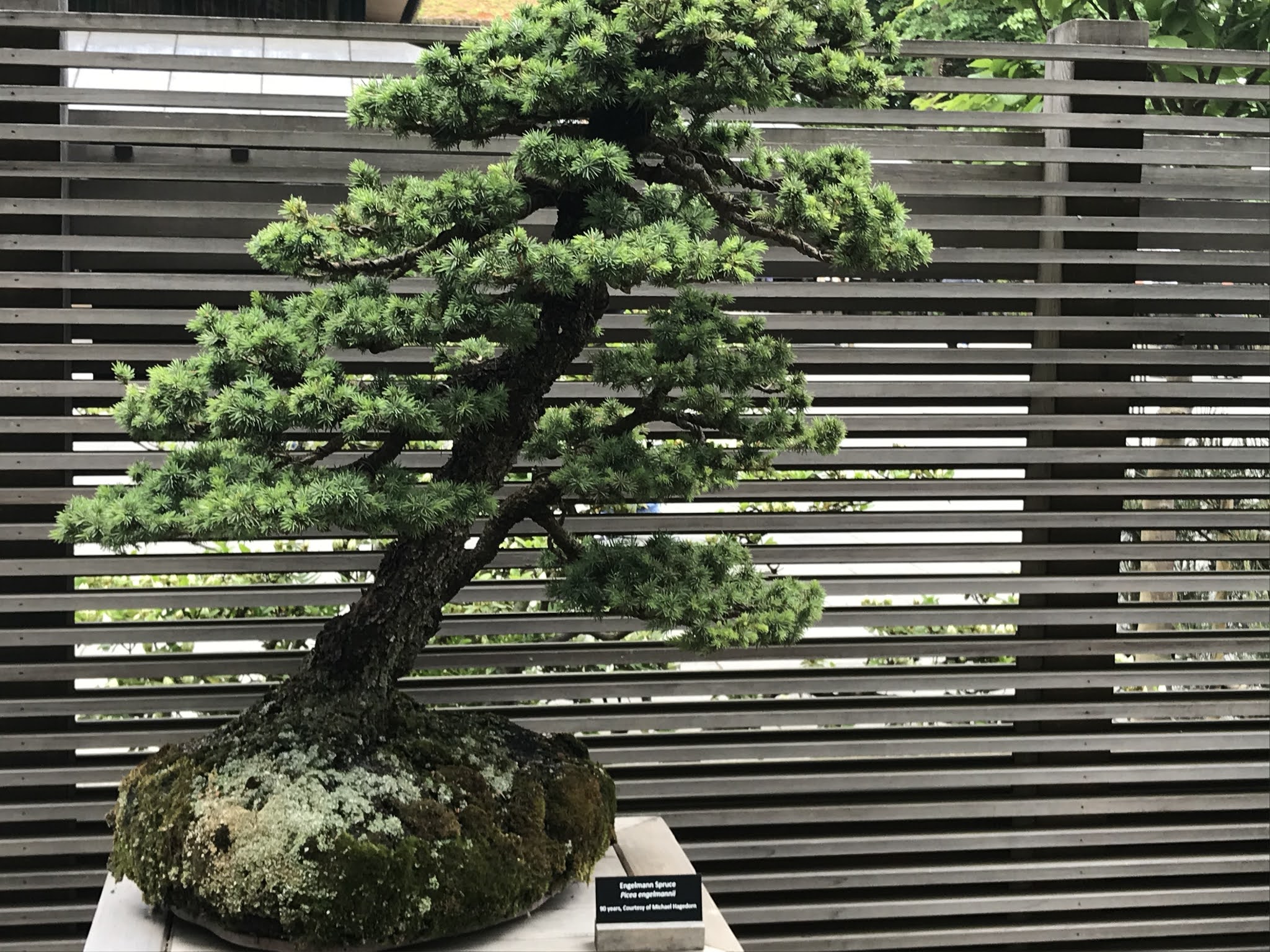
(A two-foot tall, 90-year-old spruce tree from the Japanese Garden in Portland.)
 

Love Bites?

Love Bites?

Skin: For so much of the year it’s just there, boon and barrier, boundary between world and self. 

In winter it may chap or dry, nothing lotions can’t handle. But in summer, ah, in summer — well, I forget every year that I’m not the only one who likes to be outside all day and into that evening, that there are skeeters and spiders and no-see-ums that leave their marks.

In time (starting day before yesterday!), I’ll spray on repellent if I venture beyond the deck. But up until then I’ve weeded and bounced and walked with springtime abandon, forgetting that the insects are out there too, biting and stinging their way into summer. As a result, I’ve been making liberal use of the hydrocortisone cream. 

On the other hand …  it’s finally warm. My sweaters are packed away with cedar balls.  I don’t exactly love the bites — but they’re worth it.  

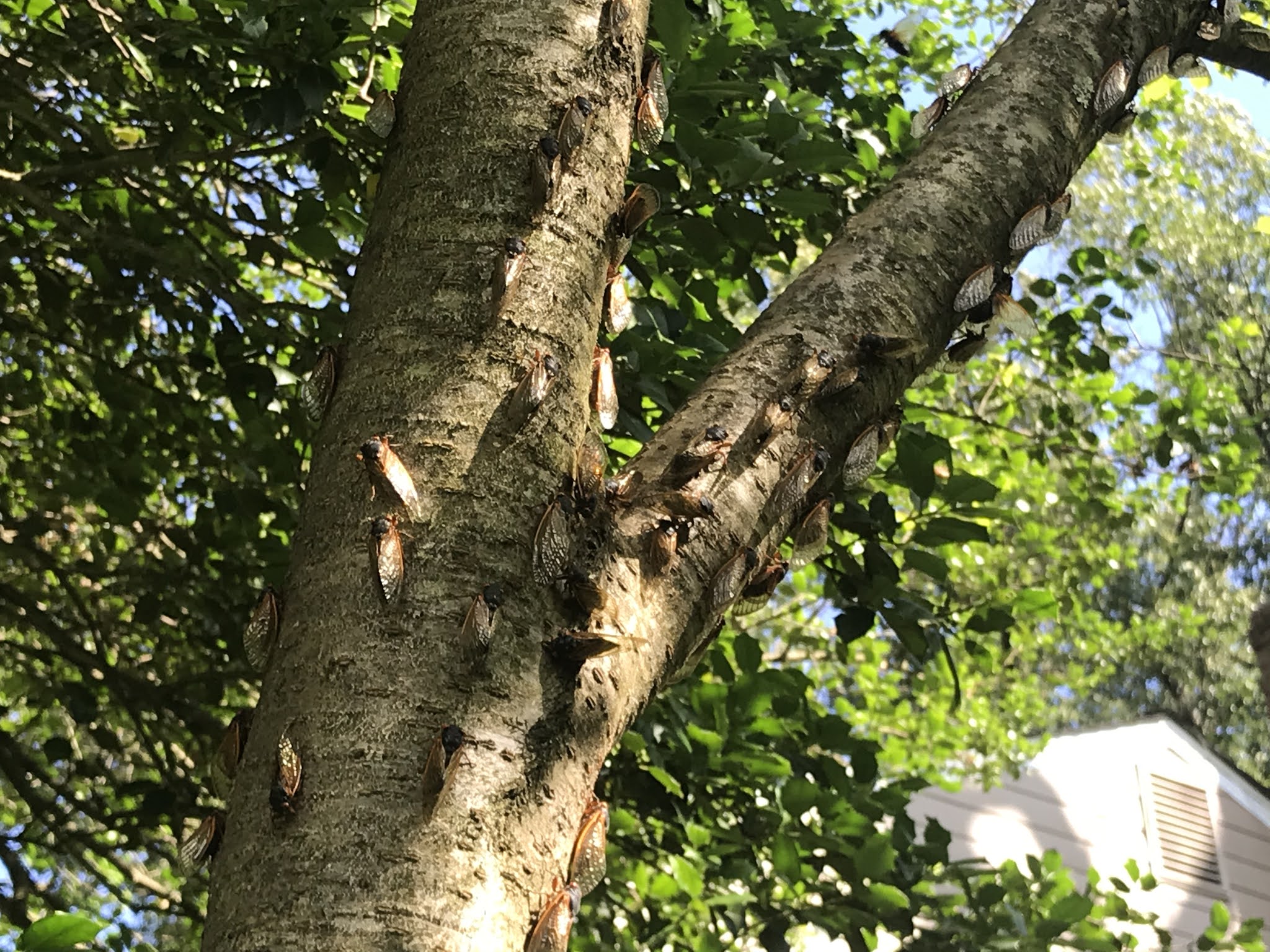
(Photo of cicadas, which do not bite but which may confuse your arm or leg for a tree trunk.)

From the Top

From the Top

It’s been two weeks since we returned from our Northwest jaunt, and I often catch myself looking through photographs when I have a spare minute. Which means that I’ve noticed trends.

For instance, I was often pointing my phone camera at flowers: roses, rhododendrons, formal gardens, cottage gardens. You would think I have no blossoms whatsoever at home, which is not the case. 

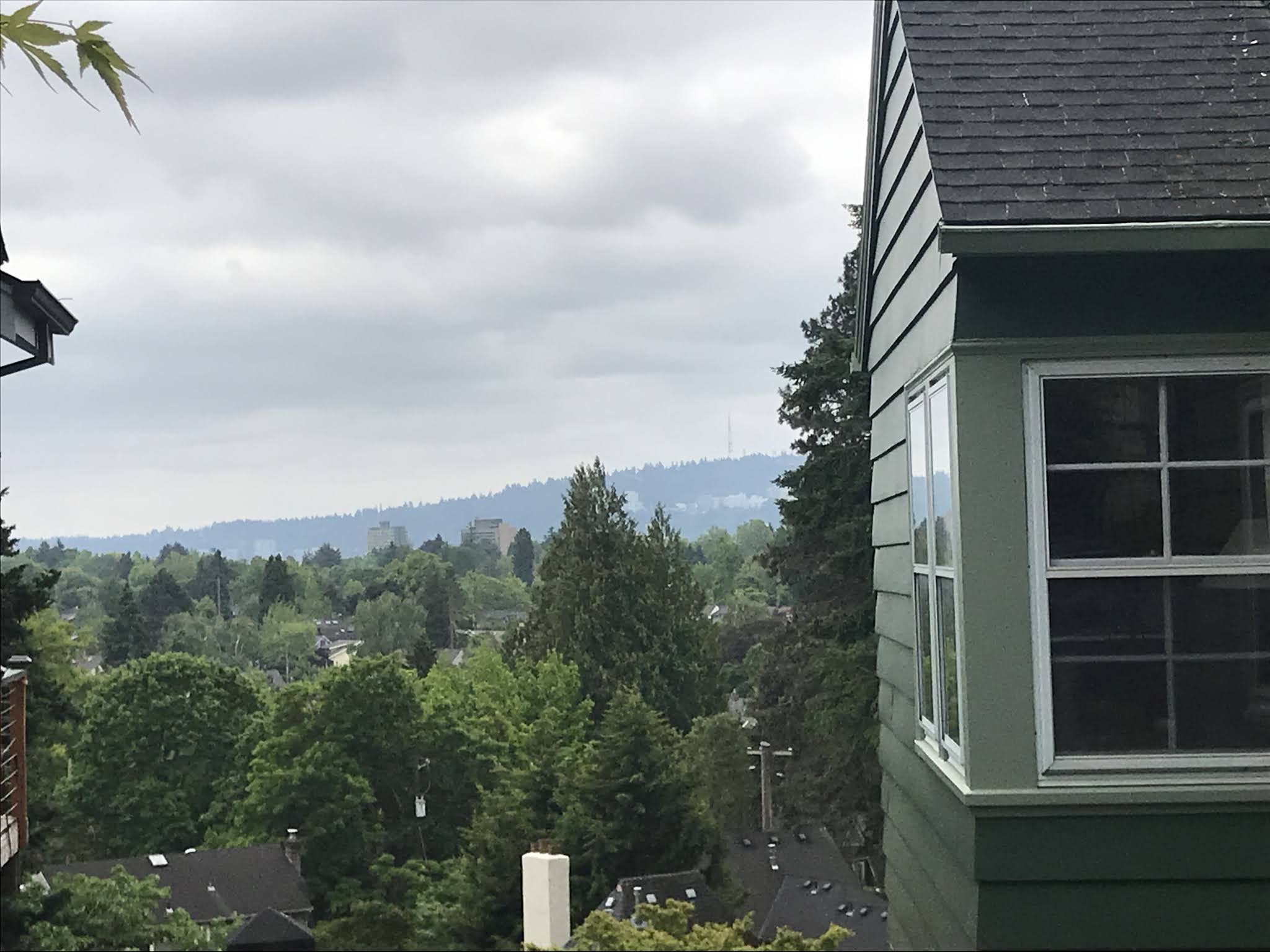
But also, whenever possible, I snapped photos from ridges and hilltops. Luckily, both Portland and Seattle cooperated, providing expansive views where I least expected them, like the one above — which appeared out of nowhere on a walk — and others (like the one below) where I huffed and puffed to reach it.

Reliving these vistas now, I feel like chucking it all and buying a piece of land in the Shenandoah. It can be small, it can be humble — all it needs is a view.