Rejoice!

Rejoice!

Yesterday was Gaudete Sunday, the third Sunday of Advent, when the message shifts from one of “beware and prepare” to “rejoice and prepare.” 

I love both Advent messages. For that matter, I love Advent. It’s a season of anticipation — and isn’t anticipating an event usually always better than the event itself? 

More than two decades ago, I happened to read Kathleen Norris’s book The Cloister Walk during Advent. It was a busy time for me as a writer and a parent, and when I’d collapse in bed each night I’d savor a chapter or two of this fine volume and be transported into the silence of the cloister.

The image I have of Advent is one of cold stone and plainsong, of middle-of-the-night awakenings for prayer and devotion. Though Norris spent time in a monastery in Minnesota, it was the old churches of Europe that came to mind as I visualized her progress through the liturgical year. The long centuries of hope condensed into an annual calendar. 

By the reckonings of that calendar, we have already begun a new year. 

The Mirror and the Light

The Mirror and the Light

I just finished reading The Mirror and the Light, the 750-page conclusion of Hilary Mantel’s brilliant three-part reimagining of the life of Thomas Cromwell, Lord Privy Seal of England and Henry VIII’s right-hand man … until he wasn’t. 

In the final pages, Cromwell prepares for his execution. He ponders heaven and hell, thinks often of his father, Walter, a blacksmith and a drunk who beat his son and propelled him out from Putney into a life he could not have imagined from his beginnings, a life of service and, more than most, of influencing history. 

Still, when Cromwell confronts his end, he shudders and he trembles, he sees ghosts. He also realizes that life will go on without him, as it will, of course, for us all:

It occurs to him that when he is dead, other people will be getting on with their day; it will be dinner time or nearly, there will be a bubbling of pottages, the clatter of ladles, the swift scoop of meat from spit to platter; a thousand dogs will stir from sleep and wag their tails, napkins will be unfurled and twitched over the shoulder, fingers will be dipped in rosewater, bread broken. And when the crumbs are swept away, the pewter piled for scouring, his body will be broken meat, and the executioner will clean the blade.

The Birds

The Birds

It sounded like spring when I walked outside the other day. The robins had swooped in, and they were filling the skies with their song. Out back, the feeder is clogged with sparrows and chickadees and bluebirds and cardinals. The bluejays are there, too. 

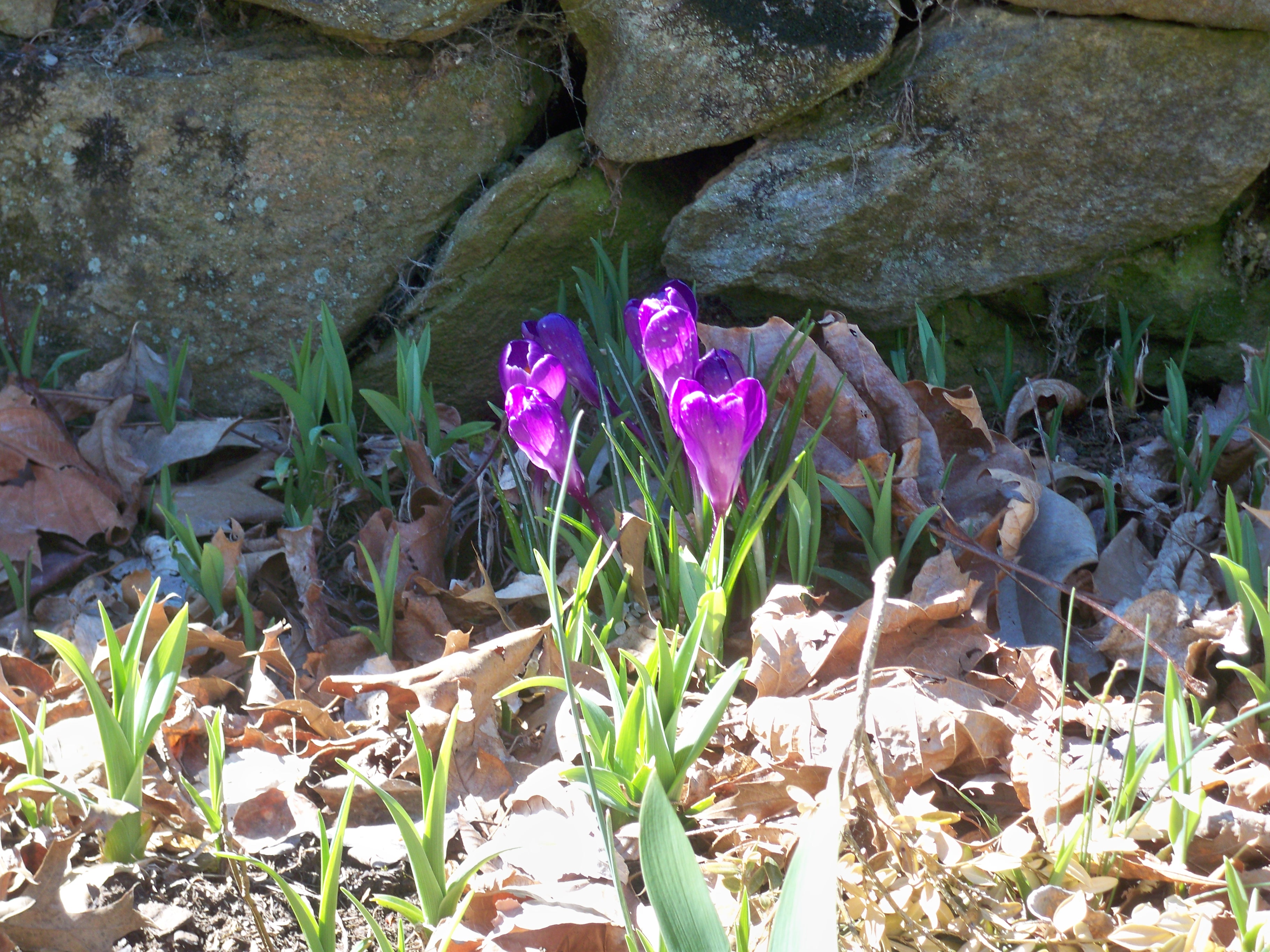
The suet block brings in the clinging birds: the downy woodpecker and its larger cousin (whose name I will have to look up, ah, the red-headed woodpecker, that’s who it is, see above) and, biggest of all, the pileated, with its look of the primeval and its distinctive red crest.

Now that I work indoors, I stay as close to the deck as possible, and with the bird feeder moved to where I can see it, my days are punctuated more than they should be by staring at these beautiful creatures.

Out there, a pandemic rages. But in the backyard, it’s just the eternal struggle to keep body and soul (in this case, tiny feathered soul) together.  

Singalong at Home

Singalong at Home

This is the time of year when amateur singers around the world gather in church sanctuaries and basements to belt out “For Unto Us a Child is Born,” “His Yoke is Easy” and other choruses from Handel’s “Messiah.” 

This year, you can probably find some Zoom version, but that won’t do the trick, not with this piece of music. Beyond the loss of life and livelihood, which is of course what we mourn the most, one of the pandemic’s other great casualties is how it has banished group singing.

Singing aloud is one of life’s great joys, and doing it with others a great joy heightened. But that pleasure has been denied us since early last spring, when we learned that singing spreads the virus more efficiently than almost anything else. 

There are many ironies here, including this one: that an activity that helps us banish our troubles is not here for us when we need it most. 

I don’t know about other once-a-year choristers, but this one will be singing the Hallelujah Chorus aloud anyway. It will be in my house, the stereo cranked up high.  It will be fervent and spine-tingling. But I will be doing it … alone.  

Focus

Focus

In the Headspace journey I’m taking courtesy of a program at work, we just finished a 30-day course on finding focus. We learned that focus in not something you must learn and strive for; it’s something you already have. 

Finding focus means attending to the moment, losing yourself in the here and now. It’s like an image used at the beginning of the Headspace program, one of blue sky and clouds. Blue sky is always there, but clouds hide it, just as the stresses of daily living block the natural calm that can be ours if we learn to still ourselves. 

This morning we take another, more advanced course on mindfulness. I’m grateful for these opportunities — because there’s never been a better time to master the art of living in the here and now. 

A Paco

A Paco

A week into December the house gradually assumes a Christmas character. The tree that was biding its time in a bucket is now gracing the far corner of the living room. The piano has its nutcrackers, the Beethoven bust its Santa hat. The jolly cloth wreath is tacked up in the kitchen and silver snowflakes hang from the chandelier. 

But the tree has no ornaments, the banister no greenery and no cards yet grace the mantel. Maybe they will all be as late as mine this year — mine which I just go around to ordering. 

There’s a term I remember from my musical days: “a paco.” It means a little or gradually. It means we’re not going to thunder into the next passage but tiptoe into it gingerly.

That’s the way I feel about Christmas this year. The holiday will be so different, with family members unable to travel here. So best to approach it with caution, to lure it like a shy young bird. Little by little. 

Vienna Waits For You

Vienna Waits For You

Yesterday, for the first time since March 12, I drove to the Vienna Metro Station. Though assured that the money I’d had taken from my paycheck would remain on the flex account charge card past year’s end, I wasn’t going to test it out. I needed the funds from the credit card to be on the Metro card — and drove there to make the transfer.

It was my first trip to Vienna Metro in nine months, and I relished the old twists and turns of the drive there: Fox Mill to Vale to Hunter Mill to Chain Bridge to Old Courthouse to Sutton and on to the station. 

The lighting was all wrong, of course. I usually did this leg of the commute in darkness or early morning shadows. And the traffic was much lighter, as it is most everywhere most all of the time.

But once there, it was not at all like the Vienna Metro Station I know.  I found myself improbably alone, like the survivor of a nuclear apocalypse. There were no cabs idling, no buskers singing, no harried commuters rushing to and fro. The place was as lonesome as a schoolyard in summer.

Here was a place I knew like the back of my hand. Here was a round-trip I took most work days in my former life. It was a place and a practice that changed abruptly last spring. And I doubt it will ever be the same. 

Tick Tock Tick…

Tick Tock Tick…

I write to the sound of one clock ticking. That would be a lot of ticks in some houses, but in this house, it means we’re down by two clocks. It’s the cuckoo clock this time, the cuckoo I mourned in an essay long ago.

A year ago, when I was home alone for a couple weeks, I remember writing in my journal about the sound of three clocks ticking. It was like jumping rope double-Dutch or playing all three contrapuntal parts of a Bach fugue, the satisfying finger-twisting struggle of it all. 

It isn’t difficult to vibrate to one chord, to rock to one beat. I like to think that having multiple ticks and tocks keeps me limber, aurally speaking.

Time for the cuckoo clock repair shop.

The Standout

The Standout

It’s a broad, bare expanse I see when I look out an upstairs window now. Tall, straight trunks sprouting tangles of limbs and branches — all  brown or gray or a shade yet unnamed that is their pairing( (bray?). 

If it’s a sunny day, add a splash of blue for the sky. If it’s not, then a lighter shade of gray for the firmament.

The eye, in this case, is drawn to the standouts, the few trees yet to lose their leaves. There’s only one of those left in the backyard — a shrub of some indeterminate breed. But what a thrill it is to spy its rich crimson. 

“Here I am,” it seems to shout. “All is not lost.” 

Getting the Tree: 2020

Getting the Tree: 2020

I worried it wouldn’t be the same this year. No girls along, for the first time in decades. And, more to the point, no Snickers Gap. The little cut-your-own place discovered in the early aughts and now a juggernaut of traffic jams and parking woes.

So instead, it was the tree lot on the corner. Ah, but what a lot and what a corner. The latter an old crossroads with a picturesque white church on a hill. And by going after dark, there was magic at work: piped-in carols, icicle lights in the trees, happy volunteers slapping their mittened hands together to stay warm. 

We found a tree within a few minutes, an aromatic Douglas fir — probably the earliest Christmas tree we’ve ever purchased — and got it home and into a bucket, where it now sits drinking happily. 

Like so much else this year, it’s closer to home, stripped down … but memorable just the same.