Room with a View

Room with a View

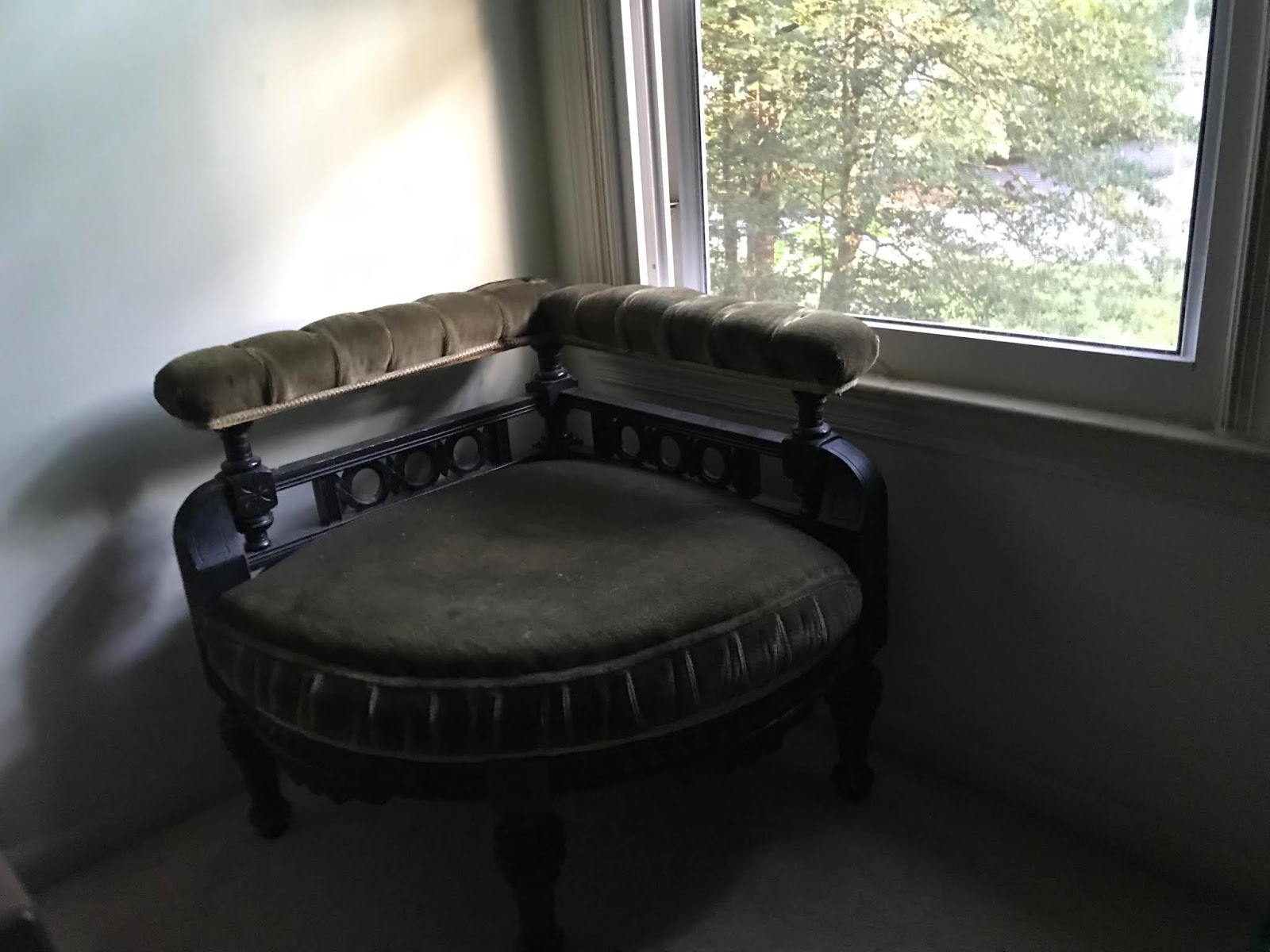
This morning I moved all my worldly office possessions a few steps down the hall into an office. It has four walls (one of them glass), no door and two huge windows. Best of all, I can turn off the overhead light and leave it off to my heart’s content.

Once they figure out how to mount my Mac monitor (this is most assuredly a PC environment) on a standing desk, I’ll be able to stand up in here too (something I was reluctant to do in Cubicle Land).

I write this post (quickly, during my break) looking southeast at the building across the courtyard and the train tracks that run all the way to Florida. Beyond the trees is the highway, then the airport, then the Potomac River and Maryland.

I’ve been lusting after an office since I arrived here, and I’ll only have this one a few months (we move to a new building next spring). But while I’m here, I plan to enjoy it. And sitting here looking out the window, laptop on lap, feet resting on trashcan … is an excellent way to begin.

Reaching Out

Reaching Out

Last night at a neighborhood gathering I learned about the tragic death of a young father whom I’d met on a walk about a year ago. I only spoke once with him and his wife. They’d just bought a house whose former occupants I knew, and had just found a little snake when I happened by.

I assured them the snake wasn’t poisonous and that these things happen around here. (I’ve found snakes in our house a few times.) The couple was friendly, and for once I wasn’t hurrying so we could talk. We chatted about the neighborhood, I met their darling 6-year-old twins, and I’d think of the family often when I walked past their house.

Over the summer things didn’t seem right there. The house and yard looked abandoned, with tall grass and unkempt hedges. The couple was from India, so I thought maybe they’d taken an extended vacation to visit family.

But last night I learned the truth. The husband died suddenly months ago. The wife is staying here with her children, with various relatives coming over to help. Life has changed radically for this family.

Once I took in the news with its sadness, its revelation of that which we understand though seldom acknowledge — that life can change in an instant — what I was left with was the inadequacy of superficial knowledge.

We walkers in the suburbs think we’re keeping an eye on things, but really we see just the barest outline of it all.  To be fully plugged in means more than just walking through; it means staying put, listening, talking — reaching out.

Suddenly Cool

Suddenly Cool

It was 37 last night here. I’m tempted to research highs and lows to learn just how long ago it was since we had such a temperature. Back to April, I imagine.

In honor of the brisk air, I’m back in black running tights and sweatshirt — and am wishing for socks that came up farther than my ankles.  Seasonal change may finally be upon us.

I’m no fan of cold weather, but once it’s here, I remember why we need it: to kick the fall foliage into high gear, to energize us — and, more than anything else, to provide variety.

It feels good to pull on tights — not just because they are warm, but because they are different.

Turning Right

Turning Right

I left the house early, out for a walk and an artist’s date. The walk was one of the usuals — until I turned right instead of left at the end of Glade and ended up on an unpaved section of the Cross County Trail.

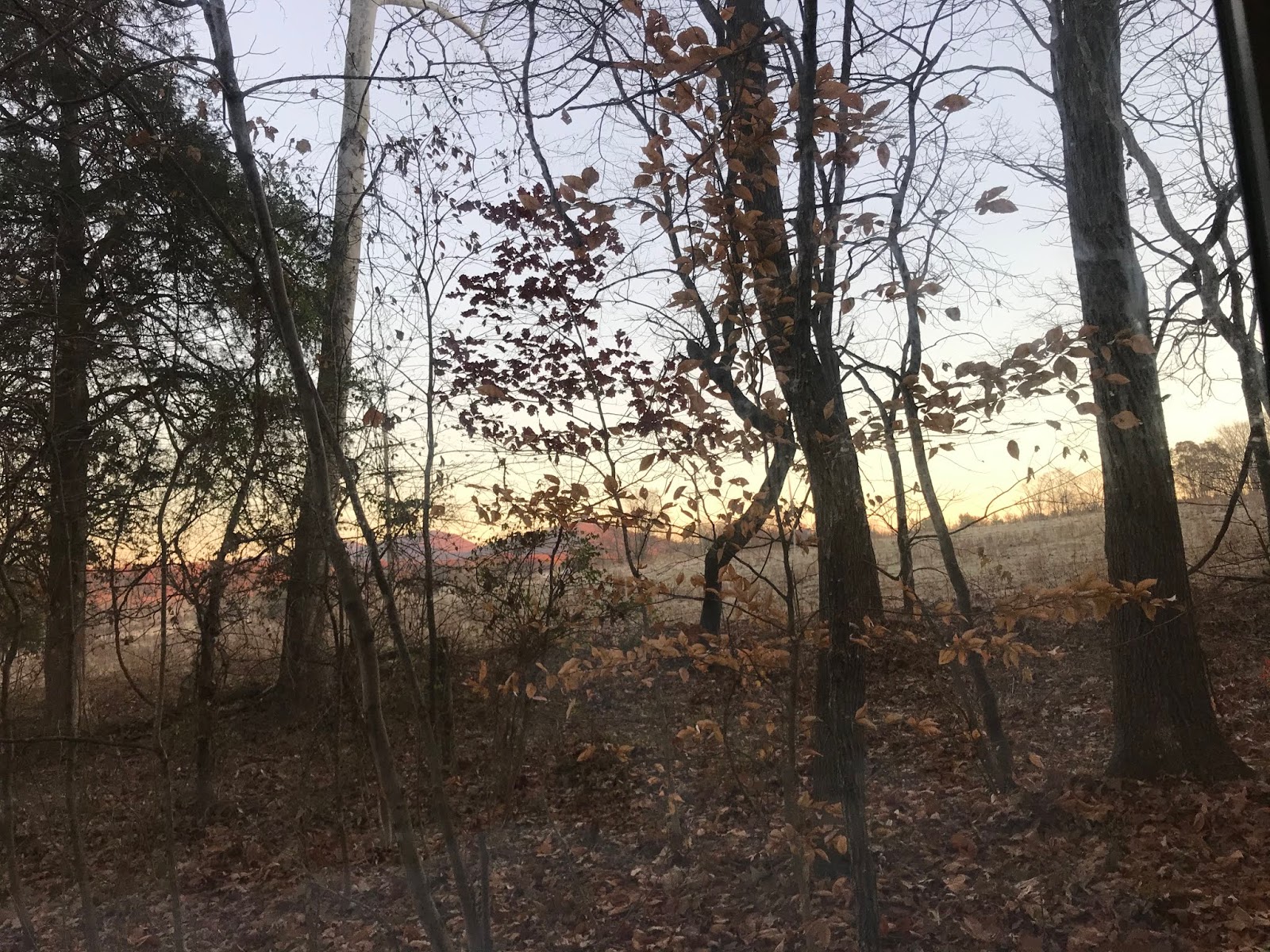
It slowed me down, this packed-dirt, root-strewn path. And slowing down was a good thing. I noticed the light filtering through the early autumn leaves, some just starting to change. I heard a bluejay squawk. Finally, I took my earbuds out so I could hear Little Difficult Run sing as it tripped over its large smooth stones.

Back to my car and inspired by the trail, I decided to drive past houses that line it. Some of them look small and down-sizable, worth a second glance.

Now I’m writing at a coffeeshop I recently discovered. The Doobie Brothers are playing, I’m tapping my feet and trying to concentrate.

Maybe not the perfect artist’s date, but it’s a start.

AC in OCT

AC in OCT

I write from the comfort of an air-conditioned living room, a living room that, I believe, may never have been air-conditioned before in the month of October. But this is no ordinary fall.

It was 98 degrees here yesterday. We’re not alone, either. It was 92 in New York City and 96 in Wilmington, Delaware.

That weather patterns are changing is no secret. And we have the electric bill to prove it — with more AC days this summer than last and more last year than the year before. 
I remember when heat waves were, in fact, waves, and not tsunamis. But no matter, it is cooler today, and we will soon slip into a more seasonable pattern that will once again let us pretend that everything is as it should be.

Sports Writing

Sports Writing

After reading about the Washington National’s stirring comeback to win a wild card berth in the National League play-offs, I had a thought. It probably won’t last, but it’s how I’m feeling today. And that is that, in my next life, I’d like to be a sports writer. Of course, that would require me to play and understand sports. But this will be my next life, so I may be stronger and more coordinated.

I’d like to be a sportswriter because it’s the one place in the newspaper where you can let fly (pardon the pun) with a description or two. Lyricism is not frowned on, nor is sentimentality.  You can write long and you can even write purple and it will not necessarily be edited out.

Furthermore, there is the theory (which seems truer to me through the years), that sport mirrors life  to an uncanny degree, and that in writing about it one is actually chronicling human nature with all its warts and halos. An infinitely rich and varied topic, to be sure.

But since it is not yet my other life (I’m thankful to say), I will have to content myself with reading about sports — rather than writing about them.

(Photo: Wikipedia)

Ambulatory Romance

Ambulatory Romance

In Elizabeth Gilbert’s new novel City of Girls, a man and woman get to know each other by exploring the streets of New York City.  They walk and talk and fall in love not by touching but by rambling.

There are unique reasons for their unusual relationship, but even putting those aside, they are onto something. Walking frees the soul, and if one soul is strolling with another, confidences are easily shared.

It may be the same process that loosens thoughts in the solitary walker, or it may be that the sheer mechanics of it means you are looking ahead and not at each other. Whatever the explanation, walking invites intimacy, as it did for this couple:

Nobody ever bothered us. … We were often so deep in our conversations that we often didn’t notice our surroundings. Miraculously, the streets kept us safe and the people let us be.  … We were devoted to each other.

The Teabag

The Teabag

The first time I saw the tea bag, I barely noticed it was there. It was morning, I’d parked at the high school and was walking through the tunnel to the station. I was rushing, of course, and I figured it was there because someone else had been rushing, too. I paid it little mind.

But the tea bag was there in the afternoon when I walked back to my car. Nothing had disturbed it. No animal had burrowed in it to see what was inside. No one had kicked it into the grass. It looked as clean and untouched at 6 p.m. as it had at 7 a.m.
So I thought more about it. Did it fall out of a box of teabags? Was it perched on top of a cup, its owner unaware until reaching the office that his hot water would never become tea?
The next morning, I decided that if the teabag was still there, I’d snap a shot of it. And so I did. Not because it was anything special. But because it was not.
Rock On!

Rock On!

Last night we went to hear my cousin Marty’s band, Rockville Station, play the hits of the 70s and 80s at a dive bar in Bethesda. They opened with “I Feel the Earth Move,” an apt tune since I was sitting close enough to the stage that I could fill my insides move with each beat.

Once I’d adjusted to this strange phenomenon, I sat back and enjoyed the show. Here were people my age and older rocking the night away with a lead singer belting out the old tunes and, in a break, introducing her parents to the crowd. They were visiting from Hawaii and had to be in their 90s. The drummer, which turned out to be her husband, looked a little like the angel in “It’s a Wonderful Life.” His face had the same innocent rapture as Clarence’s did when he showed George Bailey his vintage copy of Tom Sawyer. But unlike Clarence, he was so intense that he broke one of his drumsticks during a long riff.

Marty, who played guitar and sang, was one of the younger ones on the stage. Who knew he had these talents? He wore a white cowboy-style shirt and confessed before the show went on that he had once dreamed of being a country-western singer.

Here are people following their bliss. They have day jobs, of course, but they also have alternative lives where they can … rock on.

Frozen Sea

Frozen Sea

“A book must be the axe for the frozen sea inside us.” — Franz Kafka

I came across this quotation a week ago while reading The Second Mountain by David Brooks — and it took my breath away.  In that way that books can seem to be speaking directly to you, I first read these words as a writer, as in, writing a book will free up, if not a frozen sea, then at least a creative block I’ve felt off and on for many years.

I was pretty sure that was not the way Kafka intended his words to be construed, though. Today, I’ve had time to find the larger work of which this is a part. And yes, it is most definitely about the books we read, not the books we write. But it is still powerful, especially when you know it was written by a 20-year-old (!) Kafka, in a letter to a friend. Here it is in context:

I think we ought to read only the kind of books that wound and stab us. If the book we’re reading doesn’t wake us up with a blow on the head, what are we reading it for? … We need the books that affect us like a disaster, that grieve us deeply, like the death of someone we loved more than ourselves, like being banished into forests far from everyone, like a suicide. A book must be the axe for the frozen sea inside us. That is my belief.