Contemplative Tasks

Contemplative Tasks

A walker in the suburbs spends a lot of time thinking. So does a writer in the suburbs (or the city, depending upon whether I’m working at home or at the office).

I think best, though, when I’m doing something else. And I was thinking the other day (see?!) about how certain tasks are perfect for contemplation.

This will come as no surprise to monks and nuns who pray ceaselessly whether they’re hoeing a field or baking a fruitcake. They’ve long since realized how much physical labor lends itself to thought and prayer.

Walking, of course, is one of the most contemplative occupations, which is a large part of why I do it. Others include weeding, mowing, sweeping and ironing.

Each of these deserves its own post (and some have them), but I’m focusing today on what they have in common, on the pulling and the stretching, the pounding and the smoothing — on all the repetitive motions that exercise the muscles so the mind can roam free.

(Once freed, a mind can go anywhere.) 
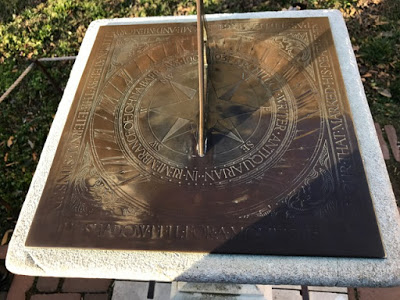
Waiting Time

Waiting Time

A return to the hospital. It doesn’t matter which one. Inside, they are all the same: a world of their own, bright of light and cool of air. If you’re lucky, you find a quiet corner to wait. It will be near an electrical outlet and away from a vent, because when air is 63 degrees, it’s better if it’s not blowing in your face.

You will get busy with the work you brought, not only because it must be done but also because it tethers you to the outside world, a world that vanishes the minute you enter the lobby with its quiet hush. 
There will be no clocks on display in the waiting room. At the nurse’s station, however, a large round analog version with numbers written in a clear black font looms serenely over the scene. 
You realize then that clocks are signs of power. Those who have them are those who are responsible to them, those who have something to do. You, on the other hand, are only waiting. 
Planking Alone

Planking Alone

A crowd of people in my office have begun a 30-day planking program — holding ourselves up in a “plank” position, either on elbows or hands. We began at 30 seconds and are working our way up to three minutes.

At 11 a.m. every day we gather in the hallway near the elevators to chat and hold. Thirty seconds of planking isn’t much. Three minutes is quite a lot. Adding seconds in small increments attempts to blunt the difference between these two.

This works best when done in company. Someone plays music on their phone, or we share recent celebrity sightings. Someone saw Justice Ruth Bader Ginsburg in the Philadelphia train station. Someone else bumped into the heir to the British throne — that is, literally bumped into Prince William. Twice!

When I’m not in the office, I plank on my own.  I set my phone to two minutes 10 seconds or whatever the time might be, get down on the floor, suck in my gut and hold … and hold …. and hold.

I try not to watch the seconds tick down on my phone timer, but I can’t help myself. Alone in my living room, I’m ready to collapse, to pause briefly, anything to end the pain. As I watch, the seconds seem to move in slow motion, a painfully stilted procession that will never, ever finish.

Want to make time pass more slowly? Just plank alone.

Threatened Tidewater

Threatened Tidewater

I’ve certainly been posting a lot about a three-day-trip, but the Virginia Tidewater is a magical place … and a place now threatened by Dorian.

The National Hurricane Center predicts flash floods, high winds and a strong storm surge in southeastern Virginia and the southern Chesapeake Bay. That means that the bucolic landscape we toured last weekend could be drenched and battered today.

It’s one reason to scotch dreams of home ownership in that area, which I’ll admit were percolating in my brain as we spied one gorgeous inlet and quaint town after another.

Probably better these days to lust after cottages on safer, higher ground. But oh, there is something special about landscapes where land and water meet.

Virginia is For …

Virginia is For …

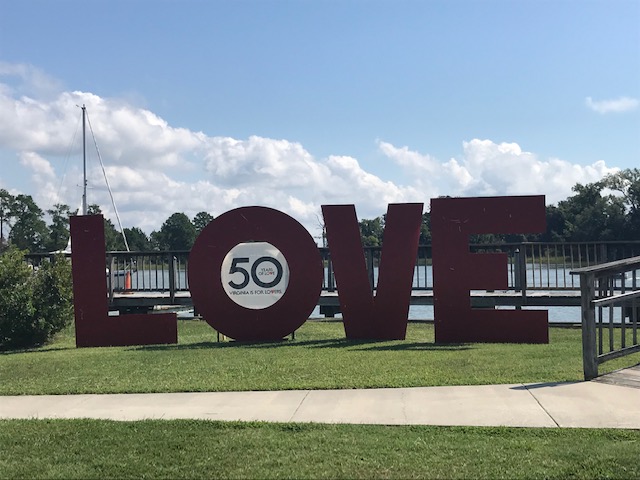
It’s been 50 years since the Old Dominion rolled out a new tourism campaign that went on to become one of the most successful ever. To celebrate this campaign, Virginia has placed more than 150 LOVE installations around the state. Seeing this one in Urbanna last weekend inspired me to do a little research.

“Virginia is for Lovers” has a contested history. Some say it was the original brainchild of a $100-a-week copywriter who came up with “Virginia is for history lovers” — until others in the Martin and Woltz agency out of Richmond (now the Martin Agency) decided to punch it up. Others say it was a more collaborative effort from the start.

Whatever the exact story, “Virginia Is For Lovers” is a classic example of less is more, because the removal of “history” gave the fusty state a whole new image. The campaign debuted with an ad in Bride’s Magazine in 1969, the year after the summer of love. And the rest really is … history.

Window Seat!

Window Seat!

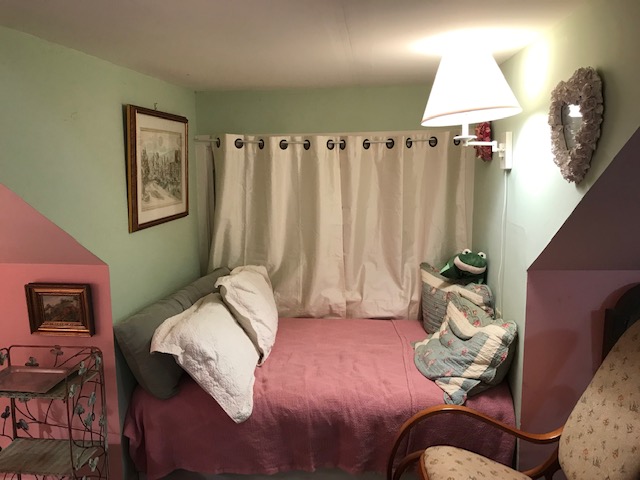
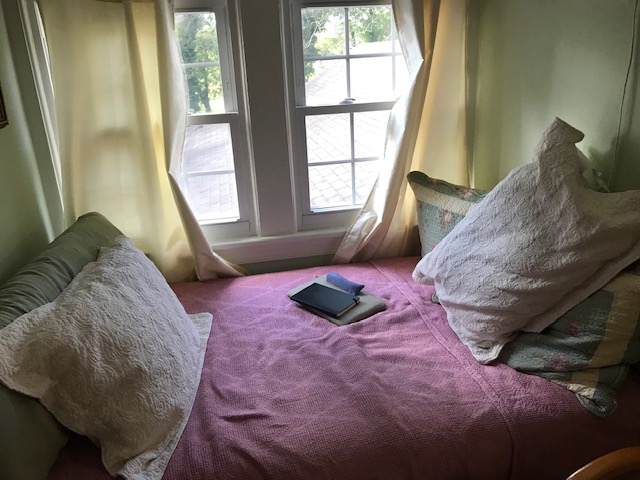
I could tell from photographs that I would like the “Rose Room,” but until I walked in, I had no idea how much. It was the slanted roof, the pinks and greens, the hearts and flowers …  and, of course, the dormer window seat.

The seat was deeper than most, for one thing, and wide enough that I could stretch out completely. It was soft, too, and plumped with pillows of several shapes and sizes. There was even a cute stuffed dinosaur for good measure.

Was it the feeling of enclosure it gave me, of being alone with my thoughts? Or, when the window was open, the expansiveness?

I’ve always wanted a window seat, would make it my writer’s aerie if I had the chance.

But until then … I’ll just have to lust after this one.

End of the Road

End of the Road

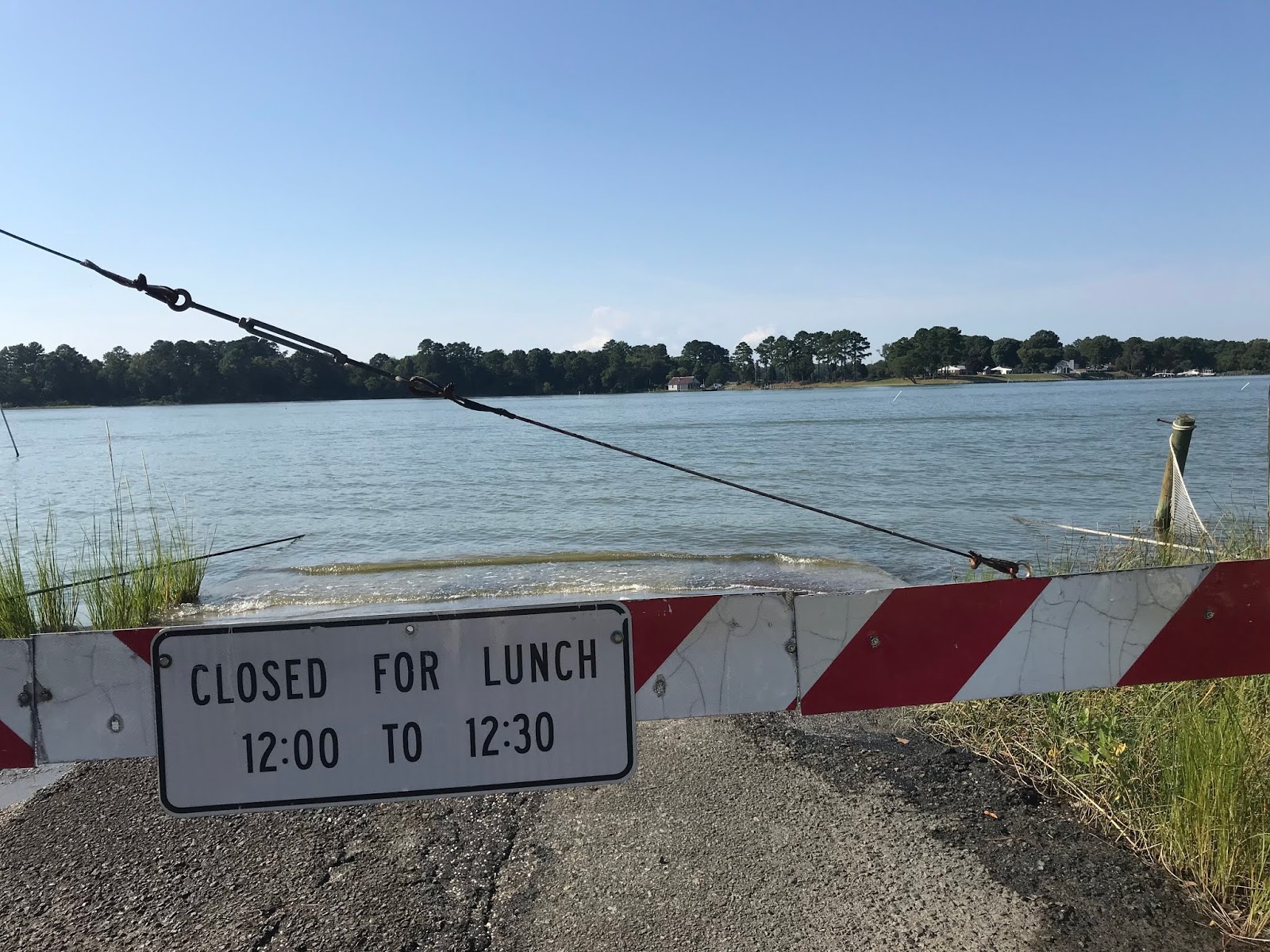
It happened often while traveling in the Northern Neck. We’d follow the road to a cove or point only to find that the pavement literally dead-ended into the water. No parking lot. No gracious circle in which to turn around.  Just land … then water.  Sometimes there would be a sign. The one above for the Sunnybank Ferry was a bit misleading. It wasn’t closed for lunch but closed for the weekend. Still, what can you expect? It’s free!

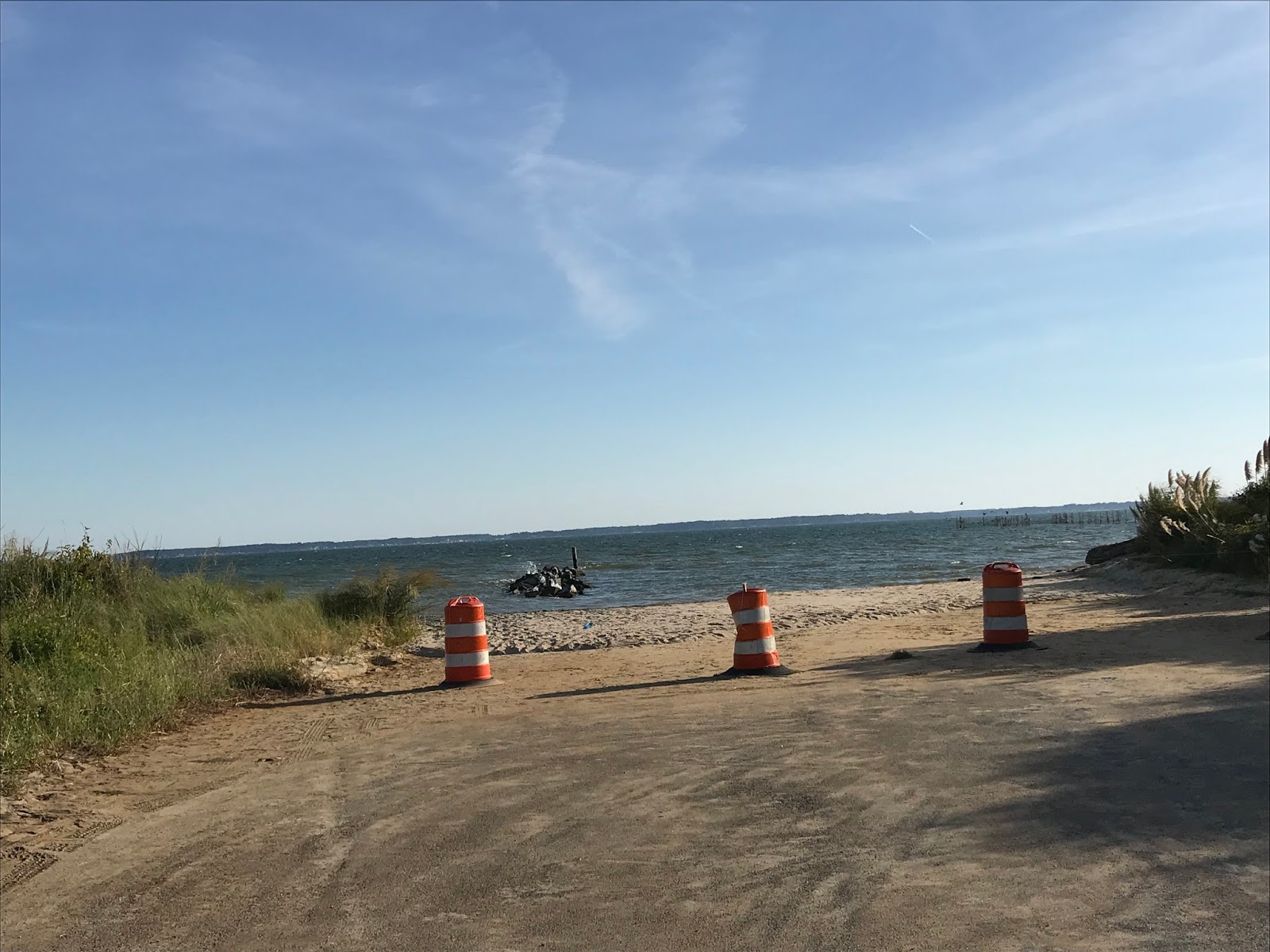
Other roads were more like this one at Windmill Point: a clear signal (as if you needed one) that if you want to go further, you’ll be needing fins or flotation devices.

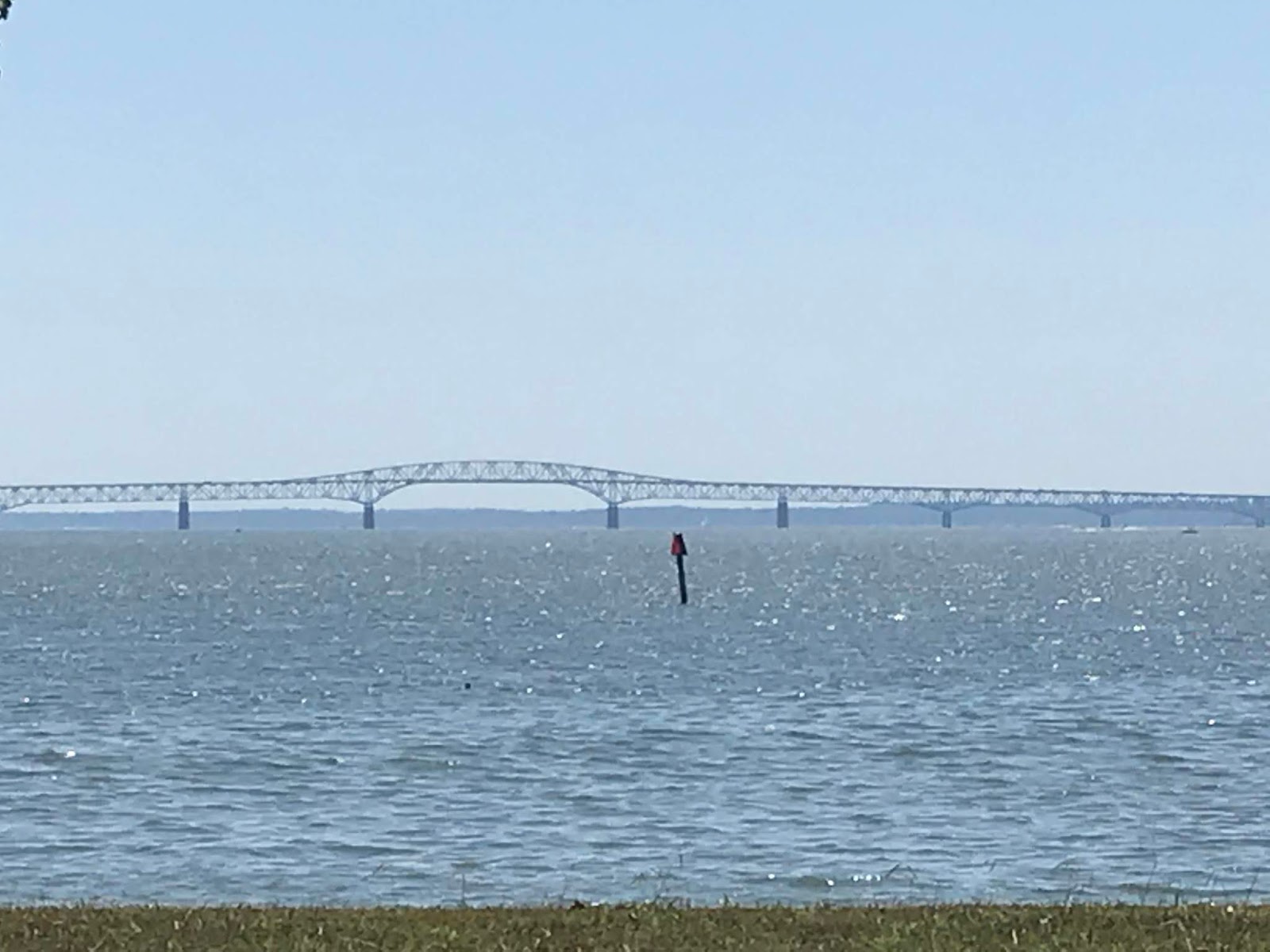
The road to the village of Weems ended at this overlook — well, not exactly an overlook, more like a backyard with a world-class view. You can see the big bridge to the Middle Peninsula from here.

When land meets water, roads and cars take a back seat to boats and bridges.

Urbannahhhh!

Urbannahhhh!

It’s really Urbanna, but I couldn’t resist adding a sigh of pleasure at the end. Where have all these sweet Virginia port towns been all my Virginia life?

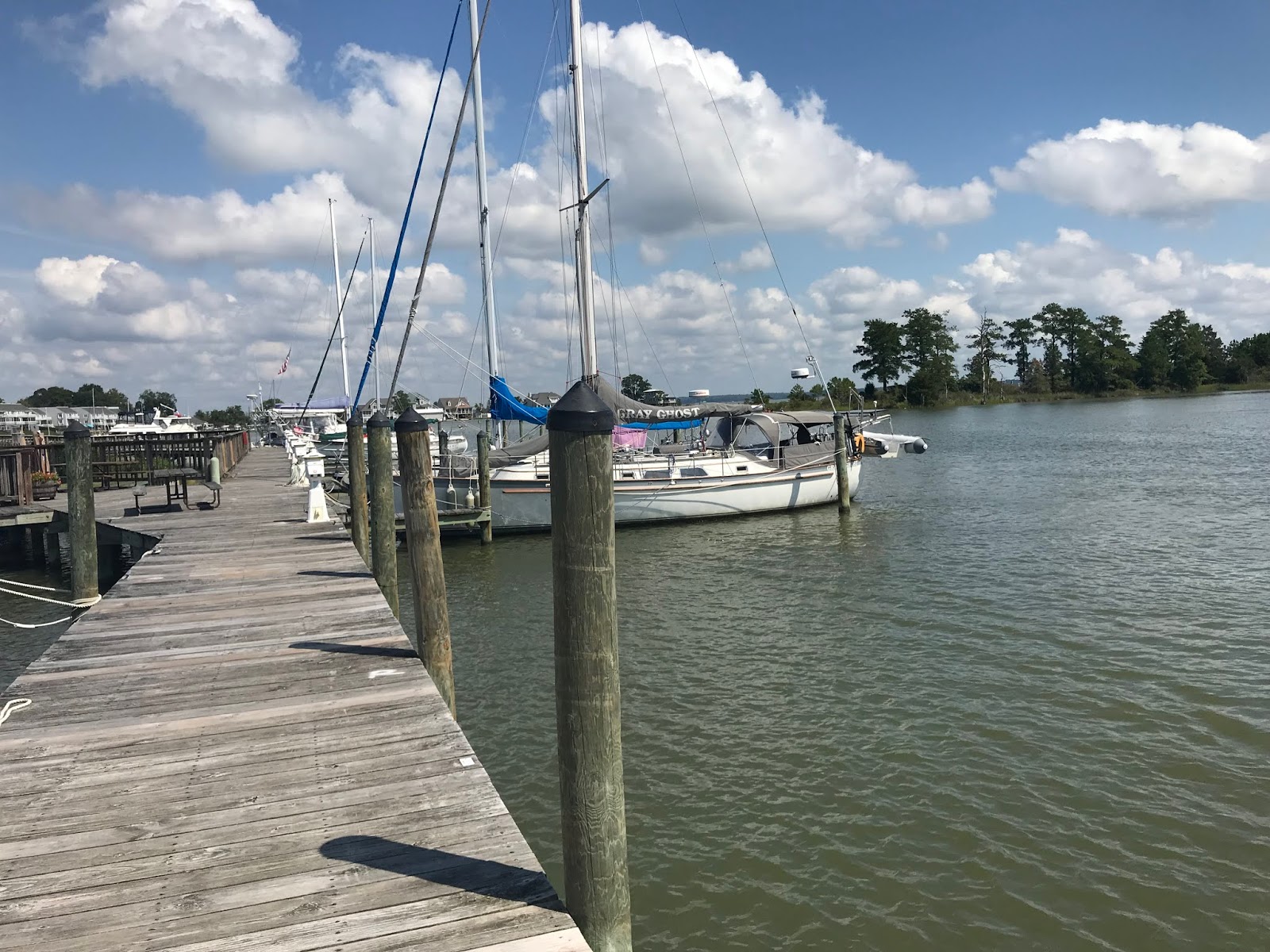
Like Reedville, Irvington and Kilmarnock, Urbanna is a small place with a large footprint, large because its role in the beginning of American history gives it a certain heft. In all these small towns, homes and shops cluster around landings that became docks that became marinas that now lie sparkling in the sun. But before the sailboats and motorboats there were steamers and sailing ships, and the harbors and quays were where business was conducted, not pleasure.

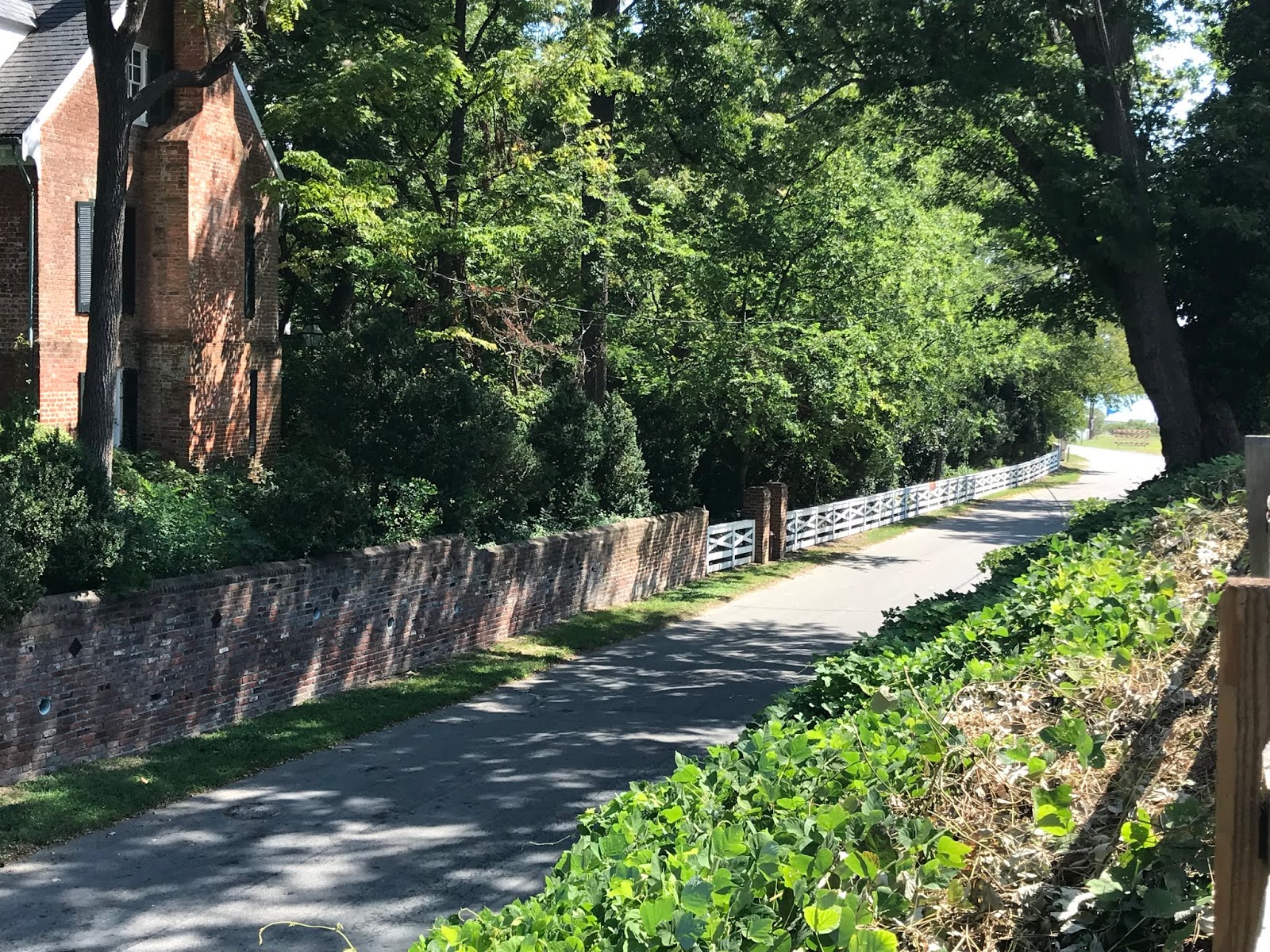
To reach the Urbanna marina, for instance, you walk down Prettyman’s Rolling Road, one of the oldest thoroughfares in America, a historical marker says. The “rolling” was named for how 1000-pound hogbacks full of tobacco were moved from custom house to ships and from there to the motherland more than 3,000 miles away.

I walked instead of rolled. But once down the shaded lane, it was easy to imagine the bustle of yore because of the modern busyness.  It was a glorious late-summer day, and sailors, kayakers and sightseers all gathered at the harbor.

 I watched one sailboat motor slowly down Urbanna Creek on its way to the Rappahannock and, ultimately, the bay. It would be back by nightfall. It wasn’t traversing the Atlantic. But as the water gleamed and a breeze promised smooth sailing, it was easy to imagine otherwise.


(No wonder I like the town. I later read that it means “City of Anne,” which I should have figured out from my ninth-grade Latin. Named not for me, of course, but for England’s Queen Anne, most recently portrayed — and not prettily — in the movie The Favourite.”) 

Chesapeake Steamboats

Chesapeake Steamboats

One of the reason I love to travel is that it opens up worlds you’d never know if you didn’t leave home. It’s not just seeing the sights and meeting the people. It’s imbibing the history and culture.

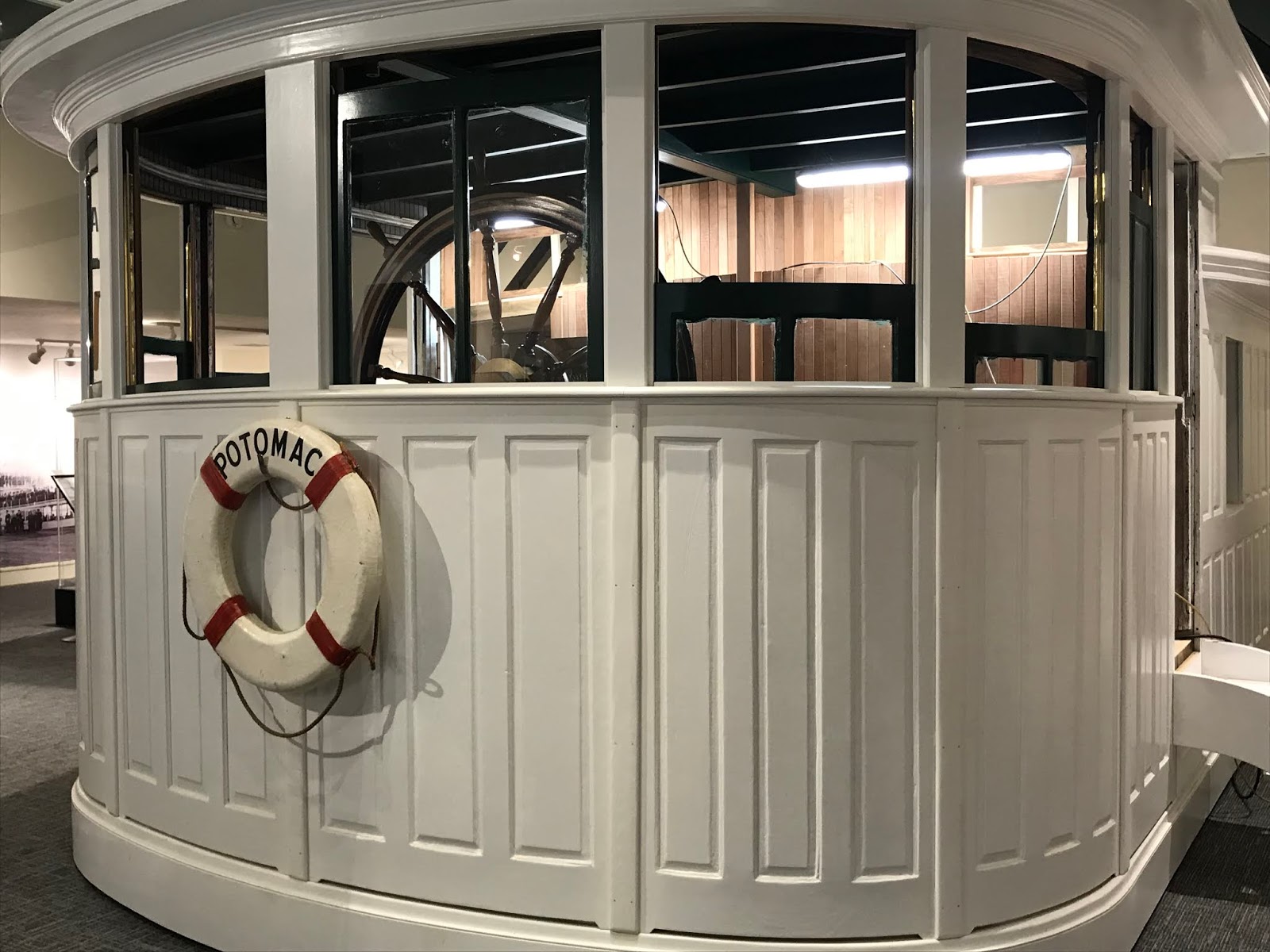
Things like the Chesapeake steamboat culture, for instance, which flourished from the 19th century into the 20th.  Boats plied the rivers, creeks and inlets of this watery world, picking up tobacco, produce, seafood — and people — and taking them to Baltimore or Norfolk. Neighbors would gather at the wharf when the boats made their return trip to retrieve the tools, lumber or lace they’d ordered from the big city.

Steamboats served as buses, ambulances, bars (you could get a drink on one during Prohibition) — and stages. The musical “Showboat” was based on an Edna Ferber story she wrote after spending time on the James Adams Floating Theater, which mostly plied the Chesapeake.  These floating stages might be the only live entertainment a family could count on all year long. It was a big deal when the Floating Theater came to town.

Chesapeake steamboats — until this afternoon, I never knew they existed.

(This is the pilots cabin from the steamer Potomac, which is being restored in the Irvington Steamboat Museum.)

Virginia Tidewater

Virginia Tidewater

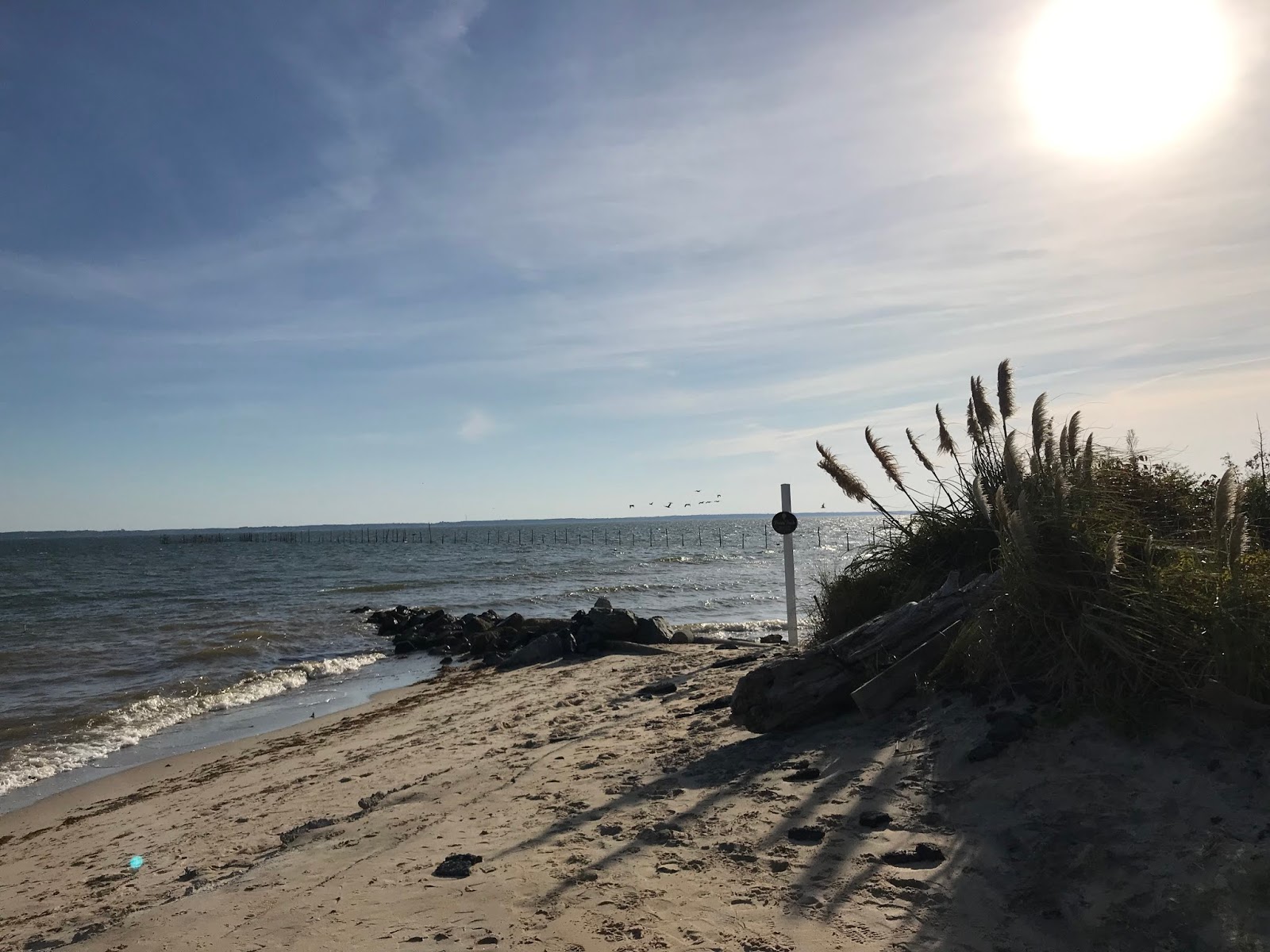
This is a land of inlets and bridges, of boats and buoys. It’s the Virginia Tidewater, home of three peninsulas — the Eastern Shore, the Northern Neck and the Middle Peninsula.

It’s a place of fringed coastlines, of oat grass waving in a stiff breeze off the Chesapeake. There are beaches here, but they are small and riverine. And the water is salt, fresh and brackish.

As if to mimic this variety, the landscape holds colonial churches, ancestral estates, boardwalks for bird-watching — and even an oyster academy.

It’s not a matter of what to do … but of how much we can cram in.