Of Memoirs and Tree Ferns

Of Memoirs and Tree Ferns

I began this International Woman’s Day reading (and finishing) a memoir by a most amazing woman, Diana Athill. Retiring at 75 from a successful editing career where she worked with such writers as John Updike and Jean Rhys, Athill began her second act — as a memoirist.

She penned several volumes in her 80s and 90s, including Stet, full of literary gossip and wise observations, and Somewhere Towards the End, which she wrote more than 12 years before the end, as it turns out. She died less than two months ago at the age of 101. She is my new role model.

Not that I think I’ll live as long as she, but it would be wonderful to write another book someday, and reading her gives me hope that there may be some juice left after I finally leave my day job.

Let me quote from her postscript, with a bit of explanation. Athill begins her book describing a tree fern that she would like to plant but hesitates to — because she thinks she won’t be around long enough to enjoy it. By the time the book ends, she has a more optimistic view:

The tree fern: it now has nine fronds each measuring about twelve inches long, and within a few days of each frond unfurling to its full length, a little nub of green appears in the fuzzy top of the ‘trunk’ (out of which all fronds sprout and into which you have to pour water). This little nub is the start of a new frond, which grows very slowly to begin with but faster towards the end — so much faster than you can almost see it moving. I was right in thinking that I will never see it being a tree, but I underestimated the pleasure of watching it being a fern. It was worth buying. 
Under Construction

Under Construction

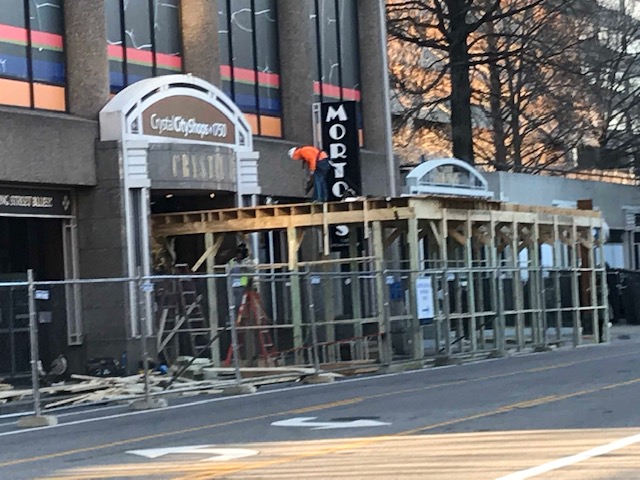
It didn’t take long. Just weeks after Amazon’s announcement that my work neighborhood, Crystal City (aka National Landing), would be its new HQ2, the demolition — and the detours — began.

First, my cut-through was cordoned off, which made my walk from Metro to office less diagonal and hence longer. Then one whole stretch of sidewalk was blocked, a pedestrian walk constructed in the bike lanes, and the whole lot of it painted white.

Now I wait at the light and cross to the other side of Crystal Drive so that I’m strolling on a pavement-stone sidewalk that runs alongside apartment buildings where a few brave pansies still show their yellows and purples.

This is not just a construction zone; it is the construction zone. A transformation that will continue for years, and will, I imagine, outlast my presence in these environs.

There’s a tinge of excitement in it, I’ll admit. It’s not unlike the neighborhood I grew up in, full of two- and three-bedroom bungalows being built as quickly as the hammers and saws could make them. The sound of construction, the sound of new life.

Ashes

Ashes

I began Lent by returning my overdue library book (see below … additional venial sin averted!) and receiving ashes. To accomplish the latter, I reached my parish church by 6:33 a.m. (the service having already begun, of course) and found the parking lot almost full. Wind chills today are in the teens but that doesn’t stop Catholics from their appointed rounds.

Back on the road to Metro before 7:00 a.m., I noticed that my church wasn’t the only one offering predawn distribution. Cars were leaving the Methodist church, too.

But the greatest surprise came at the Crystal City Metro. I usually avoid that station these days, having found a bus that leaves from another Metro stop that gets me to the office more quickly. But today I opted for Metro all the way because it was warmer.

As I was scrambling up the escalator into the usual crowd of buskers and hawkers, I spotted a man in purple off to my left. He was bearded, smiling and … wearing vestments. It was a priest giving out ashes!

Guess I would have gotten them today one way or the other.

Overdue!

Overdue!

Though I sometimes drive over the posted speed (less often than I used to) and have been known to jaywalk, I’m not what you would call a scofflaw. There’s something else afoot in my attitude toward library books.

Here I am, a few days behind returning one and I feel like I’ve just stolen the crown jewels. It must be because books are important to me, and having been on one end of the “holds” queue I don’t want to keep people on the other end waiting longer than necessary.

Still, this morning I did something faintly rebellious. I kept my overdue copy of Hempl’s The Art of the Wasted Day one more (not wasted) day just so I could finish taking notes on it. I can’t renew it because the book has one of those aforementioned holds. But I can’t return it either — because it still has a hold on me.

The book is rich in observations, too many to record in one sitting. So I’m boldly ignoring the date stamp (2/28/19) and bearing the additional fee (+10¢) and returning the book tomorrow — instead of today. Hold off on the paddy wagon just a few more days, please!

Tethered

Tethered

Last night I watched a movie called “Free Solo,” a
documentary that chronicled Alex Honnold’s untethered ascent of El Capitan in
Yosemite.  Using only his hands and feet — and most of
all his brain (which apparently has a less-responsive amygdala than most), Honnold was able to climb up the sheer face of the 3,000-foot cliff.
No ropes, no belts, buckles or belays. Just the man and the mountain.
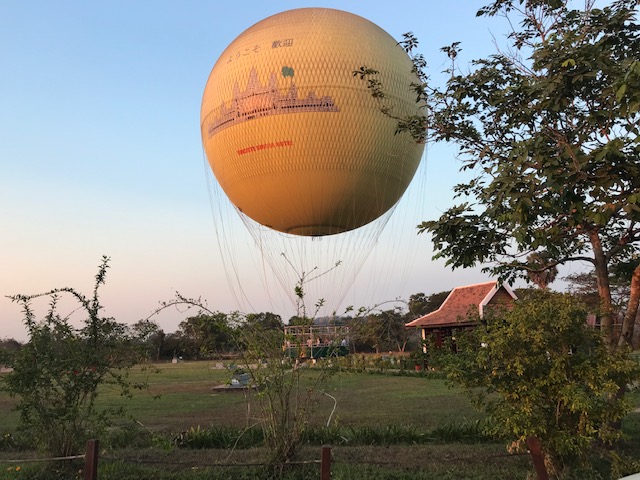
By contrast, I recently ascended 400 feet in a balloon to see the temples of Angkor Wat. It couldn’t have
been safer. The balloon was tethered to the ground and the passengers were
encased in wire mesh. I was still weak in the knees.

And last night, I was weak-kneed again. It didn’t even help that I knew the guy survived. There’s something primitive about it, something hard-wired in us to recoil when we see another human being clinging precariously to a sheer rock face. 

No doubt about it, the untethered experience makes for great cinema — but when it comes to my own ascents, I’ll take them tethered every time. 

Coconuts!

Coconuts!

I’ve yet to write about the food in Cambodia, a topic worthy of several posts. But let me say a quick word about coconuts.

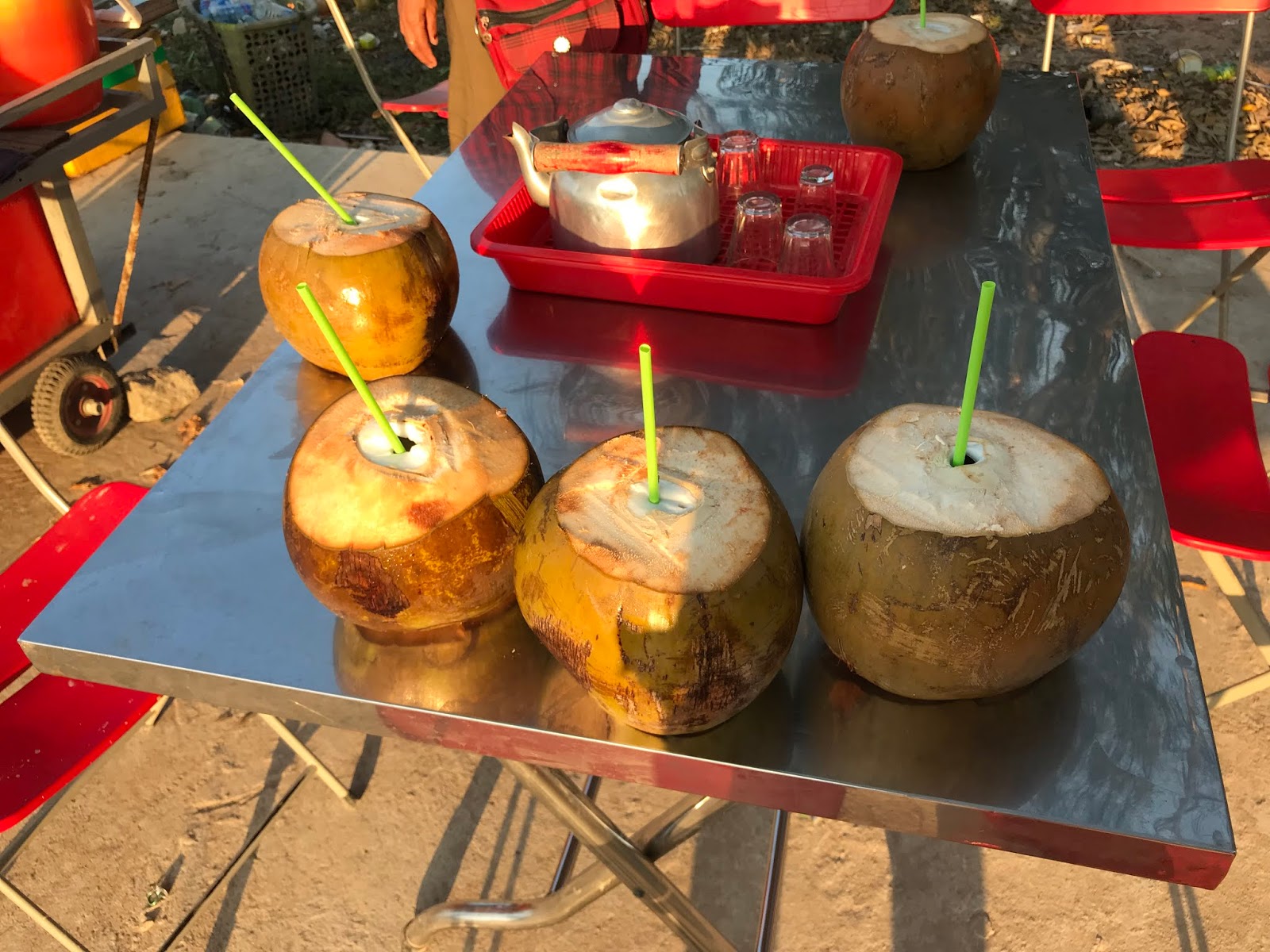
They were everywhere, at roadside stands, alongside Angkor Wat, in the city and in the country. Families served them to quench our thirst after a hot, dusty drive. And as long as the straws weren’t used (and I don’t think they were), they were the most hygienic drink of all.

The ones pictured above were served at the Vietnam border, where we sat for a few minutes to look nonchalant in our pursuit of photos. Maybe that was why their milk tasted all the sweeter.

Other Side of the World

Other Side of the World

Coverage of the president’s trip to Vietnam last night has me already nostalgic about my trip to Cambodia. There the newscaster was, standing in a Hanoi street while motorcycles and pedestrians buzzed around him.

I was just there, I thought, I was just on other side of the world — because Cambodia is right next door, of course, and I did glimpse Vietnam when we visited the border region.  
These trips I’ve taken recently to Cambodia, Malawi, Nepal and other countries are for information-gathering and storytelling. They are, above all, business trips. But I have a personal mission for them, too. I’m hoping they keep the wonder alive, that they help me appreciate every scintilla of difference I see when I’m abroad, that they remind me always that we live in a big old world.  
Longest Day

Longest Day

When the plane took off from a steamy Phnom Penh runway, it was a few minutes after midnight, February 27. That was almost 35 hours ago — and it’s still February 27.

I have nothing against February 27. It’s a perfectly fine day. Nearing the end of winter, promise of spring to come.

But by the time I turn off the light tonight, I will have had about 40 hours worth of February 27, and that will be more than enough.

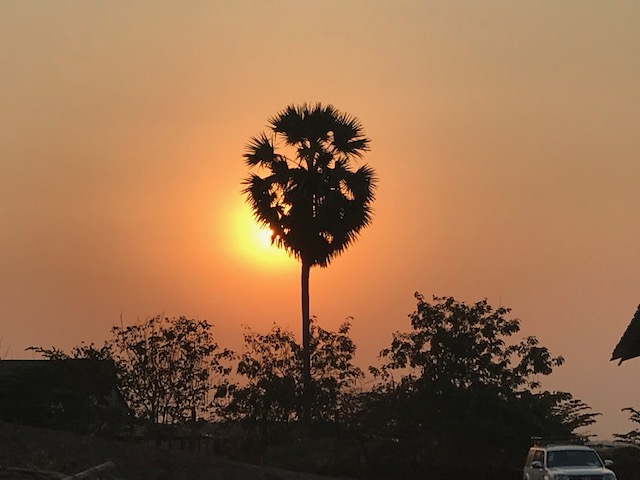
Fifty-six hours ago I was interviewing a trafficking survivor as the sun set behind a palm tree.

Now I’m back in Virginia, glad to be home — and waiting for February 27 to end!

Leaving Cambodia

Leaving Cambodia

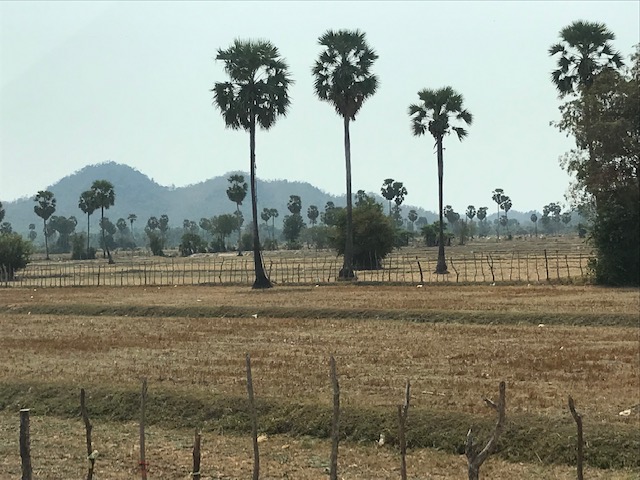
We are leaving today, leaving the rice fields and the temples, the motorized rickshaws and the funny little plows, leaving a country that made me feel at home the second I arrived and hasn’t stopped since.

In a great irony of traveling, I feel like I’m just getting the hang of the place — able to pick up a few words from the jumble of foreign sounds, knowing what to order on the menu — when it’s time to leave.

But though my physical body will be whisked from this place at the end of the day, my mind will linger, will puzzle out the sights and sounds, will recall the gurgle of fountains in the Golden Temple Hotel and the generous hospitality of every home we entered, no matter how humble.

Today it is summer heat and warm breezes. Tomorrow will be damp, chill winter. But I’ll keep in mind, as I always do, that the world is large, and there are more worlds within it that we can possibly imagine.

Smiling Faces

Smiling Faces

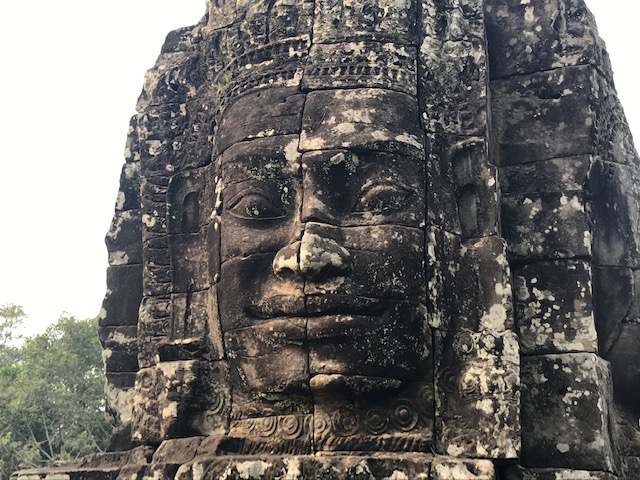
It’s a smile of knowledge and kindness, of wisdom and mercy. It’s the smile of a bodhisattva, and it appears 216 times in the Bayon temple of Angkor Thom, the last stop on yesterday’s temple tour.

The smiles are both inscrutable and accessible, plain and adorned. They were hewn not in solid rock but in huge blocks of sandstone. The smiles were carved in pieces, and in this way they resemble real human smiles, which are often constructed of humor and rue, laughter and longing. 

                                                                                          
The faces of Bayon are a good memory to take home. A smile of compassion for the people I’ve met, for the lost and hopeless, for children playing marbles in a dry and dusty yard, for shop owners sweeping the dirt floor of their new business, for all the blurred scenery on the road, for life itself.