A Day for Love

A Day for Love

Since last Valentine’s Day I’ve read several books that detail our human origins, books about homo sapiens’ emergence from the muck and slime and ethereal dust, from the hunters and the gatherers. I read them and nod; I appreciate the science and the history.

But there’s always a point where I diverge, take issue. You can call it Jesus, Buddha, Mohammed. Wonderful Counselor. Mighty Father. 
Or, you can call it love. 
Love is what the theories don’t explain, what science has not yet mastered.
I don’t think it ever will. 
Downton Sandwich

Downton Sandwich

This winter I’ve continued my binge-watching spree, plunging back into Downton Abbey after catching up on Victoria. Time permitting, I head down to the basement beanbag chair after dinner for 45 to 60 minutes of immersion in another world.

Add in elliptical-machine morning-exercise sessions, which require that one watch something to make the minutes pass more quickly, and my days lately have become what I’ve come to think of as a “Downton sandwich”: Twenty minutes of Lord and Lady Grantham in the morning and 50 minutes of Lord and Lady Grantham in the evening.

In between I must dress myself, drive my own car to Metro, commute on an overcrowded train with people of all classes, work a long day, then come home to make my own dinner. Oh, the indignity! I’m sure the Dowager Countess Violet Grantham (Dame Maggie Smith) would say something to buck me up, something like, “Don’t be defeatist, dear. It is very middle-class,” one of her many splendid zingers.

Still, my “Downton sandwich” makes me think about the modern world that was shaking the estates of the rich and titled in post World War I Britain. Makes me compare my life with those of the people upstairs (and downstairs, too, but upstairs is more fun): Where is the ladies maid to do my hair every morning? Where is the cook to prepare me a scrumptious breakfast that will be brought to me in bed? Where is the butler to open the door and dispatch all those horrid telephone sales calls?

These service personnel are scattered to the four winds, I guess. They’ve become engineers and baristas, doctors and teachers. They’re living their own lives. Poor me: I’m left to fend for myself!

(Highclere Castle interior courtesy Culture Trip)
Tunneling

Tunneling

The thermometer read 32, just as it did yesterday. But yesterday it was sleeting and icing; today it’s “only” raining. Dark, gray, cold and wet — but somehow precipitation that remains liquid.

And so, I put into place my own winter emergency plan. No riding the bus from Courthouse Metro. I took my chances on Metro all the way. Most of all, no outside walking from Metro to the office. Instead, I took the tunnel.

The tunnel is longer but ever so much more pleasant, especially on a day like today. It’s a weird feature of this neighborhood, something about its spook-driven origins.

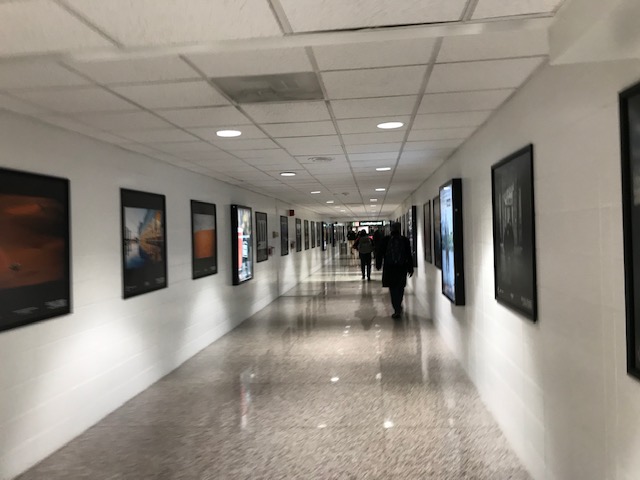
It’s a warren of passages, steps up and down. I passed a barber shop, an optician, a branch library and an experimental theater. I walked down a hallway with art on the walls.

It was warm, it was dry. It was divine.

Wasted Days?

Wasted Days?

My reading day was only partially successful, but I did get well into Patricia Hampl’s The Art of the Wasted Day. A telling title if ever there was one, because if a part of me didn’t think reading days were “wasted” I’d probably have a lot more of them.

But if Hampl’s title tips its hat to this prejudice, her content helps dispel it. She ponders leisure and daydreaming; she counters the belief that what matters in life is the checklist. The essential American word isn’t happiness, but pursuit. How about giving up the struggle, she says, redefining happiness as “looking out the window and taking things in — not pursuing them.”

The life of the mind is what Hampl is after here, and she succeeds well in pinning it down, following its application through the essays of Montaigne and the science of Mendel. She looks closely at notions of the self and how we often have to be knocked in the head (Montaigne and St. Paul both took falls) to see the world with fresh eyes.

Because this is where the “wasting” leads us — to a different set of beliefs and to “keeping a part of your mind always to yourself,” which becomes a mantra to Hampl. It might be to more of us if we had the time to try.

Reading Day

Reading Day

I remember these from college. They were Cramming Days, more like it, days before exams when normal class schedules were paused so that intense studying could begin. The nomenclature perplexed me: It’s the day before the exam and you’re just now reading?

This is not the kind of reading day I’m envisioning for today. Instead, I’m dreaming of a healthy sick day, a day spent entirely in bed if that’s what suits me. Or maybe on the couch or the beanbag chair or even while striding (gliding?) on the elliptical. The point is not the posture. The point is that I will spend the day reading.

In childhood I would think nothing of this. I could lie on my canopy bed with a book of fairytales, or in my aunt and uncle’s attic with a Mary Stewart novel, and be lost for hours.

This is what I want for today. A no-guilt reading day. A day when I don’t squeeze reading into Metro or bus rides or the last few minutes before sleep.

There are seasons in a reading life, and I have just pulled out of a fallow period into a gloriously abundant one. There are not one but two Patricia Hampl books, a memoir by Thomas Lynch, essays by Wendell Berry, Storm Lake by Art Cullen, subtitled A Chronicle of Change, Resilience, and Hope from a Heartland Newspaper and, speaking of heartland, a book by that name subtitled A Memoir of Working Hard and Being Broke in the Richest Country on Earth. 

Most of these are library books, which gives my reading day some urgency. As does the pile on my bedside table, which has become precarious enough that drastic remedies are called for. All of which is to say that a Reading Day will be good for my health — in more ways than one.

A Walker Turns Nine

A Walker Turns Nine

When I started this blog nine years ago today, I saw it as a chance to do my own work without the editor on my shoulder. It still is that — but much, much more.

Because when I started this blog, I was nine years younger, you see. I knew time was passing quickly, but not this quickly! I thought there would be plenty of years to write another book, pen dozens of essays, do all sorts of things. I hope there still is. I see no reason why there shouldn’t be.

But if there’s not … there’s this blog. It has become an oeuvre of sorts, a body of work, a folder into which I stuff random thoughts, ideas from books, the gleanings of a brain that works best when the feet are moving at three miles an hour.

As I said in the beginning and each walk confirms, writing and walking are boon companions. One informs the other.

So this walker plans to keep on walking and keep on writing until … well, until she can’t do either anymore.

I Walk Therefore I Am

I Walk Therefore I Am

The best books are not only satisfying in and of themselves but they also lead us to other great reads. Such is the case with The Old Ways, which I finished last night.

Edward Thomas, the British poet and nature writer who died in World War I, and Nan Shepherd, author of The Living Mountain, are two authors now on my must-read list, courtesy of Robert McFarlane.

“A mountain has an inside,” Shepherd wrote, describing the caves and cavities of her native Cairngorms, which she explored throughout her long life. Her prepositions are notable, McFarlane writes. She went not just up but “into the mountains searching not for the great outdoors but instead for profound ‘interiors,’ deep ‘recesses’.”

It’s landscape as self-scape, not in a shallow way but in the most original of human ways, realizing that earth is our home and in nature we discover our best and truest selves.

Here’s McFarlane on Shepherd:

‘On the mountain,’ she remarks in the closing sentences of The Living Mountain, ‘I am beyond desire. It is not ecstasy … I am not out of myself, but in myself. I am. That is the final grace accorded from the mountain.’ This was her version of Descartes’s cogito: I walk therefore I am. She celebrated the metaphysical rhythm of the pedestrian, the iamb of the ‘I am,’ the beat of the placed and lifted foot.

Dark Corner

Dark Corner

When I arrived at the office yesterday, I stopped first to chat with a colleague. “There was a guy here on Friday, and I had him turn off your lights,” she said, pointing to my end of the office, where my desk sat, finally, in the dark.

Overhead lights are a pet peeve of mine, especially the fluorescent kind, and I’ve been on a mission to darken my workspace as long as I’ve been here. My colleague Brenda has become my partner-in-crime.

I’ve no problem with natural light streaming in the window, but the flickering overhead substitution, well, it is no substitution. Better to look at a screen from a dim and quiet place, which is what I’m doing now.

Ah ….

“Green Book” and More

“Green Book” and More

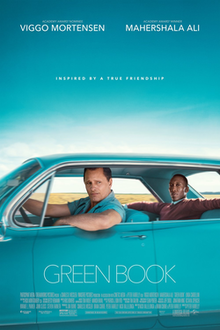
Over the weekend, as Virginia’s governor struggled for his political survival, I went to see a movie about race relations in 1962. It was difficult to watch “Green Book” and not understand the intense reactions to Gov. Northam’s yearbook page, which contains a photograph he’s now denying depicted him, with one person in a KKK hood and another in black face.

Northam has been a good governor so far, a rare Democratic moderate willing to work across the aisle. He’s gotten excellent reviews from people of all races. Which is why we should not drive the man from office for this affront. We should judge him by the totality of his actions and not by one unfortunate offense, something which, if it occurred at all, would not have carried the same weight then that it does today.

What I took from “Green Book” was not just the necessity for change but also the need for forgiveness, for learning to see the world from another’s perspective. Both men — the African-American pianist and the Italian-American driver — came to see the hollowness and futility of their positions. Both men changed.

What’s happened now is that we have hardened into such rigid postures that we can’t change; we can’t see the world from other perspectives. There are certain boxes that, once ticked, result in total elimination.

If we keep this up, it will drive even the last good people from the pursuit of public office. We are reaping what we have sown.

(Photo: Wikipedia)

Guest Post

Guest Post

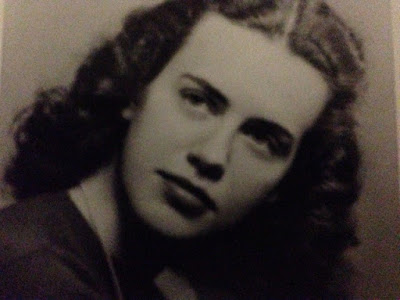
Mom would have been 93 today. In honor of her birthday, I’m letting her write the blog. This is A Walker in the Suburb’s first guest post, and it’s a posthumous one. Read it and know why I wanted to be a writer when I grew up — and why I miss her so. 

I was the third daughter born to parents who seemed desperately to want a son. All three of us girls were supposed to be Edward, named for each of my parent’s oldest brothers. The son arrived three years after me, but wasn’t named Edward after all. It seemed that my dad decided there might never be another boy and he thought tradition should be upheld. So my little brother was named Martin Joseph III.

Dad was right, of course. Our family of four was complete. Tradition had been upheld. Tradition had been upheld, too, when my older sisters were named. The first was named for my mother’s mother, Margaret Donnelly, and the second for my father’s mother, Mary Scott. When I arrived, another girl, there seemed to be quite a dilemma about what to call me. They had run out of grandmothers.

Dad suggested they call me Anne after my mother. But that didn’t suit her. I have wondered why they didn’t use Edwina, the feminine version of Edward. I’m certainly glad they didn’t!

In the end, and in spite of Daddy’s objections, Mother named me Suzanne for a nice lady who lived down the street, Suzanne Burk. I have often wished they had given me her full name, but they didn’t. So I had no middle name until I could choose one when I was confirmed. I chose Rose and used it proudly whenever I could. I guess I thought it made me more complete.