Grandfather Clock

Grandfather Clock

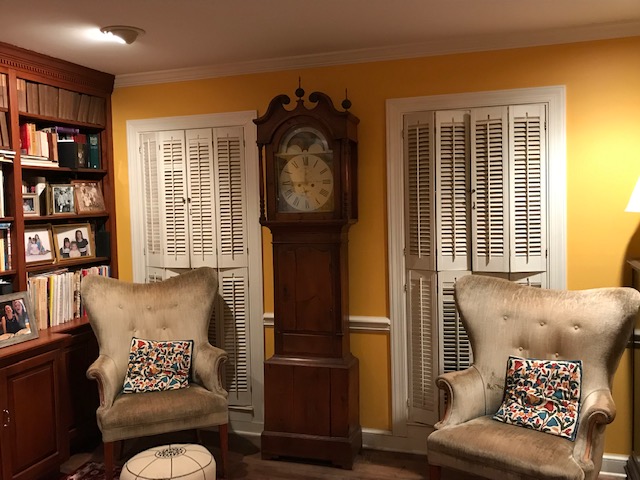
It was almost dark when the four large boxes arrived. We knew they were on their way, and Tom was eagerly awaiting them. The boxes held a grandfather clock that’s been in his family for years. It sat in the hallway of the house where he was raised, then his sister Ginna took good care of it for more than a decade, and now, through her generosity, it sits in our living room.

So many memories of this clock, the hall it graced in the house in Indianapolis, the sights it has seen, the wonderful family that grew up around it.

There was some debate about where to put it, but the spot where it landed (or maybe a few more inches to the right!) makes it seem as if it always was there.

The arrival of such a timepiece, such a legacy, is big news indeed, and I’m sure I’ll have more to say about it in posts to come. But I wanted to welcome it today — and note that although it hasn’t run in years, it was set up at 9 p.m. on the nose. Which is exactly the hour it marks.
Sun Screen

Sun Screen

Driving to Metro this morning I was squinting most of the way. It was full-on sun as I headed east. An early, low sun that slanted beneath my visor and almost blinded me at times.

I was counting on this sun, hoping it would warm the air and brighten the day. And it was complying. But it was doing it with such urgency that I felt within it the slow, sluggish air of July.

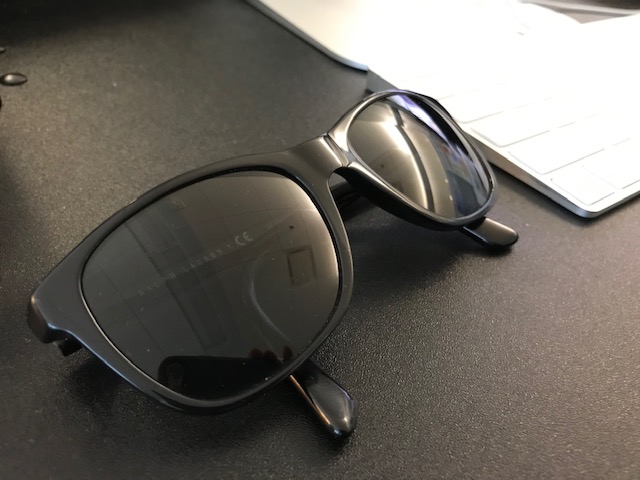
It was then — and later, as I loped around the block a couple times waiting for the bus — that I felt grateful for my sunglasses. When I put them on, the glare goes away, and I feel cooler, in more ways than one.

Even more than that, I feel protected, tucked away. As if the glasses screen me not just from the sun but from everything else, too.

Sorting Day

Sorting Day

Yesterday was cool and rainy, the perfect day to sort through drawers and throw away receipts. It began with a search for my national parks pass (not yet found), but continued long beyond that.

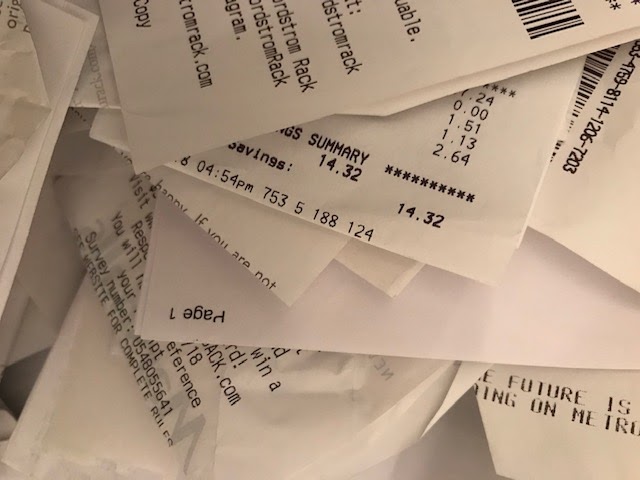
I amassed a pile of credit card receipts and tossed all but 2019’s. Along the way, I found a plethora of pool passes, a few expired gift cards and some stray Girl Scout badges, never sewn onto sashes.

It was, on the whole, a calm and meditative practice, sorting through old eyeglass holders, foreign currency and stray sewing kits — the kind of odd conglomeration that can only accumulate over time.

At the bottom of one drawer was a checkbook from Chemical Bank in New York. Haven’t heard about them in a while. No wonder. They merged with Chase in 1996.

It was that kind of afternoon.

Happy Global Big Day!

Happy Global Big Day!

Today is Global Big Day, when hundreds of thousands of birders from the U.S. and around the world list the birds they see and hear on the eBird app designed by the Cornell Ornithology Lab. The data they supply is used to tell people where birds are in real time and also to do cool things like have farmers flood their fields to give wetland-loving birds a place to land.

Using the information supplied by regular birders tramping through woods and fields, binoculars and phones in hand, Cornell has built a citizen science powerhouse that is actually saving the lives of hundreds of thousands perhaps millions of birds every year.

The flooded fields are one example of this. The birders’ information feeds a digital map that tracks the travels of migrating species. Knowing that a flock of water birds is heading their way, farmers can flood their fields, giving the birds a temporary wetland in which to land for the night.

This concept originated with a Nature Conservancy scientist who came up with the idea of “renting habitat” instead of buying it. The flooded fields accomplish just that. But it’s the eBird app that makes the flooded fields possible.

Wouldn’t it be nice if more technology was like this?

(Tufted titmouse photo courtesy Cornell eBird)

A Modest Proposal

A Modest Proposal

For the last couple weeks I’ve been single-tracking it, consumed with a big project at work that is absorbing most of my waking hours. It’s still under wraps, this project, but suffice it to say that it involves some historical research, some text writing and some speech writing.

It makes me realize how fast the hours can pass when one is engaged in interesting work. But it also makes me realize how important it is to be balanced. It’s harder to think of post ideas this week, for instance. It’s harder to do my own writing.

Ideally, there would be double the amount of hours in every day. I would have the time to be as absorbed in my own work as I am in the paid stuff. It would still be exhausting, of course, but just think of how productive I could be!

Welcoming May

Welcoming May

I’m one day late in welcoming May, my favorite month. It helps that both my sister and I were born in it (though none of my girls, they’re summer/fall babies). It helps that the weather is warming and the summer is coming. And there’s a certain horse race in Kentucky that can usually be counted on to add some pizazz to the month.

When I was a kid, May also meant the end of school. It was almost more excitement than my little heart could take, a birthday and school’s out in one terrific explosion of excitement.

I’m far removed from those rhythms now, but I like to remember them. They remind me of an earlier, slower, more rounded time, when life flowed at a pace resembling sanity.

Now here it is May again … and so soon. But it’s always good to welcome it.

Good Fortune

Good Fortune

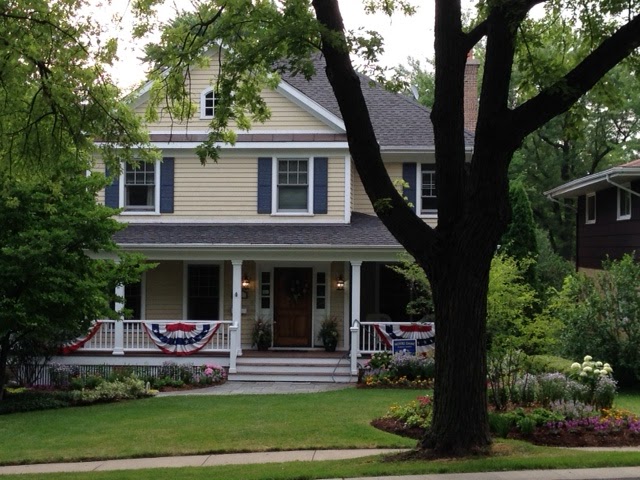
Though I call this blog A Walker in the Suburbs, my feelings about suburbs are decidedly mixed. I appreciate the greenswards, the sound of spring peepers in the night air, downy woodpeckers at the bird feeder. I chafe at the driving culture, the isolation, the lack of community.

Alice Outwater’s Wild at Heart (mentioned last week, too) is reminding me why the suburbs once seemed like Shangri-La. In the late 19th-century, human waste was stored in cesspits and removed by horse-drawn wagons. The horses that pulled those wagons produced millions of pounds of manure, which collected in the streets.

“In 1900 there were well over 3 million urban horses in the U.S., and those city horses deposited enough manure to breed billions of flies, each one a potential vector for disease,” Outwater writes.

No wonder people moved out of the cities into what must have seemed like heaven. Grass, trees, manure that was manageable. Walking Copper this morning, I reflected on my good fortune.

Decisions, Decisions

Decisions, Decisions

My morning commute involves driving to the Metro station, riding the train seven stops, hopping off, trudging up the escalator to an express bus that takes me to Crystal City, then walking to the office. Four segments, three types of transport, but it works. It’s a routine, something I could negotiate in my sleep — and often feel like I do.

When it’s very cold or rainy, I vary this slightly, stay on the train one more stop, then switch to another train, which also goes to Crystal City, where I can walk to within a few hundred feet of my office without going outside. This is the longer option, and it lacks the escalator walk (which has become part of my fitness routine), so I seldom take it.

This morning, though, I debated, because for once I dressed for afternoon warmth and not morning chill. When the train pulled closer to my stop, I deliberated. If I just missed a bus, I would have to wait and be cold. If I stayed on I would stay warm. What should I do? I really couldn’t decide.

At the last second, I stuffed the newspaper in my bag and jumped off the train. I’ll probably just miss the bus, I thought. But no, the bus was there. I stayed warm and got to my destination, where the time I’ve saved I’m now spending on this post.

Decisions, decisions.

The Return

The Return

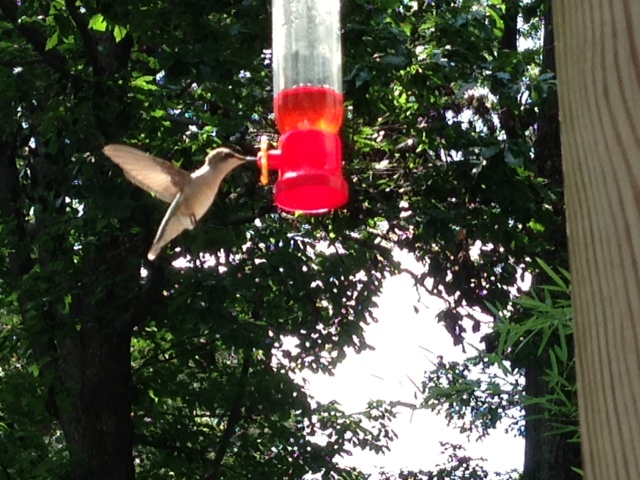
Sometimes it’s the ordinary miracles that touch us most. So it was yesterday when we spotted a hummingbird at the feeder. It’s always good to see these amazing birds return in the spring. But this time, we knew when they returned last year and were watching and waiting, filling feeders.

And then … a little bird appeared. It was April 28 — the exact same day they returned in 2018.

Do they have little timers inside? Small clocks? What is it that tells them when to leave and when to return? What propels them across mountains and oceans, back to this suburban backyard?

I’m sure there are theories, actual knowledge. I’ve probably even read some of it. But I don’t want to know about any of this right now. I’d rather just marvel at it all.

Fallen Petals

Fallen Petals

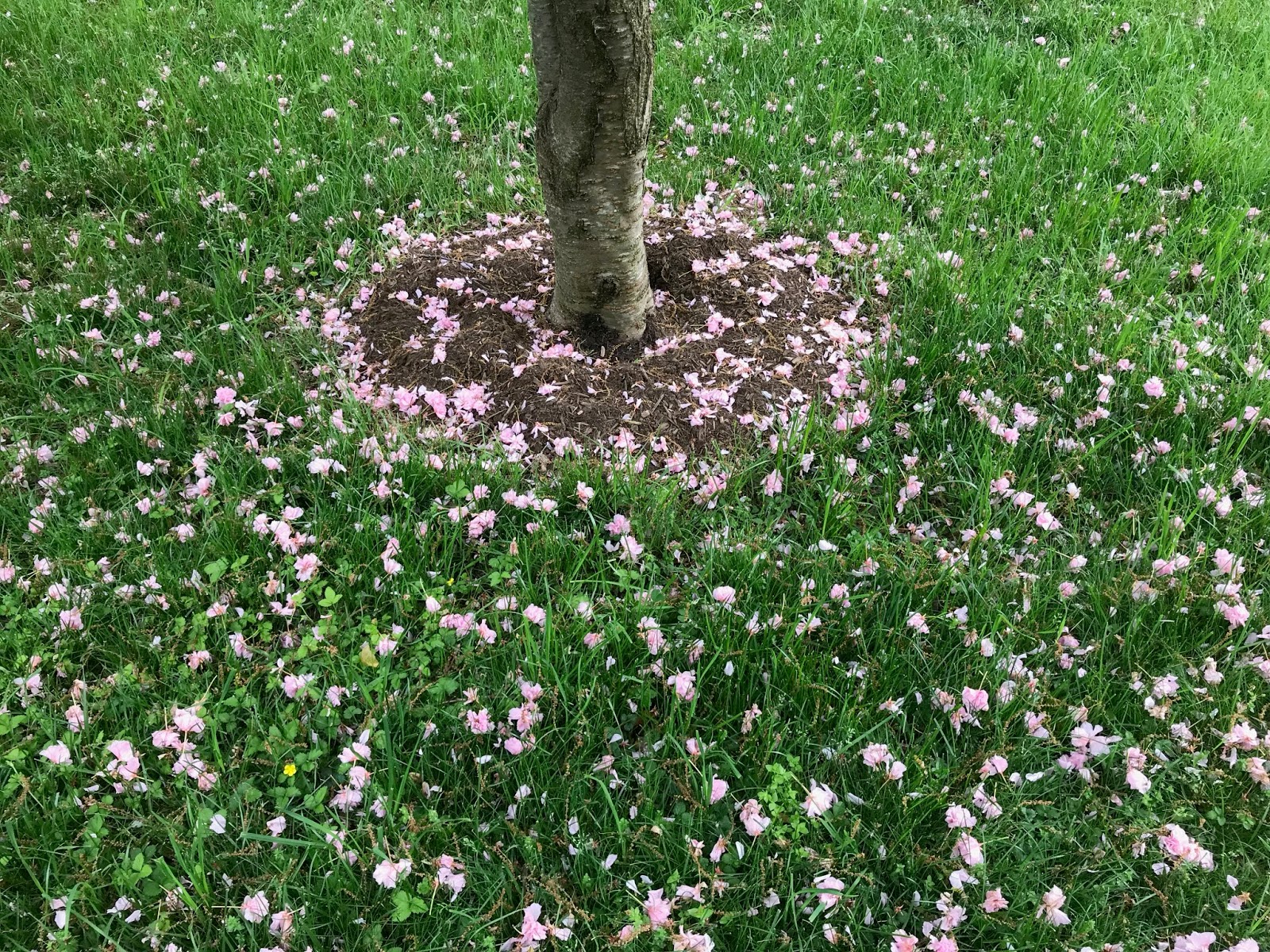
In a slight twist on “March winds and April showers,” we’re in the midst of an April wind that follows on the heels of an April shower.

That has meant that the April flowers, in this case the lovely pink rose-like blooms of the Kwanzan cherry, are no longer attached to the tree but strewn about the grass.

This is the way of the world, is it not? And has anyone expressed this more simply and more beautifully than Robert Frost?

“So leaf subsides to leaf,
So Eden sank to grief,
So dawn goes down to day.
Nothing gold can stay.”