Category 6?

Category 6?

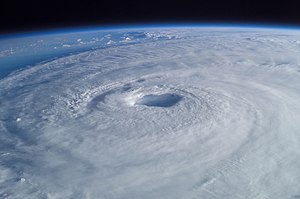
Hurricane Florence is so large and so strong and intensified so quickly that experts are wondering if ultimately there might need to be a Category 6 for hurricanes.

Apparently, other hurricanes have also been strengthening rapidly, and this has stimulated research that shows how fast they’ll blow up 50 or more years from now.

Not to take away an ounce of concern for the people of South Carolina and North Carolina and all the states (including Virginia) that will be affected by this monster storm. Weather patterns are changing.

But … it seems is that every storm is now the “Storm of the Century.” Which means that hurricane coverage has already jumped to a Category 6!

(Photo: NASA)

Educated

Educated

When I picked up Tara Westover’s memoir Educated, I knew I was in for a good read. The book had been recommended by others I trust, so I bought it for my Kindle (a sure sign I want to read a book badly enough to pay for it).

I knew the basic story — a young woman raised in a strict Mormon family, not schooled at all until she got herself to university.

What I wasn’t expecting was the nuance, the side story, which maybe was the main story, and that is how her desire for education wars with her desire to belong, to be part of a family and a place.

“The hill is paved with wild wheat. If the conifers and sagebrush are soloists, the wheat field is a corps de ballet, each stem following all the rest in bursts of movement, a million ballerinas bending, one after the other, as great gales dent their golden heads. The shape of that dent lasts only a moment, and is close as anyone gets to seeing wind.”

This passage is from the beginning of the book, when Tara introduces her young self and her family: the unbending patriarchal father, the resourceful but ultimately weak mother, the seven children, Tara the youngest. She and the brothers and sister closest to her in age didn’t have birth certificates until they were half-grown.

As Tara teaches herself enough math, grammar, history and science to receive a high score on the ACT (which guarantees her admission to Brigham Young University), she begins to pull away from her family. She has to. And the more educated she becomes (ultimately receiving a Ph.D. from Cambridge), the more threatened her family is by her.

It’s one of the oldest and saddest stories, the need to choose between family and accomplishment. But it plays out in lesser forms all the time.

“All my studying, reading, traveling, had it transformed me into someone who no longer belonged anywhere?” she wonders.

What ultimately brings her back to family — not her parents or some of her siblings, who disowned her, but to aunts and uncles and cousins — is place. “I was of that mountain (she says of Buck’s Peak in Idaho, where she was raised), the mountain had made me.”

Before her formal education, there was education of another kind:

“I had been educated in the rhythms of the mountain, rhythms in which change was never fundamental, only cyclical. The same sun appeared each morning,  swept over the valley and dropped behind the peak. The snows that fell in winter always melted in the spring. … I believed my family was a part of this immortal pattern, that we were, in some sense, eternal. But eternity belonged only to the mountain.”
Seventeen Years

Seventeen Years

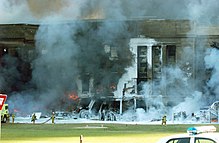
I work in a neighborhood of Arlington called Crystal City, a strip of office buildings and restaurants 15 minutes walk from the Pentagon. My bus ride every morning takes me past the building where 17 years ago today a jetliner crashed killing 125 people on the ground and 64 on the plane.

I remember that day as if it was yesterday. Who my age does not? It was also a Tuesday, but the weather was perfect, one of those crystalline early fall mornings that we used to have around here before being enclosed in a big wet sock.

It was Mom who alerted me. She knew I didn’t often listen to the morning news. And then the other calls started. They came in all day. Rumors abounded, chief among them that the State Department was also under attack.

An editorial I read today made the argument that many of the problems that beset us now — high deficits, wars that kill our soldiers and drain our morale and coffers, loss of stature abroad, even the current administration — can be traced to the 9/11 attacks.

“The world will never be the same,” I remember telling the children, who had returned home early from school that day. But they will never understand that. The world they know is the world wrought by 9/11.

(The Pentagon, moments after the crash. Photo: Wikipedia.) 

ISO Blue Skies

ISO Blue Skies

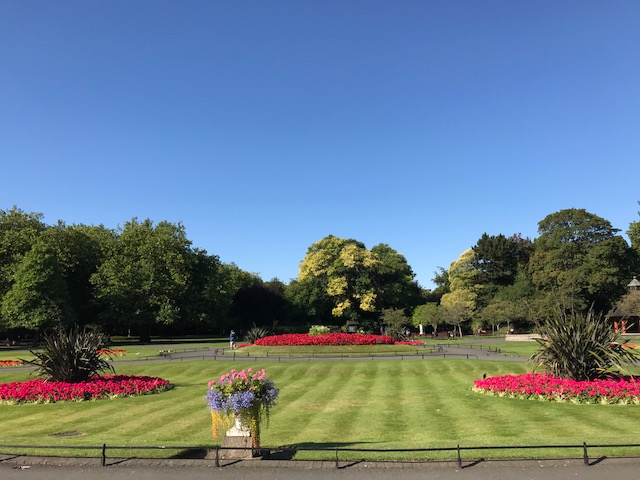
You know you’ve had a soggy summer when some of your best weather days have happened in Ireland! After a downpour Friday night, mist and spray Saturday and rain all day yesterday, I’m remembering the blue skies of the Emerald Isle.

As I walked into the office building this morning, I noticed the squeaking of my tennis shoes on the polished floor. That and “squish-squish” have become the soundtrack of our rainy days. The umbrella that I keep in my bag for emergency showers has been pressed into service more times than I can count.

And with a hurricane barreling toward the East Coast this may just the beginning of our wet weather woes.

For now, I’m going to think dry thoughts  — not sure exactly what those are … but I’ll come up with some.

(St. Stephen’s Green, Dublin. Not a cloud in the sky.)

Above-It-All-Ness

Above-It-All-Ness

Jet lag has finally had its way with me, waking me at 4:30 and sending me spinning out into the day. Luckily, it’s Friday and the office is still empty, the only sounds are of blowing air and my fingers tapping the keys.

This weekend I’m hoping to let all of this sink in: the green hills and friendly people, the toe-tapping music (which I’m reliving in my car thanks to a CD by the sons of a man who ran the B&B on Inishmore). All of that mixed with what awaited me on return: lots of work and crazy national news to catch up on.

I’m trying to keep the “above-it-all-ness” of travel, the feeling of joyful skimming it can give you. The cessation of normal routine; the quick, bright glimpse of a world you thought you knew but can still surprise you — your own.

Cottage Dreams

Cottage Dreams

I noticed the difference the minute we left the plane. The lilting voices were gone. I clung to the last few of them, people standing around the luggage carousel waiting for their bags. Maybe I’ll have to hang out in Irish bars, though there’s no guarantee you’ll hear a brogue.

It’s not just the Irish accent that I love, it’s also the expressions they use. “Sure and you wouldn’t be” or “just a wee bit of that now.” That Ireland produces more than its fair share of writers is no surprise given the number of talkers Ireland produces. Our cabdriver to Dublin Airport yesterday was one Rodney Robinson. Told us most of us life story in 30 minutes.

Today as I make my way to work on Metro, I’ll think of Rodney already driving. He lives in a little village in County Kildare. At 5 a.m. it only takes him 40 minutes to reach center-city Dublin. Seven hours of driving his cab (which he owns) and he’s back for a late lunch in the village, picks his kids up from school (two daughters and a son), and has the rest of the day with them. Four days a week like this and the other three his wife works in the village pharmacy and he stays home.

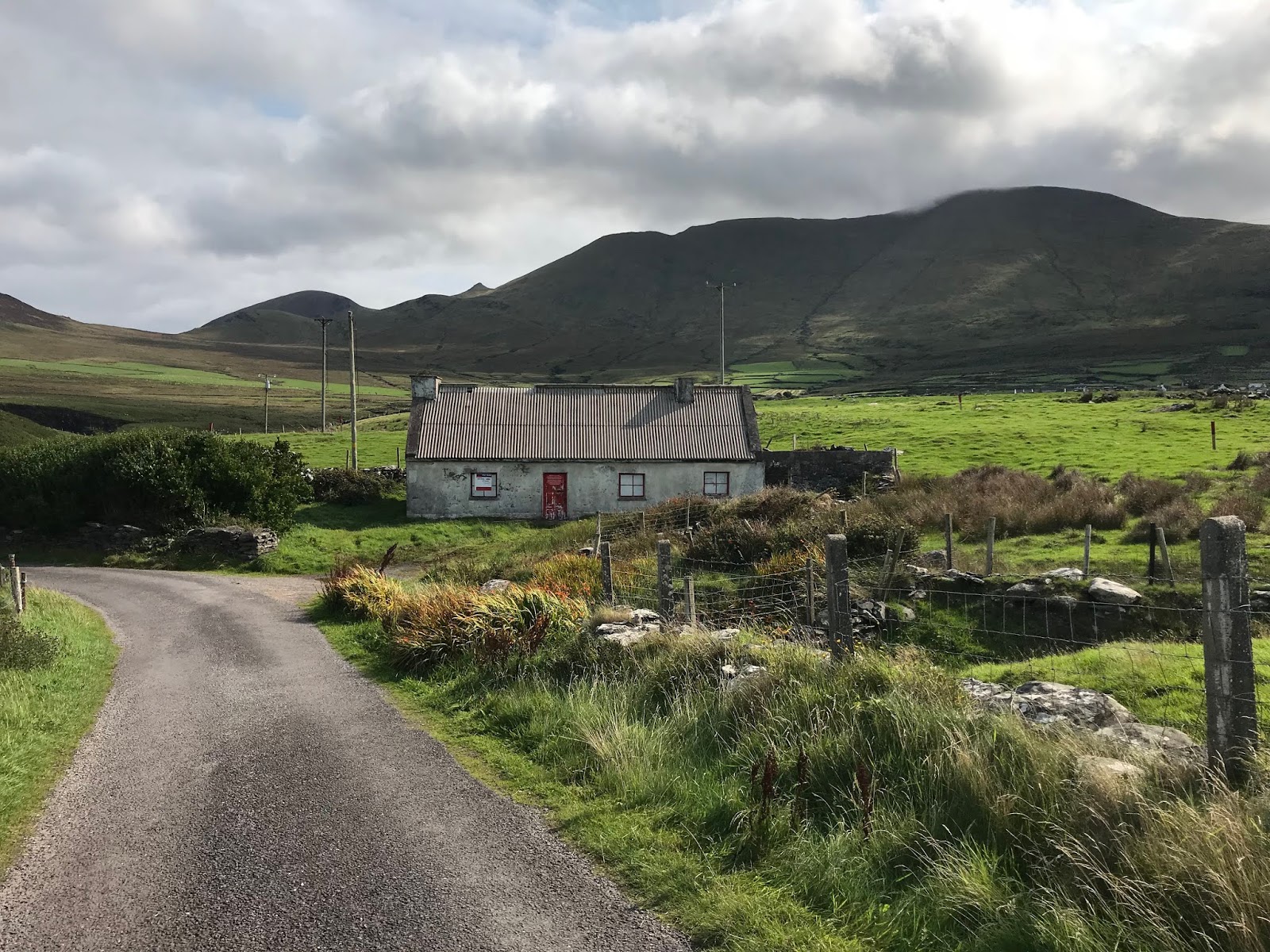
It’s a good life, a simple life, and it’s one of the Irish lives I’m thinking about today, on New World shores. Wouldn’t I love to find a cottage and try living in the Old World some day? Probably won’t happen, but it never hurts to dream.

Leaving Ireland

Leaving Ireland

I never like to leave a place, especially one as lovely as Ireland. But if you’re going to travel, eventually you have to move on. So what are we taking away from this trip?

We’ve talked about this a lot, recalling long-ago jaunts when we returned all fired up about something: living a simpler life or drinking tea from china cups.

This time it’s hard to define “the lesson.” I’d like to travel more and work less, but that’s not possible now. Finding myself taking notes during the walking tours reminds me how much I love to learn and would like to go back to school someday. Again, not possible … yet.

What will remain with me from this trip to Ireland, which was very much what remained with me from the last one, is the beauty of the Irish landscape and the warmth of the Irish people. Much has changed in the decades since I was here last. The nation is far more prosperous and modern, and there seem to be 10 times more cars on the road — all of them barreling at us down a narrow, hedge-lined lane.

But the people are as kind and funny as ever. They made us laugh. They won our hearts.

Feasts and Famine

Feasts and Famine

It’s our last full day in Ireland, and there was much left to see: the Cong Cross and the bog people at the Archaeology Museum, reading from The Dubliners at Sweney’s Pharmacy, St. Patrick’s Cathedral … and … the famine museum.

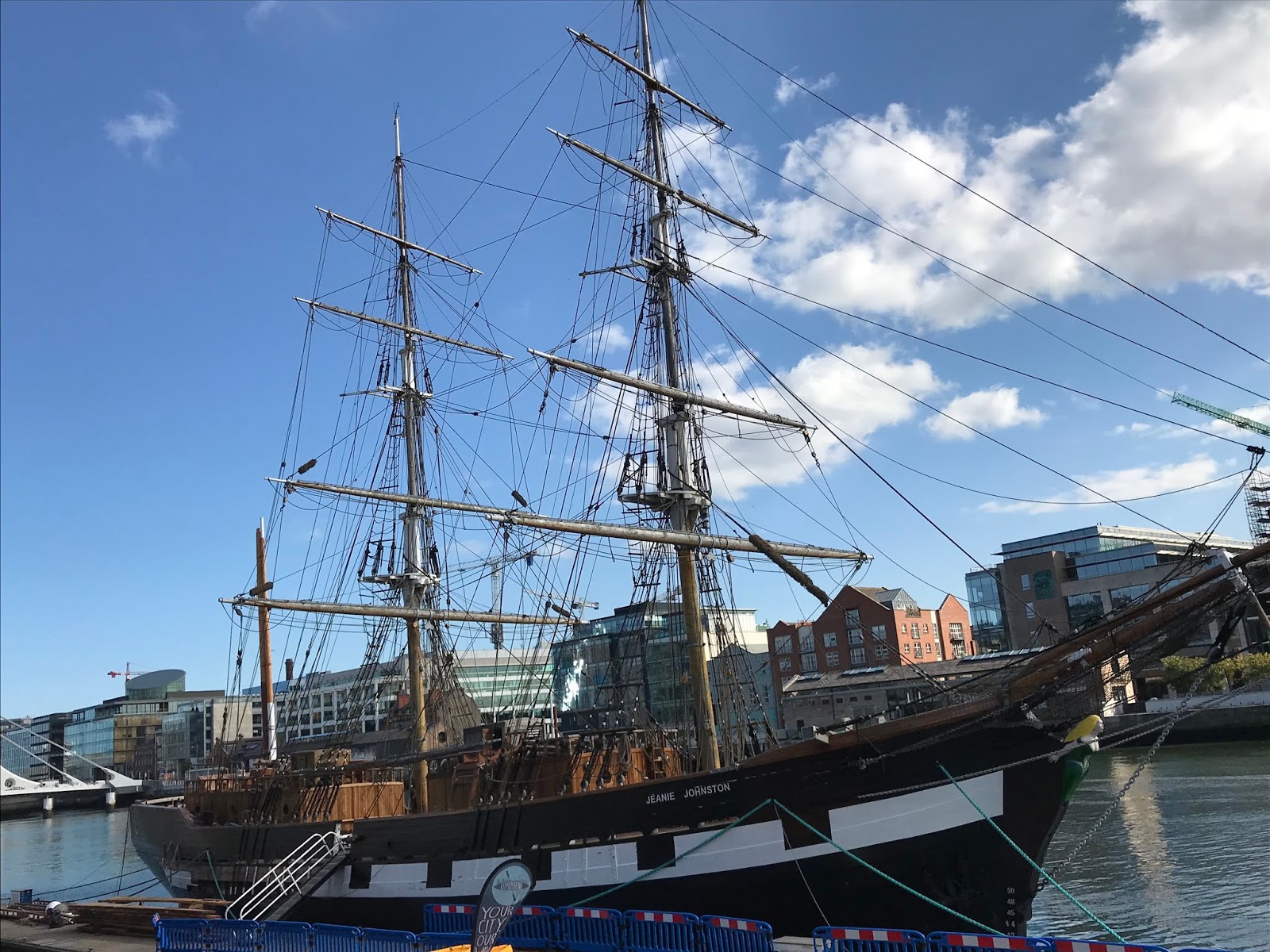
The Jeanie Johnston is a replica of a ship by the same name, a ship that carried more than 2,000 Irish emigrants to the New World, 200 at a time, people who might otherwise have perished during the Great Hunger.

The people who traveled in the Jeanie Johnston were some of the lucky ones. More than a third of those who left their homeland in so-called “coffin ships” died at sea.  But the Jeanie Johnston has a staff doctor and required passengers to spend 30 minutes on deck a day (rather than 20 minutes every two weeks). None of its passengers died at sea.

Still, the voyage was no picnic. People crammed five to a bed, ate hardtack and tried to avoid dysentery and cholera. This after a year or two of existing on a starvation diet when a blight killed the potato crop.

It was a sobering reminder of the agonies they and so many (including my relatives) endured to reach the United States. And it made me appreciate all the more the lovely feasts we’ve had on this vacation.

Ancient Manuscripts

Ancient Manuscripts

Dublin has treated us well so far. Apart from a few showers last night (conveniently timed for our walk home from the pub), we’ve had blue skies and reasonable temps for our first day in Ireland’s capital.

It’s a compact place, with history everywhere, even when you don’t expect it. We were having a bite to eat before visiting the Book of Kells, the ninth-century illuminated manuscript of the Gospels. Turns out, the bite to eat was at the Chester Beatty Library, which I read about as I ate a yummy salad plate of carrots, hummus, grape leaves, tomatoes and cucumbers.

Chester Beatty was an American collector and expat who donated his remarkable library to Ireland. It contains treasures that rival if not exceed the Book of Kells, including fragments of papyrus on which is written some of the earliest known copies of the Epistles of St. Paul.

To see the Book of Kells requires standing in several queues and jostling with others to even catch a quick glimpse of the manuscript. But at the Chester Beatty collection I stood alone, almost in tears, in front of the Letters of St. Paul to the Corinthians.

Had I been able to decipher the Greek, this is what I would have read:

“Love is patient,
love is kind,
it does not envy,
it does not boast…
Love does not delight
in evil but rejoices in the truth.
It always protects,
always hopes, and
always perseveres.”

(Top photo, a map of the world from the first modern atlas, 1570, from the Chester Beatty collection. Above, books in the Long Room at Trinity College, Dublin.)

Rock of Cashel

Rock of Cashel

Home to the ancient kings of Ireland and reputedly the place where Saint Patrick baptized one of them, the Rock of Cashel looms above the fertile green fields of Tipperary. Though it  has been an important site since at least the fifth century, the buildings that remain are “only” from around 1101.

Ten days in Ireland has made me less likely to use quotation marks around that “only.” The old ring forts of Dingle are 2,000 years old, for example. But I don’t want to become an antiquity snob.

So I stood today in the ruined cathedral and looked up at Saint Patrick’s cross, the round tower and and the blue sky through what’s left of the cathedral windows. I let my mind run free, back to a dimmer, grimmer time, one of stone and chisel, blood and smoke.