Sunday Visits

Sunday Visits

Old-fashioned Sunday afternoons were for visiting. First there was church, then Sunday dinner — a heavy, midday repast (not brunch) — then chatting in the living room or parlor.

Even in memory, these childhood Sundays are interminable. Now I realize what they were for.

Yesterday I spent four hours on the phone. I talked with my mother, my sister, my daughter and my friend. The Sunday phone call is the modern equivalent of the Sunday visit. Because family and friends are far flung, the receiver (and now the smart phone) is the portal of togetherness. It is not ideal, but it is essential.

“A culture wise in love’s ways would understand a relationship’s demand for time,” says Thomas Lewis, M.D., and coauthors in A General Theory of Love. “Americans have grown used to the efficiencies of modern life … why should relationships be any different? Shouldn’t we be able to compress them into less time than they took in the old days? … The unequivocal limbic no takes our culture by surprise.”

So even though I “didn’t get much done” yesterday, I remind myself that there are no shortcuts to closeness. False starts, conversations that go nowhere, simply being available in case a conversation might happen — these are the currency of intimacy.

Alive and Well

Alive and Well

I heard the piano before I walked into the room. A dozen folks were already there, handing out music, warming up voices, renewing friendships. It was an anniversary gathering of the Georgetown Gilbert and Sullivan Society — and it was my reunion “duty.”

But for once it wasn’t a duty. To hang out for an hour or two with people who found time to practice songs from “HMS Pinafore” while also studying torts and contracts is not a hardship.

So I listened, took notes and photos. I thought about the plays I was in as a kid, how in love I once was with that world. I thought about theater people, how alive they are. Breathing all that music in and out.

The last number was “He Is an Englishman.

I couldn’t stop myself. I had to sing.

Light through Leaves

Light through Leaves

All morning long I’ve watched the leaves wag in the cool breeze, the light filter through the canopy to the deck and the French doors into the living room, where I work.

All morning long I’ve wanted to capture that light in word and image. Now that I’ve snapped the photo, I can’t think of anything to add.

It’s autumn, the rains have ended.

Light through leaves.

Best Time for Leaving

Best Time for Leaving

I usually try to get away before the sun rises, when the house is still and the road still cool beneath the tires. I leave behind the natural savannah of the Bluegrass, the farms and the fences, the green fields stretching out across the horizon.

I point my car east. It pretty much knows the way.

Over the mountains and up the valley.

I’m home.

Pisgah Pike

Pisgah Pike

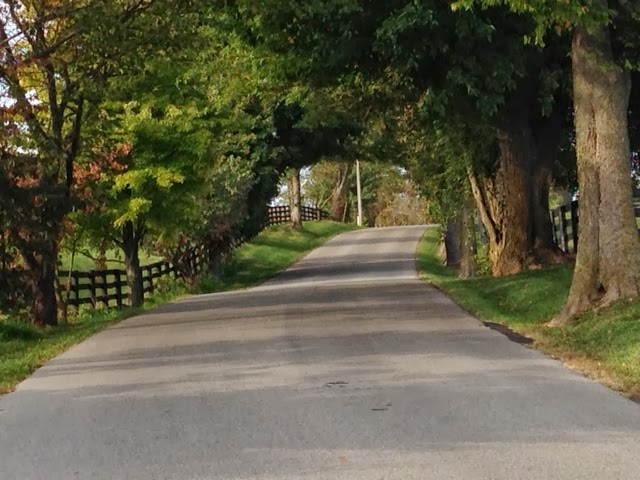
Here is a place that deserves a book not just a post, but for now, see the trees lacing over the road, the fences running beside it, the hills rising gently beyond the berm. Farther on, there are stone walls and gnarled osage orange trees dropping plump green hedge apples. There are cattle and horses and crisped corn stalks swaying.

Pisgah Pike is not just a road; it is a national historic district. Its twists and turns are protected, its houses and outbuildings, too.

Knowing this brings a certain comfort, that beauty is worth keeping —and is being kept here.

Composites

Composites

There were two of them, composite photographs of my fourth and sixth grade classes. At first the faces were familiar but nameless. But the longer I looked, the more the names returned: Teresa, Diane, Melissa, Amelia, Jody, Joan, Carol, Julia, Peggy, Debbie. And from the earlier one, Dickie, Jay and Charles. (We were the one outlier class still “mixed” at that age. The nuns preferred same-sex education after third grade.)

Fourth grade. Nine years old. Before I worried about my hair. Before I cared about boys. We played four square (the ball game not the social media app) across the divided playground — two boys on one side, two girls on the other. (Yes, the playground was “same sex,” as well, divided down the middle.)

What do I remember most about that year? That we had a lay teacher, Mrs. Hollis, a bit of an outlier herself. And that at the end of day, when she had crammed us with all the religion, math, science, reading, writing and social studies we could hold, she played recordings of Broadway musicals on the stereo.

I’ve loved them ever since.

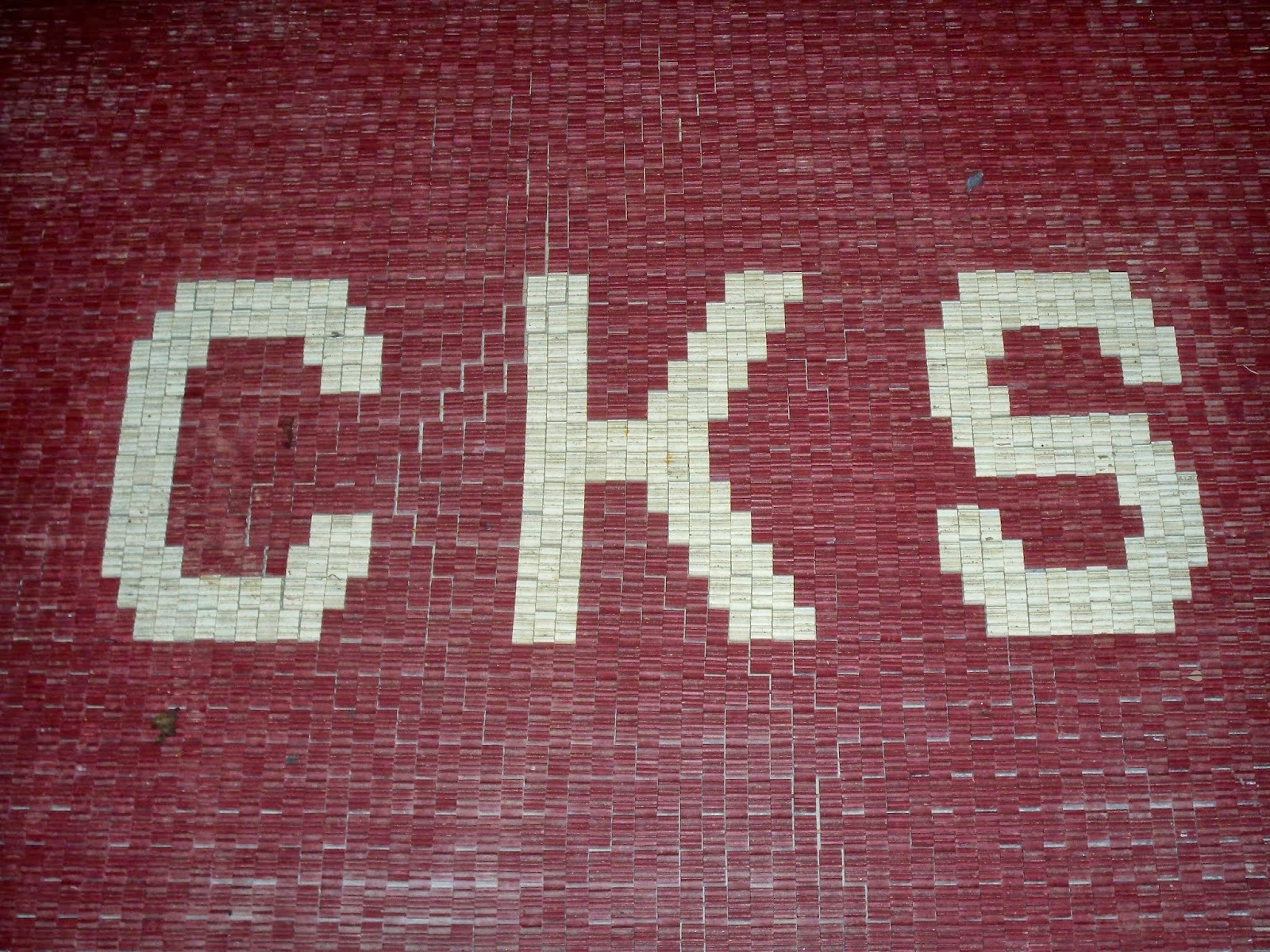
(This is the “welcome” mat for Christ the King School.)

Scenes of the Season

Scenes of the Season

Yesterday we drove out into the country to what my father had remembered as a rustic fruit stand that sold pumpkins this time of year. Signs led the way down the winding two-lane road.

But when we arrived it didn’t long to realize that the corner orchard had become an autumn carnival. Hundreds of cars were parked in rows across the grassy fields. Employees with flags directed traffic. We were waved into a handicapped spot (yes!) and made our way slowly out of the car and up to the packed pumpkin patch.

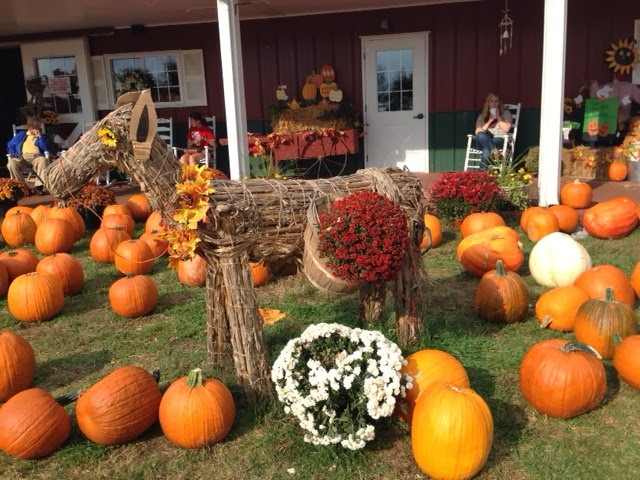
There were many varieties of apples — Granny Smith, Delicious and McIntosh — and Asian pears. There was cider, spiced and regular. There were gourds of various shapes and sizes. And because this is Kentucky, there was a reedy sculpture of … a horse.

Most of all, there was the autumn sun, out again after a brief shower, shining on the pumpkins.

The Stowaway

The Stowaway

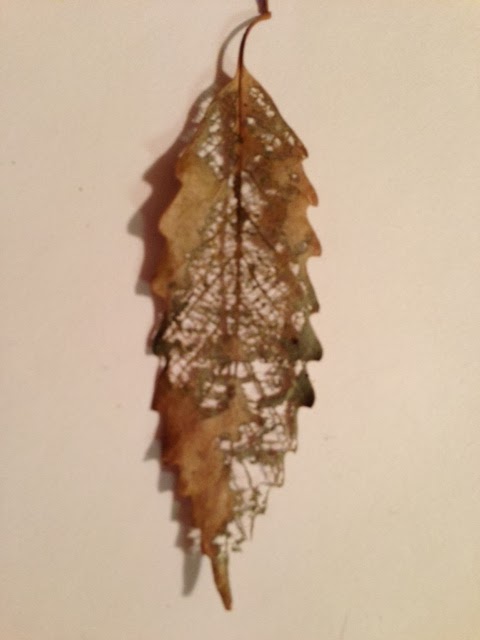
Here’s a stowaway from yesterday’s deluge. It hitched a ride on the bottom of my shoe.

I was going to toss it outside, then looked more closely, saw the delicate veins exposed, their toughness implied, still there after sun and rain and footfall eroded the rest.

So I thought about this leaf skeleton, its fragile beauty, how easy it is to overlook what is cast our way. But how essential it is to stop, search and claim it for our own.

The Backup Plan

The Backup Plan

A few days of rain have sent us into panic mode. Traffic crawls, as it does after even a few drops hit the pavement. Metro seems slower, too.

I try out the new umbrella that I bought when my old one gave out a few weeks ago. The perky, polka-dotted one. The one that felt so lightweight when I held it in the store. No problem to schlep it around in my bag every day.

But when I opened it up I quickly learned why it was so lightweight. It’s teeny! It barely keeps my head dry, let alone my sleeves or pants legs. Maybe I should have paid more attention to the diameter measurement listed on the label.

New plan: this will be the backup umbrella, the one I always have. On truly rainy days (like today), I’ll carry a full-size model. Heavier, true, but eminently more practical.

The Encounter

The Encounter

I saw him on the path to the Franklin Farm Meadow, a placid paved trail adjoining a napkin-sized playground. Fat and sleek, he sat munching grass, completely oblivious of the human two feet away.

His jaws worked each mouthful as he hungrily tore into each new tuft. This was one hungry guy — though from the looks of him he hadn’t missed too many meals.

Groundhogs are always bigger than I think they’re going to be. Good-sized and galumphing. But this one wasn’t budging. He had found a tasty patch of fescue and was going to eat it all or else.

After a few minutes I delicately eased by the guy — and that’s when he sprang into action. He snapped around and assumed an attack position, crouched, teeth bared. I spoke to him quietly, told him I wasn’t after his grass, just on a run.

When I turned back to look at him, he had gone back to his dinner.

A wild thing, observed.


(I’m fresh out of groundhog photos, but this is near where I saw him.)