The Library Place

The Library Place

The book group met at my house last night. Two people sat on our sagging blue couch, the other two in the faded wing chairs, the ones that belonged to Tom’s parents so many years ago. I pulled the rocking chair over to the far end of the coffee table, which gave me an unaccustomed vantage point — staring straight at the built-in bookshelves, our pride and joy.

I think about the part books have played in the life of our home, the schoolbooks and novels, the histories and poetry, our old college books and now our children’s, too.

And then there’s the “library place,” the shelf of a hutch so named because it’s where we put library books that need to be returned. In the enchanting shorthand of family conversation, the library place has become a repository for anything that needs to be protected or preserved: retainers, driver’s licenses, a pile of  downy parakeet feathers.

It still serves as family safe — a spot once meant for books that now holds other precious cargo.

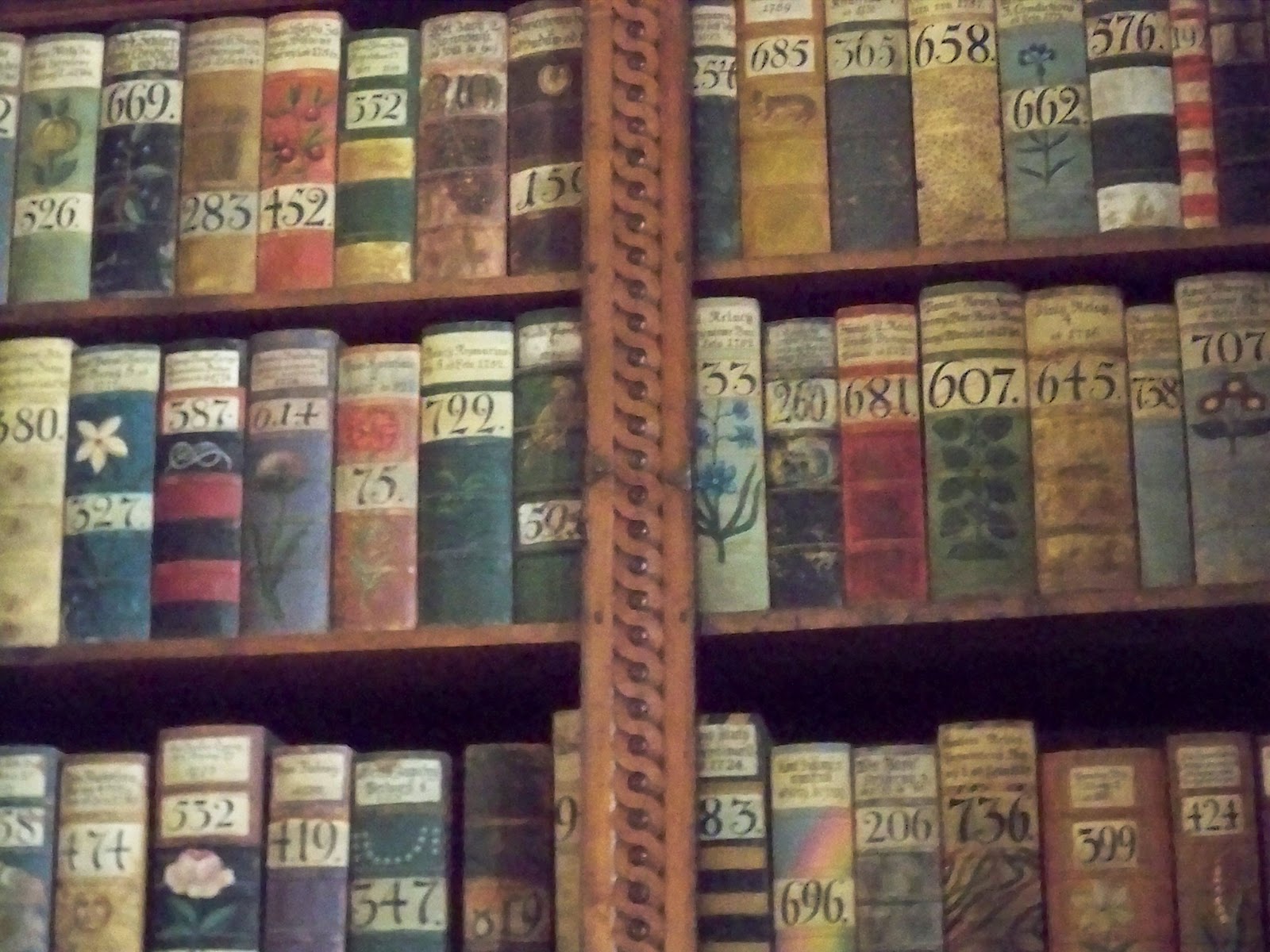
I can’t find a picture of the library place. This shot of my bedside table will have to do. There’s always danger of an avalanche.

For Ellen

For Ellen

We grew up nine years apart with two brothers in between, and — we like to joke — in two separate families, our memories, mindsets and approaches to life are so different from one another’s.

But we are no more divergent than many siblings are. And in many ways, the important ways, we are alike.  When I need her, she’s there. She is like a best friend, only so much more.

Today is Ellen’s birthday, and as good a time as any to tell her how much she means to me.

Ellen and her three beautiful daughters.

Eight or Later

Eight or Later

I heard yesterday on the weather report that the sun will not set before eight p.m. from now until August 18. It’s a good way to celebrate May Day and the start of a new month, with the promise of light.

Hot autumn days with an unshakeable air of melancholy are proof that it’s not lack of warmth that makes me mourn the end of summer. It’s the early darkness.

Extra daylight means early mornings and late nights. It means tomatoes and zinnias and basil. It means after-dinner strolls,  evening swims and long suppers on the deck. And of course, it’s the perfect excuse for insomnia. Summer is often thought an indolent time, but when you consider the extra daylight it gives us, it’s better thought of as an active season, a heroic season.

Knowing we have three and a half months of late sunsets ahead of us gives me a sense of calm — even after solstice comes, we will still have light on our side.

The Poetry of Pittsburgh

The Poetry of Pittsburgh

When I began this blog more than two years ago, I didn’t think long about the quotation I would use across the top. I knew it would come from Annie Dillard’s book An American Childhood.

“When everything else has gone from my brain — the President’s name, the state capitals, the neighborhoods where I lived, and then my own name and what it was on earth I sought, and then at length the faces of my friends, and finally the faces of my family — when all this has dissolved, what will be left, I believe, is topology: the dreaming memory of land as it lay this way and that.”

A few years ago, on our way back from visiting Tom’s family in Indiana, we stopped in Pittsburgh, where Annie Dillard was born on this day in 1945. It was a literary pilgrimage for me. Our first view of the city (where I had lived as a toddler, pre-memory), came at dusk, as we drove into a tunnel and out and suddenly there were the three rivers and the bridges crossing them all lit up with white lights and it seemed magical to me, this old city of groaning steel and trestles.

Was it the place itself that exerted this magic, or was it because I was primed to love it by Dillard’s words? “I will see the city poured rolling down the mountain valleys like slag, and see the city lights sprinkled and curved around the hills’ curves, rows of bonfires winding.”

It was both, I think. The place of poetry. The poetry of place.

 Photo by Peter Tooker 2010 All Rights Reserved. From the blog Open Windows.

Lee’s Place

Lee’s Place

Today is the birthday of Harper Lee, who was born in 1926 and still lives in her hometown of Monroeville, Alabama. She has written one book,  To Kill a Mockingbird; it won the Pulitzer and has sold more than 300 million copies. 

“I still plod along with books. Instant information is not for me. I prefer to search library stacks because when I work to learn something, I remember it,” Lee said in a 2006 issue of Oprah magazine.

The Monroe County Public Library, I wonder, is that the library she searches? Or the library of Alabama Southern Community College, located in Monroeville? I scan the college website and find a notice for the 15th annual Alabama Writer’s Symposium, with its topic “Write Out of Place,” being held (yes) this weekend.

Here’s how the symposium is advertised, first with this quotation from Katherine Mansfield: “How hard it is to escape from places. However carefully one goes they hold you — you leave little bits of yourself fluttering on the fences — like rags and shreds of your very life.”

And then with the following: “When Mansfield wrote those lines, she could have been describing the way that Alabama authors often find themselves in relation to their home. Whether they set stories lovingly in Alabama, loathingly in Alabama, or deliberately not in Alabama, place becomes a part of who they are. …  The 2012 Alabama Writers Symposium explores the ways in which Alabama writers are affected by their ‘placehood,’  the ways in which Alabama as a place informs their literary efforts.”

Lee lived in New York for a while, and she spent time away in college and when she was helping her childhood friend, Truman Capote (another native of Monroeville), research In Cold Blood in Kansas. But she has spent most of her life in Monroeville. She has not escaped from her place; she doesn’t seem to have wanted to.


Morning Memo

Morning Memo

On days I work at home I watch the house slowly empty. First Celia, early, so early, for high school. Then Tom with bike and helmet. He’ll ride to work today. And next Suzanne, off to her job in Arlington.  A parade of goodbyes and then, finally, silence.

I pour myself another cup of tea. I read a few pages from a favorite book. And then I place my fingers on the keyboard, willing the words to come, hoping they will flow smoothly today.

Copper lounges by my side. Partings are hard for him, too. But he doesn’t need to process them.

Third Place

Third Place

This is Central Park’s Sheep Meadow, a place to meet friends, to picnic, to hang out. It is neither home nor work. It is what Ray Oldenburg calls a “third place.” But there are few such places in modern cities. “Our urban topography presently favors those who prefer to be alone, to stay in their homes, or to restrict their outings to relatively exclusive settings,” Oldenburg says in his book The Great Good Place.

I would say this design flaw applies most of all to suburban topography, to the design of subdivisions without center and without stores and without a pleasant place to congregate for an hour or two.  I know of nowhere in my neighborhood where people can gather with a regular crowd for a beverage and some conversation; and there certainly are no Central Parks. The closest tavern is a sports bar with a dozen or more conversation-killing TV screens on the walls. The one local coffee shop closes at 2 p.m. We buy our goods at anonymous malls and shopping centers.

“The problem of place in America manifests itself in a sorely deficient informal public life,” Oldenburg says. “The structure of shared experience beyond that offered by family, job and passive consumerism is small and dwindling. The essential group experience is being replaced by the exaggerated self-consciousness of individuals. American lifestyles … are plagued by boredom, loneliness, alienation and a high price tag. America can point to many areas where she has made progress, but in the area of informal public life she has lost ground and continues to lose it.”

I finished Oldenburg’s book with a stunning takeaway point: that what we think are individual and family failings are actually deficits of community and place. That we have only just begun to plumb what placelessness has done to us.

On Broadway

On Broadway

The tune has been in my head the last few days. The tune is there because I was there. On Broadway, that is. Not the part George Benson sings about, not the place where “the neon lights are bright.” Not Times Square Broadway.

I’m talking Upper West Side Broadway. Corner grocers, vacuum cleaner stores, coffee shops. There was a time when I lived there that if I ran out of paper and had to run down to the tiny stationary store to buy some, I hesitated. I would have been on deadline then (I was always on deadline that year) and I knew I would run into at least a couple of people I knew on the way there and back. Could I afford the time to buy the paper and chat with the friends?

The answer, always, was yes.  I had lived there for a few months. And when I walked down Broadway I knew people. I didn’t need neon lights.

Saturday, during my 21-hour visit to Manhattan, I had time to walk from 114th to 77th Street. The sun was bright, the air was warm, the pedestrians were of every size, shape and color.  I didn’t know people to talk to along the way. But I had left one good friend at 113th Street and met another at 77th. My feet flew down the pavement. There was energy and street life. It was good to be back on Broadway.

Cross-section

Cross-section

A cross-section of woodland soil laid bare by Little Difficult Run: See how the roots dominate the picture. Is it just here that they are threaded, wedded to the Virginia clay? Or do we walk on a carpet of them? Everywhere we tread, then, connected to a tree, a shrub, a plant. Our feet fall on the tuberous and the gnarled; our paths linked not just to other routes but to the very land itself.

Symposium

Symposium

Less than 24 hours in New York City, a quick trip up for my journalism school reunion. I almost didn’t go; I didn’t know if I wanted to tell people what I was doing. It’s not that I’m ashamed of my career; it’s a decent one by most standards. But my classmates are an impressive group of journalists. I wasn’t sure they would understand that what matters to me now is not the daily chase for plum assignments or the satisfaction of putting a magazine to bed. Instead, it’s reading and thinking and working on the ever-elusive next book.

What I discovered is that many of them are in a similar place. They too are switching gears, writing poetry, starting blogs. They are still an impressive bunch — but impressive as human beings, most of all.

This is where we held our party. Symposium: Plato’s work on the nature of love, the Greek word for drinking party and a funky little restaurant on 113th Street.