Wild Time

Wild Time


A walk can be a passage out of time, a way to move from the world of clocks and calendars into a suspension of schedule and duty, so that I attend only to what is under my feet and before my eyes.

Today, reading The Wild Places by Robert Macfarlane, I found a poet’s explanation for why this is so. Macfarlane seeks out wild places, moors and islands and ridges that are remote and dangerous to reach. He plumbs them for their beauty and lessons. In a valley on the Isle of Skye, he finds a sanctuary, “the allure of lost worlds or secret gardens.”

“Time in the Basin moves both too fast and too slowly for you to comprehend, and it has no interest in conforming to any human schedules. The Basin keeps wild time.”

The reason, he reckons, lies in a quotation by a nameless source: “Landscape was here long before we were even dreamed. It watched us arrive.”

Even in the suburbs, the deep creek beds and tall oaks predate our arrival. I seek them out for their separateness and their nonchalance. They put my world in perspective. They keep their own wild time.

New Neighborhood

New Neighborhood


Yesterday, a walk in a new neighborhood: Strolling down a paved path that flanked a busy suburban byway, I crossed under the road through a pedestrian tunnel, automatically plugging my nose as I learned to do in New York, but unnecessarily, since the only whiff I got was of concrete.

The path wound along a creek, where gangs of loose-limbed kids sifted the water, looking for tadpoles. I could see the road I needed to be on, but took a chance that the path would bring me back where I’d begun.

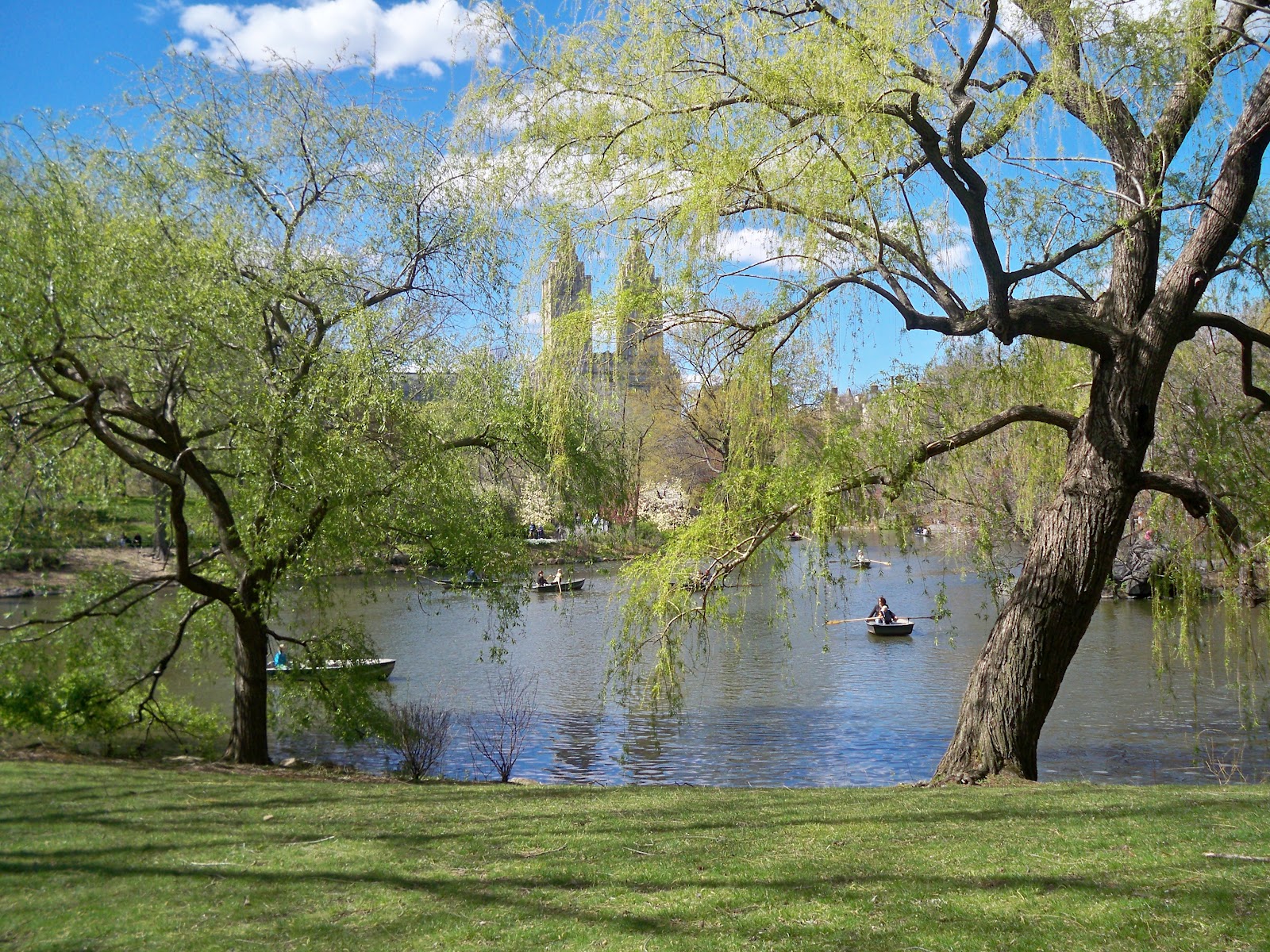
I passed willows that gleamed with the first green of spring. And farther along there were more kids, careening down the path on too-big bikes or too-small scooters. A playground sign that said “For children ages 5-9” had been altered: “For children ages 5-59.” Young mothers threw back their heads and laughed. No one seemed to have a care.

I know that the homes along the path sheltered bankruptcies and infidelities, rebellious teenagers and addled grandparents. It was just that, in that early spring light, these didn’t seem to matter. It seemed like a new beginning, like an Eden.

First Things

First Things


Has it come to this then, writing a post about not writing a post? Or, I should say, writing a post about not writing a post first thing in the morning and hence being waylaid, side-stepped, distracted and otherwise shut off from those first pure moments. It’s not yet 10 a.m., but on days I come into the office, I usually write before 6. Four hours later, I can see how easy it would be to not write at all. Let this, then, be a post about finding time, about deciding what will be automatic and what will not.

“Make it as much a part of your day as brushing your teeth,” say the gurus of exercise/meditation/daily writing/morning prayer. But how many automatic elements can one day hold? Aren’t our days already full to bursting?

All the more reason to plan carefully how we begin. To decide what will come first; to consider what, at the end of the day, we will most regret having not done.

I choose to begin with writing. Most days, I follow the plan. When I don’t (like today, for instance), it doesn’t take long to remember why I do.

Borrowed Time

Borrowed Time


This morning’s drive was a return to darkness, and yesterday’s walk was strangely lit. The shadows slanted more steeply and the sun hovered closer to the horizon.

It was surprising for a moment until I remembered we had set our clocks forward. Mornings are inky now and after dinner-walks a distinct possibility. We have taken matters into our own hands. We are living on borrowed time.

Good Fences

Good Fences


The fence was built but it needed reinforcing, so on Saturday I helped my brother hammer chicken wire into split rails. A small task, and gladly done. Now his dogs will be free to romp and play in their new home. The fence will give them freedom.

“Good fences make good neighbors,” Frost wrote. But these words are spoken by the neighbor; they appear in quotation marks. The poem begins:

Something there is that doesn’t love a wall,
That sends the frozen-ground-swell under it,
And spills the upper boulders in the sun …

And, later:

Spring is the mischief in me, and I wonder
If I could put a notion in his head:
‘Why do they make good neighbors?’ Isn’t it
Where there are cows?
But here there are no cows.
Before I built a wall I’d ask to know
What I was walling in or walling out,
And to whom I was like to give offense.
Something there is that doesn’t love a wall…

Something there is, true. But that doesn’t stop us from building them.

Whisper

Whisper


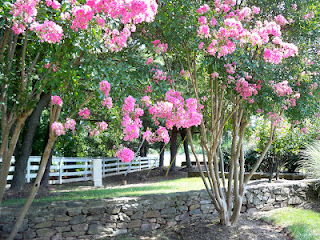
The woods awakens, sends green shoots from leaf loafs, muddies ponds with tadpole eggs, raises our hopes — only to dash them in a brisk wind or a sudden chill. At this point, spring is more a whisper than a promise, the slim strong arms of a young girl.

I hold my breath that it will once again unfold.

Photos: Tom Capehart

Fantasia

Fantasia


The solar flare did not disrupt airplane travel or satellite communication, but it did create enough gravitational pull to allow our broom to stand up on its own. I missed seeing the real thing, had to content myself with this photo that my family took yesterday mid-afternoon.

It brings to mind the movie “Fantasia,” the dancing broom that Mickey used to help him fill the well. His broom becomes manic, demonic, as it spins and dances to the music of Dukas’ “Sorcerer’s Apprentice.” I can hear the melody in my mind now, its accelerando and crescendo, its sense of abandonment, of spinning out of control.

Our broom didn’t dance. But it did stand. That’s “Fantasia” enough for me.

Wood Pile

Wood Pile


We don’t own a farm — but we do own a backyard, and our greatest export is firewood. The tall oaks through whose branches the wind chatters and sighs, the second growth forest that has shaded us in the summer and given us pause in the winter (how many more wind storms and ice storms can that one stand?) is not healthy these days. We’ve lost a lot of good trees. And at least two of them have been lying for months (even years) in large chunks in the nether regions of our yard.

So on a wind-whipped morning last week, Tom rented a wood splitter and set about the task of turning logs into firewood. He had done this once before, but the wood wasn’t seasoned. This time the logs split quickly, crackling as they went. The hum of the machine and the hiss of the great logs as they gave way lent our yard a lumber-yard excitement. It was an all-hands-on-deck family chore. We were part of an endeavor that has kept humankind busy since the beginning of time — building a fire, creating warmth, staying alive.

It took two days but the heap of logs is now a pile of firewood, some stacked, some not. All the summers and winters the trees spent upright on earth are now pent up in split, brown, burnable parcels. From life to death and back to life again.

Afternoon Light

Afternoon Light


The late-day walk is sun-scorched, quick-timed. The cars don’t see you coming. In the lengthening days of new spring, it is still raw and cold, so I don’t linger on the path. The point is decompression. The jingle-jangle of the subway, the pressure of the deadline — these will slip away in the balm of foot fall. Or at least that is the hope.

But afternoon light is desolate. It lacks the comfort of the morning. I find no explanation for this in science, only in poetry:

There’s a certain slant of light,
On winter afternoons,
That oppresses, like the weight
Of cathedral tunes.

Miss Dickinson to the rescue. She understands.

Marquez and Memory

Marquez and Memory


When I read this morning that today is the birthday of Gabriel Garcia Marquez, born in 1927 and still living, I thought of his best book. Not 100 Years of Solitude, which took me almost 100 years to read (though I did eventually finish it). But Love in the Time of Cholera.

It has been several years since I read this novel, but I still remember the transcendent last chapter, when the beautiful but aged Fermina and Florentino, the man who has waited 50 years to be with her, take a steamboat voyage down a river bloated with corpses.

Love triumphs over death is the theme, but I can remember little else of that last chapter, only that I held my breath from the beauty of the language and the depth of the thoughts. This morning I’ve looked for quotations that might give a hint of this book’s grandeur and I found this one by Florentino: “Love becomes nobler and greater in calamity.”

But I’ll leave the last words to Thomas Pynchon and a review of the book he wrote for the New York Times in April, 1988:

There is nothing I have read quite like this astonishing final chapter, symphonic, sure in its dynamics and tempo, moving like a riverboat too, its author and pilot, with a lifetime’s experience steering us unerringly among hazards of skepticism and mercy, on this river we all know, without whose navigation there is no love and against whose flow the effort to return is never worth a less honorable name than remembrance — at the very best it results in works that can even return our worn souls to us, among which most certainly belongs Love in the Time of Cholera, this shining and heartbreaking novel.