Split Seconds

Split Seconds

Into the torpor of a muggy Washington summer, where it doesn’t much matter whether you saunter down the street in 20 minutes or 10, comes news from a place where every second counts.

“Americans miss out on a men’s eight medal by 0.3 of a second,” screams one headline, describing the time that separated the U.S. men’s rowing team from a bronze medal.  Or, a more positive example, swimmer Nathan Adrian surprised everyone by pushing past the Australian, French and Brazilian favorites to win gold in the men’s 100-meter freestyle — by .01 second.

We watch sports for the drama and the fun, to marvel at what the human body is capable of. But do we also watch because time is compressed? The slow-moving outcomes of our own sometimes tedious lives are sped up in the pool and on the playing fields. In competition, as in books and movies, we get to see how it all ends.

ISO Map

ISO Map

August 1. A new month. And by any measure, the last month of summer. It hasn’t been much of one for me. All work and little play. No mountains, no shore. The creative juices barely flowing.

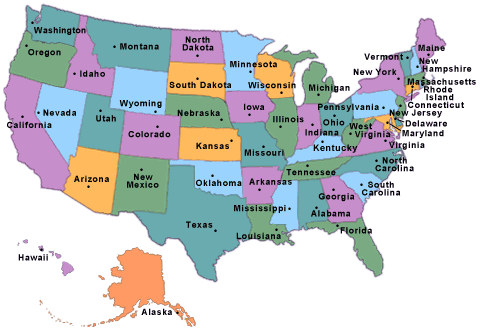
I find myself studying maps of the country, looking for the best route to North Dakota. I could go through Chicago into Wisconsin and then up 94 into Minnesota. Or drive straight across Kansas to 29 and follow the Missouri River north.

It’s armchair travel at this point, and the only map I could locate last night showed me just half the country — the eastern half. But there are other maps out there.

Even imaginary adventures require a little graphic inspiration.

Map: Info Please

Mad Dogs and Englishmen

Mad Dogs and Englishmen

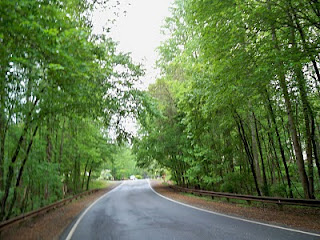
The older woman was driving slowly, opening her window as she rolled to a stop. She probably needed directions, I figured, so I walked up to the car.

But no, she was shaking her head and wagging her finger even before she spoke.  “You’re going to make yourself sick out here. It’s too hot to be walking,” she said. “Take care of yourself.” And that was all. I nodded and smiled, mumbled something like, “It’s hot today, isn’t it?” She closed her window and drove away.

And I had just been thinking what a pleasant day it was. High humidity, yes, but breezy and bearable. So I steadied my pace a little, thinking again about the time of day (yes, it was 1 p.m. — not the best time to be out) and the simple neighborliness I’d just witnessed. In all my years of walking through the neighborhood, this was the first such interaction I’d had.

Suddenly, I was feeling all warm inside. And it wasn’t from the walking.

The Poor Woman’s Library

The Poor Woman’s Library

The Writer’s Alamanc tells us that today is the anniversary of Penguin’s first paperback editions. Apparently, publisher Allen Lane was looking for something to read on the train and found only magazines and Victorian novel reprints. At the time, quality books were thought to deserve only quality bindings, which made them expensive to acquire and not very portable, either.

Lane remedied that by publishing Agatha Christie and Ernest Hemingway paperbacks in the summer of 1935; the books cost the same as a pack of cigarettes. The publisher then expanded into other titles (classics, nonfiction and children’s literature genres) and had soon sold more than 3 million copies.

I have a few Penguin classics in my collection; more to the point, I have a lot of paperbacks. Long ago I had to make a decision: I would either buy a lot of paperbacks or not very many hardcovers. I chose the former, figuring that what’s important is the content of the books, not their durability. It’s what you might call a poor woman’s library. But when I take down one of the volumes, and read the words on the (perhaps now yellowing) page, I couldn’t feel richer.

Twenty-one!

Twenty-one!

Claire arrived two weeks later than we thought she would, waiting for a break in the heat wave (back when heat waves meant temperatures in the 90s instead of the 100s) to make her debut.

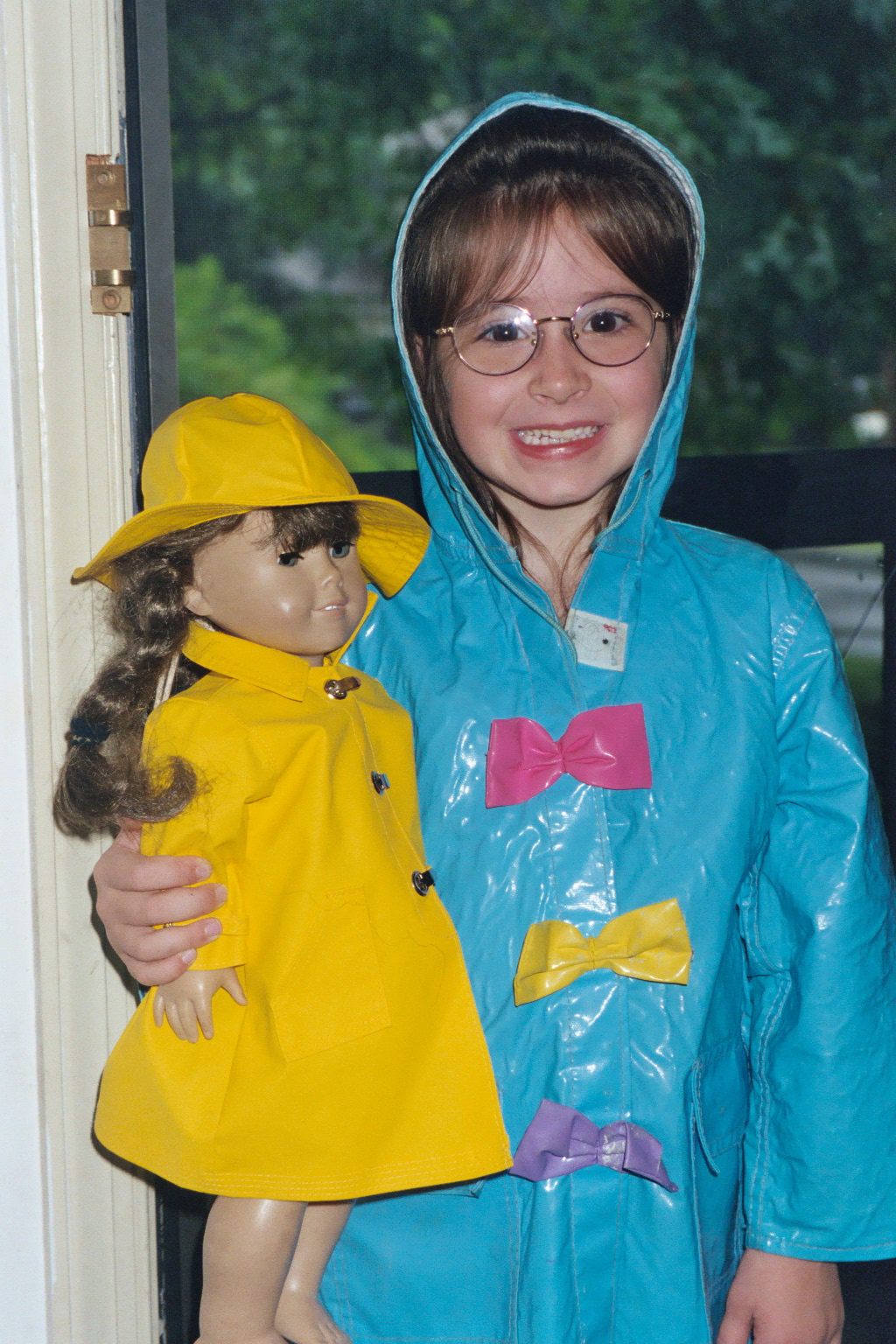
She was a cuddly baby, a tempestuous toddler and, well, we’ll just say a lively teenager.  Now she’s a lovely, caring, accomplished young woman heading into her senior year of college. And today she turns 21.

Back when I wrote parenting articles and the children were younger, I would routinely mine their antics for anecdotes. I don’t do that anymore, of course. But on some days I can’t help but note how proud I am of them, how they continue to amaze me, how very grateful I am to be their mother.

Today is one of those days.

Olympic Stories

Olympic Stories

The warm-up visualization our yoga instructor led us through last night took us to London. “Flow east across the ocean. Look down, see the Thames as it curves through the city. How do you know it’s the Thames?” he asked. And then, with laughter in his voice, he quickly answered: “It’s the only dark thing you see.”

“It’s late there,” he continued. “But the pubs are still full. The eyes of the world are on this city.”

Maybe it was the drama in his voice, maybe it was the mid-summer doldrums, but whatever it was, it made me very excited that the Olympics are starting today.

I remember writing about the ice dancing event in Vancouver in in one of my first posts in this blog. Have I really been writing almost daily here for that long?

The Olympics, like any event that happens every two years (or every four) helps us measure time. The music, the uniforms, who wins and who loses, where we lived and who we watched it with — all these wrap themselves into our memories and become part of the experience. Watching the Olympics unites us in a good way. We are riveted by competition, not by tragedy.

It’s eight hours until the opening ceremonies. Let the games — and the stories — begin.

Anthony Page holds the Olympic torch in front of Big Ben. Photo: London 2012 Olympics Official Site.

Just a Couple of Crazy Kids in Love

Just a Couple of Crazy Kids in Love

Sid and Dominique, our rescue parakeets, had been chirping to each other for days, but it wasn’t until yesterday that they met beak to beak. Early reports are positive and confirm our initial impression that Dominique is, in fact, a girl.

I wasn’t there to witness the first date (which quickly led to cohabitation), but it’s worth noting that they ended up in Sid’s cage. Dominique has seemed a little more interested all along.

This is all new to us. Our sweet Hermes, who died in January, 2011, was a coddled only bird. I’m not even sure he knew he was a parakeet, so thoroughly did he join our flock (he talked, he sneezed, he went to sleep each night with a bedtime story, Goodnight, Moon).

Sid and Dominique, on the other hand, are pure bird. They will be each others mates and best friends, we hope. We humans are just along for the ride.

Photo: Claire Capehart

Meadow Music

Meadow Music

A walk through the meadow. I pull out my earphones to hear the rustle of grasses in the wind, the sound of children playing, a ball bouncing. Past the pond, where a family fishes. The mother is veiled, the little boy intent upon his lure.

Along the ribbon of pavement that bisects a field, I breathe in the scent of pine and cut grass. The Queen Anne’s lace is nodding, the tall weeds waving. Insects buzz, the backdrop noise of summer.

But soon enough, I dart into the woods. There was a place there where I had to duck under a tree that had collapsed upon itself in the storm. But only a bare patch remains. Already I smell autumn in the air, the acrid aroma of dry leaves. I shiver as I stride.

Night Swim, Again

Night Swim, Again

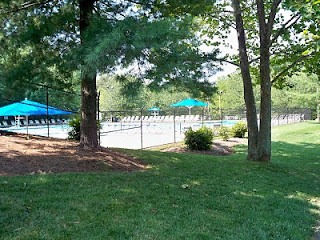
It was almost nightfall. The air was balmy, and a crescent moon grew brighter with every stroke.  I’ve been swimming a lot this summer but never this late. Our dinners have been long, our evenings full. Last night was the first chance to paddle through the mysterious waters of the suburban pool after dark.

There was the same dignified man I remember from last year, doing his quiet breast stroke. He hasn’t changed, though the guards have grown younger. There too was the windmill slowly spinning and the faintest breeze ruffling the leaves in the high branches of the oaks. The thwunk-thwunk of the tennis balls in the adjacent court was the only sound I heard, other than an occasional splash.

I end the day tired and calm. An advantageous combination.

Belonging Matters

Belonging Matters

We will never understand evil and yet, since last Friday’s horrific event in a movie theater in Aurora, Colorado, we have been trying. Alleged mass murderer James Holmes amassed a large cache of weapons and ammunition, all of which he acquired legally. How can we use existing laws and safeguards to stop such madness? Should we reinstate the ban on assault weapons that expired eight years ago? Is there a way to catch incipient insanity through a more rigorous and well funded mental health network? And what about the culture of violence; to what extent did that lead to Columbine, Virginia Tech and now Aurora?

There is one potential cause I’ve heard little about, though, one that might be considered with the others. Holmes was a native of California living in Colorado. Like many of us (and in some places most of us) he wasn’t living in a place he knew well or that knew him.

“The news reports you hear about him, it’s as if people are talking
about one person in San Diego and one in Colorado. Who he is now is not
who he was in San Diego,” said William Parkman, 19, who went to school with Holmes’ younger sister, in USA Today. 

This, of course, doesn’t provide an immediate explanation for Holmes’ actions, but it does provide an underlying one.  The “lone wolf” exists on the fringes of society; he is not part of a community. The people he kills aren’t known to him; they are characters in a movie, props in his own demented play.

Holmes sought notoriety. He wanted to be known, to set himself apart in a society of malls and mega-theaters and anonymous, empty suburban bustle. He wanted to set himself apart as a scientist, too, but that accomplishment was apparently eluding him.

We have only begun to plumb the mysteries of his psyche, of the mental illness that may have driven him to such unspeakable acts. But even patients with schizophrenia seem to do better when they are part of a family and a community. The World Health Organization’s International Pilot Study on Schizophrenia tracked 3,300 patients in a dozen countries and found that patients in poorer countries did better than those in more well-off ones. Families and communities in countries like India and Nigeria are more likely to care for patients, to give them jobs, to include them in day-to-day life. The human touch, it appears, is more important than we think. And it seems to be more readily available elsewhere than in the U.S., where individual autonomy and accomplishment trump social and family connections.

But what happens when we fail? When accomplishment isn’t enough? When autonomy forces us deeper and deeper into our own misguided thoughts?

Tragedies force us to take stock of ourselves and the world we have created. The random violence abroad in this land (and which, unfortunately, we seem to have exported) makes me think there is more to place than how we feel about where we live.  For the more than the last half century, moving up has often meant moving out.  We’re beginning to see what a culture of anonymity looks like. Yes, we are free. No one knows our business. But what have we become?

Belonging matters.