Castle in the Clouds
Castle in the Clouds

I sit at a stoplight, one of several long ones I’ve already encountered on the way home. I’m running late and the light takes forever. I strum my fingers on the steering wheel, tap my feet, fiddle with the knobs of the radio and then fiddle with them some more. I look up, light’s still red. 

It’s then that I think that I have become Fairfax County. Its tempo is my tempo. Its impatience is my impatience.  I drive too close to the car in front of me as I listen too intently to public radio. I have come to believe that what I do every day is more important than it actually is.

What I need is a summer off. Humility Camp. In which people from the East Coast are sent to carefully chosen out-of-the-way burgs in the Heartland. Let us walk down empty sidewalks to the only store that sells the New York Times, only to find that there is no Times delivery today. The wireless in our rented two-bedroom will long since have fizzled. Our Kindle is out of charge.

There is nothing to do, then, but to lie back on the grass, look up at the sky and find a castle in the clouds.
Waking Up

Waking Up

Up and out early. Moisture fills the air and glows in the lamplight. I play some Gabrielli but it’s too loud for this delicate time of day. I try Dan Fogelberg’s “To the Morning.” Ahhh; that’s better.

I consider turning off the music entirely and listening to the birds. They’re waking up and singing lustily. But the music is good, too. In fact, it sounds a lot like the birds, has the same gradual crescendo.

There are few cars on the street at this time of day, and the ones I see drive sleepily, as if they, too, are just waking up. The day seems to be holding its breath.

On the main road, cars are more numerous and faster. I ease into a trot. The tall grass is wet as I brush by it. Time now for louder music. “Day by Day,” a sung prayer.  I’m fully awake now. Ready to come home, touch the keyboard, write.

Shade Seeking

Shade Seeking

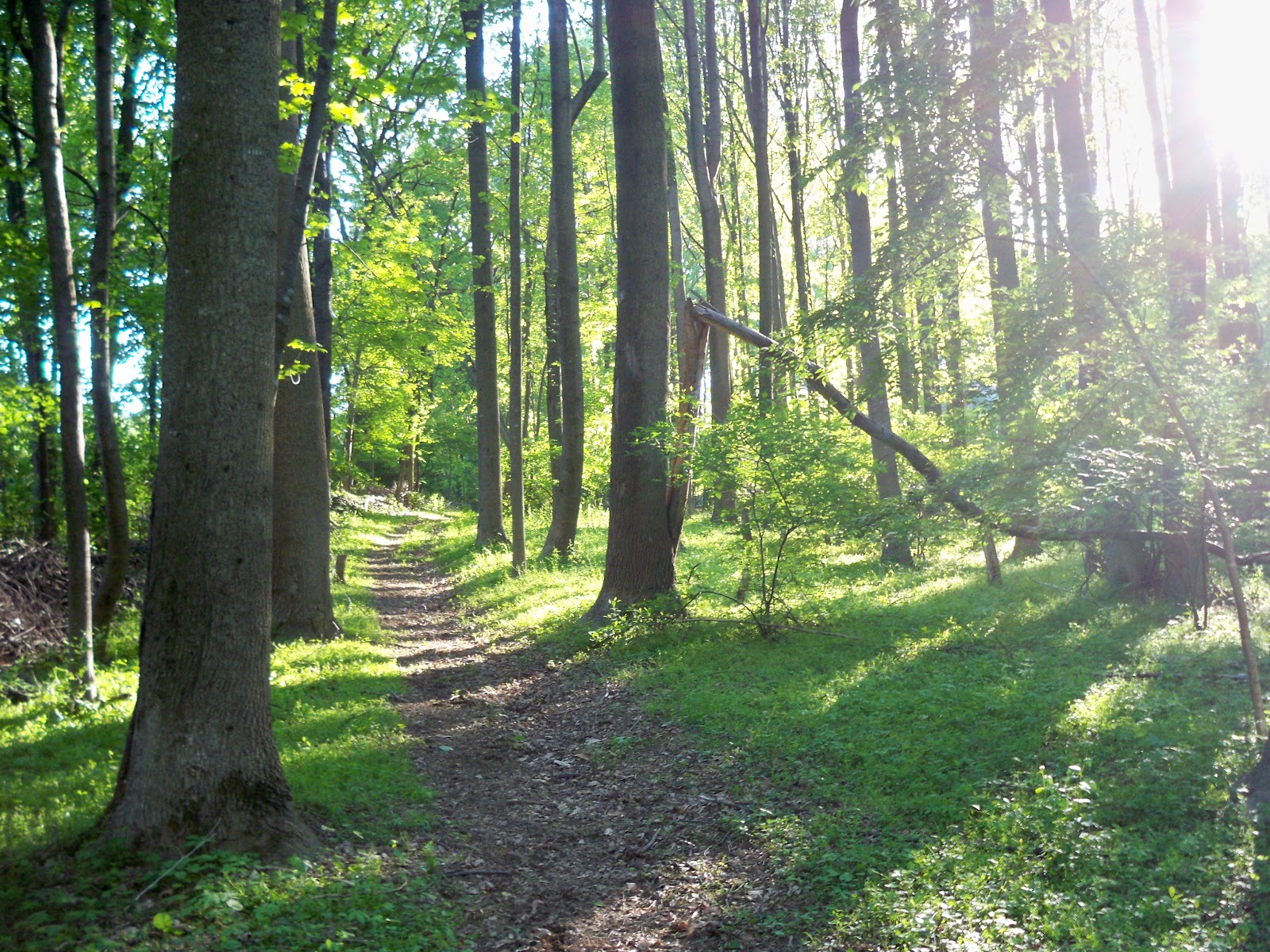
I finished writing an article yesterday morning, which meant that I didn’t walk until noon. But I found a trail with only dappled sunlight and fast-walked there. No sun. No sunscreen. No visor.

The summertime world is all about light, from the earliest gray dawns to the latest pearl twilights. But I’m trying to walk less in full sun this year, to choose my path carefully so that — at least at high noon — there will be blessed shade.

This is counter to every sun-loving bone in my body. But it’s to preserve my body, well, most particularly my skin, that I’ve suddenly become a shade seeker.

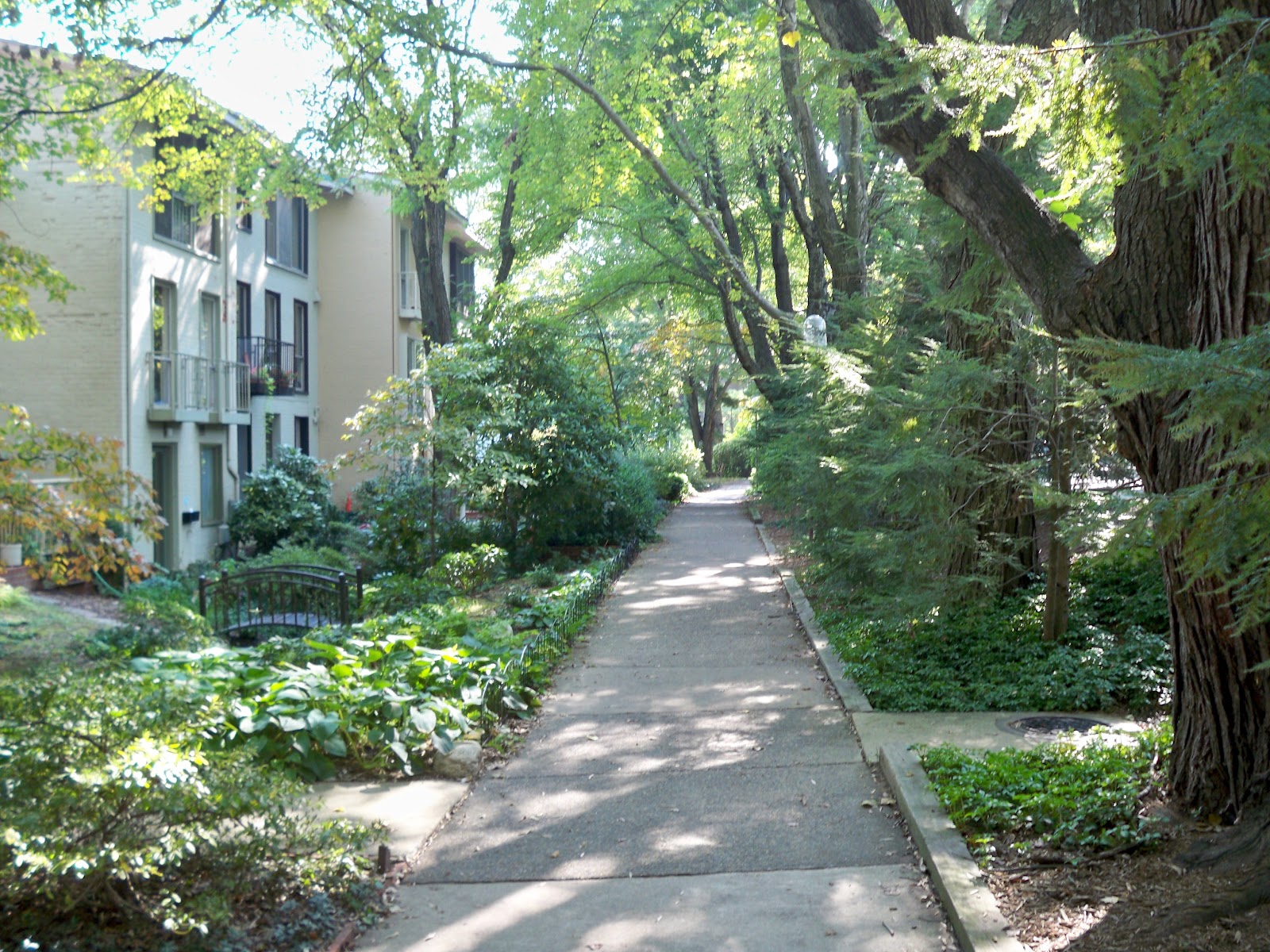
I’m coming to appreciate the play of light on tree trunks, the wagging of oak leaves high in the canopy, the trails that wind along the stream. There are animals, plants — even ideas — more visible in the shadows than anywhere else.

New Music

New Music

My musical life has languished for years, taken a back seat to raising kids and earning a living and making a home in the suburbs. It’s not just the playing of music that’s dropped away but even the listening. Being at least two generations behind in recording technology (pre-MP3, pre-CD — most of my treasures are in vinyl), I’ve contented myself with the radio.

The radio, of course, is potluck, taking what you’re given and, in the case of D.C.’s current classical music offerings, listening to the same “greatest hits” over and over again.

But a couple weeks ago an iPod nano entered my life and I’m finding tunes I haven’t heard in years, downloading show music and folk tunes and arias, mixing them all together and coming up with playlists that start with Mungo Jerry’s “In the Summertime” and end with Gilbert and Sullivan’s “He is an Englishman.”

To paraphrase someone (Churchill?) who said, “It’s not the end, nor even the beginning of the end … but perhaps it is the end of the beginning,” I say, It’s not the revival of my musical life, or even a reinstatement. But it is, at least, the end of its dormancy.

Small Critters

Small Critters

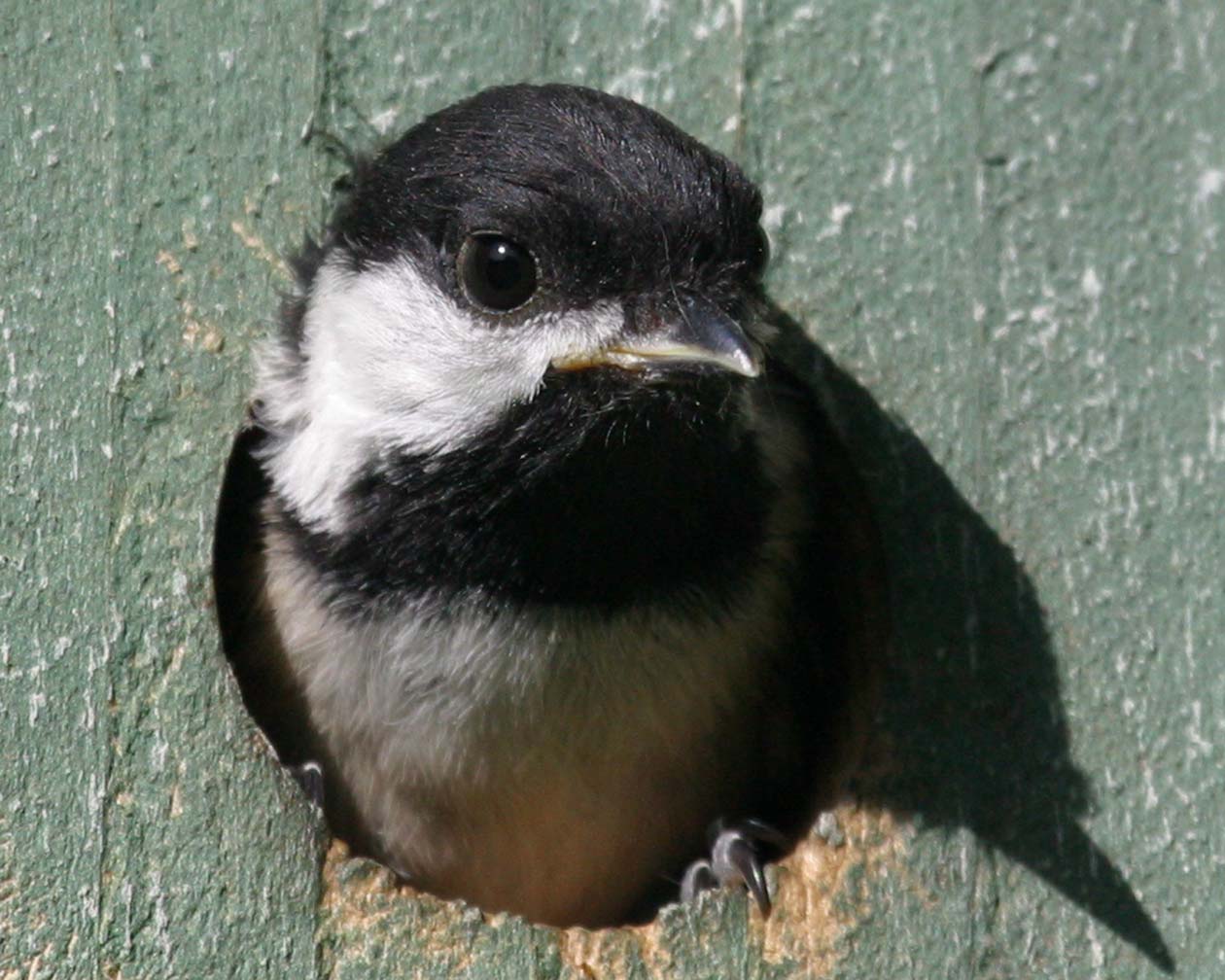
The baby chickadees look just like big chickadees only smaller. They are tiny replicas that flit and flutter in the bamboo that borders our deck.

I spotted one this morning perched on a twig so insubstantial as to bend slightly with his miniscule weight. The little guy made a “chick-a-dee-dee-dee” sound. Only it was higher and thinner than the mature chirp.

How darling are the small critters of creation. They train our eyes on the little things of life.

Photo: 50Birds.com

The Toll

The Toll

Last evening, a walk I’ve never taken: A path between two houses to a woodland trail, and along that to another neighborhood. From there to a busy road, left past the shopping center and left again down a street where we once looked at a house to buy. It was faux Tudor and smaller than it looked outside.

I was deep into nostalgia, what-ifs. The yards were edged and tidy with fresh-strewn mulch. I noticed  the brave annuals planted by the mailboxes. The flower boxes and hanging baskets. The lawns were a proud, chemical green; most were new-mown and they sparkled in the slanting light.

Beyond the house life and the car life lies the curb life, the walker’s view. This walker has become more sympathetic over the years. More aware of the toil — and the toll — of the suburbs.

Fighting Fire

Fighting Fire

Fahrenheit 451. The temperature at which paper burns; a novel by that name by writer Ray Bradbury, who died Tuesday.

Fahrenheit 451 was one of those novels I read as a kid and could never forget. It wasn’t just the frightening dystopia of a future without printed books. That future is becoming more real for us everyday.

It was something about the heart of the story, the way the characters cared for each other and for ideas. It was the elegant and practical and timeless solution they arranged to keep books alive — they memorized them. They learned them by heart. They became the books.

As we’ve all learned recently, painfully, book burnings are alive and well. And Fahrenheit 451 was often under assault for the vigor of its ideas. “The real threat is not from Big Brother, but from little sister [and] all those groups, men and women, who want to impose their views from below,” Bradbury told a Times of London interviewer (as reported in today’s Washington Post).

The way to fight fire is not with fire. Or with water. The way to fight fire is to believe,  hold fast and, ultimately, to become the solution. 


(Photo: Firepictures.net)

Flow in Motion

Flow in Motion

“It is normally easy and actually quite pleasant to walk and think at the same time, but at the extremes these activities appear to compete for … limited resources,” writes Daniel Kahneman in his book Thinking Fast and Slow.  “My experience is that I can think while strolling but cannot engage in mental work that imposes a heavy load on short-term memory.”

Without going into the nuances of Kahneman’s theory (in large part because I’ve just started the book and am still figuring them out!), what he’s saying here is fairly straightforward: There is only so much energy to go around, and it’s difficult if not impossible to expend great mental and physical effort at the same time.

In my experience, walking promotes thought. The mental briars that entangle me when I’m sitting still aren’t present when I’m skimming along a trail. Motion accelerates thought, enlarges it, shakes it free.

The explanation is, in part, speed. Were I to run I would think a lot less. But the answer also lies in something Kahneman discusses a few paragraphs later,  the concept of flow, “a state of effortless concentration so deep that [people] lose their sense of time, of themselves, of their problems.”

What happens when we walk (or at least when I walk) is flow in motion. Which sounds redundant. But actually isn’t.

Grasping the Moment

Grasping the Moment

There was a last-minute offer to grill, a request for chicken, zucchini and tomatoes, all of which I gladly supplied. And then there was transporting the grill, the real thing, the Weber, with its bag of charcoal.

The real grill takes time to heat up so there were games of catch with Copper, plenty of ins and outs through the backdoor. People appeared on the deck, talked on their phones and then vanished back inside. Earlier we had sifted through an album, found a black and white photo of Tom from his long-hair days. This was passed around and admired. We opened some hard cider, marveling at its tang and effervescence.

Two more friends appeared, and now it was an impromptu party. I bounced on the trampoline, listening to songs I’d just bought: “Teach Your Children Well,” “September,” “Your Song,” “Morning has Broken.”

My troubles left me alone for this blissful, golden evening. The late light glancing the trunks of the oaks, the hydrangea blooming, voices from inside, laughing. People, young people, talking about music and jokes and places we don’t know and never care to find out. Someone could have pulled out a guitar, strummed a few chords, and I wouldn’t have been surprised. Maybe next time. It was life renewing itself. And I was pulled along by it, glad for the ride.

Escape Route

Escape Route

A few days of blissful low-humidity weather mean that at the highest point of my favorite walking route the foothills of the Blue Ridge swing cleanly, clearly, briskly into focus. I like to think of this as my “escape route,” the one that gives me, better than any other, a glimpse of a world that lies beyond.

For the longest time the route — and for all practical purposes the view — didn’t exist. The road was curvy, two-lane and treacherous. You walked it at your peril. And even if you did, you wouldn’t have seen the mountains. They would only have been visible from the ridge above — and probably not even there, since the trees that grew along the brow obscured the horizon, too.

But when a new housing development shoved out the few remaining homes and a preschool, the view emerged. And the sidewalk supplied by the property developers opened it up to all.

I had to stop griping about progress then. For once it was on our side, the side of the walkers, the side of those who like to be reminded where they are in the world. The side of those who like their escape routes.


(This is not exactly what I see. My view is of the same mountain range, just farther east.)