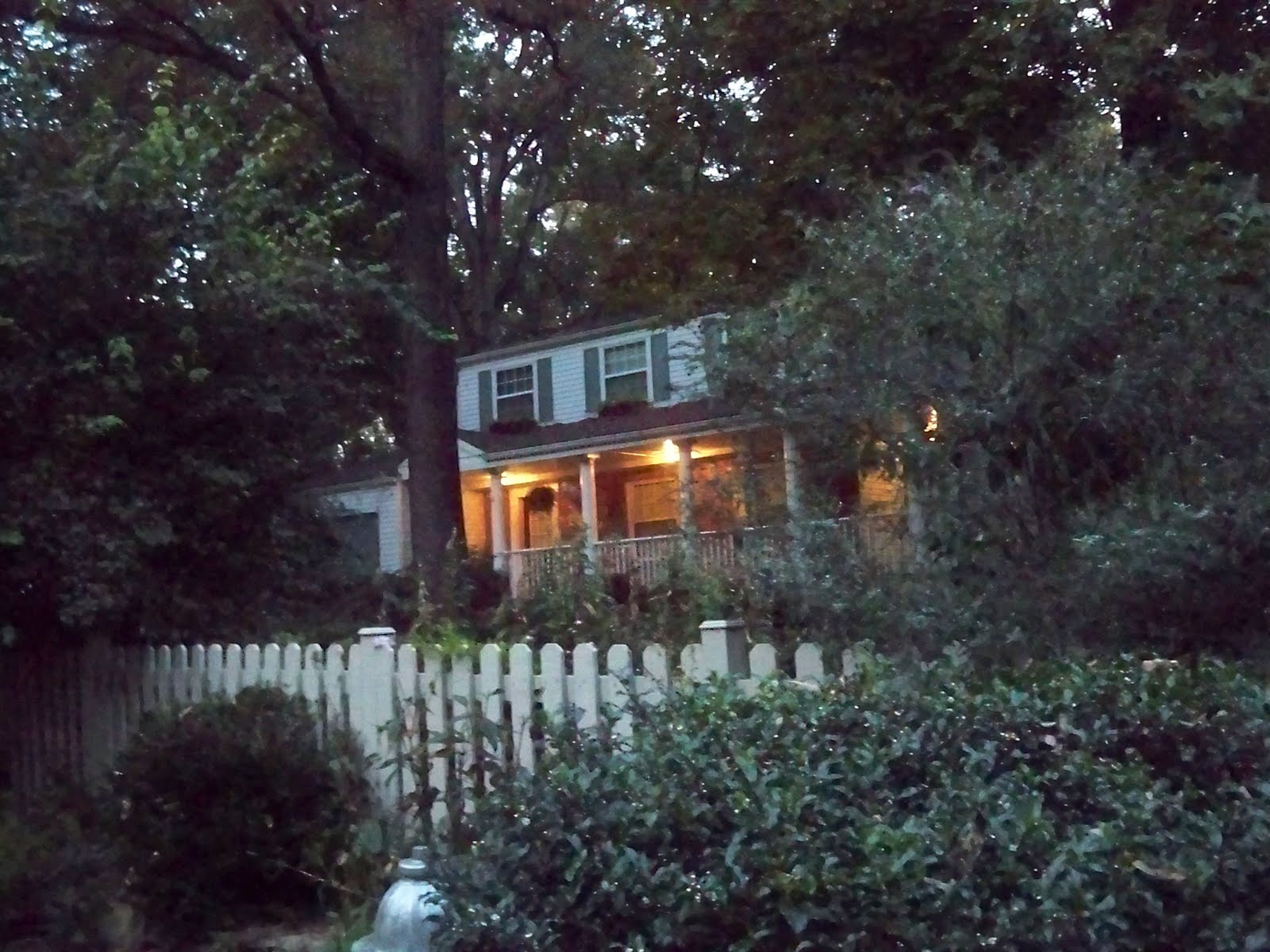
Moonlight woke me this morning. It poured through our back windows at 4 a.m. A pool of white light, a bright beacon.
I had no intention of walking in it, but still, it posed an invitation, perhaps even a summons. Get up, savor the moment, look at the faraway, inscrutable, silent, brilliant moon.
And so I did. The orb bathed our backyard in a strange glow, neither night nor day. It made me think of places where moonlight lights the way for travelers and smugglers and lost souls. It was like a dream, except it wasn’t.
When I drove to work this morning, the moon was still up, a tamer version of its earlier wild self. I could almost pretend it wasn’t there.
Too busy writing about the anniversary here yesterday to mention Dickens’ 200th birthday. David Copperfield is one of my favorite books — in fact, it’s about time to re-read it — and I revere most of author’s classics. (I’ll admit, Bleak House was a bit tedious in parts.)
What I didn’t know until yesterday (or perhaps once heard but had forgotten) is that Dickens was a walker. The “Morning Edition” story I heard about him yesterday said he liked to walk “far and fast.”
“He did these great walks — he would walk every day for miles and miles, and sometimes I think he was sort of stoking up his imagination as he walked, and thinking of his characters,” said Claire Tomalin, author of the new biography Charles Dickens: A Life.
Imagine going for a stroll and coming back with Mr. Macawber. Or Bob Cratchit. Or any number of the other real, human, flawed, funny, rich and revealing characters that people Dickens’ novels.
Learning of the great man’s walking habits makes me appreciate my ambles all the more. A walk may not yield a masterpiece. But it almost always produces a thought or two that I wouldn’t have had if I hadn’t moved my legs and jiggled my old brain a bit.
As any parent knows, a child’s second birthday is not quite as big a deal as her first. And so we come to February 7, 2012, the second anniversary of A Walker in the Suburbs. It’s a more low-key event than last year’s celebration, but I can’t let it go unsung.
There are 612 posts here — that ‘s about 600 more than I thought I’d write when I began this blog during “Snowmageddon,” the great blizzard of 2010.
As it begins year three, A Walker in the Suburbs continues to ripple ever so slowly into cyberspace. I know I should gussy up the old template, add some bells and whistles to attract more followers to the site. (And speaking of followers, I accidentally erased that feature last year and haven’t found a way to add it again.) But adding followers (though delightful when it happens) is not my only aim.
I started the blog as an exercise in daily writing, a way to look beneath the surface of the suburban world I live in to the channels and eddies and springs underneath. Sometimes I do this by walking and reflecting upon what I see. Sometimes I do it by writing about what I’ve read or noticed in the course of daily living. Sometimes I get to the place I’m seeking; other times, I miss it by a mile.
It still seems an act of extreme hubris to post my thoughts in a forum for everyone to see. That I do so is either proof that I’m learning to embrace technology — or the opposite, that I can’t imagine my words going beyond the screen of my laptop.
Whatever the case, they do, and you’re here. I’m glad we found each other.
A winter reading binge this weekend: Two by Conrad Richter, The Trees and The Town. The latter won the Pulitzer Prize in 1951, doubtless in part because of sentences like this:
“She reckoned she knew how one of those old butts [trees] in the deep woods felt when all its fellows were cut down and it was left standing lone and gaunt against the sky, with only whips and brush and those not worth the axe pushing up around it.”
The “she” is Sayward, the woods woman heroine of Richter’s “Awakening Land” trilogy. (I wrote about the middle volume, “The Fields,” a couple weeks ago.) And in this passage she’s at the end of her life, remembering the kind of people she knew in her youth. “In her time in the woods, everybody she knew was egged on to be his own special self. He could live and think like he wanted to and no two humans you met up with were alike.”
If she could feel this way in a 19th-century frontier town along the banks of the Ohio, then no wonder I fret about the unanimity of personality in 2012 suburbia.
A few pages later, Sayward ruminates on the new trees she planted in the side yard of her grand city house. “No, she couldn’t blame these young trees of hers. They did uncommon well since they were planted. Sometimes at night, especially when there was no moon, she thought they changed into wild trees. Then they looked mighty tall. They stood like Indian chiefs, letting the dark come over them, like this was still their land and they were the masters of it, like they hadn’t lost heart. Oh, she had to admire their spunk and feel for them, three young forest trees against a whole city. Sometimes she wishes she could give them back their land, for it was she who had taken it from them.”
Today I’ll look kindly upon saplings and other young living things. I’ll hold out hope for them.
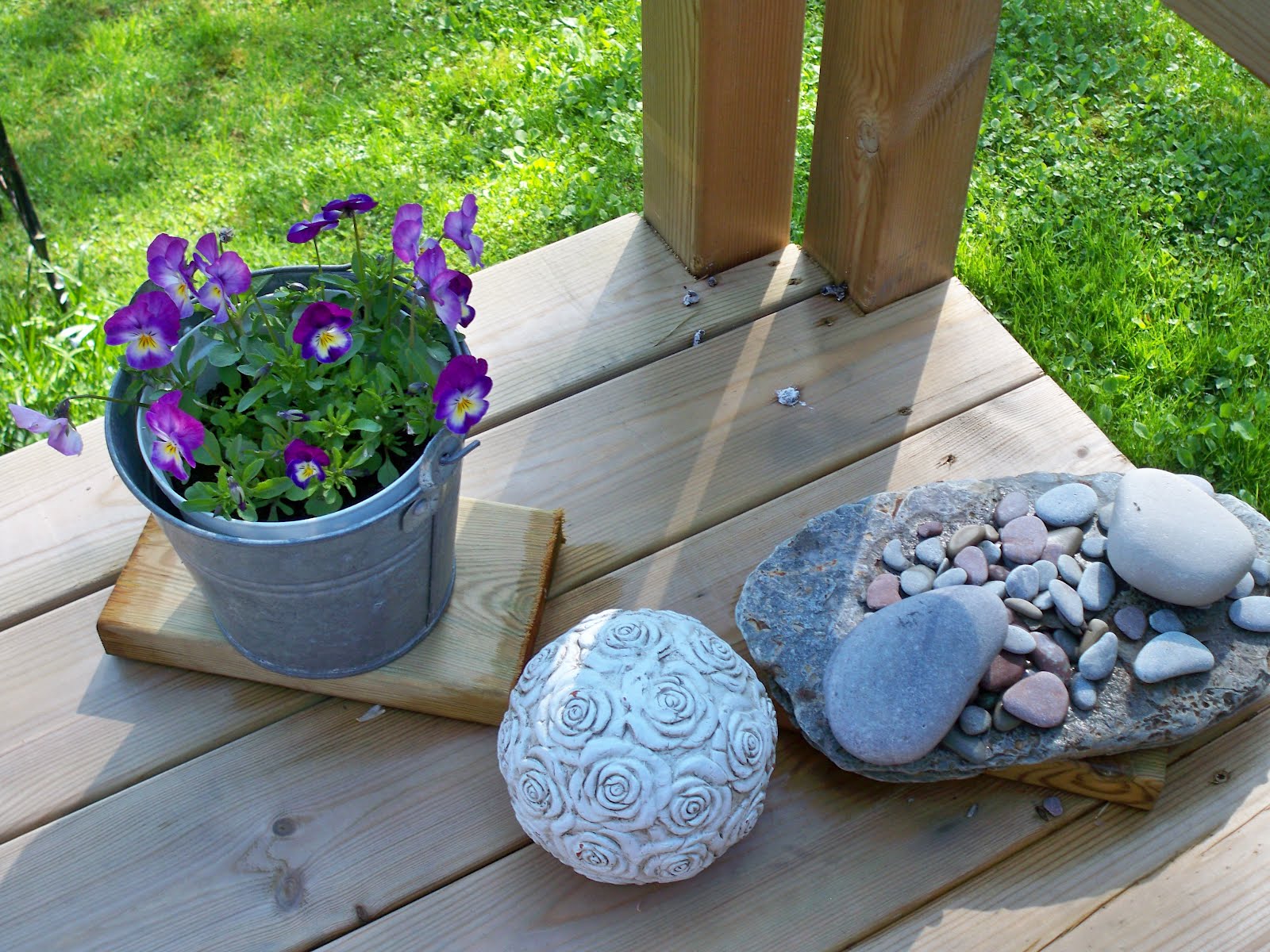
When we first moved to the Washington, D.C. area from New England, I was surprised at the fall planting of pansies. Won’t they just be clobbered by snow and ice? Isn’t it tempting fate to assume the winter will be warm?
One year I planted ornamental cabbage, the white kind with a sweet lavender center. That was as close as I’ve come to winter plantings.
But this year pansies have flourished. In fact, they’re in danger of being overrun by the early blooming of daffodils and witch hazel. Winter is taking a nap this year.
I just finished Bill McKibben’s short book Wandering Home, his thoughts on environment and place as he walked through Vermont’s Champlain Valley and New York’s Adirondacks.
Here’s one passage, about how it feels to arrive somewhere on foot: “It’s not like arriving in the car for a dinner party. On foot you arrive late or early, without excuse, and settle into whatever conversation is under way. It took you a while to get there, so you’re obviously going to stay awhile. It feels like visiting in an older sense of the word…”
And here’s McKibben on the loss of old codgers: “It’s as if someone came and knocked down a thousand-acre stand of mature timber, as far as I’m concerned.” When these people were alive, McKibben says, “there was a quality of memory that I believe informed the place. It was tangible. It was in the air, it made the place what it was for me.”
In the suburbs, old codgers, or even young ones, are in short supply. Perhaps that is one reason why there’s no “there” here.
Our neighbors found a property marker the other day. At first, they didn’t know what it was. Surely it couldn’t have remained hidden almost 23 years. But that is exactly what it was — and exactly what it had done. We looked at our original plats and deeds — and we are now the proud owners of a few feet more prime Virginia clay soil, another 70-foot oak tree. And every fall (the best part), we now must rake and bag hundreds more bushels of leaves.
In other words, we didn’t welcome our new acquisition. And we’ve joked about how long it will take us to turn the lush, well groomed strip of land into a bumpy, grass-bare parcel.
I’m reading a history of Fairfax County and learning how often the same land was deeded twice. Deciding boundaries kept surveyors and courts busy for decades. Sometimes property lines were intentionally ignored, but other times the confusion came from surveyor error. Trees or rocks were used for landmarks — and then the trees or rocks would disappear.
Makes me feel better about our little suburban boundary confusion. And just to think, we settled it without a surveyor or court.
Today is the birthday of the writers Muriel Spark, Langston Hughes and Galway Kinnell. It is also the birthday of my mom, a writer who is less well known, whose pad and paper were often put aside to tend to a child or pay a bill or wait until the world was calmer before picking them up again.
But she read Shakespeare to us and talked to us of worlds beyond the one we knew. And now we are out in those worlds and she is encouraging us still.
We encourage her, too. It’s calm enough to write now, Mom. You can pick up that pad and pen. The coast is clear.
This winter’s mild weather means it’s not too cold for a walk before dawn. I’ve taken a few of these lately, mostly brisk strolls to the train.
To walk to Metro is to walk east, toward morning. So in all of these ambles I aim toward a slight strip of red along the horizon, the earliest sign of daylight. The only folks I see are just like me, dressed in black or gray, shouldering packs and briefcases and gym bags, purposefully striding to the ribbon of track that will whisk us from one world to another.
These last few months I have come to appreciate even more the benefit of such a separation. It is good to have a place that is not home, a cool, quiet, unemotional place in which to produce solid, if unimaginative, prose. So, I move fast on these morning walks to Metro not just because I’m scared to be stirring in the darkness, but also because I’m genuinely eager to leave the turbulent, heartfelt, almost full to bursting world for a leaner, calmer one.
I have no illusions, though. My best and deepest work always comes from acknowledging and confronting the turbulent world. I walk fast in the morning, but never fast enough to leave that world completely behind.
A trip through the suburbs this weekend helped me see our corner of the world with fresh eyes. Yes, we have congestion here, and within walking distance are large houses on small lots. But our neighborhood has a wooded, tucked-away feel, and my shoulders relaxed as we drove home under low clouds and a gathering wind.
What makes the difference in Folkstone is having a sense of the land we lie on. The houses work in tandem with topography rather than trying to overwhelm or undo it. We are an older subdivision, too, with houses in the 2,000 to 2,500 square-feet range rather than double that amount. How much easier it is to harmonize when you have room to do it in.
There is a sense of proportion and scale here that soothes the spirit. It’s good to be reminded of this.