Aldo Leopold

Aldo Leopold

I was already writing another post this morning when I learned from “The Writer’s Almanac” that today is the birthday of Aldo Leopold. I had never heard of Leopold until I took the class last fall. Now I can’t imagine not knowing about him. Here’s an excerpt from a review I wrote of his book A Sand County Almanac:

At first glance Aldo Leopold’s book A Sand County Almanac (1949) seemed to be like other evocative writing about place — books by Annie Dillard or Henry David Thoreau, for example, books that shed light not only on cities or rivers but also on the author or the human condition, books in which the landscape is a vehicle to the self. I was to learn otherwise.

I scanned the bio of Leopold on the back of the book before I started reading it, and I learned that he grew up in Iowa, graduated from Yale Forestry School and worked with the U.S. Forestry Service in New Mexico and Arizona before becoming a professor of game management (a field he is credited with creating) at the University of Wisconsin. Leopold bought some poor, down-on-its-heels farmland near Baraboo in south-central Wisconsin, rehabbed an old chicken coop on the property and lived there with his family on weekends and vacations. It was there that he wrote the essays that became his masterpiece, A Sand County Almanac, a book that encapsulates the philosophy of place that makes him one of our earliest prophets of ecology and wilderness preservation. This book, like the twisted little apples of Winesburg, Ohio, is the hard-won fruit of the deep thinking Leopold brought to the land on which he chose to live.

Sand County was not as conversational or as revelatory as I first thought it would be. It was not a book about the transformation Leopold and his family underwent as they lived in the “shack” and fixed up the farm. It was so much more.

“There are those who can live without wild things, and some who cannot. These essays are the delights and dilemmas of one who cannot,” writes Leopold in his introduction. But from such big pronouncements the work quickly becomes more specific: the winter awakening of a skunk, the trail of a meadow mouse, the fate of the passenger pigeon, the life of a downed tree, the difference between a shovel (which makes us givers) and the axe (which makes us takers).

Eventually, Leopold does share a few personal details: “To conclude, I have congenital hunting fever and three sons. … I hope to leave them good health, an education and possibly even a competence. But what are they going to do with these things if there be no more deer in the hills, and no more quail in the coverts? … And when the dawn-wind stirs through the ancient cottonwoods, and the gray light steals down from the hills over the old river sliding softly past its wide brown sandbars – what if there be no more goose music?”

So there is a place for the personal in Leopold’s ruminations after all, a subtle place and an effective one. But the most important lesson I learned from reading this book is to let go. Let the place teach me.

First Flakes

First Flakes


They were barely more than specks in the sky when Copper and I stepped out for our walk yesterday. Bits of fluff from an errant dryer vent, I thought at first, or airborne ash from a fire. I didn’t know that snow was coming. I should have. All morning the earth had that gray stillness it does before the weather changes, a pause, a turning from one element to another.

As we walked, snowflakes dotted Copper’s shaggy back. This would make a good picture, I said to myself several times — and every time I did he did his little doggie shake and they would all be gone.

When we came inside, I still thought the snow shower was a fleeting one. But it flurried the rest of the day and left us with a thin coating, our first of the season. In winter, the world looks better in white.

A Muted Palette

A Muted Palette


I’m making my way through Bill Bryson’s oddly titled At Home: A Short History of Private Life (oddly because it often reads more like a history of building materials and inventions than of private life) and learning about the Crystal Palace at the Great Exhibition of 1851, gas lighting, Palladian architecture, falls down stairs and the quality and hues of 18th-century paints.

What the book makes abundantly clear is just how recent the comfortable home of today actually is. How not too long ago people slept on mattresses full of vermin, huddled around a single candle and bathed once a year.

A passage I read last night mentions that in the second half of the 19th century the world still lacked two very basic colors — “a good white and a good black.” So “all those gleaming white churches we associate with New England towns are in fact a comparatively recent phenomenon” and the glossy black front doors, railings and gates of London are new, too. In fact, Bryson writes, “If we were to be thrust back in time to Dickens’s London, one of the most startling differences to greet us would be the absence of black-painted surfaces. In the time of Dickens, almost all ironwork was green, light blue or dull gray.”

What was missing, then, was contrast, at least in a decorative sense. What a soft, muted palette that world must have had. What would it have been like to live in that world, to see those colors, rather than the ones we have now?

Unseasonable

Unseasonable


Yesterday I passed three bikers on a four-lane road. Walkers clogged our neighborhood streets. There was a lightness in the air, a feeling of lift and brightness. This is the fun side of global warming, a walk in short sleeves, the smell of mud in the air, bushwhacking through the woods and leaping over the creek.

Will we pay for this soon? Probably. But it’s nice while it lasts.


It’s not warm enough for this. But close….

Parfait

Parfait


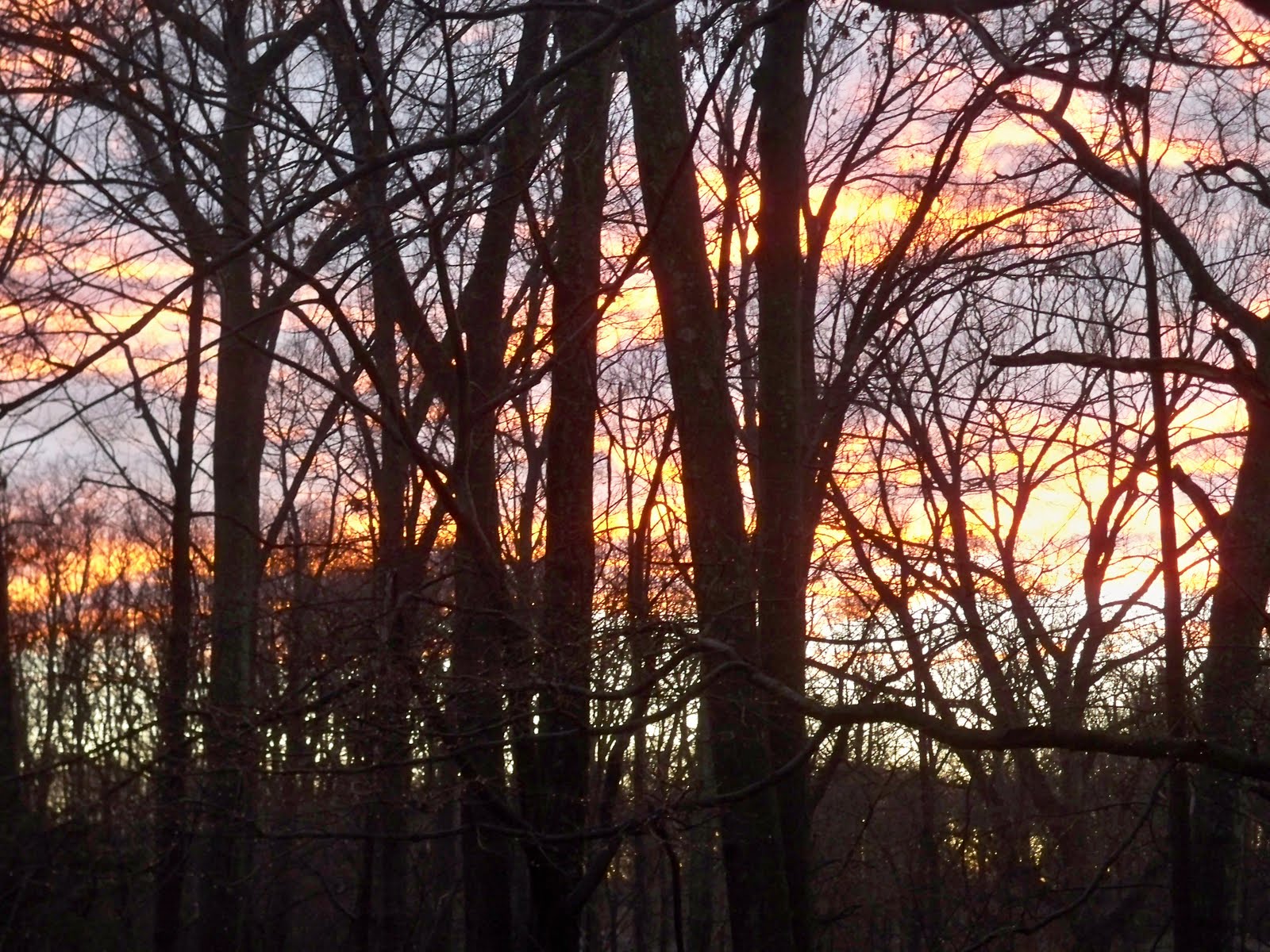
No epiphany today, despite the date. In its place, some sights and sounds. On my walk this morning the eastern sky was streaked pink and orange, a parfait of dawn. As the sun rose and the sky lightened, contrails made lacy white stripes through the blue.

Birds were active today, jays and robins and crows all chirping and hopping and flitting about. I decided that bird song in the morning is a sure-fire way to improve the day.

At the end of my walk, I heard a strange bark-like noise and turned my head just in time to see a plump red fox trot through the meadow. He moved like our dog Copper does, with pluck and verve and a bit of a waddle. When he reached the woods he turned and posed, then ambled on. I felt his wildness in my bones.

Uptown View: An Elegy

Uptown View: An Elegy


Yesterday I learned that a friend I’d corresponded with for years, the editor who hired me at McCall’s Magazine, passed away in May. I hadn’t seen her in years, but I was always fond of her. She was the second person gone on my Christmas card list this year (the other my old boyfriend Gerry, who I eulogized seven months ago in this blog) and I was so sad to learn of her death. Sad for her family above all, but sad also for the passing of an era that she represents.

Lisel was first an agent and then an editor. She was smart and funny and wore her hair in a simple page boy style. She was the one who called me after I dropped off my resume and clips a few days after finishing up a graduate program in journalism. “Well, you’re sort of old to be an intern,” she said, with an endearing New Yorkish bluntness I was just beginning to understand. “But we’d like to have you for the summer.”

The summer turned into five years, and I went from editorial assistant to articles editor. Lisel became executive editor. She was always the calm heart of the magazine, which (like all the “Seven Sister” publications at that time) was edited by a man. I can still recall her big-looped script and her slightly distracted air. She was an intellectual, as many women’s magazine editors were then, and though we had our share of “Lady Di” covers, inside McCall‘s you could still find splendid fiction, elegant essays and controversial reports.

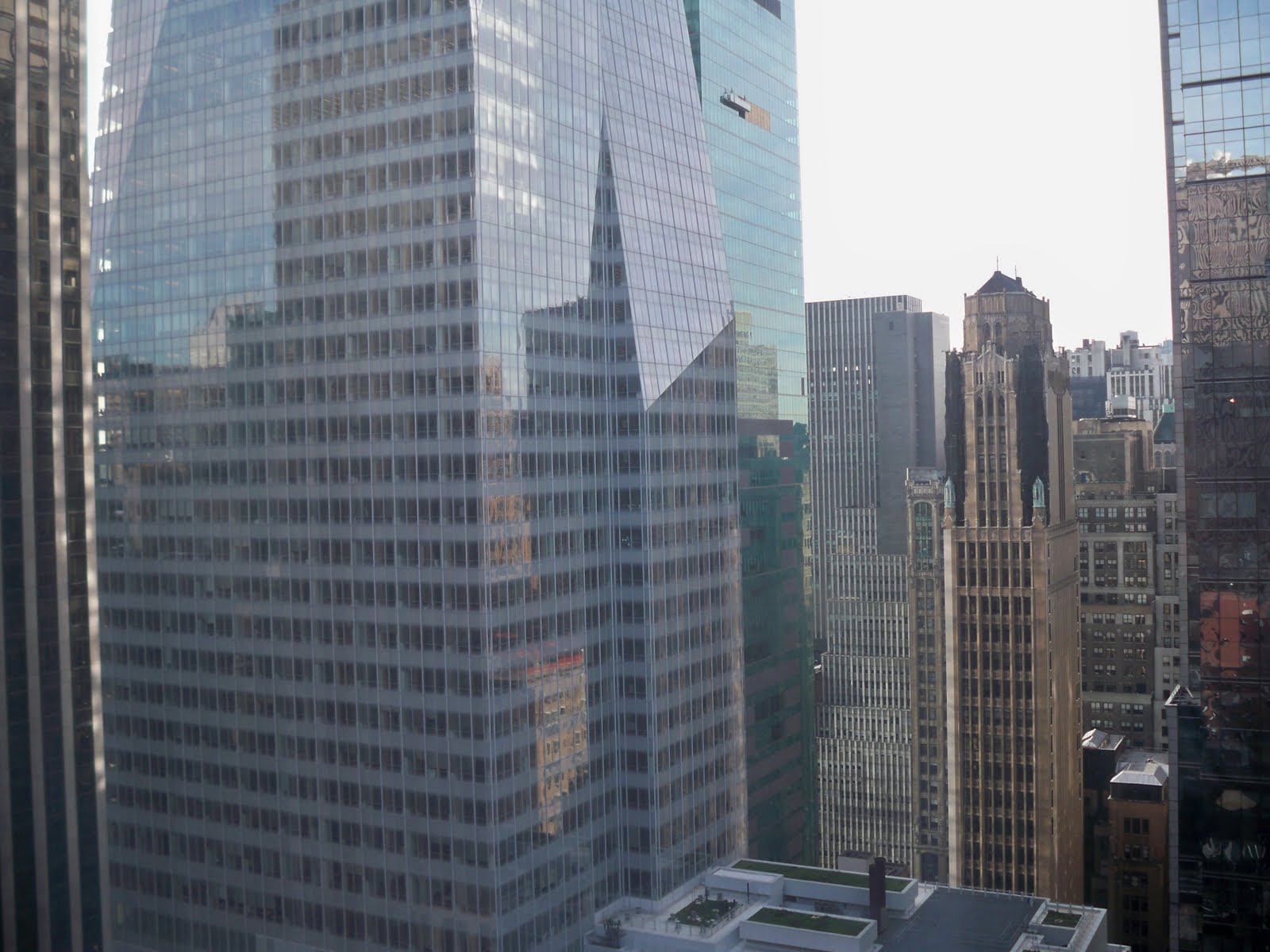
The magazine offices were housed at 230 Park Avenue, the ornate building which straddles that great thoroughfare. The elevators had painted clouds on their ceiling; they made me feel like I was in heaven. And in so many ways, I was. I’ve thought a lot about that place and those people since hearing the news of Lisel, about the long hall where she and other top editors had their offices. They all had an uptown view of Park Avenue; the whole world was at their feet.

Beating the Cold

Beating the Cold


When temperatures hit the teens, running is better than walking. This morning I skittered to my office, shortening the seven-minute stroll to less than five. The sun wasn’t up yet and a dreary light filled the void. Cars belched clouds of visible exhaust and the few commuters I passed kept their heads burrowed in their scarves.

I tried to keep it loose but when I’m cold my shoulders bunch and my grip tightens. I cinch in my coat, turn up my collar and dash down the sidewalk. This is not the way to deal with winter, I know. It’s easier when you relax. But today I’m moving quickly, still trying to beat the cold by moving through it as fast as possible.

Right Back Where We Started From

Right Back Where We Started From


Tom showed me a chart in the newspaper on New Year’s Eve, a chart that recorded the highs and lows, the improbable multiple dips and rises of the stock market in 2011. Funny thing was, it ended right where it began at the end of 2010.

There is cause for celebration in this. For the patient investor, obviously, who finds that — yes! — he still has a retirement fund. But for all of us who think we have fallen far when really we’re stuck in the same place.

I don’t like being stuck, stuck isn’t good. But it’s better than the alternative. So here’s a toast to all of us who, for whatever reason, find ourselves this year right where we were last year. We know what we have to do; now we just have to do it.

Hitching a Ride

Hitching a Ride


Winter came in with a vengeance last night. I didn’t feel it as much as I heard it. It hitched a ride on a wild west wind and galloped into our neighborhood in the middle of the night. It roared and growled, set the bamboo a rat-tat-tatting against the house and drove the wind chimes into overdrive.

It’s Arctic air, the weather folks say. I say it’s Winter and it’s angry, ready to take back its time. Enough of this balmy rain, this blooming-time air. This is the real thing. It keeps us inside and drives newly landed birds deep into thickets, where they fluff themselves up to wait it out.

I wait it out, too. Maybe I’ll walk at noontime, when the sun has some power over the cold and the wind has subsided, even a little.

New Year

New Year


The balmy temperatures of the last few weeks mean that cherry trees are blossoming and daffodils are peaking through the soil. Worries about global warming aside, it’s a nice way to greet the new year — with new growth, new life.

As I write, sun pours through the kitchen window making rainbows through a prism. We still have the holiday place mats, candles and poinsettia on the table and the Christmas tree lights up a normally dark corner of the living room. There is, then, a feeling of fullness.

I just came in from a brisk walk through the neighborhood. Resolutions are wafting through my head. I’m surrounded by people I love. So all is well this first morning of 2012.