Timepiece

Timepiece


Full disclosure here: My daughter Claire suggested this post. I emailed her Saturday night to remind her to “fall back.” She’s a busy college student; I thought she might forget.

Here’s what she wrote back: “I think all my clocks turned themselves back. You should blog about that. Now clocks turn themselves back. Computers, phones, you know.”

She’s onto something, I think. Not just that the ritual of “falling back,” that satisfying stoppage of time, is more often accomplished by a distant satellite these days. But also about the digital divide. Look at the wrists of young people; you won’t see many watches. I wonder, too, how many clocks they’re buying. My guess is precious few. When time is always in the palm of your hand, why display it on a wall?

The very concept of a timepiece, of a device whose only purpose is to tell time, is going the way of the slide rule. As a watch-wearer, cuckoo-clock owner and occasional Luddite, I find something to lament about that.
One Hour

One Hour


Today, thanks to our springtime sacrifice, we receive an extra hour — the gift of time. It’s still early enough in the day that I can contemplate how to spend it:

Sixty more minutes to read the Sunday paper? Two walks today instead of one? An extra-long phone call with friend or family? Cleaning the fridge? Snapping photos of autumn gold? Reading and writing? Putting the garden to bed? Making beef stew? Practicing “Sheep May Safely Graze” on the piano?

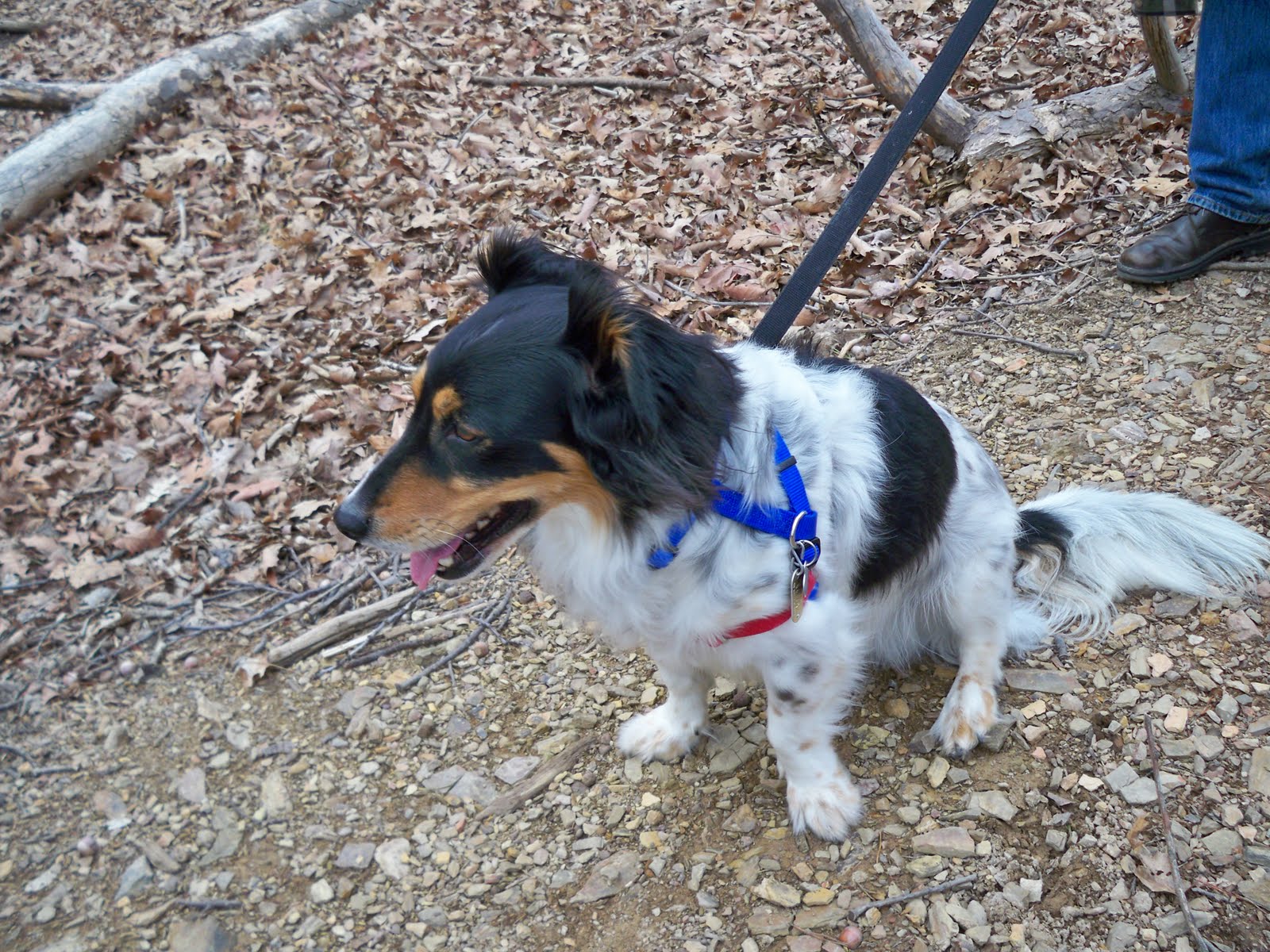
Or, how the day is starting to shape up: Letting the dog out, letting the dog in; letting the dog out, letting the dog in.

Has a certain mantraesque quality to it, no?

Permission

Permission


A cloudy morning grants permission. Not that one needs it, of course. We are all grownups here (well, almost). We go out or stay in as we are moved to do.

Still, a cloudy morning says, no need to venture out just yet. You will miss nothing by sitting here just a moment longer with the laptop, tapping a few more words onto the screen, reading another passage, closing the book and pondering a phrase.

A cloudy morning diffuses the light. No rays blare from the east. No shadows fall. The clouds are democratic; they spread light evenly across the land.

There is something in the work-worn soul that craves a cloudy Friday morning. It is a long sigh, a pause, a resting place.

Place under Assault

Place under Assault


Last night in class we talked about how place is being challenged by globalization, population growth, global warming and other challenges. When places must compete for resources they have to sell themselves. They are essentially in competition with each other.

On the surface that would seem beneficial to places, because it would prompt them to sharpen their competitive edges and make them more attractive. But what makes places more attractive, the marketplace says, are jobs, commerce and convenience. The marketplace is not very good at recognizing, creating and delivering the ineffable something that makes, say, San Francisco, San Francisco. And why should it be? What makes certain places sing out to us is far more than the sum of their parts.

So when places have to compete for jobs or big box stores, they sell an image of themselves. I’ve seen this happen with Lexington, which pushes itself as the “horse capital” even as racetracks are dying and horse farms struggling to make it. Once the real place is gone, it resurrects itself as a carriacture.

The real placeness of a place can only bubble up from below. It can’t be superficially imposed from above. End of sermon!

Water and the Bridge

Water and the Bridge


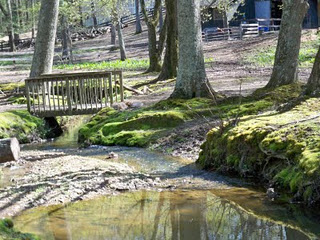
As I learn more about the land around me, I find myself gawking out car windows, craning my neck as I cross bridges, counting houses after I pass a hidden lane.

Is that where the old road veers off into the woods? Is this where, as late as 1970, cars forged the creek?

I’m testing the waters here, seeing if history can stand in for that bone-deep knowledge of a place that comes from growing up there. My hunch is that it won’t; my hope is that it will.

For doesn’t this, like so many conundrums (conundra?) depend upon whether you listen to head or heart? You can make a list of pros and cons, but in the end your rational self is taking orders from that fast-moving water down below.

Our thoughts are the bridge; our feelings are the water.

I put my money on the water.

Quick Change Artist

Quick Change Artist


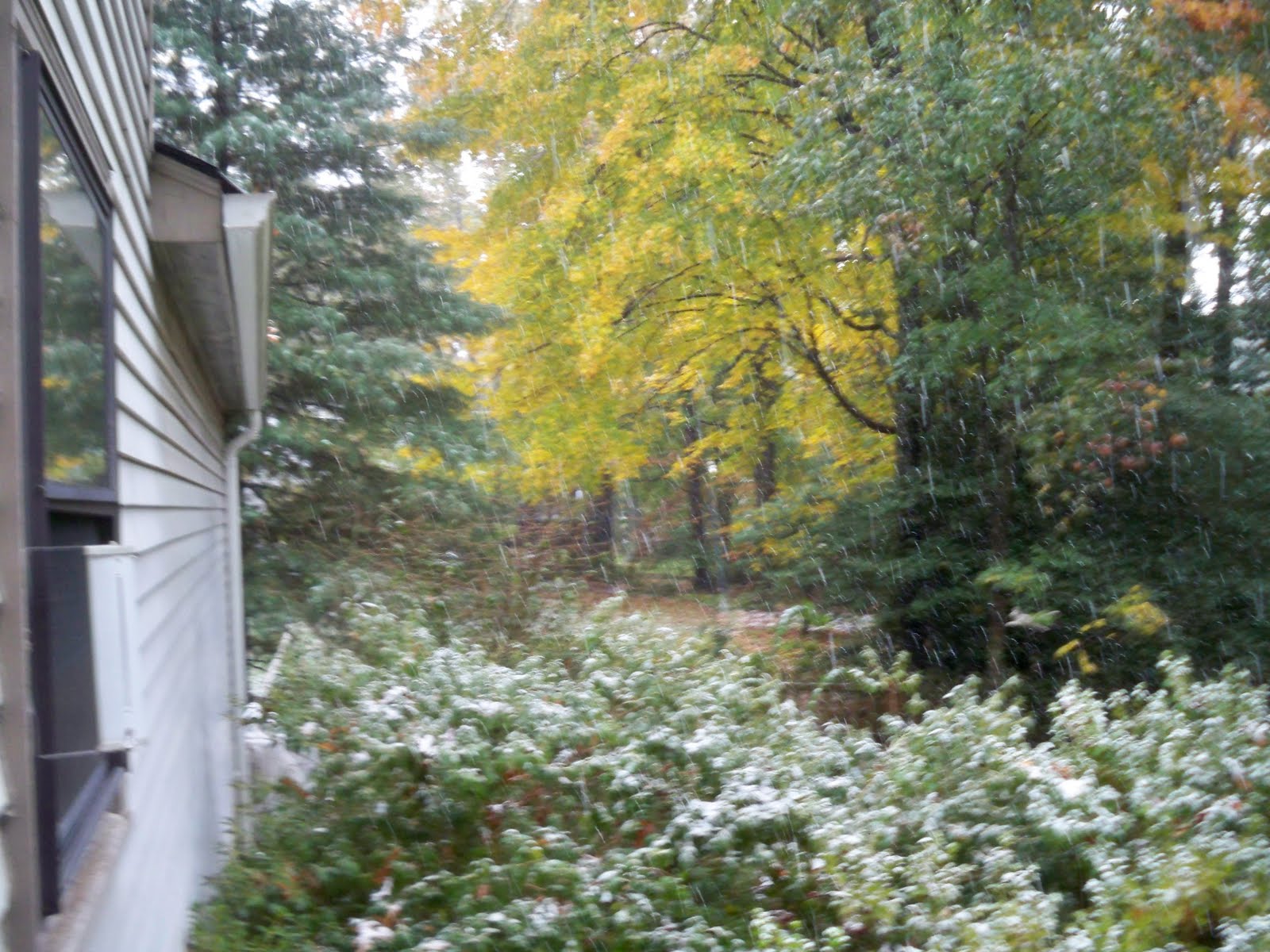
It took a glimpse of winter to scare us into fall. Oh, I know the chemical explanation. Or the lay version of it. Leaves need a shock of cold air in order to change color.

But look at it another way: The trees still clothed in summer green, shivering in the snow, telling themselves, this isn’t working. We need to strip down, and fast.

Overnight, we have autumn. The trees I know, the dependably flashy ones, have burst into yellow and orange. The air smells both acrid and sweet. And on a hurried walk, I spot an artful arrangement of crimson maple leaves snagged in a net of spent clematis. I relax my shoulders and move on.

Morning Commute

Morning Commute


Until the Viking warrior sat down across from me on Metro, I was planning to write about how there are now 7 billion people alive in this world. I had my head down in the Express, my mind riffing on population growth, limited resources, oil shale and other frightful topics when I looked up and saw someone who looked like this.

The Viking made a self-conscious entrance into the Orange Line train. The horns of his helmet tangled with the Metro railing and his seat mate looked a bit askance. The Viking’s friendly nod and greeting did nothing to brighten the day of his dour fellow commuter. But some of us were chuckling behind our newspapers.

I took the time out from my scary computations ( the world population has doubled in my lifetime and is projected to be 9 billion by 2050) to revel in the fun of the season.

A Viking on Metro. Happy Halloween!

Snowtober

Snowtober


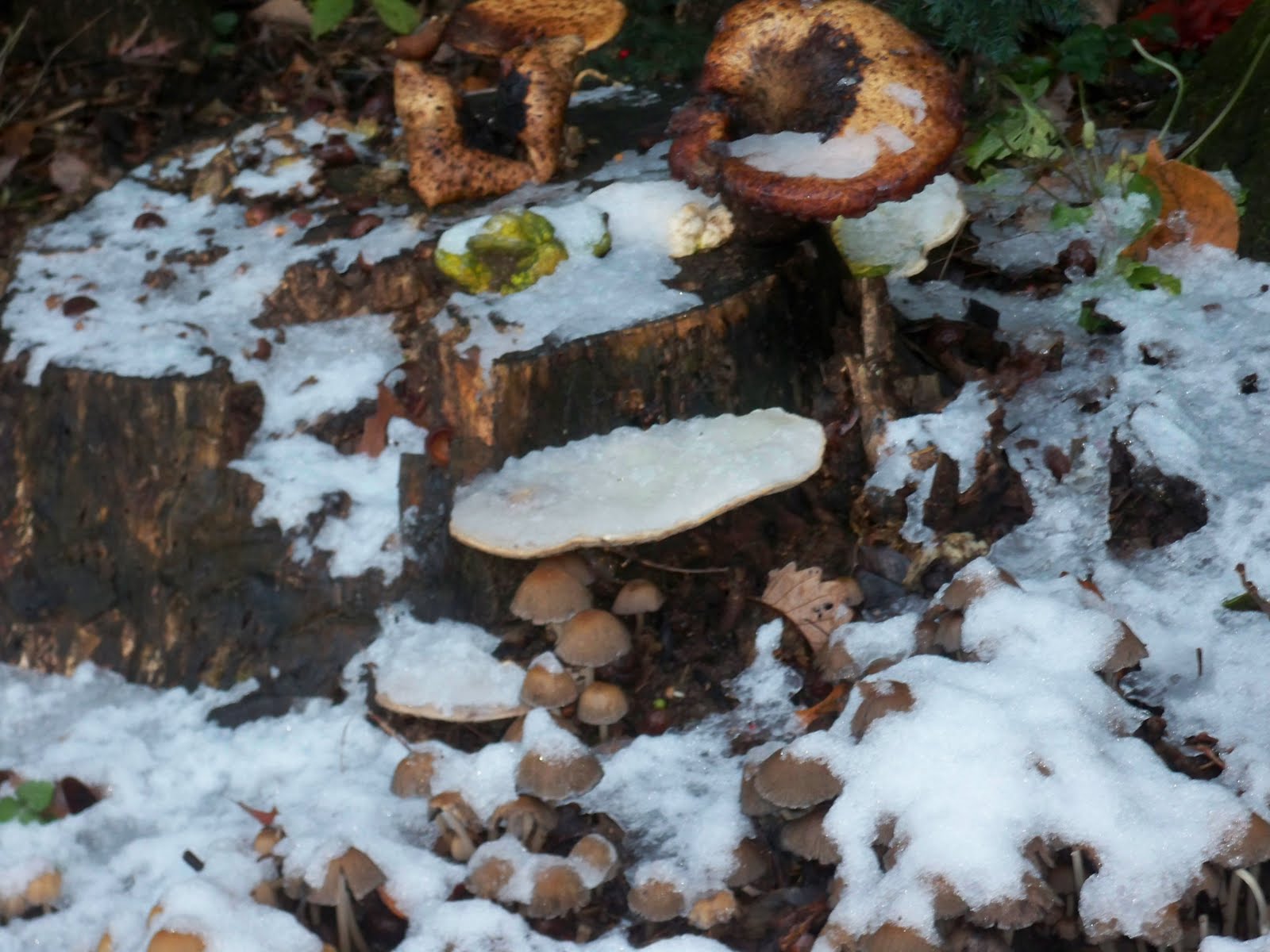
The name isn’t mine but I can’t think of a better one for a snowy October day, one of the few we’ve ever had in northern Virginia this early in the, well, we can’t really call it winter, can we? This early in the season — that’s better.

In honor of our snowy day, here’s a photo from the vault. With fond hopes that this is not the beginning of a hard winter to come.

Thinning

Thinning


Warm weather has kept our leaves from turning, but it hasn’t kept them from falling. On my walk this morning I skittered across frost-slicked bridges dotted with clumps of wet leaves. The woods are shimmering in some places, but denuded in others.

The overall impression is of a gradual thinning and winnowing — as if the year, winding steadily to a close — is ferreting out the truly important from the superfluous. Trees can do without this foliage, so let it go.

Our summer annuals, they too are winding down. The begonias and impatiens are stalky and pinched. They may be gone entirely tomorrow if temperatures plunge as low as predicted.

What will be left? The essentials: trunk and limb and stone and house. Only the strong survive.

Possession and Gratitude

Possession and Gratitude


Last night in class we talked about what it means to possess the land, about feelings of stewardship that have grown out of the environmental movement and other more modern sensibilities, but also about an earlier mindset that was abroad in our nation, pushing westward, felling trees, ruining the soil, taking and taking and not giving back.

This morning, I read about how pride assumes possession — and its opposite, humility, assumes gratitude. It is a shift of mindset, then. Something to mull over on my suburban walks, how thankfulness changes things, sets us free to receive what comes and be glad. We cannot possess what we never have in the first place.