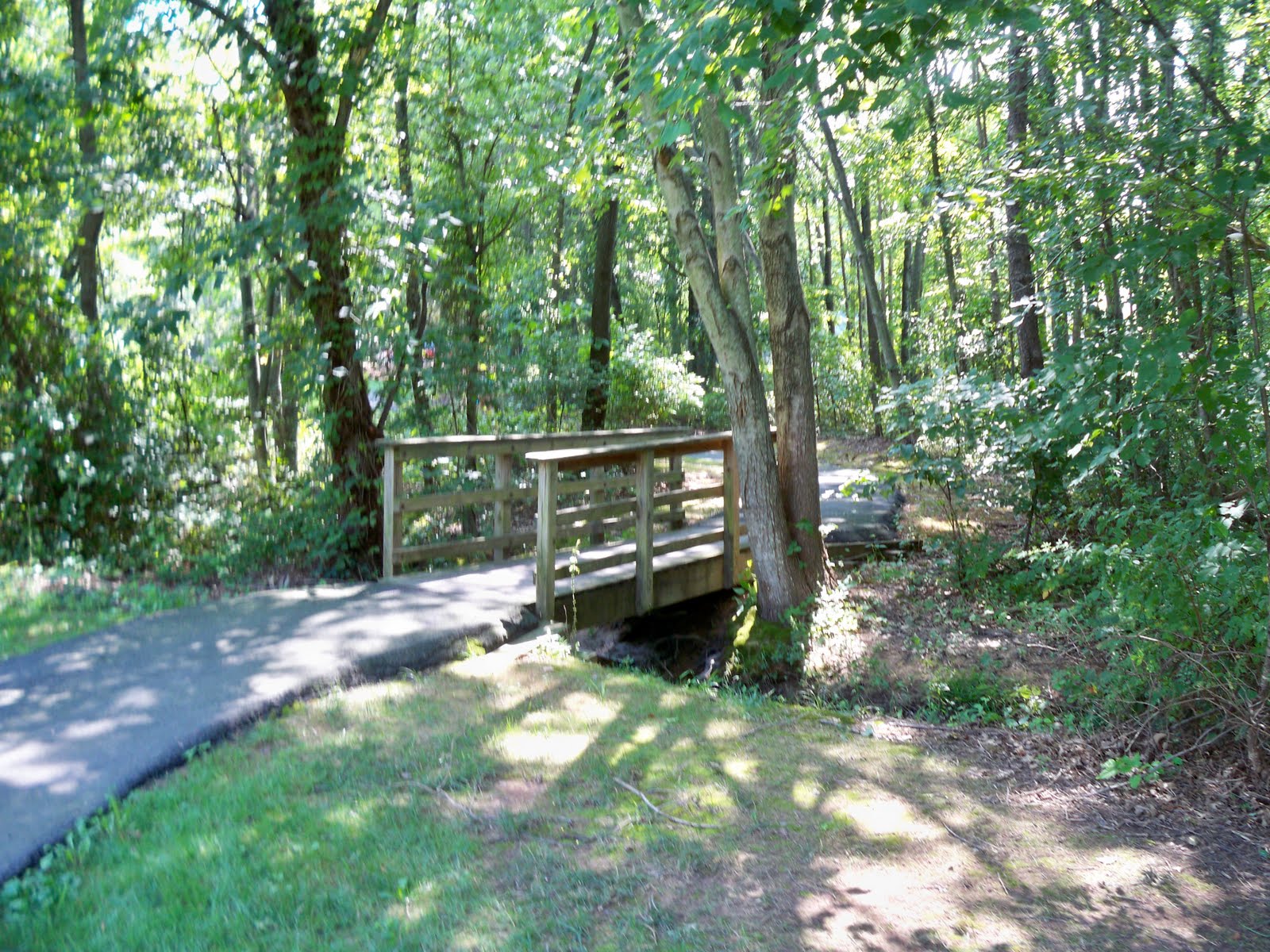
The more blogs I read the more I realize that mine is a blog in name only. Underneath its electronic shell it is paper, paper, paper. Ink on paper. Not that there’s anything wrong with this, of course. Some of my best friends read only ink on paper. But because this blog can be anything I want it to be, sometimes I think it should be more casual, less earnest. In other words, it needs attitude. So I am looking for a random photo to illustrate this random post. And I am typing with lips pursed and brow scowled. And in the future you may see more posts with bravura. But then again, you may not.
“How do you like to go up in a swing
Up in the air so blue.
Oh, I do think it the pleasantest thing
Ever a child can do!”
Robert Louis Stevenson
I love the little poem in A Child’s Garden of Verses from which these lines are drawn. I recited it on stage at age six and read it often to our girls when they were young. Lines from it pop into my head whenever I go “up in a swing” myself.
Maybe it’s the residual kid in me but I still like to swing. There’s something about moving through the air, seeing the landscape from such a moveable perch, that is uniquely satisfying. Movement enhances vision, I suppose.
Of course, swinging doesn’t come as easily as it used to. It isn’t that I can’t pump my legs or move my arms. It’s that swinging gives me motion sickness. After a few minutes I have to hop off until the world stops spinning.
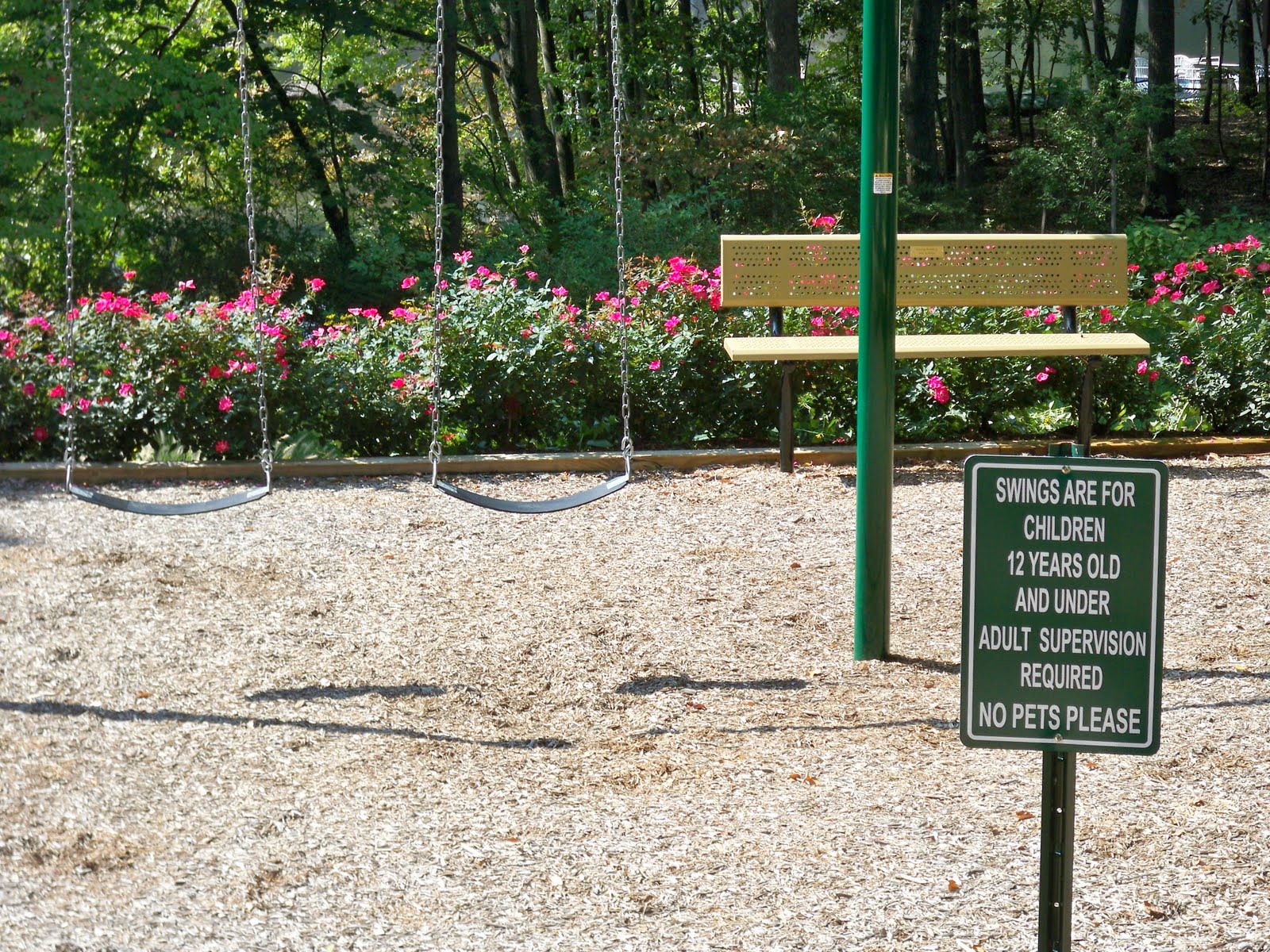
But the pleasure is worth the pain. There are few activitiess that provide as direct a link to childhood as this one. So I found a two-swing set in a neighborhood to our south. It’s tucked away in the woods (notice I’m not divulging the exact location), and it does not have a ridiculous sign like this one. There I can swing to my heart’s content and my head’s tolerance. Which means about, oh, five minutes or so.
An incomplete project puts me in limbo. It’s not so bad after all. I grew up with dim images of limbo as a soft cottony place where unbaptized babies frolicked happily, unaware that they would never see the face of God. The teaching was, if I recall, people in limbo will never go to heaven, but neither will they go to hell. And they won’t suffer. Limbo, then, is a land beyond time and expectations. But the thing about limbo was — and is — you can’t will yourself to be there. You have to arrive accidentally.
By the time autumn arrived yesterday the temperature was above 90 degrees. Our string of crisp, cool mornings and azure afternoons had come to an end. We were back to swelter.
Meanwhile, indoors, I was learning that two of the articles in the magazine I was ready to send to the printer would require substantive changes. New sources. New photos. And all the attendant re-design, re-proofing and re-angsting those require.
I once wrote a parenting article called “Two Steps Forward, One Step Back” about how children, after learning a new skill (walking, using the toilet) will occasionally regress back to their old habits (crawling, having accidents) as part of the process. Like all my articles in those days, it was meant to be instructive and encouraging. Don’t get frustrated if your child wets the bed after staying dry all night for weeks. It’s all part of the process!
Yesterday was like that. I remind myself that progress is not always linear, that we often reach our destinations crabwise, with much moving from side to side.
Today, summer turns to fall. Today, we are poised between two seasons. While there is nothing extraordinary about this in terms of climate or meteorology — it happens twice a year — equilibrium is certainly rare in terms of human conduct. How often do you meet a perfectly balanced person, one who is neither too strong nor too weak, too bright nor too dim; who is enough of this world to make a life in it but not so much as to lose all common sense or perspective.
Such a person sounds too good to be true, too wise to be real. I suppose to be human means to be swept up from time to time in passion or folly, to vibrate between the poles rather than steadily plot a center course. The way of balance and equipoise may be what we strive for (at least some of us) but it is seldom what we achieve. And maybe that’s a good thing. Was it Mark Twain or Petronius who said, “Moderation in all things, including moderation.”
It has been a while since I read a book in 24 hours, but I just did that with Nothing Was the Same, a memoir by Kay Redfield Jamison. I got hooked on Jamison’s prose when I read An Unquiet Mind, which chronicles her struggle with bipolar illness. Nothing Was the Same is about the illness and death of her husband, Richard Wyatt. The book combines raw grief with an elegant reflection on that grief.
Jamison, a psychologist and professor of psychiatry at Johns Hopkins, has studied the disease from which she suffers and she compares it with grief. Grief does not alienate as depression does, she says; grief is more useful. “Grief, lashed as it is to death, instructs. It teaches that one must invent a way back to life.”
Jamison takes you through her journey of abandonment and fear, and gives you hope that not only can people survive such journeys, they can even be transformed by them. “It is in our nature to want to hold on to love; it is grief’s blessing that we come to know that there are limits to our ability to do so.” To hold onto the love she has for her husband, she had to transform it. So she wrote this book. “I would write that love continues, and that grief teaches.” It did, and it does.
I don’t know exactly what I was doing when “Band of Brothers” first aired in 2001. Raising children, I guess. But I’ve been watching it now, courtesy of Netflix, for several weeks, and the day after I view each episode I can’t get the music or the images out of my mind. The score is elegaic but forward-moving, perfectly suited to its subject, and it breaks my heart, as does the show.
I have seen war movies, plenty of them. But there’s an unrelenting power to these episodes that brings home over and over again what we owe to these men. What they did for us and for our country. The scenes are gray, colorless: the cold, the mud, the fear, the constant presence of death. And the soldiers, they are so very, very young.
I watched the final episode last night, and it was a comfort to learn the outcome of those E Company survivors, to know that they returned home to be mail carriers and earth movers. To live ordinary lives.
I missed honeysuckle season this spring, was traveling or getting ready to travel, so I’ve relished the second bloom of this aromatic weed. It is a weed, I think, or at least it acts like one: tumbling over fences and hedges, showing up uninvited in garden plots. I love it, though. Love the way its aroma takes me back to childhood, to the days when we played outside all day long. So yesterday I picked a sprig, brought it home and put it in a tiny vase. I’m sniffing it even as I write these words. The scent of spring, transported to fall.
Sometimes when I have a free moment I browse the pages of The Footpaths of Britain by Michael Marriott. It’s an old tome I picked up for a dollar at a library book sale and worth a hundred times that amount. It has sentences like this: “In many respects, indeed, the Ridgeway is the best route for aspiring distance-walkers wondering where best to open their account.” Or this: “The Pennine Way, the first of Britain’s long-distance paths and still claimed by many as the toughest, grandest and most romantic of them all.” How can you fail to write lyrically when your country has place names like the Forest of Bowland, North Wessex Downs or Edenhope Hill?
Illustrated with mostly black-and-white and the occasional stunning color photograph, The Footpaths of Britain is charmingly out of date, with a chapter on equipment that long predates today’s pricey synthetic fabrics. Of course, this only makes me like the book more.
In short, it makes me want to travel, to hoist a pack on my back and take to the hills. But more than that, it reaffirms why I write about walking. This is from the foreword by John Hillaby: “Walking is a way of reviving a very old way of life once shared by mendicant friars, beggars, bards, pilgrims and traveling artisans. As Henry James remarked, landscape is character and walking — which is a form of touching — is like making love to the landscape and letting it return that love throughout your whole body. … Long-distance walking, I maintain, is a fine art…”
The wallet was lost, so we went to find it. We started at Hunter Station, an old crossroads. Confederate troops passed through here on the way to Antietam; Union troops on the way to Gettysburg. As skinny-tire bikes blew past us (“passing on the left”), we walked briskly toward the Cross County Trail, turned left and entered an alternative universe of creek and fern.
That there is such a thing as a 40-mile ribbon of green in a place as crowded and over developed as ours is cause for jubilation. Sometimes paved, sometimes dirt or gravel or mulch, the trail meanders along stream valley parks and across hidden ridges, gladly using rejected land, the leftovers, the crumbs. Put enough crumbs together, though, and you have passage from the Occuquan in the south to the Potomac in the north.
We walked a small stretch of the trail, just enough to stretch our legs and convince us that the wallet probably was at home after all (and of course, it was). But the point wasn’t the wallet; it was the walk.