The Train Stops Here

The Train Stops Here

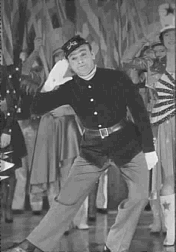
More snow is forecast for tonight and tomorrow. But that’s not what I want to talk about. It’s the morning light, the morning that comes earlier every day, pink tinged and proud. It’s the rosy fingered dawn that Homer wrote about in “The Odyssey,” still rosy, still here. And it’s a guy I noticed this morning while waiting for the train, just an ordinary guy in a black pea coat, who thrust his right index finger up into the air and then very definitively pointed it down again as the old Orange Line cars lumbered into Vienna station. He looked as if he were delivering a downbeat to the New York Philharmonic or refereeing the Super Bowl, but what he was really doing was pointing to his place on the platform, saying to the great god Metro, “I want the door to open here. Right here where I’m standing.” And, by golly, it did; a door opened magically in front of him. This is the wish of weary commuters everywhere, that the doors will open right in front of us, that we’ll step into empty trains and find seats. The pantomimer was just more open about this desire than the rest of us. We can all use a little levity in the morning.

Behind the Pines

Behind the Pines


Astute followers of these posts will notice that for a blog that calls itself “A Walker in the Suburbs” there’s been precious little walking going on. Let’s blame that on the snow and on sciatica (perhaps shoveling-induced although its exact origin is a mystery) — both of which have kept me inside. But I did venture out yesterday and I noticed that one house I’ve always wondered about, a house obscured by thick evergreens, is now partially exposed due to a downed tree. This place was always a mystery. Because I couldn’t see the house at all, I imagined it to be quite different from the other models in our neighborhood. Elegant and refined, with the whiff of an English country estate about it. But now its secret is out. It’s just another house, I’m sorry to say. But if I know evergreens, the trees that remain will quickly spread and offer a blessed screen. And then, once again, we will have mystery.

Opening a Window

Opening a Window


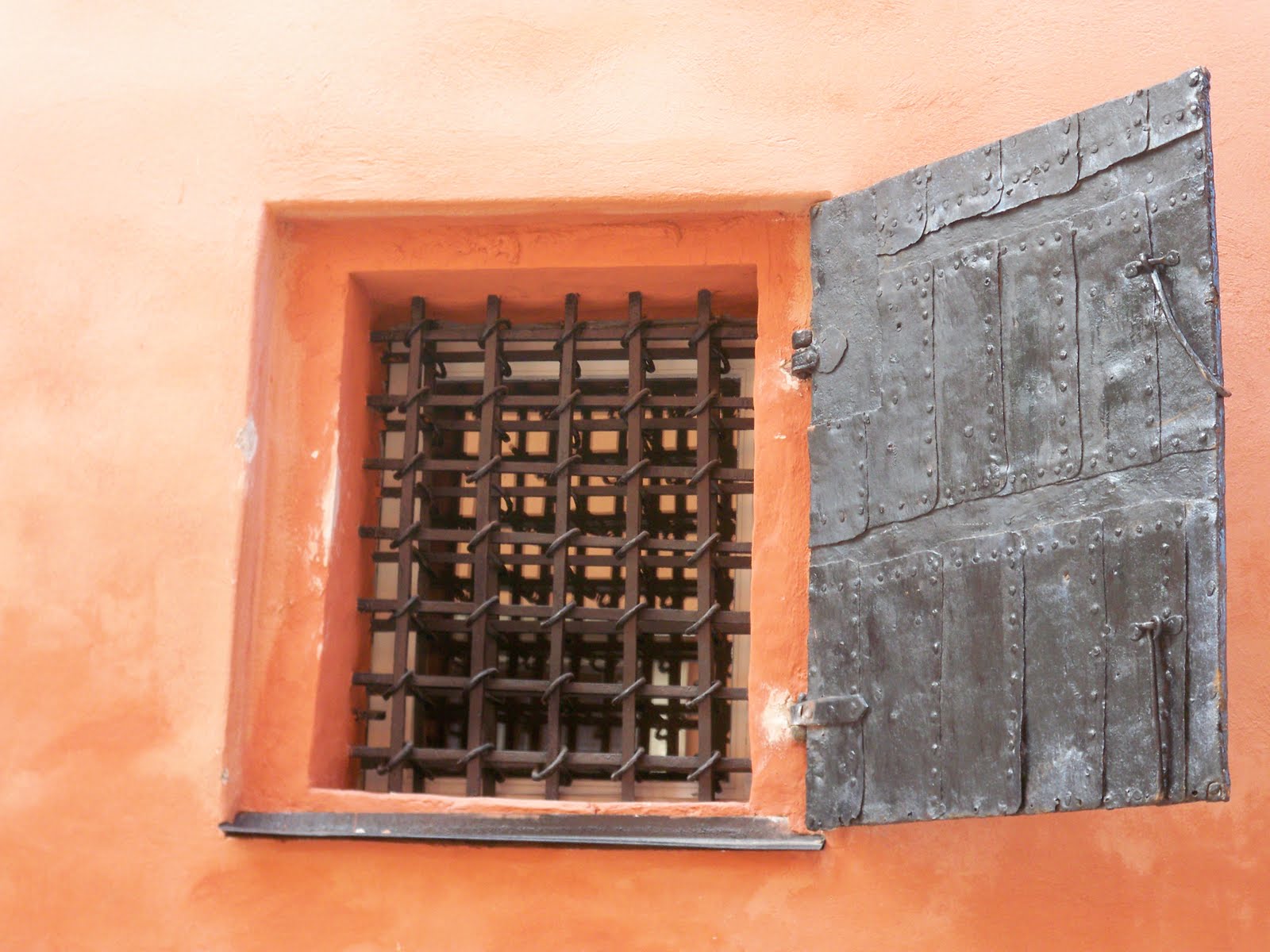
I read today in the paper that Georgelle Hirliman died. She was known as “the writer in the window” because about 25 years ago when she had writer’s block she came up with the idea of sitting in a Santa Fe shop window with her typewriter and a sign that read “Help me cure my writer’s block — give me a topic.” People passing by would tape up their questions and on the other side of the glass, she would tape her answers. One question was “Where do ducks go when ponds freeze over? Her answer: “warm, chlorinated pools in Miami and Beverly Hills.” You may guess where this is going. She never wrote the novel, but she appeared in windows all over the U.S. and Canada, and eventually collected all her aphorisms into a book called “Dear Writer in the Window: The Wit and Wisdom of a Sidewalk Sage.” For her, the bypass became the new road. For her, when God closed a door he literally opened a window. Salvation often has a sense of humor.

The Tissue

The Tissue


Like many people these days I’ve been mesmerized by the Winter Olympics–although I seem to have a knack for missing the most exciting moments. I was there for the first runs of the women’s skeleton, for example, but missed Shaun White’s Double McTwist and Evan Lysacek’s long program Gold. But what stands out in my mind is a moment from last night’s ice dancing program. I don’t even remember which pair it was, but I watched the man blow his nose and then hand the tissue to someone — a coach, a relative? — before he skated off with his partner into Olympic glory.

It made me think about all of us who only stand and wait, who cheer on the sidelines, which is, let’s face it, most of us. And it also made me think about how, despite their gravity-defying feats, these Olympians are just ordinary people after all. I’ll remember the tissue long after I’ve forgotten the triple toe loops. It was a moment of humanity. Those always stick with me.

In Design

In Design

The scene: a class on Adobe In Design. The characters: Seven people who know what they’re doing and one who does not. The latter, an editor, works in words not in images, cannot find all the tiny buttons and tabs with which one works in this program, cannot even remember to use the mouse instead of the keypad. But she — heck, I’ll just come clean and say I — press on, determined to get as much out of the class as possible.

I don’t plan to become a designer; I just want to demystify the process. I repeat that to myself all day, a silent mantra, but there comes a time in mid-afternoon when I’m hopelessly confused. I don’t know how to manipulate the image, I don’t even know what layer I’m on. The class is moving fast and by the time I ask a question I’m six steps behind the others.

The secret to staying young, I’ve heard, is to keep learning. But learning is risky. It requires a willingness to appear foolish in front of others. I felt foolish today. Based on that, I should have lopped a week off my age. At least.

Black Ice

Black Ice

I’m not an ice skater, so when I hear the words “black ice” I don’t think of a calm skate on a frozen pond. Instead I imagine the skid mark, the tire tracks off the road. What is it about black ice that strikes terror in my heart? It’s the stealth, isn’t it? Fearing something that you can’t see. It’s the ordinariness of the ice, the way it poses as a puddle but turns out to be something more, something sinister. Black snow isn’t good either, of course, but at least you know what you’re getting — the fumes of a thousand internal combustion engines, the grit of countless plow-gouged roads. Black snow coats the roadside mounds and stands in sharp contrast to lawns of untouched white. But black ice is invisible; it’s felt before it’s seen. I drive cautiously when black ice is about; the curves of Fox Mill that are normally such a joy to lean into, I slog through slowly these days. And let’s not even mention how I shuffle along suspiciously shiny sidewalks. Black ice makes me walk like an old woman.

In and Out

In and Out


Today I woke early and blew my hair dry. Soon I will put on work clothes, drive to Metro, ride the Orange Line to Metro Center, switch to the Red Line, walk from Judiciary Square to the Law Center — and return to routine. For 17 years I worked out of our house. Whole weeks would go by when I would only wear slippers. Last week’s snow holiday was a brief return to that world. It was nice; I won’t deny it. But there is something about getting up and getting out of the house that is good for creativity. So even though I long to spend today with my books and my laptop, a walk through the woods and a cup of tea after I come back inside, I will instead shoulder my bag and head out into the world.

Feed the Birds

Feed the Birds


We haven’t fed the birds since we brought our dog, Copper, home from the Loudoun County Humane Society three years ago. Copper is part border collie, part basset hound. While he’s never harassed our beloved parakeet Hermes (who’s always in his cage, swinging from a hook in the kitchen), he does love to chase small critters in the backyard. But the snow and ice have been so brutal for wild birds that we’ve thrown some seed on the table and the deck railing. We’ve mostly had junkos, little gray things with a flash of white under their tails, so brave in the face of cold and ice, hopping the snowbanks on their little stick legs. As I watch them from the kitchen window, I think of how winter opens our eyes to what is usually hidden. It is, in that sense, the true season of renewal.

Staying Put

Staying Put


I haven’t left the house by car in more than a week. My only forays have been on foot. This has not been a bad thing. I’ve made soup, baked rolls, shoveled snow, read books, talked on the phone, hauled wood, watched movies, fed the birds and consumed an entire bottle of champagne (which is a lot for me). Most importantly, I’ve started this blog, which I might never have done had I not been handed this windfall of time.

Staying put has made me think about restlessness, what drives us to be out and on the go. It’s often a sense that something more important is happening elsewhere. When I lived in New York, I felt like there was a little battery inside me that never wore down. I had to be out walking, meeting friends for dinner or drinks, running down the broad streets of Tribeca (sadly, one of my running destinations was the World Trade Center). God, I loved New York, but if I had stayed there I think I would have burnt out at an early age.

This is not a vote of confidence in the suburbs, by the way. But it is a paen to staying put. I wouldn’t want to live behind a wall of white, but a few days here has slowed us down, has showed us what’s essential.

Giving Way

Giving Way


As the big snow of 2010 becomes a part of history we on the ground are left with its aftermath. We are still digging, still shivering, still feeding the birds. We are also learning the etiquette of the yield. Our roads are plowed now, and for that we are grateful. But there is not enough room on the road for two cars side by side, so one must give way. This is true for pedestrians (and dogs!), too, and was especially noticeable before our street was cleared. The one-lane footpath that was Fort Lee Street was only wide enough for one person at a time, so if neighbors were coming toward each other, the one closest to the smallest snowbank (or mailbox “dig-out”) stepped aside.

Seeing this ballet reminds me of a trip Tom and I took to Devon and Cornwall before we married. We stayed in a place called Old Walls and the roads we took to get there were the most impressively narrow ones I’ve ever seen. They were bordered by tall hedges and were barely one car’s-width wide. As we crept slowly down them in our borrowed Renault, an Austin Mini (or whatever it was) would zoom toward us like a bat out of hell. Every time, I braced myself for a head-on collision. But every time, at the last minute, those narrow-road veterans would dip into some nearly invisible turnout in the hedge, and we would be saved. The local drivers knew about these places all along, of course. Playing chicken with the tourists was their favorite sport.

This was a lesson in how not to give way. I’d like to think we’re adapting a more courteous approach here, that we’re learning to read the intentions of the car coming toward us, that we’re becoming flexible and patient. But then again, I’ve not left the house (except on foot) in a week. So it’s easier to believe in fairy tales.