The Redder the Better
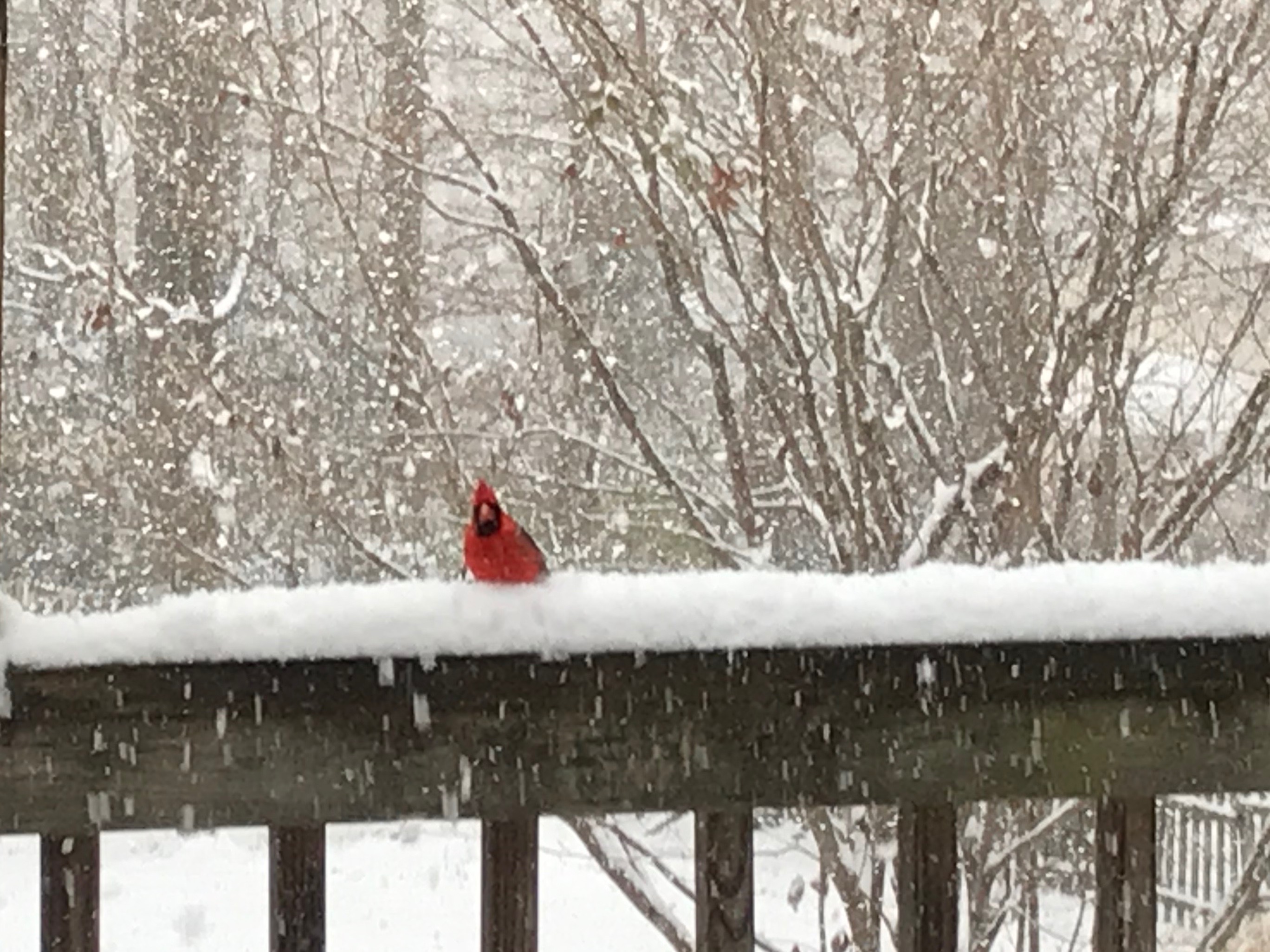
We are flush with cardinals here in my corner of Virginia, but the male at the feeder yesterday was one of the most vibrant I’ve ever seen. He practically glowed.
I did a little research, and sure enough, male cardinals are at their most vivid in late winter and early spring. Diet determines color, and females want a partner with a seed stash. The redder, the better.
You might wonder how such an outlandishly bright bird manages to be one of the longest lived, up to 15 years old in some cases. Male cardinals certainly aren’t hiding from predators.
The answer, according to the Cornell Bird Lab, is that cardinals avoid the stress of migration, and staying put gives them a longer breeding season. They are “habitat generalists” who can nest in a variety of locations, and the females of the species are far less conspicuous than their mates. They camouflage themselves in tangled shrubs (of which we have plenty).
It’s easy to be ho-hum about cardinals, given how many we have. But their springtime brilliance reminds me how lucky we are to have them in our midst.
(I snapped this photo during a late-winter snowstorm several years ago. This fellow was already an eye-popping scarlet.)