A Sense of Belonging
Still high on last week’s trip, I recalled the name of a book, How New England Happened by Christina Tree. Suddenly I wanted to read it. I believed we owned it, had acquired it when we lived in Massachusetts.
I looked upstairs and down and even in the basement, where books are double-shelved behind a small rainbow-painted table. The volume was elusive, didn’t appear in any of these places at first, but I decided to search again in the upstairs nook where most of the travel tomes are housed. And there, as if it were a magnet pulling me shelf-ward, was the very book.
I spent part of yesterday perusing it, trying to figure out the magic ingredients of this special place. Is it the architecture, the climate, the inhabitants themselves? A combination of factors. of course. For one thing it was “America’s first finished corner,” Tree writes, “with a look and a style all its own.”
And then there was this: By the end of the 17th century, Tree says, “one trait could be said to distinguish this region from other British colonies. It was a sense of belonging. People no longer talked of ‘going home’ to Britain. The first person on record to use the word ‘American’ for a colonist rather than an Indian was the Boston Puritan Cotton Mather. That was 1684.”
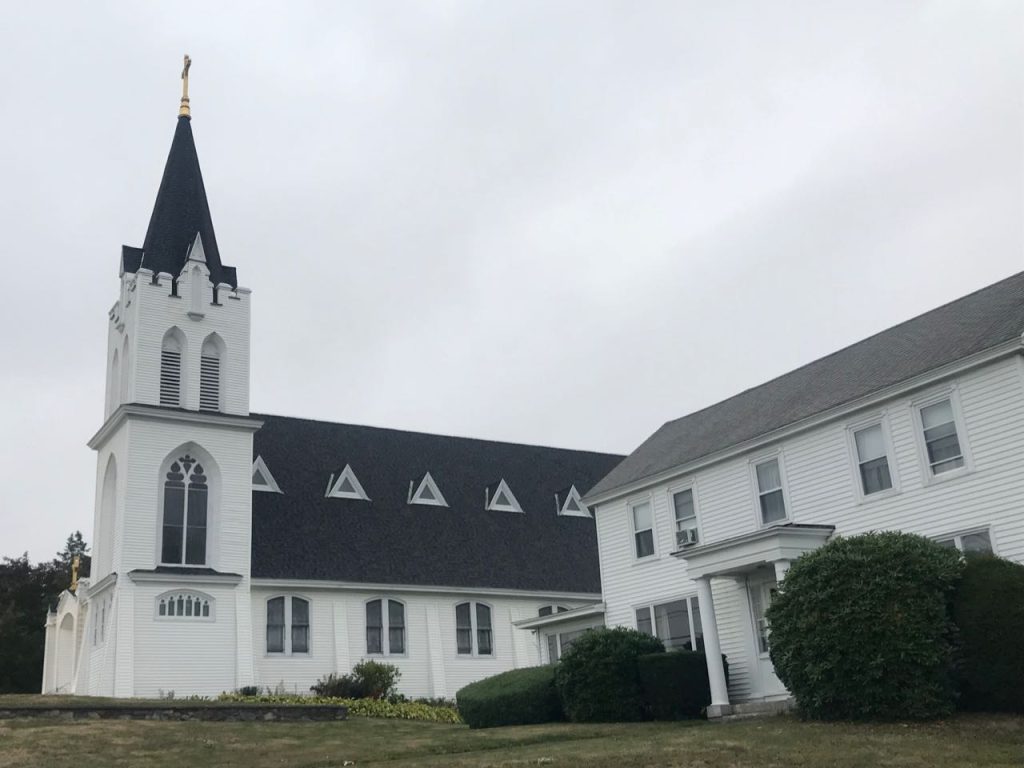
(Big white churches on a hill: a distinctive feature of New England.)