Browsed by
Author: Anne Cassidy

Haunted House

Haunted House

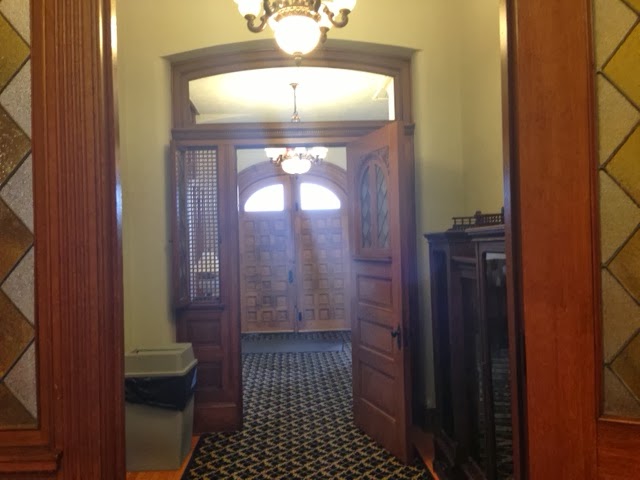
The stairs creak, the floor groans — night sounds of the empty nest.

When the house was full of children I used to joke that we didn’t need those fake cobwebs, we had the real thing. Our house was messy because we were too busy to clean it.

The house is tidier now, but trick-or-treaters will be the only kids I see. No one to carve the pumpkin (though Celia helped with that last week when she was here for fall break). No one to watch “The Legend of Sleepy Hollow” and laugh at Bram Bones. No one to borrow my eyeliner for drawing a fake mustache.

Luckily, the house is haunted. Not with evil spirits, but with good ones. All the years, tears, giggles — all the drama — it’s here somewhere; I’m convinced of it. And on this day of spirits, it doesn’t take much imagination to find it. 

Rhythm of the Amble

Rhythm of the Amble

Lately I’ve been running as much as walking. This may be good for my physical well-being but I’m missing the measured thought that comes with slower foot fall.

I’ve written about this before, but it’s worth more rumination. My theory has been that running requires enough effort that there is little left for anything else.

But the other day, on an especially soothing woods walk, another possibility presented itself: It’s the rhythm of the amble — left, right, left, right — allowing each step its own percussive moment. It’s trance-inducing after a while. And very conducive to cogitation.

Then again, it may have been the autumn color and the deepening dusk that worked its magic.

Walkable City

Walkable City

“Walking is a simple and a useful thing, and such a pleasure,
too. It is what brings planeloads of Americans to Europe on holiday, including even some of the traffic engineers who make our own cities so inhospitable.”  — Jeff Speck, Walkable City
 It would take far more than a single post to describe all the ideas in this book, thoughts about walkability from one of the nation’s foremost experts on it, the city planner Jeff Speck. For now here are Speck’s “Ten Steps of Walkability”:
 Put cars in their place
Mix uses
Get parking right
Let transit work
Protect the pedestrian
Welcome bikes
Shape the spaces
Plant trees
Make friendly and unique spaces
Pick your winners
Speck mentions European cities throughout the book. Here are places where pedestrians rule, where public transit safely transports people to and from their destinations, where bikes are welcome and buildings create human-scaled places.
What all these features combine to create is a walkable environment, one people want to stroll through and be part of.  We need to value “moving under one’s own power at a relaxed pace through a public sphere that
continually rewards the senses,” Speck says. “We need a new normal in America, one that
rewards walking.”

Marathon Girl

Marathon Girl

Her first achievement was signing up, a marathon of its own, requiring hours online and the drive to submit her name ahead of tens of thousands of others.

And then there was the training, which began in March and involved a byzantine schedule of long runs and short runs building up to yesterday’s 26.2 miles (excuse me, 26.6 miles, according to her Garmin).

For some reason, she decided that the training should also include a triathlon, a swim-bike-run event that left her with a sprained ankle less than two months before the big race. But she pushed through that, too, with an air boot and lots of determination.

And finally, yesterday, all the hard work and determination paid off.  Not much more than a year and a half since she started running, Claire successfully completed the Marine Corps Marathon.

There were many moments I’ll remember, ones I didn’t photograph because I was too busy hugging her, but this is one that will stick with me.

Cleaning Up

Cleaning Up

As one who routinely gives short shrift to sleep, cutting corners whenever possible, I read the newspaper article with great interest. Reporting on a study published in the journal Science, the article said that new imaging techniques have allowed researchers to better understand how the brain cleans cells during sleep.

Apparently, the space between cells expands while we’re snoozing — which gives a network that drains cellular waste from the brain more space to flush out the toxins.When we sleep less, the brain can’t go about this housekeeping function as efficiently — and toxins build up. No wonder my head feels foggy the morning after I’ve slept five hours or less.

This finding explains the restorative nature of sleep and may also help scientists better understand Alzheimer’s and Parkinson’s diseases.

All I know is, I’ve gone to bed earlier and slept later ever since I read the article. And that’s a good thing.

Priming the Pump

Priming the Pump

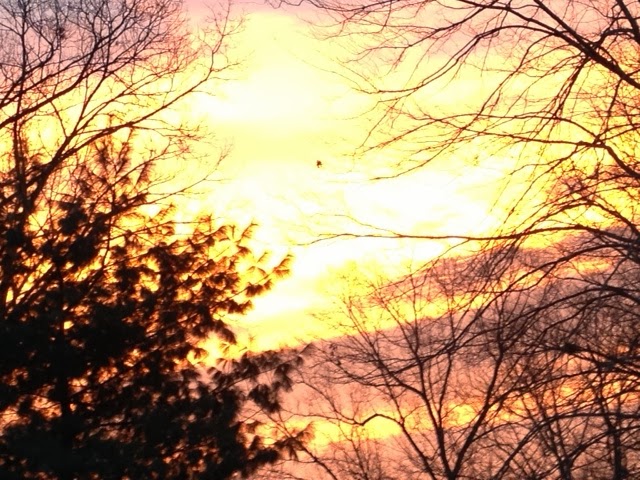
I sit here as I do on many work-at-home mornings. The top half of the plantation shutters are open to the new day. It’s still early. There are no colors yet, just dark
shapes silhouetted against the light. Soon I will leave the keyboard and
venture out. It used to be my morning habit, up and out before the day had any cobwebs
on it. But now I write first. It’s the only way sometimes. 

And sometimes it
works, the words pour out in a torrent. From the feel of the keys
beneath my fingers, this will not be one of those days. But no matter. I write
in all internal weathers; I prime the pump. And, on this day, which feels so
much like a first day, a new year, I will prime it some more. 
Summer Sun

Summer Sun

Light slants low from heaven this time of year. Yesterday it made rainbows on my office walls, pouring through a prism in the window — winter’s consolation.

But today the summer sun is on my mind: full-bodied, inescapable, soul-stirring and strong. 

From its rising to its setting, a benediction, a hymn of love upon the land.

Twenty-Five

Twenty-Five

I’m up early, but her birthday has already been underway for nine hours. Her 25th birthday. It’s happening in Greenwich Mean Time in the northern reaches of a tall, skinny country in West Africa, and in many ways I’m feeling very far away from Suzanne today.

But in other ways I’m not. I heard her voice less than 48 hours ago and, God willing (a phrase she’s begun to use with alarming frequency), I will again later today. I’ve had two emails recently and, within the past month, a rare and precious letter.

These, for now, will have to do. And I’m left where many parents of 25-year-olds are — to my own devices. Suzanne, after all, is her own person. They all are. And I am mine. Or at least I’m beginning to be again.

So what I think about today is not just that she is a quarter-century old, but that I’m 25 years a parent. Long enough to get the hang of it, you’d think. Not really, though.

(Photo: Katie Esselburn)

Standing Still

Standing Still

A post postponed. A post about sleep. Too long to get into today. Instead, a meditation on standing still, its importance in our lives.

Standing still to watch the grass waving in the wind; to ponder a fenced pasture.

Standing still to hear each leaf hit the ground, to feel a breeze I wouldn’t notice if I were moving quickly.

A walk moves you through space. But standing still lets space move through you.

Sunday Visits

Sunday Visits

Old-fashioned Sunday afternoons were for visiting. First there was church, then Sunday dinner — a heavy, midday repast (not brunch) — then chatting in the living room or parlor.

Even in memory, these childhood Sundays are interminable. Now I realize what they were for.

Yesterday I spent four hours on the phone. I talked with my mother, my sister, my daughter and my friend. The Sunday phone call is the modern equivalent of the Sunday visit. Because family and friends are far flung, the receiver (and now the smart phone) is the portal of togetherness. It is not ideal, but it is essential.

“A culture wise in love’s ways would understand a relationship’s demand for time,” says Thomas Lewis, M.D., and coauthors in A General Theory of Love. “Americans have grown used to the efficiencies of modern life … why should relationships be any different? Shouldn’t we be able to compress them into less time than they took in the old days? … The unequivocal limbic no takes our culture by surprise.”

So even though I “didn’t get much done” yesterday, I remind myself that there are no shortcuts to closeness. False starts, conversations that go nowhere, simply being available in case a conversation might happen — these are the currency of intimacy.