The Grand Gesture
This is what, long
ago, made him fall in love with photography, the paying of attention, the
capturing of time. He had forgotten exactly this. … Pay attention, he thinks.
Not to the grand gesture, but to the passing breath.
This is what, long
ago, made him fall in love with photography, the paying of attention, the
capturing of time. He had forgotten exactly this. … Pay attention, he thinks.
Not to the grand gesture, but to the passing breath.
Yesterday I learned that Kentuckian Cassius Clay had a specially reinforced door and cannons mounted on the top of the building from which he printed his abolitionist newspaper. He was willing to step out and call for an end to slavery, but he was going to protect himself, too.
As it turned out, his office was ransacked — and his printing press sent packing to Cincinnati — while Clay was out of commission with typhoid fever.
Journalists who speak truth to power have never been safe. Neither now nor then. Sometimes the power of the press is best measured in the lengths people will take to silence it.
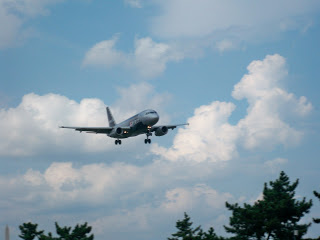
Yesterday, a trip that usually takes eight and a half hours took an hour and a half. Instead of driving to Kentucky, I stepped on a plane, waited around a few minutes (OK, I’m not counting that, I was reading!) and in less time than it takes to watch a Disney movie (which is how we used to measure travel distances when the kids were young; one “Lion King,” one “Beauty and the Beast,” one “Hunchback of Notre Dame” and we’re there!) I was looking at my hometown from the air.
Among the cognoscenti (of which I obviously am not one), Lexington, Kentucky, is said to have one of the most beautiful aerial approaches anywhere. The old grandstands of Keeneland Racetrack, the red-topped barns of Calumet Farm and the white-fenced green fields of the Bluegrass are the last things you see before the plane touches down.
But it wasn’t just the beauty that amazed me. It was being reminded of air travel’s time-stapling speed and the essential order of the landscape. Truths that have been hidden to me recently but which I caught a glimpse of again yesterday.
Every spring I plant impatiens in the front garden and tomatoes and basil in pots on the deck. That’s what I did yesterday. The begonias will wait till the weekend. These annuals join the perennials, the day lilies and climbing rose and (right now) the slender irises and steadfast peony.
This is not a wide array of plants, but experience has proven what will grow in our shady yard — and what will not (forget a vegetable garden).
Is this what makes for routine? All the countless failed experiments — geraniums, petunias, speedwell, columbine? The list of plants that won’t grow in this shady, clay soil is much longer than the list of those that will. But all it takes is a few. And the knowledge of what those few are makes gardens grow a little faster, bloom a little brighter.
(The garden of my dreams, not my reality! It’s anything but routine.)
The book I was reading as I fell asleep last night was Pack of Two by the late Caroline Knapp. In it she describes the unique bond between human and canine.
And coincidentally, the canine most in my mind and heart right now was sitting at the top of the stairs, where he knows he shouldn’t be, when I woke up early this morning. I wanted to be angry at him, but I couldn’t. It’s because I had just read words like these:
Here I am with my dog. Me and my dog. The closeness feels like a private bridge, extending from human to animal … The causeway is constructed of ritual and repetition and simple moments, of behaviors discovered and then executed exclusively between human and dog, and there is something exceptionally restorative about crossing it day after day.
The bridge I cross most often with Copper consists of throwing the little guy a day-glo orange tennis ball. He runs, jumps, leaps, catches it on the fly or sometimes trots into the bushes to retrieve it, and lopes gratefully back to drop the ball at my feet so we can repeat the ritual over and over again. For some reason, he does this best (actually only!) with me.
It is our “causeway,” our “private bridge.” And I’m grateful for it.
Sitting in church yesterday, thinking about Pentecost, not just the upper room and the “rushing mighty wind,” but the many tongues and how the apostles heard each language as if it were their own, I decided, in a distinctly non-theological way, that this is a feast of clarity.
To hear the many but harken only to the one. To walk in confusion but know the way. Of the seven gifts of the Holy Spirit I suppose it is the second, understanding.
But there is an aural quality to it. That from a cacophony of noise came one still voice. From a meaningless melange of sounds came one true melody.
It was the gift of discernment. The mighty wind blew everything else away. What remained was what is essential. That’s what they received.
The air is soft, the birds are singing, it’s time for the screen door.
A screen door breaks down the barrier between outside and in. It lets the air move freely between the two worlds.
Out go the dim lights, hot soups and thick socks of winter. In come the bright sun, cool salads and bare feet of summer.
This is not our screen door; it’s the screen door of my brother- and sister-in-law in Portland. We haven’t used our screen door since we got an energetic dog. Copper also sees a screen as a way to break down the barrier between outside and in — but in a more direct and less metaphorical way.
So I keep the back door open (no screen at all) and remember a time when the slap of the screen door closing meant summer and all of its freedoms.
Authors Barbara Natterson-Horowitz, M.D., and Kathryn Bowers coined the word “zoobiquity” to describe their efforts to use animal behavior and the latest finds of veterinary science to solve some of the great puzzles of human medicine.
Take fainting, for instance. Turns out that animals faint, too, and can better elude predators when they do. It’s not just “flight or fight,” then, but “flight, fight or faint.” A important lesson — that stillness is another way to fight stress.
Or take obesity. It’s common in the animal world, and studies on dragonflies raise the possibility that the condition might be caused by a parasite, raising the more intriguing possibility that obesity might be infectious.
Natterson-Horowitz, a cardiologist and psychiatrist, has observed first-hand what fear can do to the human heart — and she honed her theories by learning about animal hearts, how restraint or fear of capture can kill an otherwise healthy bird or beast. She then applies this to what is known about Sudden Infant Death Syndrome, and a study that found a threefold greater risk of this among swaddled (i.e., restrained) babies put to sleep on their stomachs and exposed to a loud noise. The combination of noise and restraint triggers a slowdown of the heart in the young of many species, Natterson-Horowitz says, and calls for more collaboration among animal physiologists and pediatricians. “Powerful yet vulnerable, the heart-brain alliance usually saves lives,” the authors write. “But every once in a while, it can also end one.”
Zoobiquity is big-picture thinking at its best.
Walked out of the office yesterday and right into a … bagpipe rehearsal. This is one of the wonderful things about city life, the strange little surprises of it.
Since bagpipes in concert often sound like bagpipes in rehearsal, bagpipes in rehearsal sound like, well, you get the idea. Let’s just say I didn’t linger in the alley.
A few paces later it all came together — it was a parade for Police Week. All up and down E Street, uniformed officers were gathering. My walk to Metro Center takes me right past the National Law Enforcement Officers Memorial, where the names of fallen officers are inscribed.
Turns out that today, May 15, is Peace Officers Memorial Day. A bad day to jaywalk, but a good day to be grateful for police protection. Oh, and a good day for bagpipes, too.
(The view from my alley.)
As I write, the temperature hovers above freezing. 35 degrees on May 14!
Cold spring days are the smell of cut grass in nippy air. They are the crisp edge of morning when dawn is brisk as well as bright. They are lingering dogwood, preserved by the chill.
The seasons bump up against each other, one ready to begin and the other not ready to leave.
I know how this story ends.
The question is when.