Browsed by
Author: Anne Cassidy

Black and White

Black and White

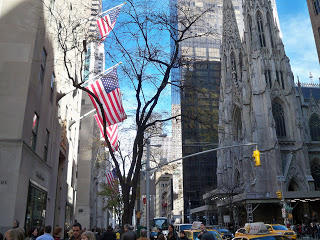
My walks around the city are a study in black in white. The white is from the buildings, their facades of marble, limestone and granite.

The black is from the coats. Long, short, open, closed. But black, almost always black. The puffy parkas of the seriously cold. The long topcoats of the multitasking and self-important (a lot of those around here). The dark suit jackets of those impervious to the chill.

Put them all together — the Hill types striding across the Capitol plaza; the office-worker at lunch — and you have a ballet, a choreography, a study in contrasts.

D.C. gets color from its tourists. But it gets its subtlety and its heft and its monochromatic harmony from its denizens.

Three Years and Thankful

Three Years and Thankful

I began this blog three years ago, not sure how often I would post or for how long. It would be an exercise, I told myself, “a slow, patient accumulation of words,” a daily discipline. Maybe people would read it, maybe they wouldn’t. But if I kept at it long enough, I told myself, I would have a body of work.

Don’t know if there’s quite a body yet. Maybe the beginnings of one.

What I do know is that somehow, every day but Sunday (or Saturday!), the blank screen is filled. Even on the hardest days, the words come. Some days they rush in as quickly as I can get them down. Other days I spend way more time than I’d like with fingers poised above the keys.

But eventually the muse speaks — and I listen.

Today I pause to thank that muse — and to thank all of you who visit, read and cheer me on. Your encouragement means more than you know.

Stitchery

Stitchery

The lunchtime walk is timed, by necessity. No more than an hour, often less. Bracketed by desk work, it is more of a bolt than a saunter.

Down First to New Jersey, over and around the Capitol.

Or maybe down the Mall, to the Washington Monument and back.

Errands might take me up Massachusetts or along E Street to Penn Quarter, the bustle of Chinatown.

Sometimes just to the Botanical Gardens to smell the roses.

In the end, it doesn’t matter. Each route stitches me more securely to this place.

Grand Central Centennial

Grand Central Centennial

Saturday marked not only the 127th Groundhog Day celebration in Punxsutawney, Pennsylvania, but also the 100th birthday of Grand Central Station. It was the second train station on that site, and it opened on Sunday, February 2, 1913. More than 150,000 people visited the first day.

For me, for years, Grand Central was the place I passed through on the way to work. My office was in the Helmsley Building, an ornate wedding cake of a structure that straddles Park Avenue north of the station.

Grand Central was where we grabbed a newspaper and a bagel before starting our day at the oh-so-civilized hour of 9:30 a.m. It was where we went out to lunch for a splurge on our assistant editor salaries. It was where we met people for drinks or dinner. It was even sometimes where we caught the train.

Most of all it was — and still is — a grand public space. One of the grandest. And its currency is not stone or steel but motion. Of trains, of people. 

To stand at the clock in the middle of Grand Central is to be caught up in a great whirl of activity — but somehow to feel the stillness within the movement.


(Not Grand Central, but something of its scale…)

Flurries

Flurries

We’ve had more than our usual share of flurries this winter. Snow without purpose, not driven, not sticking much, just dancing in the air.

One minute the day lightens, the next it grays, and then … it’s white out (though not whiteout).

This is snow-globe snow, decorative, ornamental, does not mean business. It could be lint from an errant dryer. Or ash from a meddlesome volcano. Or bits of fluff from a cottonwood tree.

But no, it is snow. It melts on the tongue. It coats my hair when I walk through it, which I did yesterday.

Flurries are difficult to photograph. They are ephemeral. It is part of their charm.

Is Poetry Dead?

Is Poetry Dead?

This morning’s Washington Post tipped me off to a literary kerfuffle that has recently been playing out in its pages and online. An op-ed by Alexandra Petri, “Is Poetry Dead?,” has 375 comments and counting. I didn’t read all of them — only enough to convince me that no, it is not!

Petri’s piece seems to have been inspired by Richard Blanco’s inaugural poem and the fact that Blanco “has overcome numerous obstacles, struggled against opposition both
internal and external — in order to excel in poetry, a field that may
very well be obsolete.”

Petri raises valid points, criticizing not just poetry and poets, but a culture that has turned poetry from a romantic, individual act to a heavily workshopped, grant-driven endeavor.

But she certainly touched a nerve.

With rants and reasoning, 375 people took the time to defend the art form, many of them in posts that used the art form itself.

“Poetry turns darkness into light,” wrote one.

Another quoted William Carlos Williams, from “Asphodel”:

It is difficult
to get the news from poems
yet men die miserably every day
for lack
of what is found there.

Violets, Again

Violets, Again


Violets are part of my emotional-horticultural heritage. My mother has
always loved them and her mother, my namesake, always
loved them, too. I have very few of my grandmother’s possessions, but I
do have her violet-patterned cup and saucer set, and I treasure
it.

In a way, the violet is a strange flower to claim. Many consider it a weed. It’s mowed down as often as it’s cultivated.

But even without the family tradition, I would like this flower. Maybe it’s the color combination, the vividness of
the purple, the way it’s grounded by the green. Or maybe it’s the way it
clusters with its own, as if waiting to be gathered into a bouquet. In
the general boisterousness that is spring, the violet is shy and
unassuming; it doesn’t ask for much.

 For that reason, it’s an easy flower to love.

(Happy Birthday, Mom!)

King Lear Weather

King Lear Weather

It’s the end of January, not the month known for going out (coming in?) like a lion. But this year it’s doing just that. Wild wind, rough rain, flash flooding.

King Lear weather.

“Blow, winds, and crack your cheeks! rage! blow!
You cataracts and hurricanoes, spout
Till you have drenched our steeples…”

We are not the first to see weather as sign of a disordered world.

But this time, maybe we’re right.

(Not this steeple! It’s in Annapolis.)

A Study in Brown

A Study in Brown

I saw them yesterday as I left work, a flock of sparrows taking in the air, sunning themselves in the hedge at the end of the alley.

They looked so much like a painting that I had to stop, snap a picture — and appreciate the respectful distances they kept from each other, the way they blended in with their surroundings, a study in brown.

It was the sort of day when everyone was outside who could be.

And that included sparrows, of course.

View from the Tramp

View from the Tramp

I used to think of trampoline bouncing as a warm weather activity, something best done barefoot in summer. But this year (maybe because it’s been warm, maybe because I have a greater need to move to music), I’ve been doing it all fall and winter, too.

Last week I ventured out in the snow. It was a light dusting, and the stuff was powdery enough to sift right through the pad onto the ground. Yesterday I bounced after the sleet had stopped and the day had cleared.

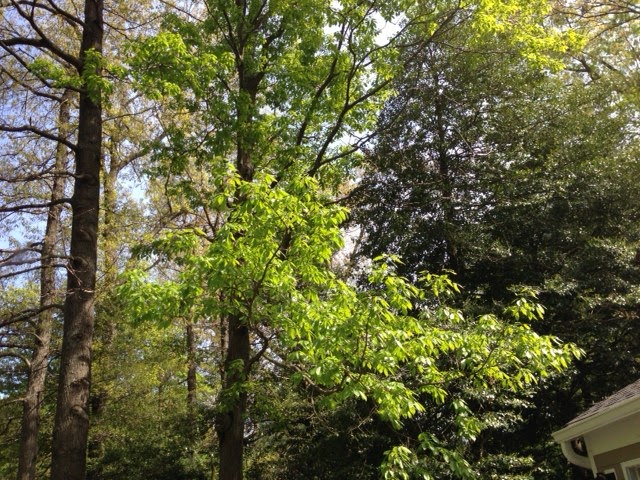
If I bounce long enough, the backyard starts to look pretty good: the brush no longer needs chipping;  the trees no longer need trimming. They are shaggy friends now, these trees, with long, spindly arms that touch the sky.