Browsed by
Author: Anne Cassidy

Autumn Labor

Autumn Labor

The motion is hypnotic, timeless. An outstretched arm, the curve of a rake’s end the arm’s extension, reaching forward to gather what has fallen.

As I work my heart stills. There is progress, measured in leaves corraled, bags stuffed, sticks broken and tied.

My eyes look up to a swirl in the sky.

I’m not the only busy one.

A niggling wind has frisked the Kwanzan cherry and now, on the green grass, lies a pile of gold.
 

Walker Eats Words

Walker Eats Words

I walk daylight paths and share (mostly sunny) thoughts, but I walk because I want to, not because I have to. Most of the time there is a car at my disposal. Most of the time, but not last night.

It was a long day with a complicated automotive choreography involving three people and two cars. I was driving one vehicle in the morning and another in the afternoon. It was dark when I stepped off the commuter bus, and I had car keys in hand, ready to slide into the seat and drive home. But I couldn’t find the car; I walked up and down the lot, looking in vain for the distinctive luggage rack of our sedan.

I would have called and asked for guidance but I had no phone and the pay phone was out of order, probably has been for several years. Never mind, I told myself. There must have been some confusion. I’ll just walk home.

Walking home from that distance wouldn’t be daunting in the daylight, but it was at night. I found myself tripping on cracked pavement and dodging cars, even when I crossed with the lights. It took me 45 cold unpleasant minutes in my dark coat and too-tight work shoes. The only thing I could think about was how much I wanted to be home.

I hadn’t been in the house more than five minutes when Tom and Celia walked in. The car was in the lot (sans luggage rack); I had just missed it.

What I hadn’t missed was this: It’s easy to rhapsodize about walking when you don’t have to walk.

Pushing Send

Pushing Send

No longer the search for the envelope, the stamps, to say nothing of the white-out and carbon paper that preceded them. No longer the rush to the post office to make the last pick-up of the evening.

Now, instead, it’s the multiple save, the last-minute printer malfunction, the inexplicable garbling of text or omission of “o’s” in the preview document.

Now, at the last possible minute of the second-to-last possible day, it’s wondering whether the document should have been saved as a PDF after all.

But finally, after the problems are solved, the tempers calmed, the signatures checked and the credit card number encoded, it’s time to push “Send.”

Miracle of miracles, the Common App is on its way.

Music as Place

Music as Place

I bought the tickets months ago in a fit of concert-going induced by pleasant outdoor evenings at Wolf Trap last summer. But by the time Saturday night rolled around I was wondering why we were going to hear the group Chicago. A concert for me usually means a symphony orchestra. What was I thinking of?

The opening band, Kansas, didn’t do much to dispel the fears. Yes, they played “Dust in the Wind,” but their other songs were more cacophonous than I remember. By the time I was ready to slip in the ear plugs, though, the opening set was over and Chicago was on stage. The volume went down and the energy level went up. Here was the soaring trumpet in “Does Anybody Really Know What Time It Is?” and the driving keyboards in “Saturday in the Park.”

And even though I’m a classical music nerd, I still knew every song. More to the point, every song took me back to a me I hadn’t been in years; to sweaty high school slow dances and college parties in the top floor “rack rooms” of gritty fraternity houses.

It was enough to make me believe that the past isn’t really over after all, that it lives within us and can be sparked to life by a brass chord, a guitar riff, a voice. That music is a place, after all, and a visit there can make us feel young again.

Photo: Wikipedia

Graceful Exit

Graceful Exit

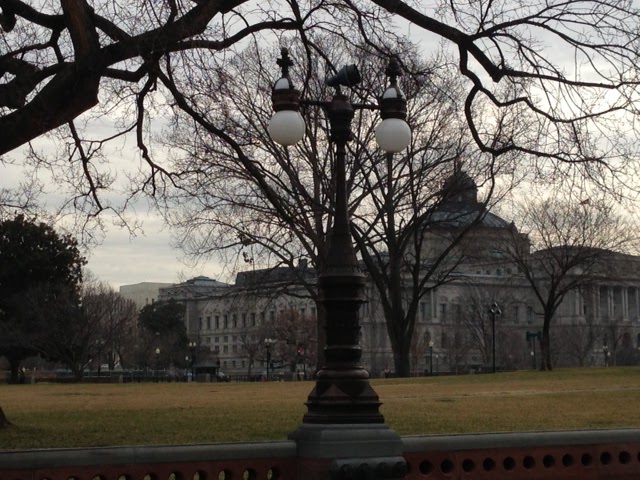
The pin oaks of my youth were all over Lexington, but where I remember them most is along Chinoe Road (that’s SHIN O WAY).  They rustled their dry leaves in front of some of the more desirable real estate in town.

Long after the leaves of other trees had flamed up, dropped off and blown away, the pin oaks hung onto their poor brown specimens. Pin oak leaves had not mastered the art of the graceful exit. Even with snow on the ground, they clung to their branches. They reminded me of old women with overly made up faces; like them, they did not know when to quit.

Walking past a grove of pin oaks the other day brought these memories to mind, how I had always disliked the tree, found it ugly and lacking in grace.

But this year the pin oak has company. This year many leaves fell during the hurricane, and some trees are nearly bare, but certainly not all. At least a third are half-leaved. It’s as if they’ve forgotten what to do next.

Pin oaks don’t provoke me as they used to.  Perhaps it’s because I’m older (though not overly made up!) and see the wisdom of clinging to what nature has given us until nature, in its wisdom, takes it away.

Late Rose

Late Rose

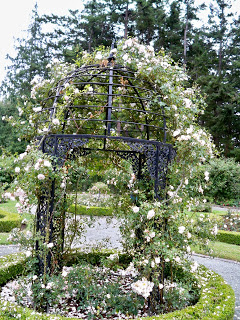
Frost has nipped the begonias, colored the maples, brought a dignified end to the tomato and basil plants. But it has not yet conquered the knockout roses in our front yard.

They have continued to bloom red and pink, their colors out of place with subtle autumn russets and gold, their freshness unexpected and sublime.

To see them still waving in the breeze is to believe that all will be well, that winter will pass and spring will come again.

Intermittency

Intermittency

A problem with our wireless network has changed my blogging habits. I write quickly, post quickly, before I’ve timed out.  At least for now, I’m learning to live with intermittency, with stopping and starting, with that which cannot be controlled.

A valuable lessons to be reminded of from time to time.

My pace has been intermittent lately, too, as bursts of running punctuate my usual fast-walk cadence. I try for a steady pace but can’t help but respond to the music in my ears and the feel of my joints.

Even the weather has been singing this tune — blustery and cold one weekend, calm and warm the next.

Bedrock is necessary, that which is solid and predictable. But what gets us through the day is the lighter, looser loam on top.

Staying Put

Staying Put

In The Merry Recluse, the late Caroline Knapp writes about finding home. It wasn’t a grand “ah-hah” moment, she says. “I figured Boston would be an interim city, a place to set down my bags until I moved on to some bigger, more exotic locale … I figured I’d be transient, my sense of place fluid, my attachments focused on people and jobs rather than on location. And then, not long ago, I looked up one day and thought: Oh, my God. I have a life here. I’m not moving. I’m home.”

Her point is that many of us don’t choose our place; our place chooses us. It’s not so much a decision as a non-decision. A not-moving rather than a staying put.

What helped Knapp stay put is the Charles River, “one of the longest, best stretches of flat water for rowing anywhere in the U.S.” and where Knapp would scull four or five times a week.

If we stay here (and it’s always “if”), it will be because of the hollow tree along Little Difficult Run, the one Copper always has to stick his nose in on the days he’s lucky enough to get a walk. It will be because of the mossy hill and the view of treetops I can see from there. It will be because of this one ancient knobby tree stump I always look for because more often than not it trips me up. 

It will be the little things that keep us here.

Lost and Found

Lost and Found

I thought I knew the way, so I headed out with no map, no directions, no GPS and no phone.

The first part was easy. Down Lawyers into Vienna. I knew that much for sure.

But when I turned into the neighborhood it was dark and alien. I recognized the median but not the turnoff. I drove slowly down the suburban lanes, turning every time I thought I’d found the road. But nothing looked familiar.

I realized then that I had never arrived at this house in darkness, only in daylight. In the light, the houses were large, solid, knowable. In the darkness they were too close to discern differences. More cars were parked on the street than I recalled. I drove so slowly I could have been walking, peering into windows with one eye while keeping the other on the road.

At one point I found myself retracing last Saturday’s local history tour. And then I laughed out loud. I can’t find my friend’s house but I can locate the site of an 1862 Civil War encampment.

It was then that I turned toward home. This time I knew the way: right on Lawyers, left on Steeplechase, left on Fox Mill.

When I pulled into our driveway, the porch lights were glowing a warm welcome. My heart leaped at the sight. I parked the car and walked inside.

Morning After

Morning After

Amid yesterday’s electoral busyness and drama came word came of a high school classmate’s death. He was a wild man and a lover of life who lost his own life far too soon. Hearing this sad news from my hometown put everything else in perspective.

Not just the brevity of it all or even the wonder of it all but the preciousness of each individual person. Each one a world apart, each with aspirations and aggravations that we, on the outside, can never know. As we emerge from the collective that is an election season, when people are numbers, weights on a swing state scale, we return to what really matters — the individual.

This is the morning after, the day we cheer or sigh. But tomorrow is a new day, and like every new day, composed of the individual actions of individual people.